

We are not alone. That’s been the recurring theme of Steven Spielberg’s films since his first sci-fi epic, 1977’s Close Encounters of the Third Kind. In Disclosure Day, this central tenet – the belief that there must be something beyond the realm of our immediate understanding, in the form of other lives and civilisations – takes on a quasi-religious significance. The very fate of humanity, Spielberg suggests, rests on grasping the fact that we are part of something larger, that our small blue-green planet is not the centre of the universe.
Disclosure Day takes place at a pivotal moment for the human race. Alarmist headlines warn of an imminent nuclear war and a world on the brink. The best hope for the future is a total reset: an event of such magnitude that it brings together every person on every side of the brewing global conflict; a piece of information of such shattering significance that, for a while at least, the human race stops scrolling and focuses on one unifying message. Well, this is science fiction, after all.
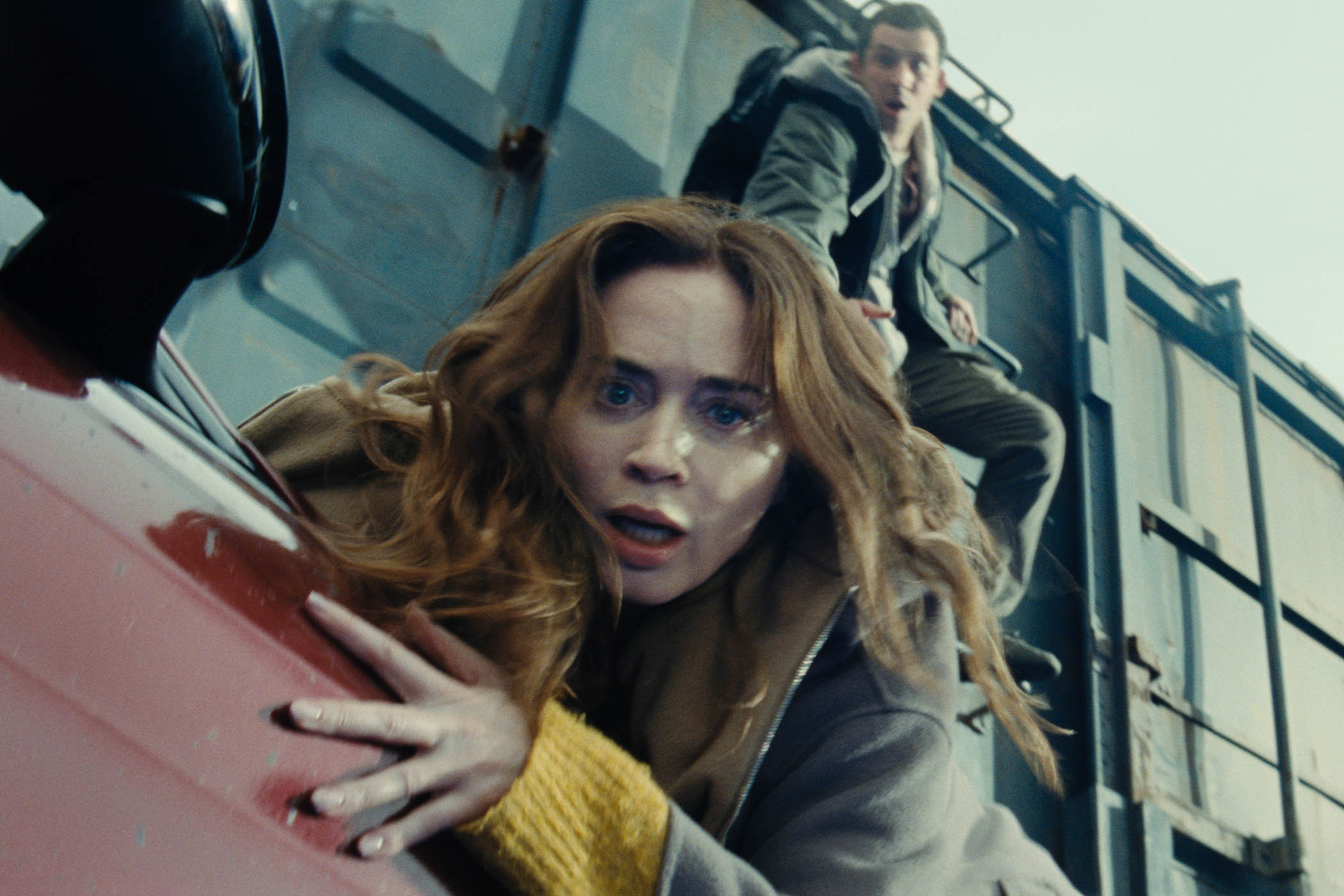
Integral to this event, in ways they don’t initially understand, are Margaret Fairchild (Emily Blunt), an ambitious Kansas City meteorologist, and Daniel Kellner (Josh O’Connor), a data security expert-turned-whistleblower.
The sci-fi gospel according to Spielberg has tended (with the notable exception of War Of The Worlds) to preach optimism and accord. Close Encounters and ET the Extra-Terrestrial are stories of connection and communication, rather than Martian armageddon. That is true also of Disclosure Day, in which the real threat to the world comes from within — hence the hazily nonspecific hints of geopolitical catastrophe. But evil needs a face, and in this case, it belongs to Colin Firth.
It’s not the first time Firth has played the baddie – Rowan Joffé’s 2014 thriller Before I Go To Sleep flipped the actor’s decent chap persona on its head. But here, playing Noah Scanlon, the head of a shadowy government-adjacent corporation known as Wardex, Firth teeters on the brink of pantomime villainy. It’s not so much the performance that is at fault as the writing: Spielberg collaborator David Koepp’s screenplay positions Noah as someone whose fingerprints are on every nefarious aspect of the story, from alien torture to mind control to information suppression. He might as well have his thumb on the nuclear button.
The film opens dramatically and dynamically, during a rowdy wrestling match shot from the point of view of a fighter, lying prone on the canvas. It’s a neat visual metaphor, placing the audience at the mercy of an unpredictable and violent world, and reminds us that Spielberg remains a master of action: the balletic camera moves in some of the extended shots are jaw-dropping.
But Disclosure Day is let down by the writing: it launches us, without preamble, into the fray, and offers little respite thereafter. This means the script leans on shortcuts to explain Margaret and Daniel’s cross-country dash and the convoys of ominous unmarked vehicles that pursue them. Take, for example, the multi-purpose plot device – an alien artefact, about the size of a TV remote, which permits evil Colin Firth to dive into the consciousness of characters, operating them like heavily armed sock puppets. This gadget can also make cast members invisible and jumpstart mains electricity; it’s truly the Swiss army knife of narrative tools.
Then there’s the wise nun (Elizabeth Marvel) who, more or less unprompted, delivers a speech detailing how God’s omnipotence might not be limited to our world, and how alien life-forms may also be His creations. Faith in the Almighty and belief in aliens are not, in other words, mutually exclusive. The picture’s earnest but theologically muddled opinion is that there is even considerable overlap between the two.
Yet there is still much here to enjoy, with a generous helping of pulse-racing set pieces and both Blunt and O’Connor on terrific form. While this is not a top-tier Spielberg movie, it is still an archetypal one: both stylish and sincere, hopeful and hokey.
Photograph by Universal Studios
Newsletters
Choose the newsletters you want to receive
View more
For information about how The Observer protects your data, read our Privacy Policy