
Alongside bucolic fields in Maryland near the border with West Virginia, US flags flutter on porches and tree-shaded roads wind through the gentle hills. It’s not until you cross the freight rail tracks that the vast white-and-blue warehouse emerges from the landscape.
The 800,000 sq ft building – approximately the size of 10 football pitches – is eerily devoid of activity. The only hint at its intended purpose is a navy-blue vehicle with a red stripe down the side, and “ICE” written in gold lettering on the door.
Access to the warehouse in Williamsport, just outside the historic city of Hagerstown, is strictly controlled. But Brandon Thompson, a 37-year-old army veteran and satellite network analyst, regularly heads out to fly a drone over the property and monitor for any activity.
“It barely even fits on the screen sometimes,” he says, as he pulls the drone back to reveal the sheer scale of the warehouse – a windowless building that might eventually incarcerate about 1,500 people arrested by ICE.
The acting ICE director Todd Lyons said last April, he wanted migrant detention and deportation in the US to be “like [Amazon] Prime, but with human beings”.
The Williamsport warehouse appears to be the manifestation of that wish. It is one of 11 warehouses across the US that the Department of Homeland Security (DHS) has bought since January, part of a plan that could mean up to 80,000 people detained in buildings that were once intended for goods.
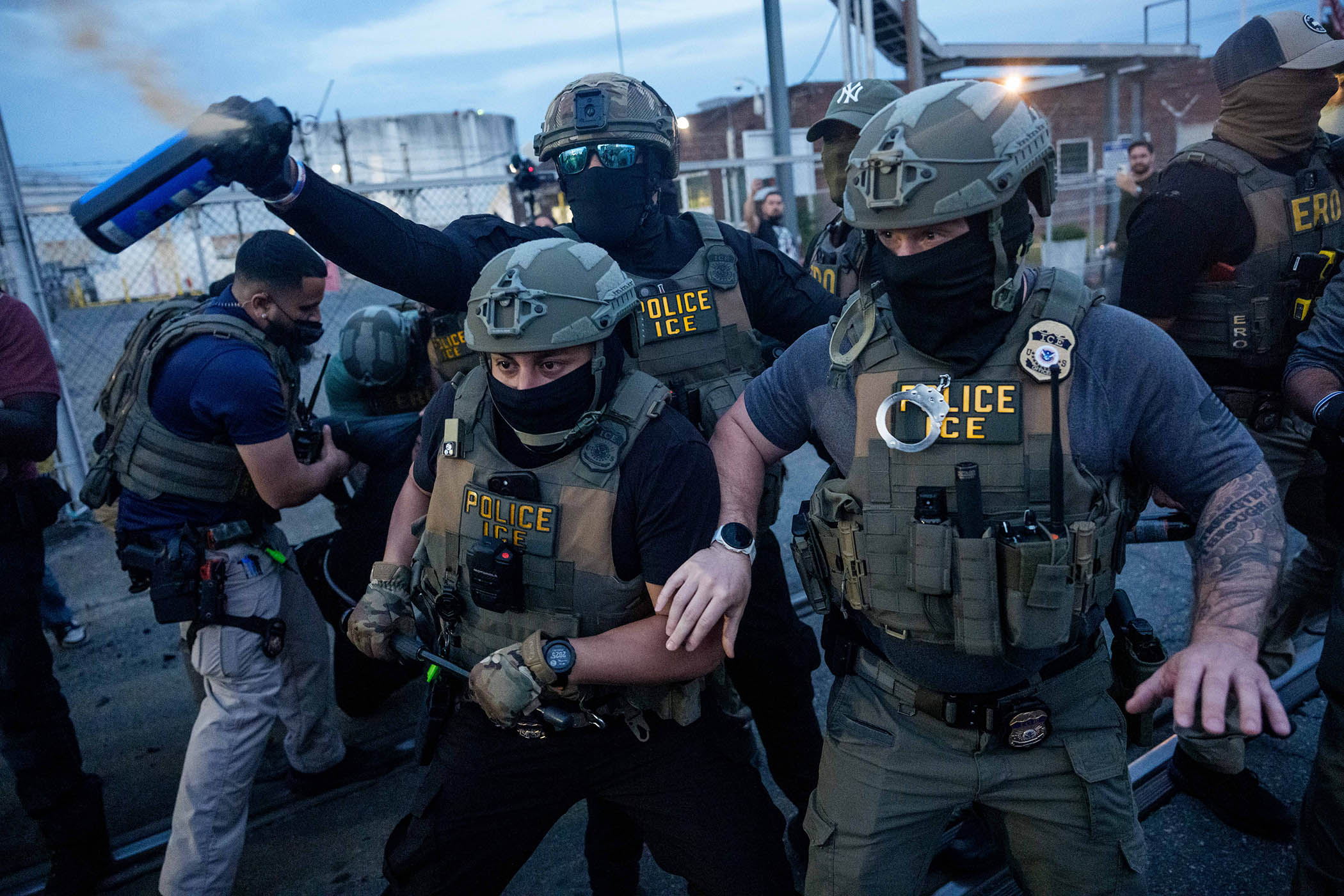
About 60,000 people are already held in ICE detention across America and human rights groups have detailed shocking conditions. Some inmates at the Delaney Hall immigration detention facility in Newark, New Jersey, launched a hunger strike this month to protest what they say are inhumane conditions, with inadequate food and medical care. Last week ICE agents pepper-sprayed protesters gathered outside the facility, among them a Democratic senator.
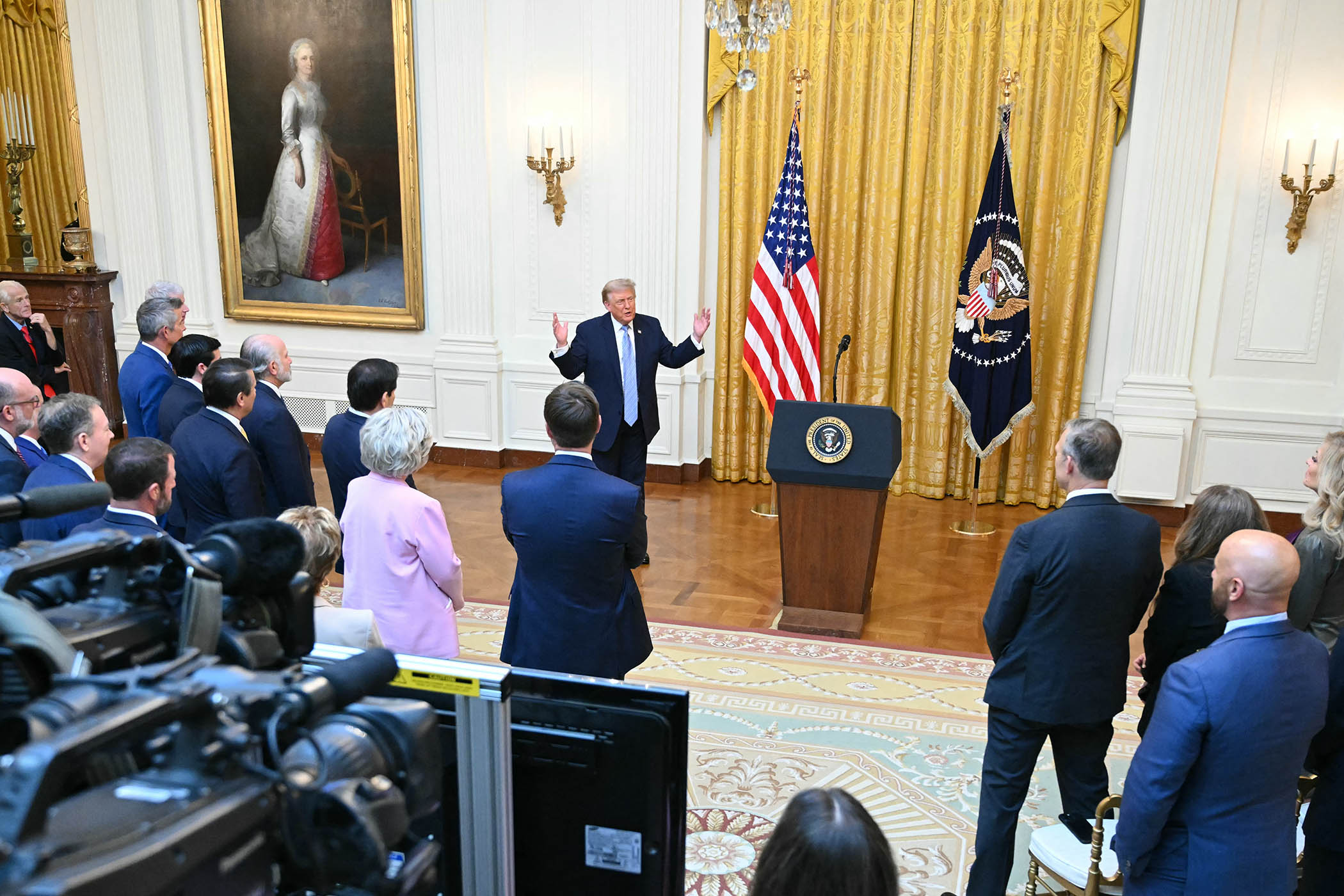
Donald Trump promised during his campaign to enact the largest domestic deportation operation in US history and has tasked his deputy chief of staff and homeland security advisor Stephen Miller with making that happen.
Miller was behind the deployment of National Guard and federal agents in cities including Los Angeles, Washington, Chicago and Minneapolis. Last May, when the normal rules of immigration enforcement were not getting the desired results, he demanded that arrests reach 3,000 a day. That paved the way for a dragnet approach that culminated in January in the fatal shooting by federal agents of two Americans in the streets of Minneapolis – and a drop in public support for Trump’s migration agenda.
Homeland security secretary Kristi Noem was removed from her post in March, but while the optics around immigration enforcement changed, the fundamental policy to arrest and deport record numbers of undocumented people remained unchanged.
Newsletters
Choose the newsletters you want to receive
View more
For information about how The Observer protects your data, read our Privacy Policy
Tom Homan, Trump’s “border tsar”, reiterated that last month when he told a border control conference: “You ain’t seen shit yet.”
“This year will be a good year,” he vowed. “Mass deportations are coming.”
That policy relies on having somewhere to house the detainees. “In the deportation machinery, detention plays a hugely important role,” said Muzaffar Chishti, a senior fellow at the Migration Policy Institute thinktank. “Because you can do quick arrests, but you can’t do quick removals, and the only thing therefore you need is a place to detain. And if you don’t have enough places to detain, then you can’t arrest.”
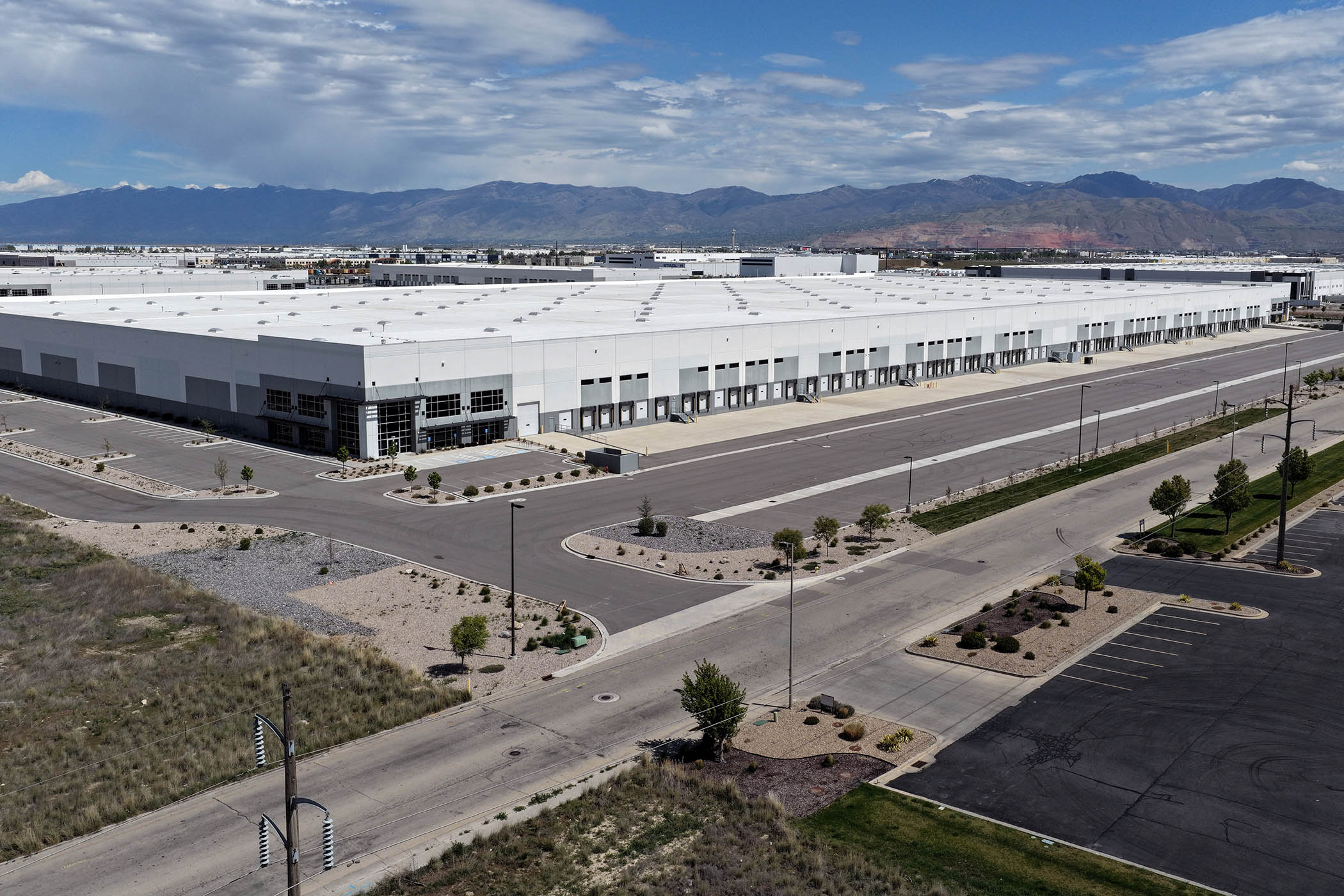
A warehouse in Salt Lake City that has recently been purchased by U.S. Immigration and Customs Enforcement
The warehouse purchases were meant to solve this problem. Under the ICE “detention reengineering initiative” devised last year, $45bn was to be spent on expanding detention capacity.
Noem’s replacement, Markwayne Mullin, has launched a review of the warehouse purchases – part of scrutiny of all contracts Noem signed – and no more have been bought since his appointment.
But opponents of the warehouse plan don’t believe the administration will simply abandon them. While arrests fell 12% after the killings in Minneapolis, tens of thousands of people are still in ICE detention.
“They know what they’re doing,” said Alexis Goldstein, a Democratic congressional candidate in the November midterms, who spoke to The Observer at a protest in Hagerstown against the warehouse conversion. “Once you build something like this, it’s really hard to shut a prison down.”
Questions have been raised about the cost of the warehouses. A warehouse in Salt Lake City was purchased almost 50% above its estimated market value. The DHS bought another, in Social Circle, Georgia, for $129m – about four times its market value.
Democratic members of Congress have now launched an investigation into whether “property owners are corruptly profiting from the White House’s fast-tracked expansion of inhumane warehouse-based immigration detention facilities”, the 52 lawmakers wrote in a press release.
The level of detail available about the warehouses is in part down to the Project Salt Box initiative started by Breyona Gurosko, an army veteran and computer engineering student.
The solution is not supposed to look pretty. I don’t care about optics. I care about numbers
The solution is not supposed to look pretty. I don’t care about optics. I care about numbers
Enrique Tarrio, Trump supporter and far-right activist
In October, Gurosko started poring through public records to try and see if a pattern of procurements and contracts issued could help predict which cities could be facing an ICE surge next. Then Gurosko focused on property purchases, to pull together as much information as possible on the warehouse plan.
The aim of Project Salt Box – named after the yellow boxes filled with salt on Baltimore’s streets which communities use to melt ice during the winter – is to funnel all the information to community organisers, who can then start campaigns to try and stop the projects.
The warehouses now face a slew of legal challenges. Maryland’s attorney general filed a lawsuit arguing the DHS did not carry out the required environmental impact reviews for the Williamsport facility, and there is currently a stop-work order.
Similar legal challenges over environmental concerns have been filed in Arizona, New Jersey and Michigan.
Elsewhere, community outrage has prevented the purchase of warehouses by ICE. In Oklahoma, the Choctaw Nation bought a warehouse to prevent its acquisition by the DHS. In other cases, local Republicans have opposed the warehouses, aware that large detention centres in their communities are unpopular with constituents.
Concerns range from the impact on local communities, the strain on water and sewage infrastructure, and worries about the treatment of detainees. So far this year, at least 18 people have died in ICE custody. In 2024 – the year before Trump launched his migration crackdown – that figure was 12 for the whole fiscal year.
But there remain plenty of Americans who support the deportation programme and have no qualms about the tactics deployed.
“The solution is not supposed to look pretty,” said Enrique Tarrio, an ardent Trump supporter and far-right activist who reflects the views of many in the Maga base. “I don’t care about optics. I care about numbers.”
For now, the administration has shifted to a quieter approach, focusing on making life so difficult for undocumented people that they “self deport”.
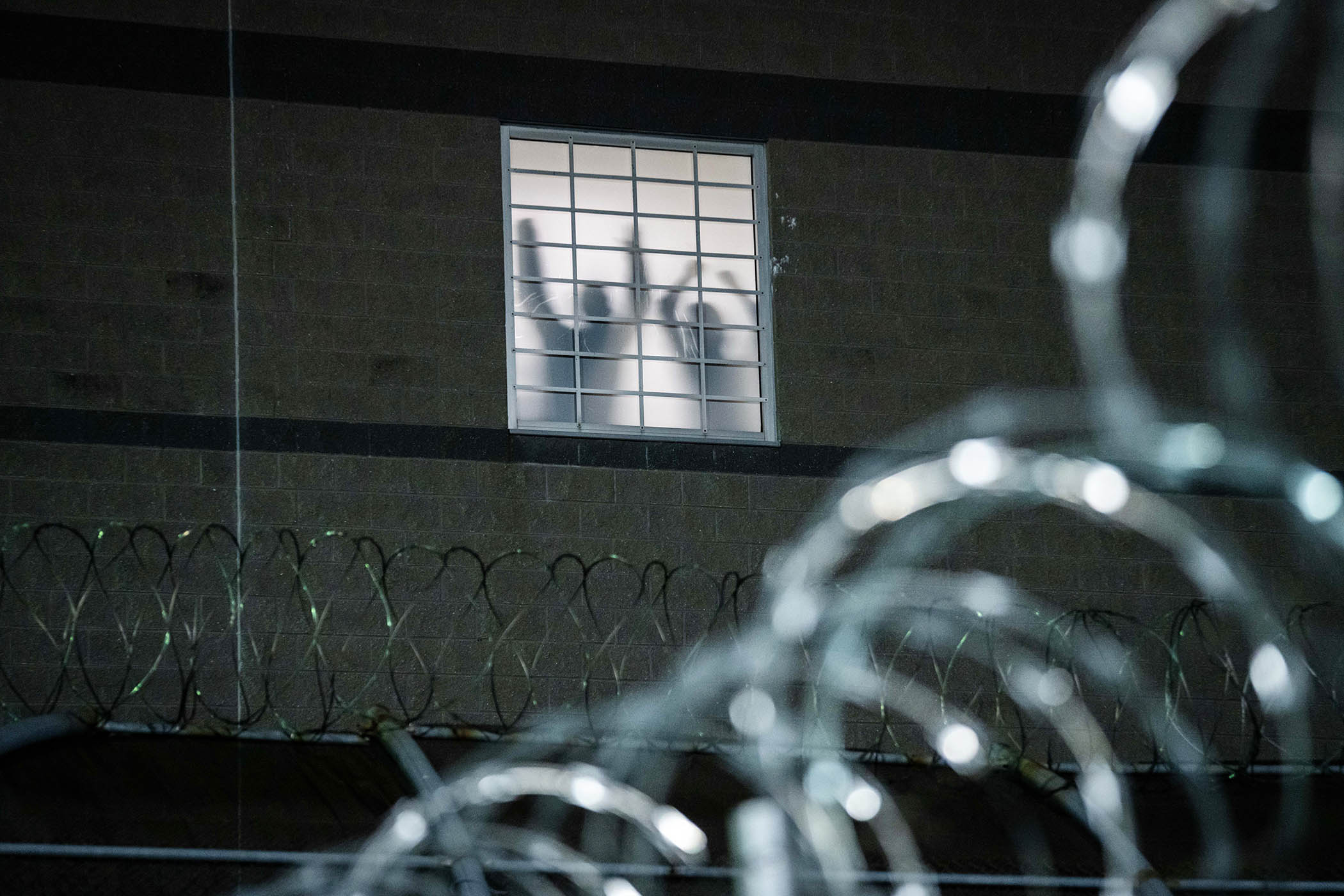
Detainees stand by a window inside the federal immigration center at Delaney Hall in Newark
This includes stripping undocumented people of their commercial driving licences; restricting access of families with mixed migration status to subsidised housing; and preventing access to some loans. The New York Times has reported that Miller has raised the possibility of ending funding for undocumented children in America’s public schools.
But this is unlikely to net the million migrants a year Trump has promised to deport, and without the space to detain the people ICE arrests, it cannot move forward.
Brandon Thompson heads to the warehouse day and night, launching his drone to document any activity in the area. A Minneapolis native, he doesn’t trust the government, so has taken matters into his own hands.
“If this administration is not going to provide accountability, then what I can do is at least document what’s happening in hopes that someone else will,” he said.
Photographs by Adam Gray/Getty Images, Justin Sullivan/Getty Images