
After you ship over 90 points inevitably the big questions tend to be asked. Enquiries along the lines of; how on earth did that happen, and where exactly is this club going?
Bristol had two weeks to stew on that humiliating night at Northampton Saints. A 94-33 defeat is the kind of apocalypse-level thrashing for which there is no easy balm and puts everything – philosophy, coaching, players – under the microscope.
Only Mark McCall at Saracens and Rob Baxter at Exeter Chiefs have been in charge at a Prem club for longer than Pat Lam, Bristol’s director of rugby, whose most recent contract extension back in 2023 signed him up for a further five seasons.
That record-breaking night at Northampton – Bristol conceded more points (94) than ever before in the Prem – left Lam apologising to supporters after “probably the worst” game of his career as a coach.
Parking the score for a moment, the loss at Franklin’s Gardens also practically killed Bristol’s hopes of making the playoffs. If they do miss out on the semi-finals, as expected, then their record since winning promotion back in 2017 will be three trips to the playoffs in eight seasons, without having reached the Prem final.
Given the quality of players Bristol have developed and recruited during those years - Charles Piutau, Steven Luatua, Semi Radradra, Ellis Genge, Louis Rees-Zammit – that feels underwhelming. The 2021 semi-final was their best moment to date, cruising at 28-0 up at home against Harlequins after finishing the regular season top of the table, before an infamous collapse.
Before facing Bath, Lam was asked if was the best person to take Bristol forward, and responded with a defiant “yes”. When pressed on why he was the right person for the job, he added: “I don’t need to explain”.
Back in August, Lam did explain how Bristol had reset their defence over four weeks of pre-season - more time than Lam had ever put into that area of the game before in his coaching career – keeping the same system in place but drilling down on the key messages.
Even with that pasting by Northampton, Bristol’s defence has still improved on last year in terms of points per game and tries conceded. And when you factor in Bristol’s horrendous luck with injuries in this campaign, losing three pivotal backs in their opening game in Harry Randall, AJ MacGinty and Gabriel Ibitoye, who have all returned at different points, that defensive progress holds a bit more weight.
Operating with a reduced squad, as Bristol opted to do a couple of years ago, saves money but comes with its own pitfalls when fifteen players are listed as unavailable, as was the case this week. MacGinty, 36, made his comeback on Friday night against Bath, eight months after rupturing his Achilles.
Newsletters
Choose the newsletters you want to receive
View more
For information about how The Observer protects your data, read our Privacy Policy
Silverware may have recently eluded Bristol but at least they have been able to celebrate a number of great days against their local rivals from up the road. Bath’s record at Ashton Gate prior to this week was a miserly one win in ten visits, and that came almost 20 years ago.
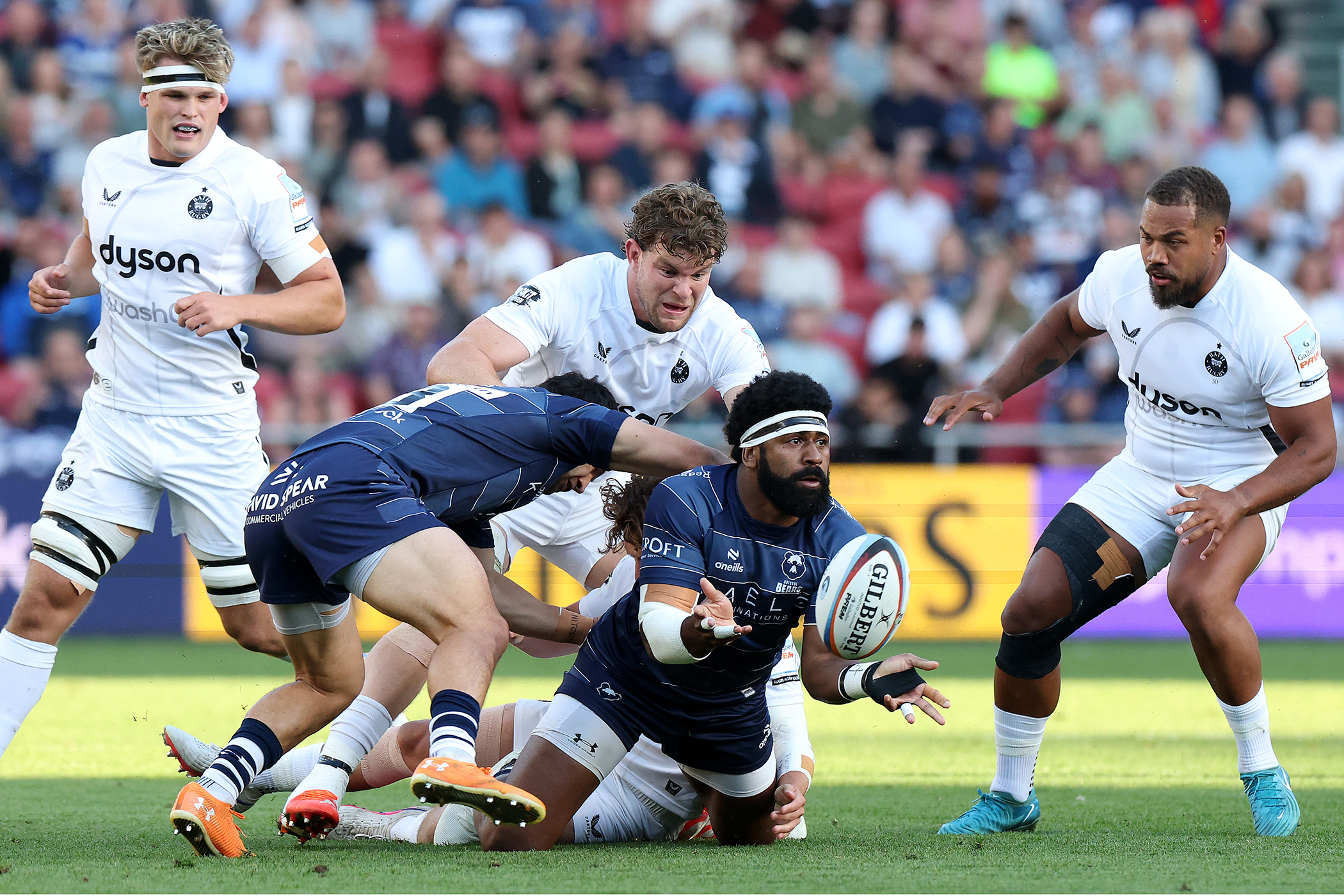
The reigning English champions will have to wait a little longer for a fresh victory on their neighbours’ patch. Turning around a 19-7 deficit, as Bristol did on Friday night to defeat Bath 21-19, took guts and commitment and belief. Their captain, Fitz Harding, played most of the game with a broken hand, led the team in carries (13) and tackles (20).
As for Lam, he revealed post-match the personal torment he has been through recently, attending the funeral of his grandson on Tuesday. That moment gave him and his family some closure. And his players also found some closure with their performance against Bath. “This is the true them,” added an emotional Lam.
There is a discussion to be had around Bristol the great entertainers - led by their electric Fijian winger Kalaveti Ravouvou - and their relationship with success. Last month the club’s chief executive, Tom Tainton, was quoted at a SportPro London event discussing the club’s approach to recruitment.
“There is no point going to market and spending marquee money on a player and just expect them to do something between the white lines on a Saturday,” Tainton reportedly said.
“At Bristol Bears, we don’t call ourselves a rugby club. We are a marketing agency that plays rugby. Yes, our players have to be competent and able to deliver on the field, but if they are not bringing any value off the field, that genuinely factors into our recruitment conversations.”
The “marketing agency that plays rugby” part naturally provoked a response, even if those remarks regarding “value off the field” tap into one of rugby’s current quandaries: how to create more household names when the traditional foundations of the sport are built around teamwork and humility, not individual superstars.
Still, there was enough of a reaction that Tainton sought to clarify his comments in a statement. “To reassure our supporters, while we are proud to be different at Bears, our number one priority is performance. To win trophies, and to inspire our community through rugby success. That hasn’t – and won’t ever – change.”
Assuming that Bristol do not make the Prem playoffs, six years will have passed since their last trophy – winning the second-tier Challenge Cup against Toulon during the pandemic.
Even when you factor in the decision by their benefactor, Steve Lansdown, to steadily reduce his investment in recent years, and the knock-on effect of a smaller squad, the gap between Bristol’s last trophy and their next title is widening. Also, despite their injury disruption, Bristol still had an opportunity to make the Prem semi-finals and blew it with a disastrous loss against struggling Harlequins and defeats to playoff rivals.
There was a pragmatism and a doggedness about their fightback against Bath, both in their tries and defensive efforts. Flair is fun, but that type of performance wins titles.
Do you give this injury-disrupted season a mulligan? Or opt to move away from 90-point thrillers every week, reining things in a bit in order to find elusive success? The big questions in Bristol this summer will continue to be asked.