“Richard Dadd / Painted fairies, mad. / He killed his dad, / Which was too bad.”
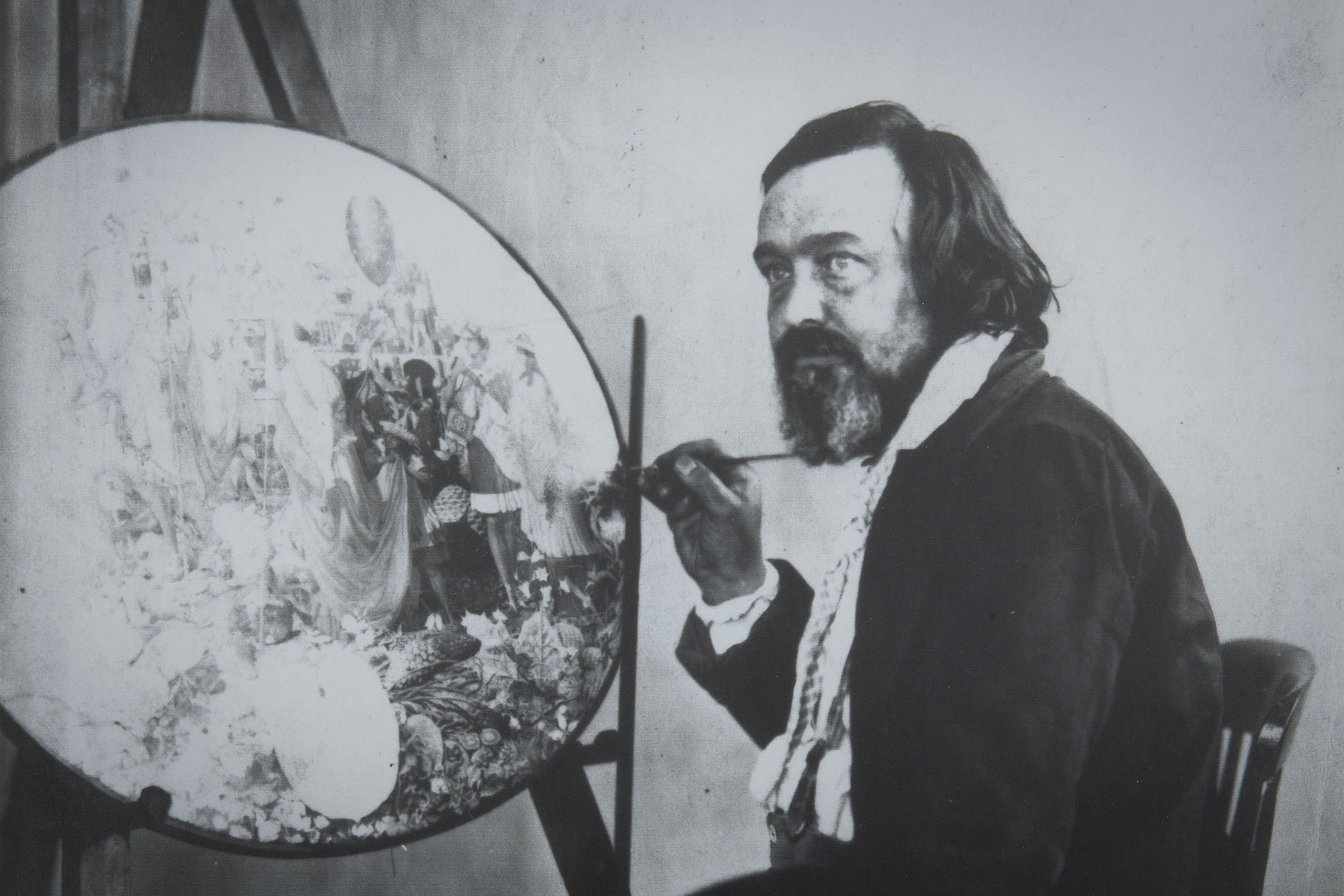
So runs the old clerihew on the Victorian painter (1817-86) who took his father for an after-dinner walk and murdered him with a knife. A few days later, fleeing across the Channel, Dadd tried to kill a stranger in France. Committed to Bedlam, and then Broadmoor, he seems to have attacked doctors and fellow patients repeatedly on the orders of the Egyptian god Osiris, among other voices in his head. “No change,” reads a pitiful case note in this show: 42 of his 68 years were spent in institutions.
Change is exactly the issue at the Royal Academy, where Dadd is receiving one of his periodic revivals. The first and most significant of these came with the poet Siegfried Sassoon’s gift of The Fairy Feller’s Master-Stroke to the Tate in 1963. By far Dadd’s most famous painting, his microscopic vision of a teeming world of fairies at the bottom of the garden took nine years to paint, and it shows. He zooms further and further into an undergrowth of wildflowers and weeds, goblins, elves and Shakespearian faeries. It is virtually impossible to distinguish the different elements, still less make out any kind of narrative.
The surface twinkles with oleaginous oil paint. Daisies stand proud of it in thick white discs. Somewhere in the middle, or so it is said, the brim of an oversized hat hangs over a mysterious face. The picture has become a bestselling postcard for children the world over, perhaps as a Victorian version of Where’s Wally? – spot Oberon and Queen Titania!
But the overripe uneasiness of its stoned gnomes and bosomy sprites, all rendered in obsessive miniature, feels entirely adult. The Fairy Feller became the very definition of far-out hallucinations in the 1960s. In the 1970s, Freddie Mercury wrote a song in homage, and the painting has inspired novelists from Angela Carter to Terry Pratchett. Is it a vision of intense originality or febrile madness?
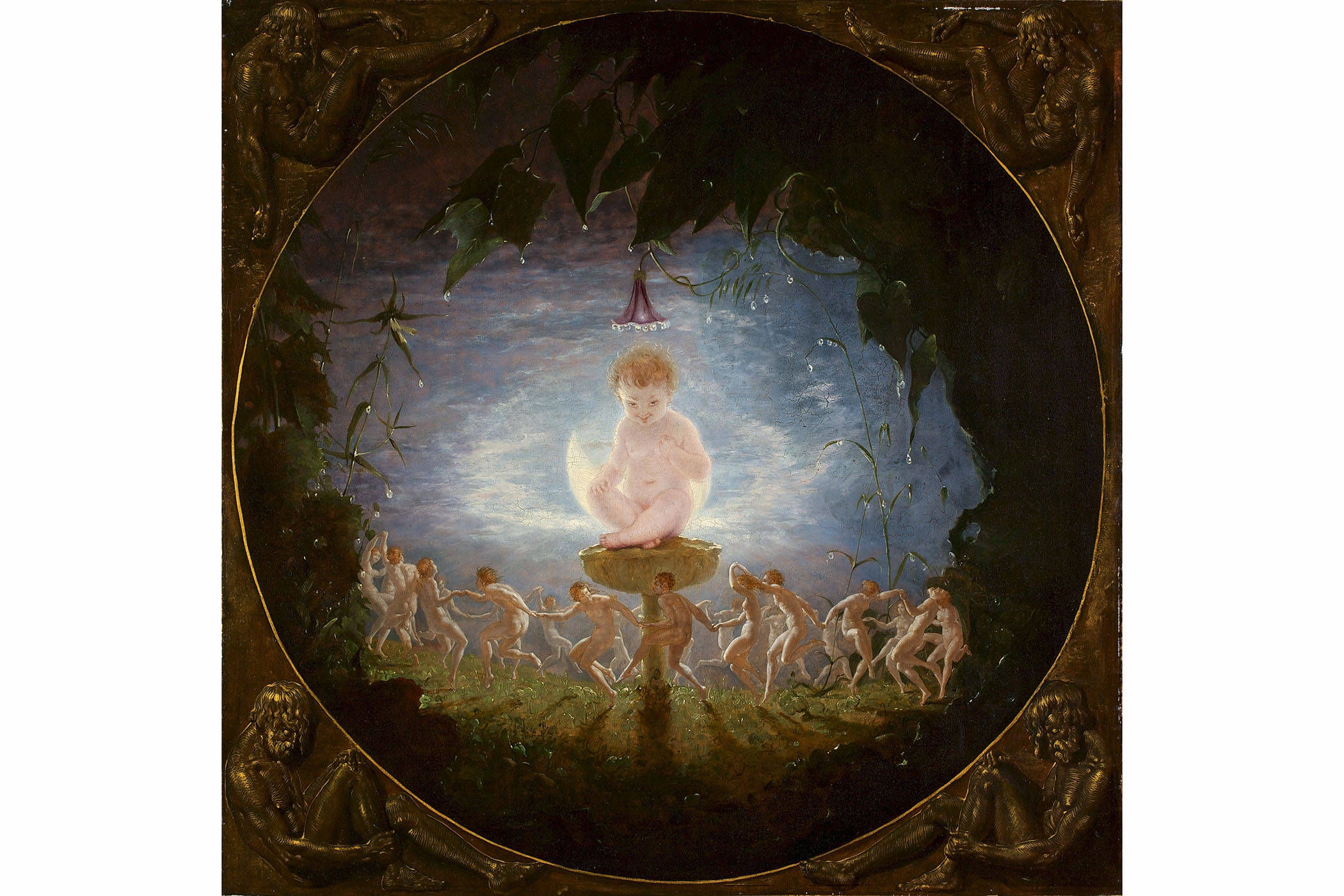
A circular canvas shows Puck as a demonic little baby cross-legged on a mushroom
On the evidence of this show, it is neither. Dadd was a trained painter, who studied in the Royal Academy Schools, winning the life drawing medal in 1840. He was taught by Daniel Maclise, fairy painter to the elite. He formed a group known as the Clique with the narrative artists Augustus Leopold Egg and William Powell Frith, among others, and even if you did not know how many of his contemporaries were inspired by Shakespeare, you can see it in Dadd’s own work.
Long before his incarceration, Dadd’s pictures were infested with faeries and nymphs, Peaseblossoms, Mustardseeds and nude Titanias in sultry glades. A circular canvas shows Puck as a demonic little baby cross-legged on a mushroom beneath a convolvulus blossom that resembles an overhead shower. It is a startling image, midway between grim and twee; not different from the later folkloric paintings in essence.
And there are plenty of wild-eyed hysterics in Dadd’s paintings early and late. Hamlet losing it at the sight of his father’s ghost in 1840; three swivel-eyed drunks in Bacchanalian Scene from 1862. Melodrama runs right through his work. “Crazy Jane” trails flowers through the skies, Henry VI is murdered by a bloody assassin and Robin Hood draws his bow and arrow tight at some offstage victim, a dog as big as a tiger next to him.
The curators are careful not to speculate too much about Dadd’s disorder. In the early 1840s, he travelled abroad with a patron, filling tiny sketchbooks with drawings of Syria, Turkey, Greece and Egypt, where Dadd evidently smoked so many hookahs he began to hear Osiris in the bubbling pipes. It has also been suggested that excessive opium, followed by its sudden withdrawal, set off paranoid schizophrenia. At least two of his siblings were institutionalised after breakdowns, so there may have been an inherited predisposition, or perhaps some past history of syphilis.
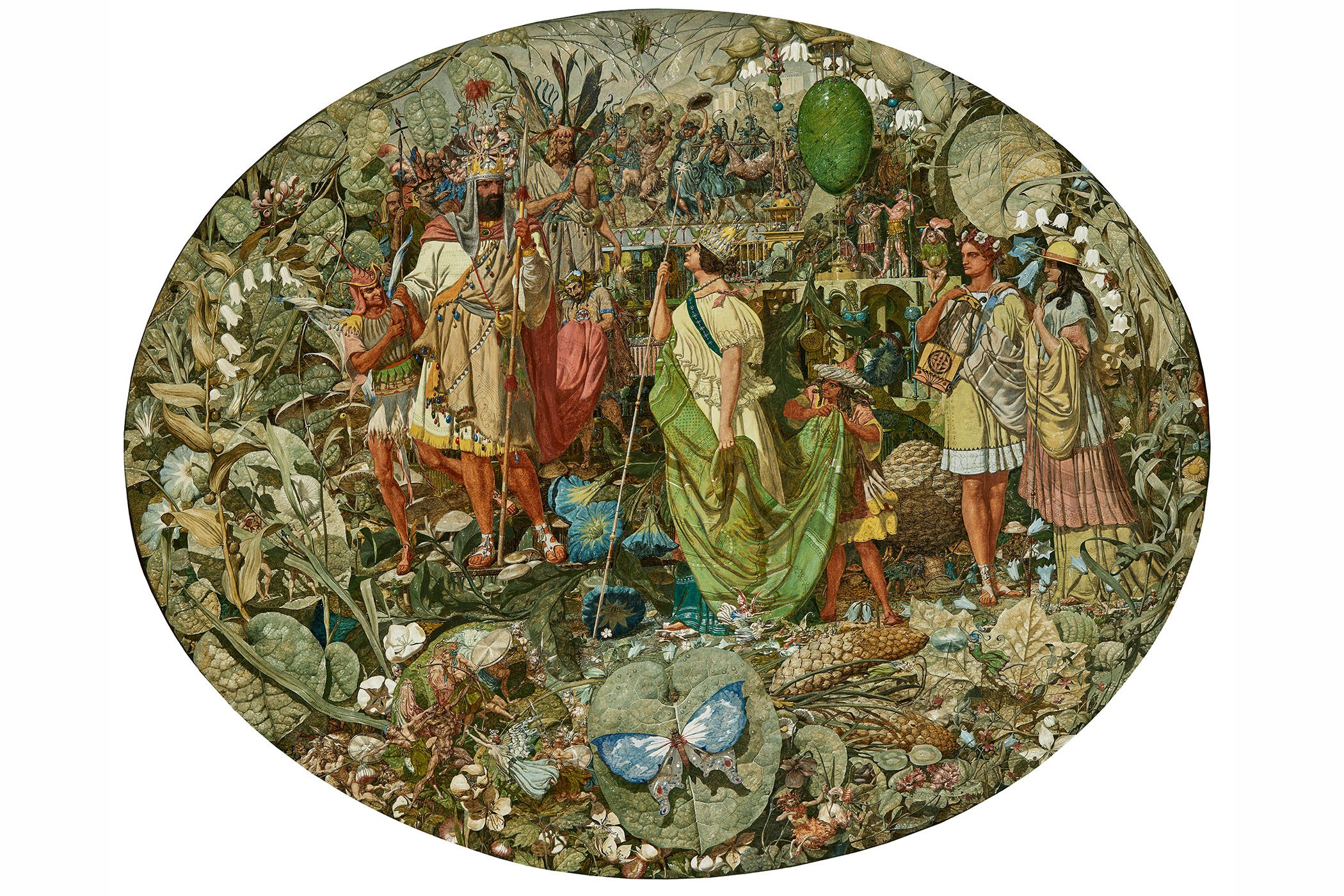
‘A microscopic vision of a teeming world of fairies’: Richard Dadd’s Contradiction: Oberon and Titania, 1854-58
The show also wants us to see Dadd as a serious painter, independent of his illness: Beyond Bedlam, as the subtitle has it. But beyond Bedlam was Broadmoor and some of the weakest images in the show, of wandering minstrels and wilting damsels in fading colour. Dadd’s best late works are the portraits of his doctors, worked in fine pencil and watercolour with a sparing precision that resembles, ever so slightly, the early graphic work of Lucian Freud.
Newsletters
Choose the newsletters you want to receive
View more
For information about how The Observer protects your data, read our Privacy Policy
It is hard to think of an odder show at the Royal Academy. Some of the paintings, produced in the direst of mental and physical circumstances, are vividly eccentric in their hyper-detailed fairylands. Others strive for whatever Dadd remembered of the London art world in which he once thrived. But many are sadly underpowered.
It is hard to believe that they would ever have been shown had he not been incarcerated, and yet we are supposed to see them independent of his illness. That way, so to speak, lies madness.
Richard Dadd: Beyond Bedlam is at the Royal Academy, London, until 25 October
Photographs by Bethlem Museum of the Mind, Harris Museum and Art Gallery