

Photograph by Stan Gaskell for The Observer
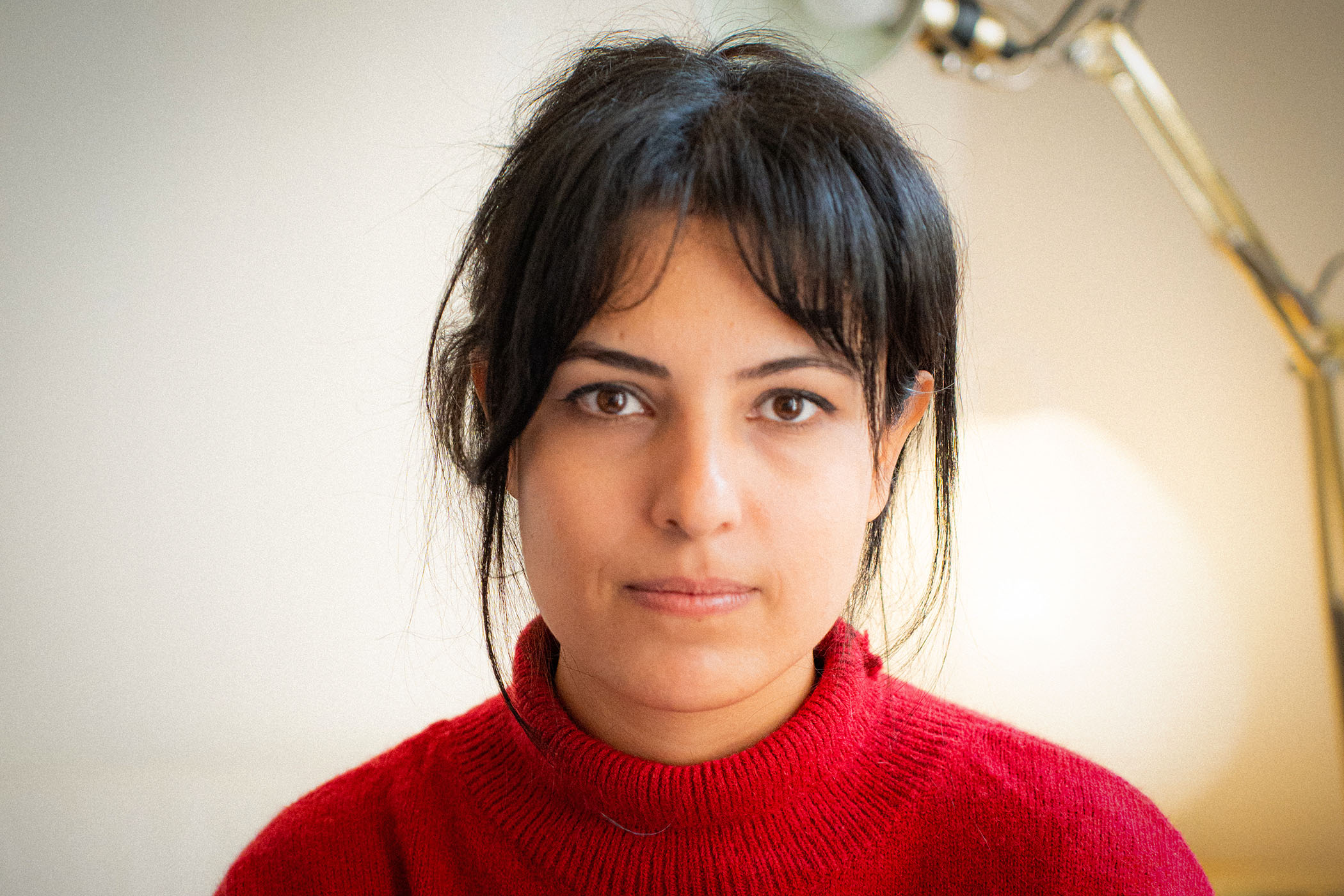
If you are lucky enough to get out of Gaza, you must be prepared to leave everything behind. Sara Alqataa crossed the border into Jordan with just a phone and a charger. She had been due to leave with her husband, Ahmed Shamia, but he was killed in an airstrike in Gaza City two weeks before they could board the bus together. Shamia was an artist and architect; he died walking past one of his own buildings. Dozens were killed in the attack on the busy restaurant on 7 May last year, including a journalist, Yahya Sobeih, who, five hours earlier, met his newborn daughter for the first and last time.
The restaurant was a scene of precious memories for Sara – she and Shamia threw their engagement party there – but it became a site of trauma. It was just one of Shamia’s many projects that stood in the same strip of land: schools, cafes, malls, an apartment block, palatial homes, hotels – one symbolically named the Phoenix. From her new home in Paris, Sara tells me how Shamia devoted his life to imagining what Gaza could be: resilient, but also cosmopolitan and even opulent, facing outwards to the world with sleek stucco facades, or with wide windows taking in the Mediterranean sea.
There was Fattouh Villa, in the southern strip, which Shamia supervised down to its turquoise swimming pool, and curtains and carpets, though the owner never had the chance to live in it. Most recognisably, Shamia designed the surgical unit of al-Shifa hospital, the largest medical centre in Gaza; after a two-week raid in 2024, much of the building was blown open and blackened, but for the white fluted pillars, which stood in the wreckage.
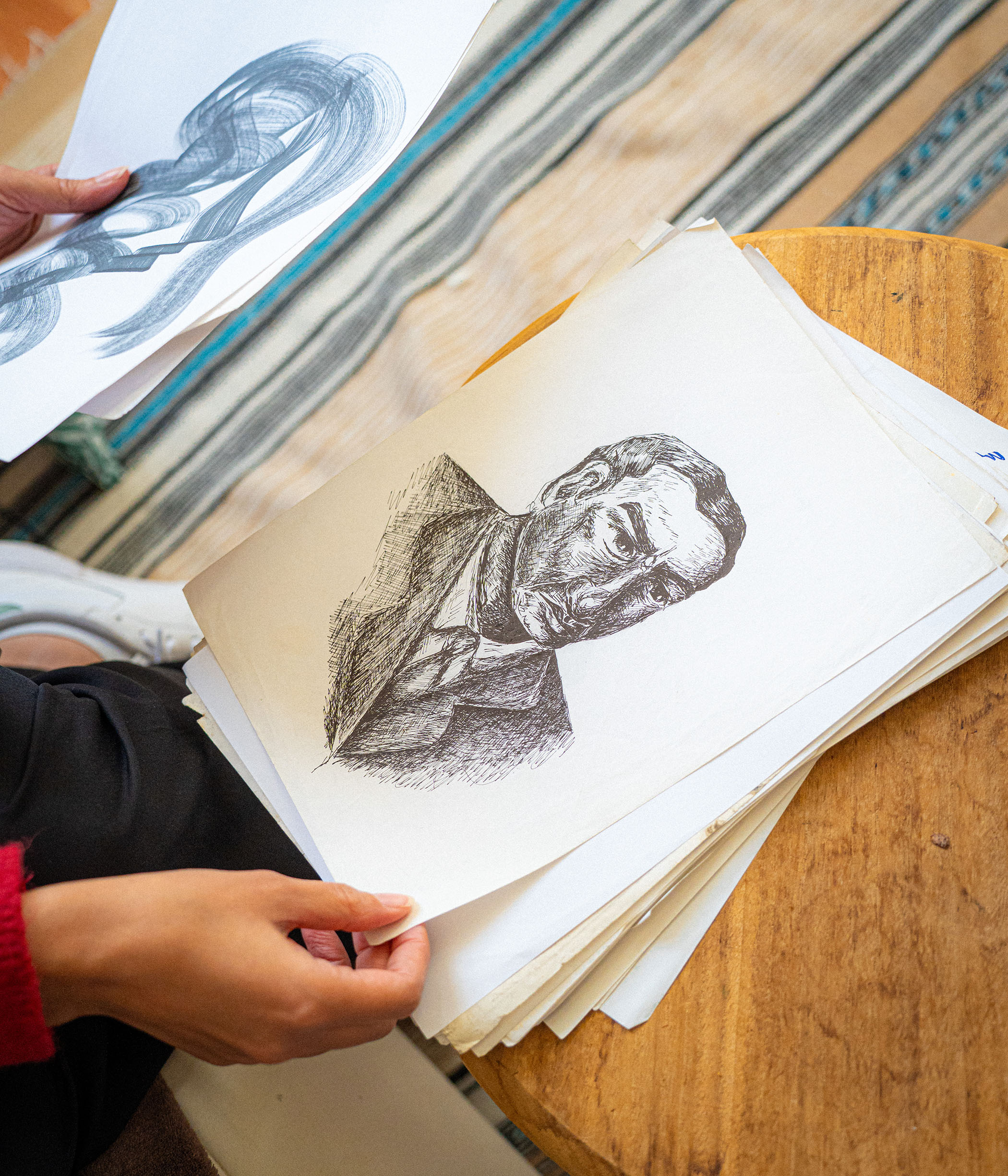
Shamia’s artwork, in comparison, was looser and less refined: sketches, rough ink on paper, depicting local faces and streets; or cartoons, sometimes cutesy, sometimes explicit. Eyes are often wide in fear, or blindfolded. The last drawing he posted on social media shows a figure, scratched in blue ballpoint, walking wrapped in shrouds. “I pass by a pile of debris beneath which entire families are buried with their memories,” he wrote in the caption. “My city has become a ghost town.”
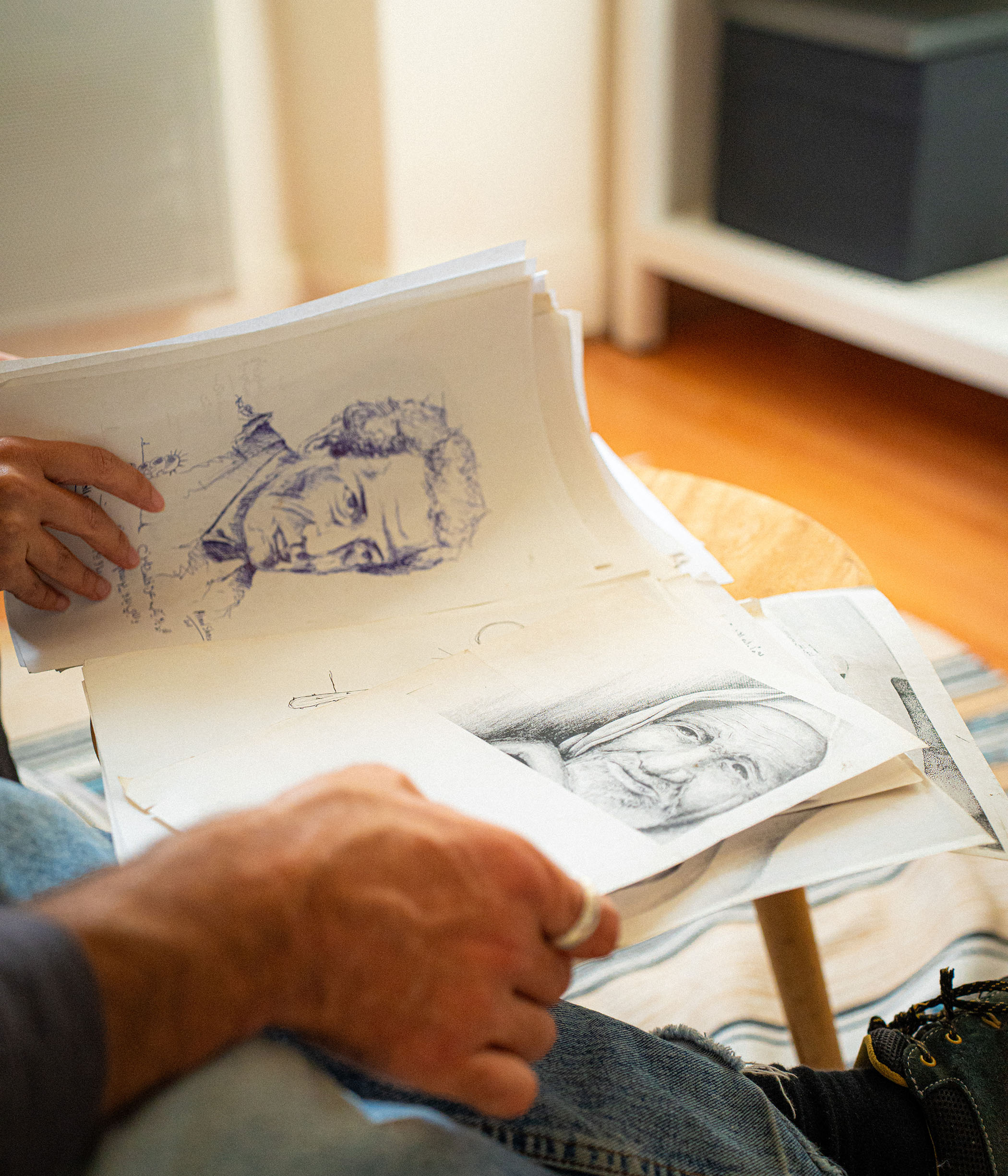
Some of the artworks by Ahmed Shamia that were recovered from Gaza
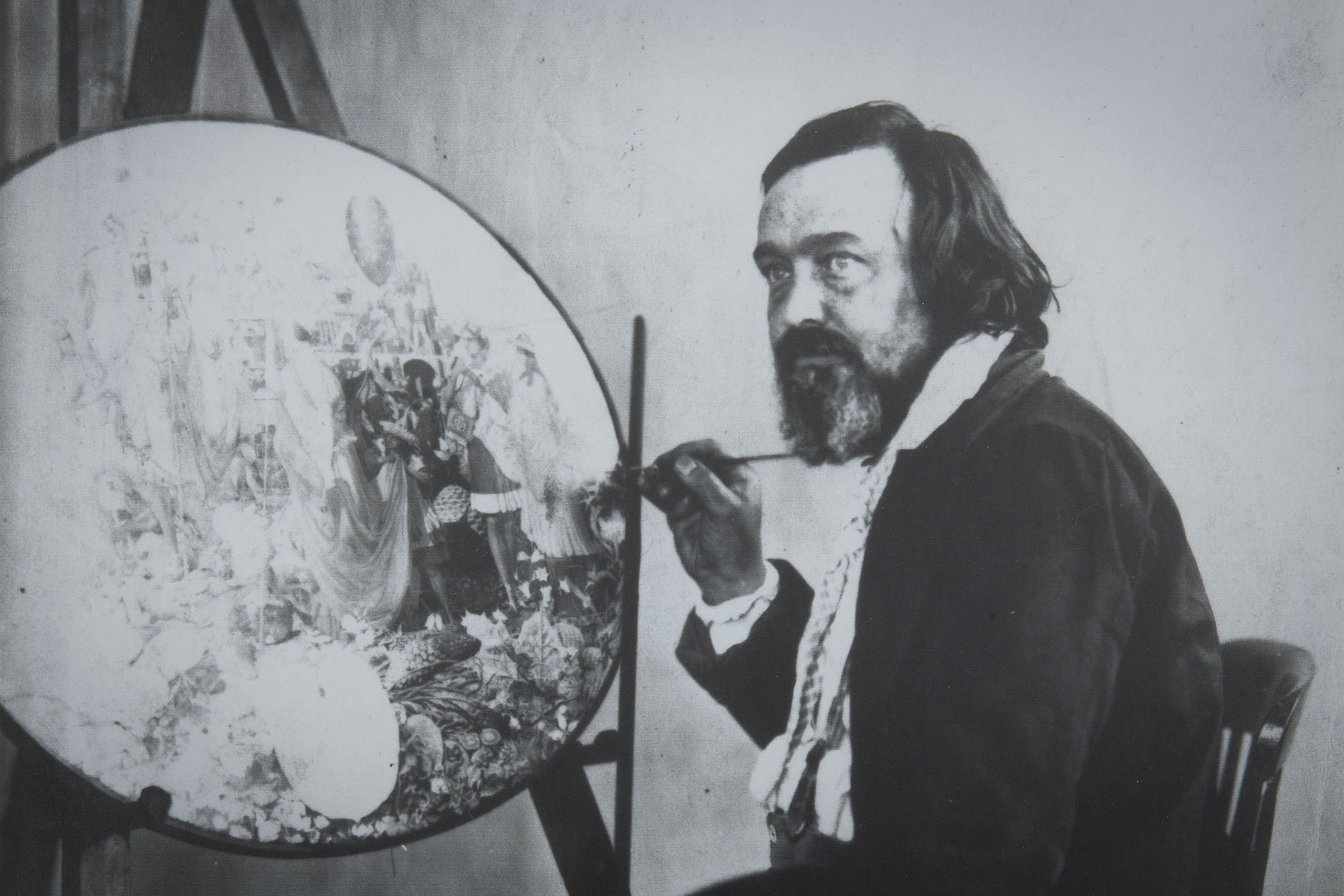
Shamia described himself as an “architect in a country where architecture no longer exists”. In recognition of his wasted talent, in early 2025 he was offered refuge by France’s Pause programme, established to evacuate artists and scientists with their families in conflict zones so that they could continue working in the sanctuary of its universities. Shamia was well known and well respected, says Ahmad Ashour, a friend and fellow Pause laureate, who became an aid worker during the conflict and is now a lecturer-researcher at Tours University: “He was drawing the new Gaza.” As it stands, that looks unlikely now to be the job of any Palestinian.
In exile, in her unimaginable grief, Sara took her husband’s place at the Paris-Est architecture school and dedicated herself to commemorating his work. But almost everything that could tell his story – his portfolio, laptop, blueprints and drawings – was still trapped inside his sea-view office, the Art House, in al-Roya tower, another of his projects, which was under constant threat from shelling. Sara, an interior designer, first met Shamia there, when she had an interview for a job at his agency. “We worked together [at the Art House] from the very first day we met,” she tells me, “and we continued side by side until the day before the war began.” By the time she reached Jordan, she had accepted that she would not see his work again.
While en route to France from Gaza, waiting for clearance in Jordan, Sara met Sam Roberts, a British humanitarian worker on leave in the capital, Amman. Roberts (whose name has been changed to protect his identity) was about to head off for his final rotation in Gaza, where he had been based since 2024. They were introduced by his Palestinian aid worker colleague Ashour, who was also evacuated. The three of them sat together in a hotel lobby and shared stories, which is when Sara, in her gentle, unassuming manner, mentioned her late husband’s drawings.
Recalling that conversation, Roberts tells me that he couldn’t fathom how someone newly widowed, alone in Jordan and soon to be exiled in Europe, would settle in an environment so different from the one she knew. What if he could give her something of home? Barely running a risk assessment in his mind, he offered to try to smuggle out her husband’s drawings. In fact, he promised.
‘I can’t tell you how many times I spoke to Palestinian colleagues,” he tells me later, “and they said: ‘I lost my cousin yesterday.’ Or: ‘My brother went to go and get some food from the distribution point and was caught in a shooting.’ You can’t fully understand what they’re going through. You can only try to meet them with humanity. Ultimately, the question becomes: who are you in that moment? What can you bring?”
And so his mission to retrieve Shamia’s drawings began.
What motivates a man such as Roberts? He is someone who was forced to grow up before the rest of us; he learned young how to take charge in a crisis. He joined the military straight after school, but left dissatisfied, in 2018, to pursue a career in disaster response. It was that background that led him to Gaza as a humanitarian worker specialising in access and safety. He is, by nature, adventurous, anxious to test the brakes of his survival instincts. Also, he has an ego.
“I think it’s important to have honest conversations about what spurs people to do this kind of work,” he says. “Part of me found the prospect of going to Gaza interesting – exciting, even. Most people aren’t driven purely by altruism; there is usually also an element of curiosity. In humanitarian contexts, you get different types of people: some are misfits, some are continuing a version of a military career and some are deeply driven by a desire to help.”
Shamia described himself as an ‘architect in a country where architecture no longer exists’
When he first arrived in Gaza, during an intense period of fighting before the first ceasefire, Roberts, who is making a short film about his experience, initially fitted the “mercenary” profile: mission-oriented, with a highly disciplined military mindset.
Was he afraid?
“In a crisis, people look to you for decisions,” he says. “I’m quite comfortable holding that responsibility, so fear didn’t have much space to take hold.”
Since the start of the Israeli invasion, more than 560 aid workers have been killed in Gaza and the West Bank, among at least 70,000 Palestinians. “There were moments where things could have gone terribly wrong,” Roberts says. “But the reality is, the risk I faced was far less than that of my local colleagues or the general population. I stayed in a known location; they were living in constant exposure.”
He was struck most of all by the allegiance Palestinians had to family and home: in north-eastern Beit Hanoun, he recalls, some people chose to stay in the city and eat grass rather than leave for the humanitarian zone. “A big part of my role was analysing the conflict and advising colleagues. Sometimes, I had to call someone and tell them I thought their area might be targeted, that they should pack their bags. I’m a young white guy who’s just stepped into this context: who am I to tell someone to leave their home? Many people would rather die than leave. But at the same time, my responsibility was their safety. So it became about balancing that with empathy, and acknowledging how impossible that decision is.”
In April 2022, about 18 months before the outbreak of war, it was reported that a Palestinian farmer had found the head of a statue – a Canaanite goddess – sprouting from the soil, thought by local archaeologists to be approximately 4,500 years old. It went on show in Qasr al-Basha Palace, which housed more than 20,000 artefacts from the bronze age to the Ottoman period. But no sooner than the head was found, it was lost. The palace – for so long at the centre of conflict that Napoleon is said to have stayed there during his military campaign in the region in 1799 – now lies in ruins; just one of at least 160 cultural heritage sites destroyed or damaged to date, according to Unesco.
Shamia’s drawings were not ancient artefacts. They were sheets of paper. But they were important – and not just to his widow. Making comparisons between this war and the cultural destruction witnessed during the Nakba, or catastrophe, of 1948, the Palestinian scholar Mezna Qato has written: “Historians often note how much harder it is to write a history of Palestine after the Nakba … A people scattered, isolated, under siege, bombarded, repeatedly massacred and dispossessed, has meant that generations of Palestinians must rely on shards and scraps.”
Roberts brought a small rucksack to the Israeli military checkpoint at the Kissufim crossing. He remembers gripping tight to the bag, as if it could be blown away by the wind. Inside was a plastic wallet full of Shamia’s sketches, entrusted to him by one of Sara’s relatives, who had retrieved them from the Art House studio. Scraps that had, by then, become an archive, as precious a piece of cargo, Roberts thought, as any museum artefact. He had come up with a plan: to bury them under his dirty washing – a kind of trapdoor made of pants turned inside out – hoping the Israel Defense Forces (IDF) soldiers conducting searches would be put off riffling down too deep.
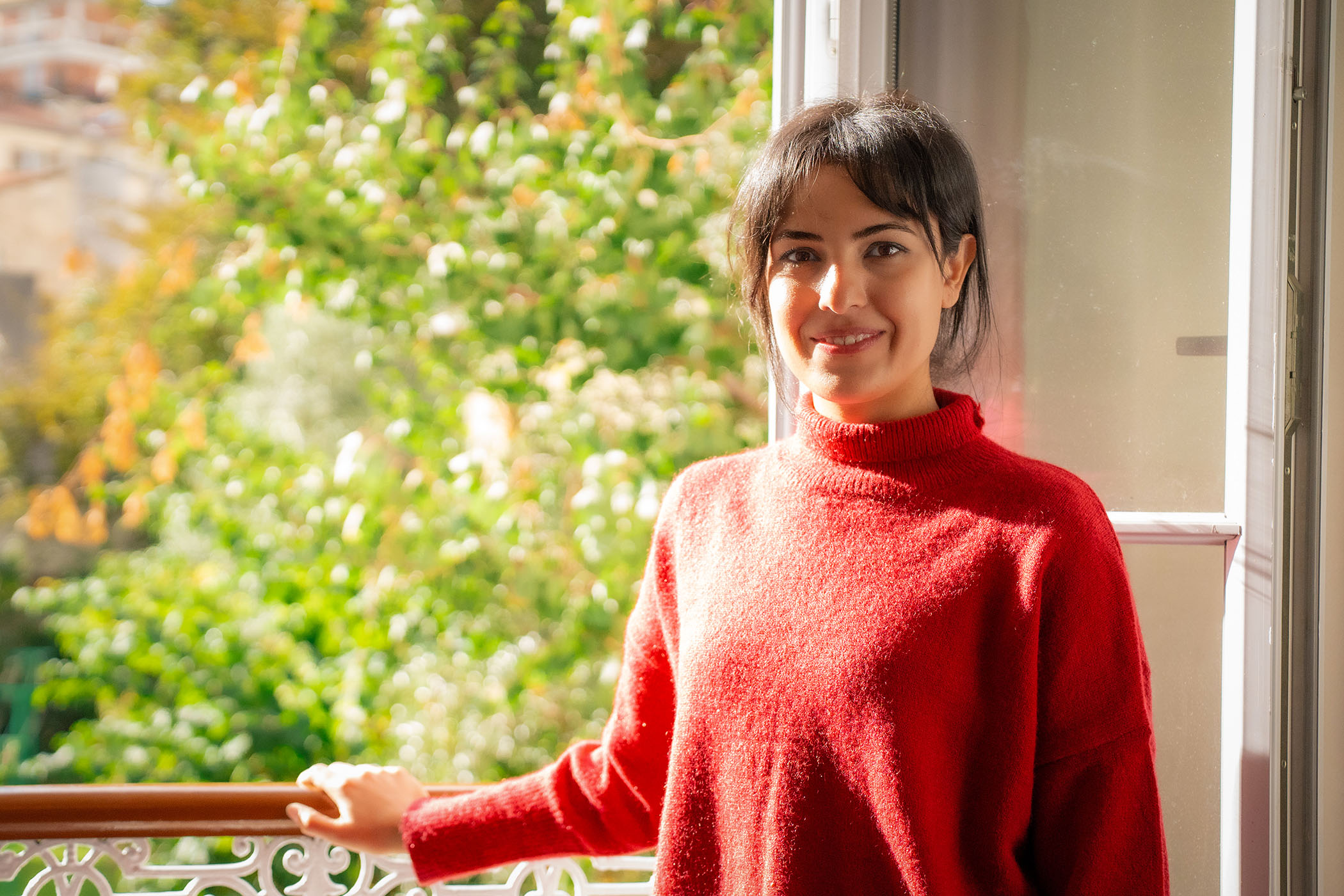
Sara Alqataa is now teaching interior design in Paris
This was not some single-handed Monuments Men-style operation – such as the famous Allied effort to recover artworks stolen or endangered by the Nazis during the Second World War. But getting physical art out of Gaza is heavily restricted, relying on individuals, or diplomatic vehicles or other modes of secret transport. Aid workers have more freedom to carry items across the border than civilians, but they are still subject to rigorous checks. A colleague had told Roberts about a “terrifying” interrogation for carrying a prohibited amount of money; his own mission, in some ways, carried considerably more risk.
“As a humanitarian, who should be neutral and impartial as per the humanitarian principles, having the artworks might not be seen as pro-Palestinian so much as anti-Israel,” Roberts says. “Then I would never be allowed back in.” Worse was the prospect of the artworks being confiscated or destroyed. He believes the soldiers at the military checkpoint that day were officers from Shin Bet, Israel’s internal security agency; hardcore, he says, and not anticipated. He watched the agent’s hands move through his bag. “They took out my washbag, my toothbrush,” he says. “I was convinced they would find the drawings.”
But the smelly clothes were enough to throw the agent off the scent. Roberts was waved through. He boarded the coach departing Gaza, suppressing his elation.
It was a timely escape. Four months after Roberts was handed Shamia’s drawings, al-Roya tower, and the Art House studio, where for years they had been made and stored, was itself hit by a missile strike and destroyed.
Sara’s favourite piece by her husband is an illustration of a girl with a wave of brown hair holding hands with a looming figure, bound by the waist in chains. Two red flowers spring up in the foreground. The girl, her face obscured, is pointing the way forward to a place out of sight, where the chains will not reach. It is a picture of the exiled mind; the blank white background a liminal space. “I see myself in it,” Sara tells me. “I feel caught between Gaza and Paris. I hesitated to leave, my family lives there. Part of me wants to look towards the future, while another part is still stuck there.”
Roberts had visited Sara in the crisp Parisian autumn last year to reunite her with the wallet of her husband’s work. It was strange seeing her in this context, he recalls – in this simple, light-filled apartment, decorated with holiday selfies and snapshots of family life before wartime – and he felt self-conscious walking into it, with his camera and sense of ceremony. But the tension turned to relief as they looked through the pictures, quietly, over glasses of wine; the relief, for Roberts, of a promise fulfilled, and for Sara of something more tangible. “It felt like the most precious gift I could ever receive,” she tells me. “To hold even a small trace of Ahmed – a paper touched by his fingers, a painting shaped by his hands – brings me comfort. I imagine his fingers moving across the page.”
These sheets carry a lot of weight for Sara; this eclectic mix of portraits, of the wizened faces of friends or figures such as the late Palestinian poet Mahmoud Darwish, or scribbled men pointing guns. And they carry responsibility. A year after her husband’s death, as part of the Pause asylum scheme, Sara opened an exhibition of his work – Ahmed Shamia: Bâtir, au-delà de l’absence (“Building beyond absence, or loss”) – in her determination to keep his memory alive.
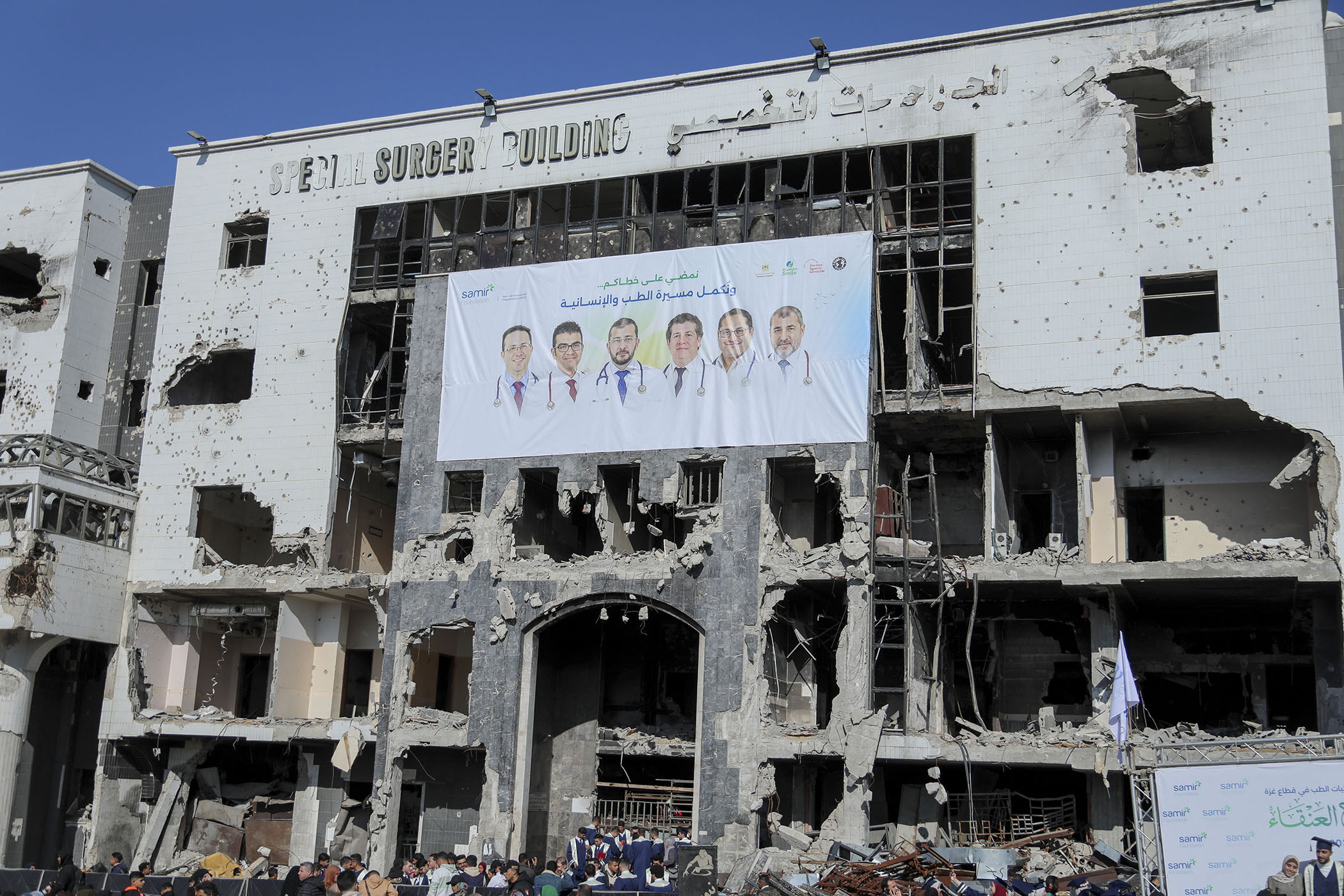
The damaged Al-Shifa hospital, part of which was designed by Shamia
It also archives, in real time, a wider culture that is being destroyed piece by piece. One neat artwork depicts a child holding a blanket over his stomach, which is hollowed out, opening into a black void like a cave, or a ransacked tent. “The world must know what Gaza has endured and what we have lived through,” she says. “I hope that one day Gaza will rise again, rebuilt in a way that preserves its memory rather than erasing it.”
Does the work matter without the man who made it? However worthy the rescue mission for the drawings was, however consoling for Sara, Roberts’s Palestinian former aid worker colleague Ashour cautions against sentimentality. Some charities suggest about 300 working artists are still active in Gaza; as of March last year, more than 40 others had been killed since the start of the conflict. “It’s so important that, if we’re going to preserve the art, we mainly preserve the artist,” Ashour says. “I wish we can give the artist who’s still alive the chance either to leave Gaza with their work, or to stay if they want, and we help them to rebuild inside Gaza. That’s what I’m calling for. Because I hear some ideas that [international actors] want to get the artwork out, and to leave the artist in this miserable life, without the artwork. That will be a disaster.”
In August last year, the partly state-funded Pause programme that brought Sara, Ashour and 45 other laureates and their families from Gaza to Paris was suspended by the French government, along with a separate student evacuation scheme. It came after a row over allegedly antisemitic online posts by a refugee Palestinian student at Sciences Po Lille who was not part of Pause.
Twenty authors, including Sally Rooney, Deborah Levy, Annie Ernaux and Viet Thanh Nguyen, signed an open letter to Emmanuel Macron to restart the scheme, describing the decision as a form of “collective punishment”. But there has been no change in the supposed “temporary suspension”; a spokesperson tells me that, to date, 33 laureates, including 24 artists, and their families are still awaiting evacuation, some for well over a year now, and 54 others have been selected but cannot formally become part of the programme until the evacuations resume.
Ashour, meanwhile, highlights the British government’s efforts to evacuate 100 Palestinian students to study at UK universities on fully funded scholarships this academic year; last month, the then foreign secretary, Yvette Cooper, confirmed this support would be renewed.
Newsletters
Choose the newsletters you want to receive
View more
For information about how The Observer protects your data, read our Privacy Policy
Sara is settling into her quiet corner of Paris; this autumn, she will begin teaching interior design at ENSA Paris-Val de Seine and ENSA Paris-Est; her exhibition of Shamia’s work opened this month, with a second planned in October. It features models of his buildings alongside video footage of Shamia, visiting construction sites, that she cannot bring herself to watch. And there are the artworks – dozens of them – that have travelled a long way to be shown.
Roberts is suspicious of the word “resilient”: how it “gets bandied around in the context of [Palestinian] people, as if it were an inborn, heroic trait to be admired rather than a response to atrocity. They have a right not to be resilient,” he says. Yet there is a moment in particular that has stayed with him – one that, in its everyday way, captured the Palestinian spirit of defiance as he perceived it.
He was visiting an area of Khan Younis in southern Gaza, as people were returning to the shells of their homes after IDF troops withdrew. “When the [IDF] leave, it creates a kind of vacuum,” he says. “I remember driving past this roundabout at a point where people had just begun moving back. Someone had put up a sign on the roundabout with some Arabic words written on it.” His colleague told him it was a joke: that someone had returned and named it after themself.
“So it was like, ‘This is Ahmed’s roundabout now.”’ Roberts laughs. “This funny, childish piece of graffiti,” he says, “there in this wreckage.” Like, “Ahmed was here”? “Yes,” Roberts says. “Exactly.”
Additional photograph by Eyad Azam / AFP via Getty Images