


Last year, on a trip to the US, I bought a novel – a hefty, banana-coloured hardback – and read it almost in its entirety on my return flight. I recommend books all the time, but – skinflint that I am – rarely foist them on people. This title was different: back home, I bought several copies online to give to friends, an expensive endeavour since it had not been published here. Luckily for UK readers, however, Playworld, by Adam Ross, has arrived on British shores.
Playworld isn’t Ross’s first novel, but when it was published last year in the US, it was his first in 15 years. Mr Peanut, a tricksy tale of uxoricide, was published in 2010; a collection of short stories, Ladies and Gentlemen, came out the following year. For much of the intervening decade and a half, Ross has been the editor of the venerable Sewanee Review. It has been a productive hiatus: Ross has revived America’s oldest literary journal and written a masterpiece.
Briefly, then (the book is around 500 pages), Playworld is the story of 14-year-old Griffin Hurt. A coming-of-age novel set in New York at the beginning of the 1980s, it takes place over a year as Griffin navigates his family life (complicated), school work (inadequate), film sets (fraught) and falling in love (twice). Griffin is a child actor – albeit one who is rapidly becoming disenchanted with his craft – who plays Peter Proton on a hit TV show, The Nuclear Family. He attends Boyd prep, a private school with overtones of Dalton (the Upper East Side school where Jeffrey Epstein taught before he worked in finance), whose school fees he pays himself from the money he earns acting. Meanwhile, his own family is struggling to stay together.
You could turn to almost any page and find a phrase that in another book would stand out like a beacon
You could turn to almost any page and find a phrase that in another book would stand out like a beacon
The Hurt family is still reeling from a financially ruinous house fire some years before; a flashback to this moment and the unscrupulous insurance agent, Nick Salvatore, is the first of many bravura set pieces. Griffin’s father, Sheldon (he changed his surname from Hertzberg), is the kind of toe-curlingly pompous thespian who in the UK would be head of the local amateur dramatics society but who in the US is the foundation of a vast entertainment industrial complex. Lily, Griffin’s mother, is a ballet teacher and masters student at NYU with a mordant tongue; when Griffin tells her, years after the fact, that at 14 he had an affair with a much older family friend, she responds: “But she was such an ugly woman.” As their parents’ marriage deteriorates, Griffin and his younger brother, Oren, run wild in Manhattan’s concrete canyons.
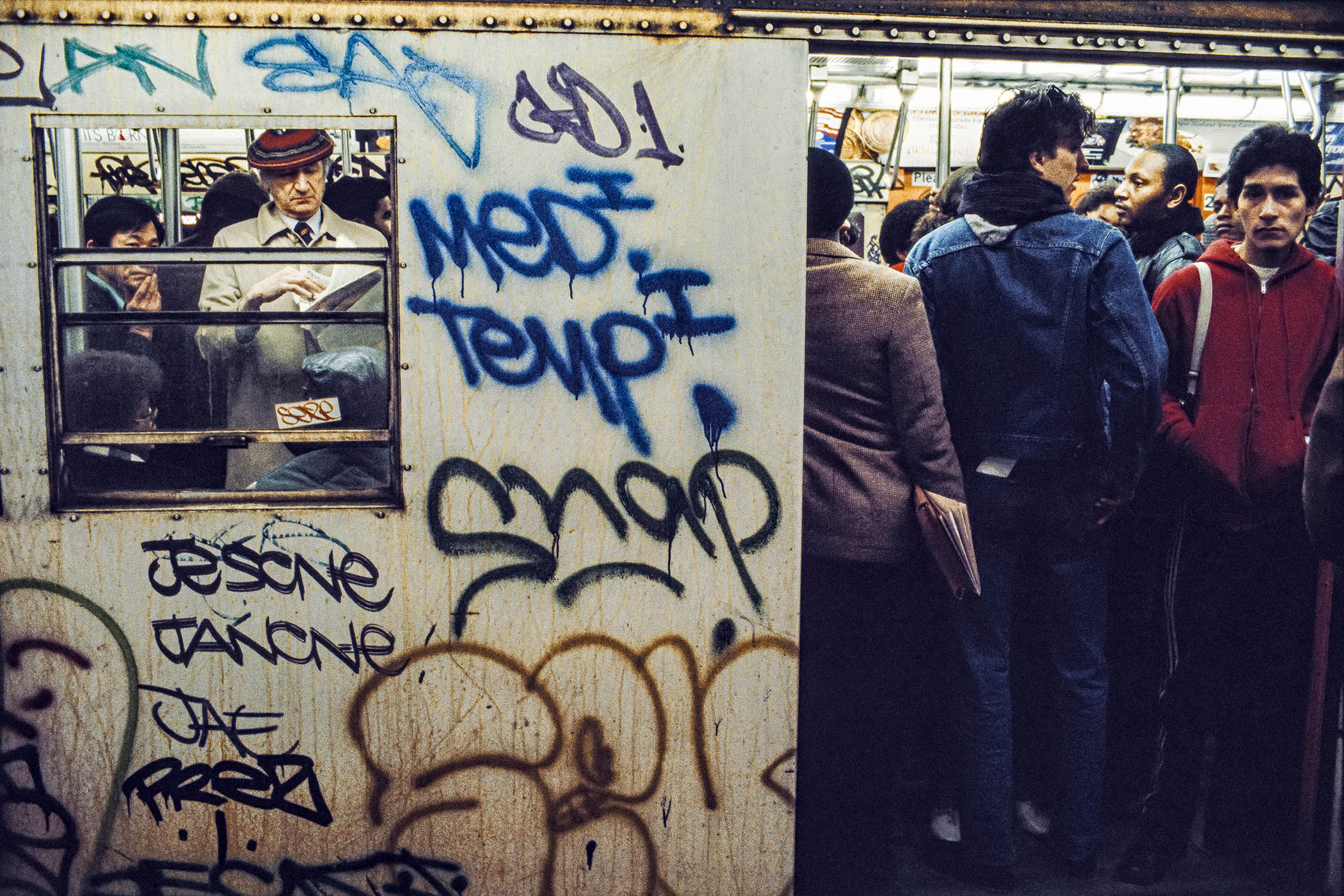
Growing up in New York – especially the lurid, X-rated Manhattan of the early 80s – may well have encouraged speedy maturation, but Griffin’s precociousness, along with his parents’ laissez-faire approach to parenting, mean that he is an easy target for predators. His wrestling coach, Mr Kepplemen, obsesses over his charges’ weight, assessing them with what Griffin calls “a carny’s eye for our mass”. But Kepplemen’s leering eye isn’t purely athletic and he often demands one-on-one grappling sessions with the boys on mats he has arranged in a dank corner of the school basement.
Kepplemen, Griffin tells us, “smelled of deodorant and cheap detergent, and beneath that, an odour that was enfolded and in transformation, like the yoghurt that hardened at its container’s rim”. As a result of Keppelmen’s regular weigh-ins – and perhaps, too, as a result of the traumatic, malodorous happenings in the Boyd basement – Griffin’s weight waxes and wanes as he alternates between starving and gorging himself. Ross, who was a child actor and on his school’s wrestling team, writes with compelling feeling about food and the shame that its consumption can produce. These passages are infused with bathos; not since Iris Murdoch’s The Sea, the Sea have I so enjoyed reading about ordinary meals.
Griffin also finds himself embroiled with a married 36-year-old, Naomi Shah, the aforementioned family friend, who picks him up after school in her Mercedes. There is a sinister grooming element to these trysts but they also provide a much-needed kind of in loco parentis presence for Griffin and culminate in the finest set piece of the book. You will never look at a koi pond in the same way again.
There are times when the story drags just a little, but that’s to be expected in a book of this length; life is not without its fallow moments. One thing that never disappoints, however, is Ross’s writing. You could turn to almost any page at random and find a description or a phrase that in another book would stand out like a beacon. A fish tank is a “burbling aquarium, bejewelled with fish”; Naomi’s husband’s tasselled loafers “looked like tiny squid dipped in expensive chocolate”; and a seasick sailor’s overboard vomit becomes “long eels of puke… which webbed to filament downwind and then broke apart in patterns as complex as snowflakes, disappearing without so much as a splash”.
Related articles:
Playworld is a rightful heir to Lolita and Catcher in the Rye, and will appeal to fans of Donna Tartt’s The Goldfinch and Paul Murray’s Skippy Dies, too. It calls to mind the dizzy feeling – like looking through the wrong end of binoculars – of seeing the future of your life, of being caught between not just adolescence and adulthood, but between the person you are and the person you want to be. Most of all, though, it’s a novel about, and in thrall to, New York – a book that captures the vertiginous thrill that residents and visitors alike still feel.
I, for one, hope that Ross doesn’t make his readers wait another decade and a half for his next book, but if he never wrote another word, Playworld alone would still be a major literary achievement. I envy all those who have yet to read it.
Newsletters
Choose the newsletters you want to receive
View more
For information about how The Observer protects your data, read our Privacy Policy
Playworld: A Novel by Adam Ross is published by Simon & Schuster (£14.99). Order a copy from The Observer Shop for £13.49 (10% off RRP). Delivery charges may apply
Photography by Barbara Alper/Getty Images