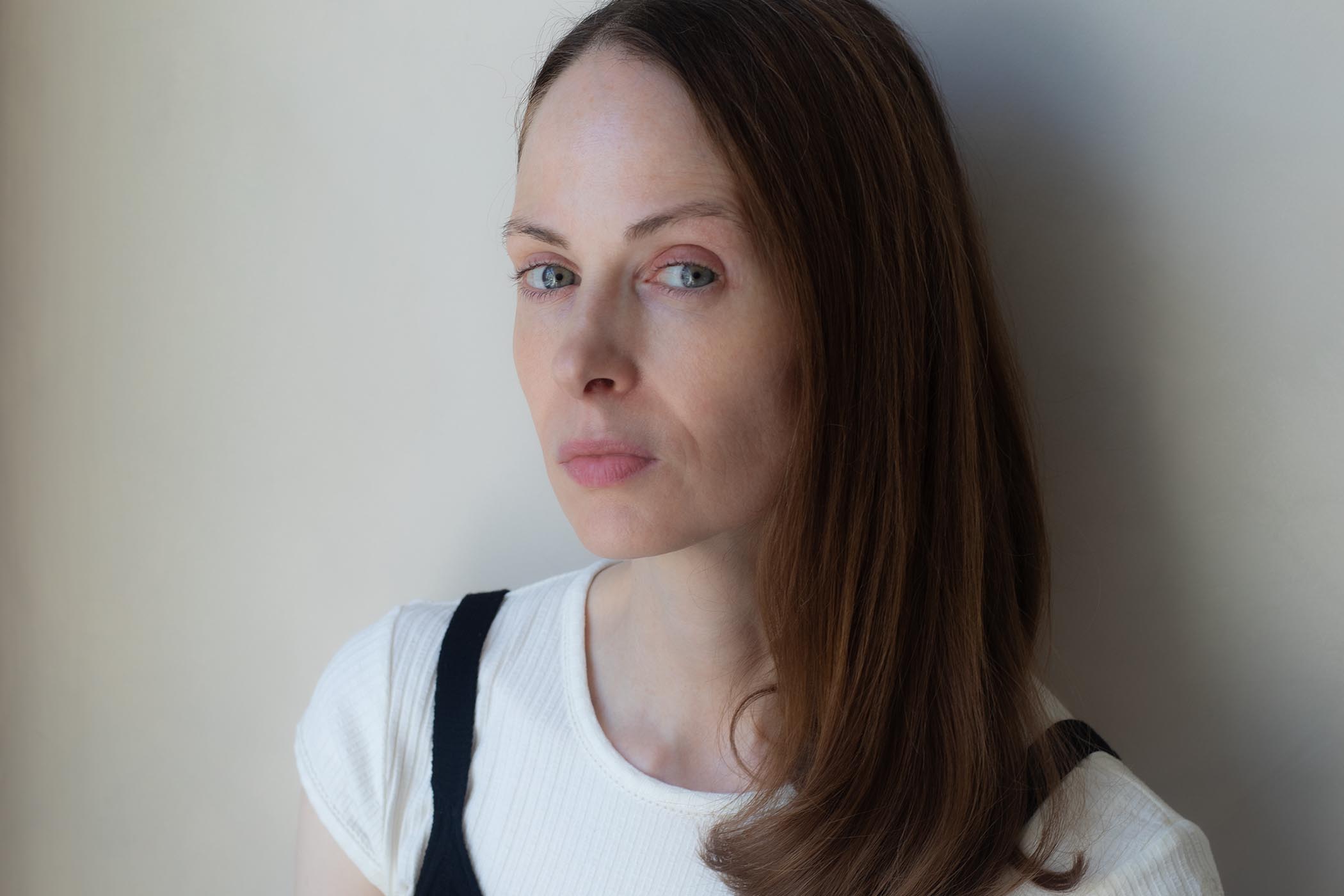
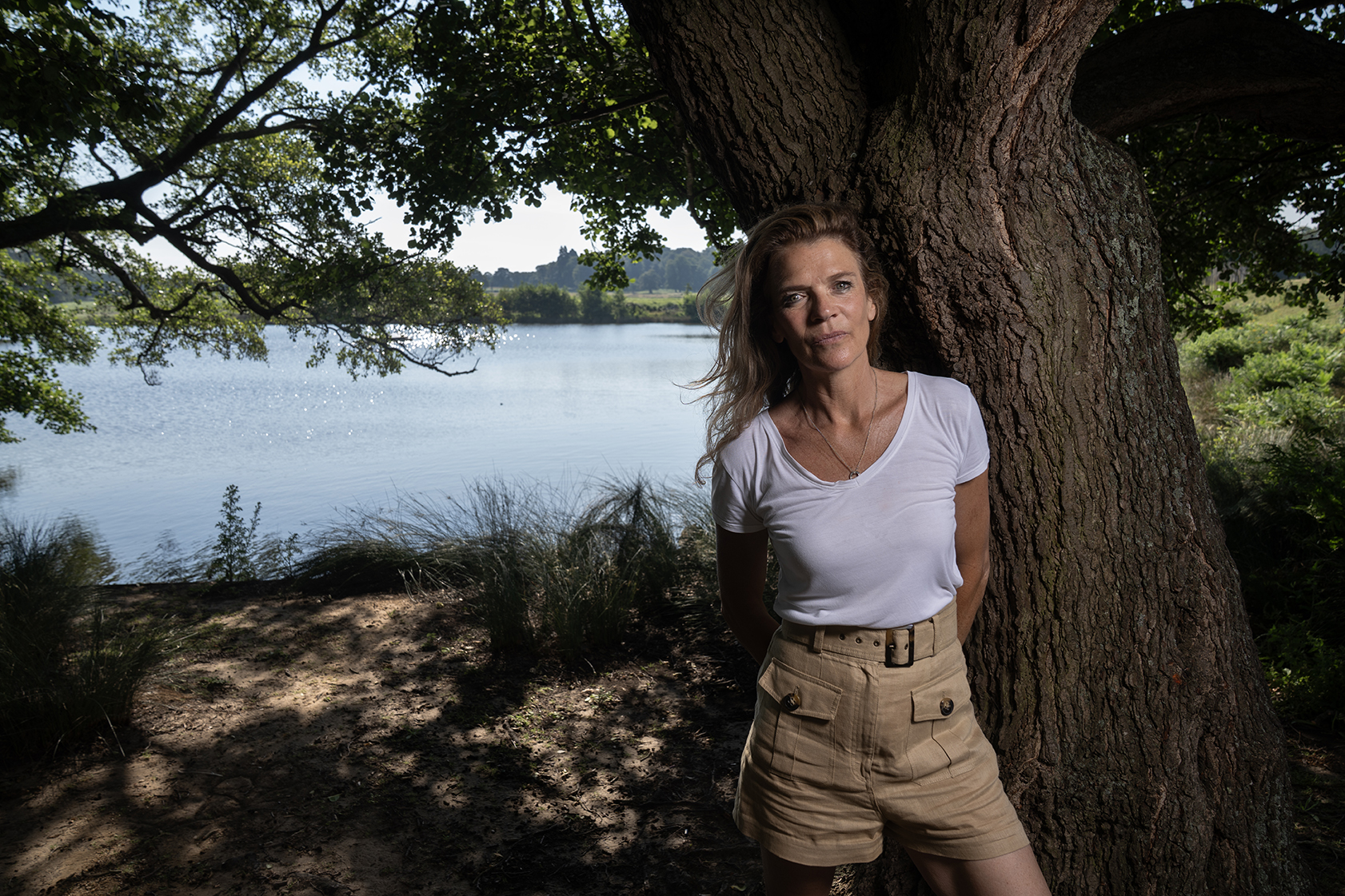
Consensus regarding Gwendoline Riley’s genius grew with her fifth and sixth novels, First Love (2017) and My Phantoms (2021), published by Granta after Jonathan Cape dropped her for weak sales. On Instagram last year, the writer Sarah Perry called her “bewilderingly gifted”. Lots of writers say such things about Riley, who recently turned 47, yet the sense persists that she’s yet to have her due. Twice ignored by Granta’s once-a-decade roll of best young British novelists, she has never been nominated for the Booker. Perry wondered why she isn’t accorded the stature of Rachel Cusk, “but here we are… FOR NOW”.
In a sunless meeting room at the Clerkenwell office of her new publisher, Picador, where she has followed her editor from Granta, Riley tells me none of her novels really strike her as “Booker books”, not that she means anything bad by that (“Listen, I wouldn’t say no to fifty grand”). Each novel comprises a series of tense vignettes starkly told by a grownup daughter wrestling with the legacy of poisonous parents. The details vary, but two figures recur: a bullying estranged father (modern fiction’s biggest monster outside the novels of Edward St Aubyn) and a show-stealingly tricky mother whose hangups are both maddening and heartbreaking. The ruthless emotional acuity of My Phantoms was such that it was funny as well as desperately sad.
Riley’s seventh novel, The Palm House, opens more gently. Set in 2017 in London, her home for the past 15 years, it follows a weekly arts magazine under a new editor, Simon “call me Shove” Halfpenny, whose dream of turning it into the city’s answer to the New Yorker sets unconvinced staff bitching behind his back. The magazine’s long-serving deputy editor Edmund Putnam quits, spending the rest of the book bemoaning his lot to his ever-loyal friend Laura, an assistant editor at a history magazine and Riley’s latest iteration of a first-person protagonist breaking free of a stifling family dynamic.
Riley didn’t intend to write about parents again; the novel was going to be about Putnam only. “But of course, by the second chapter I was thinking: ‘Right, mothers!’” she says. “And then Laura’s story came in. I thought they played off each other quite well, this slightly off-kilter friendship that the two of them have – to see how they were both thinking about their history and how they got where they were.”
For the novel’s jacket, Riley is delighted to have an image from the archive of the 20th-century British photographer Bill Brandt. In black and white, it shows the bare legs of a woman or girl who is reclining out of shot, the lens positioned where her eyes would be as she looks out (as we do) towards the door of an empty room. The picture resonates horribly once you’ve read the book: its light social comedy is darkened by a flashback in which Laura recalls her obsession with a TV standup who groomed her when she was 15.
“This is from a childhood where she doesn’t have anyone who speaks to her, or touches her, so she reaches out,” says Riley. “It’s extremely bad luck that the person she decides will seem to understand, or be sensitive, is...” Riley breaks off. “You think: was that just bad luck or was that always going to happen, the way it happens to a lot of women at different stages of their life? I thought it was a good counterpoint,” she says, “to contrast it with Putnam’s bad luck with this new editor coming in. He could have gone anywhere, but no, this has to get wrecked. But that’s life, isn’t it?”
I ask if “Shove” is a version of the journalist Stephen “Stig” Abell, whose four-year tenure at the Times Literary Supplement (TLS) from 2016 likewise began with talk of mirroring the New Yorker. When Riley flatly denies any knowledge of the parallel, I can’t help but laugh. “No, I don’t know what you mean,” she repeats emphatically. (In January, Private Eye suggested anyone reviewing the book would be remiss to ignore its connection to the TLS, for which Riley sometimes writes, and where her ex-husband, the poet Alan Jenkins, worked for nearly 40 years. She rolls her eyes: “Because the wider world gives a damn?”)
Riley was born in London but moved when she was small to Wirral, Merseyside, where she lived with her divorced mother and grandparents. “Growing up, I couldn’t work out what anyone was up to,” she says. “You found intelligence in books, in both senses of the word.” At school, she remembers being so moved by John Keats’s letters that she became visibly upset in class. Her response as a reader remains undyingly visceral. “My reaction can be so far in one direction or the other: pure relief and stimulation [and] delight, or fear – just from an essay! The refusal is total, just as the acceptance is total.”
‘Someone old enough to know better – maybe in their 40s – stood about three inches from my face and went: CAN I FANBOY YOU?’
‘Someone old enough to know better – maybe in their 40s – stood about three inches from my face and went: CAN I FANBOY YOU?’
Careless writing pains her almost physically, she explains, but put on the spot, she can’t say why. “It’s not just a little shudder because something is aesthetically whiffy.” (A couple of weeks after we speak, I pick up the latest issue of the TLS and see her byline on a review persuasively damning the “snide bathos” of a Beryl Bainbridge novel, recently reissued to general acclaim.) The writers Riley mentions approvingly are often dead and translated – Aleksandar Tišma, Mihail Sebastian, Yuri Trifonov – and when I ask if that reflects dislike or disinterest in contemporary fiction in English, she half-jokes that new books are expensive for someone on a tight budget, but she’ll buy anything by Cusk or Claire-Louise Bennett as soon as it comes out.
Riley writes every day: scenes, exchanges, observations, thoughts. Yet nearly a quarter of a century since publishing her debut, Cold Water, at the age of 23, she continues to find her process mysterious, even frightening. A project typically begins with a year or more of worrying that her fragments won’t add up to anything. Some of them eventually fuse into something that might become the germ of a new book, then she’ll work uncertainly for another two years before astonishing herself by completing a novel in three weeks. “I find that scary every single time, thinking: ‘Will this come together?’ Because everything’s riding on it.”
Newsletters
Choose the newsletters you want to receive
View more
For information about how The Observer protects your data, read our Privacy Policy
What is the challenge she sets herself when she writes?
“Trying to be vivid and accurate. For it to be life as it is lived, and for it to, you know, sound good; getting the prosody right, I suppose. I don’t try to do anything other than get it right. It’s pure instinct. ‘That feels wrong; that feels right.’ I’m making it sound like I’m a sort of priestess,” she laughs. “But that’s how it works. It becomes more and more interesting to me. I always feel I’m three steps behind.”
Behind what she wants to achieve? “Yes,” she says, laughing almost regretfully now. “Time’s running out.”
Riley never receives letters from readers (“thank God”) but whenever she speaks in public, people come up to her saying they must have had the same mother, “which makes a slight presumption that my mother was directly put into a book – and she was not, by the way. But a lot of people talk to me as if the characters are real. That’s good! That’s how I feel about characters in books. I always think, ‘Wow, I’ve brought something off there’; I’m delighted if someone has found something in my book that they recognise as part of the human experience.”
Her superpower as a novelist is her hyper-sensitivity to people’s capacity to reveal their worst selves in the things they say. It may be a curse as well as a blessing. “I think if you’ve got any kind of overdeveloped sense, it would be the same. Imagine having a really overdeveloped sense of smell: eww.” She doesn’t think it makes people wary of her company, at least not to judge from a recent book party she attended. “Someone old enough to know better, maybe in their 40s, stood about three inches from my face and went: ‘CAN I FANBOY YOU?’ I said: ‘No.’ So that doesn’t speak of enough wariness, in my opinion.”
Riley sees her novels as repeated stabs at what she calls “the one true book”, which so far has always been 200 pages long, give or take; she jokes that, given their intensity, you wouldn’t want them much longer. Yet a doorstopper isn’t out of the question. She likes to look at Elena Ferrante’s novels shelved in order, from the svelte early novellas to the fat Neapolitan quartet, tracing her finger along the tops of the spines. “There was obviously something that happened there, to suddenly write four whoppers: where did that come from?” She gets a similar frisson of possibility from Don DeLillo’s 832-page masterpiece Underworld, written after 10 average-length books. “So who knows?”
Riley’s publicist is at the door; our time is up. The next time I hear her speak, she’s on stage for an event that her publisher has organised to showcase upcoming titles to journalists and booksellers. Of the 10 authors on the bill, Riley alone offers nothing by way of introduction to what she is about to read – a passage from The Palm House, delivered with room-silencing panache. All she says to the audience is: “This is from the beginning. You’ll get the idea, and then I’ll stop.”
The Palm House is published by Picador (£16.99). Order a copy from The Observer Shop for £15.29. Delivery charges may apply
Photograph by Susannah Baker-Smith