


If you’re a liberal it can be hard not to feel gloomy about the world. Democracies seem helpless, caught between Donald Trump’s lunacy, Vladimir Putin’s megalomania and Xi Jinping’s totalitarianism.
Radical right parties lead the polls in Britain, France and Germany. In the UK the government is struggling to manage a pile of debt, while desperately trying to improve public services that haven’t recovered from austerity and Covid.
In Braver New World, John Kampfner implores us not to lose hope. He’s right that falling prey to nihilism only helps the most malignant political forces, which rely on voters feeling it’s worth trying anything rather than stick with legacy parties. The solution, he argues, is to learn from what works in other countries and have the courage to follow through on the radical policy changes this requires.
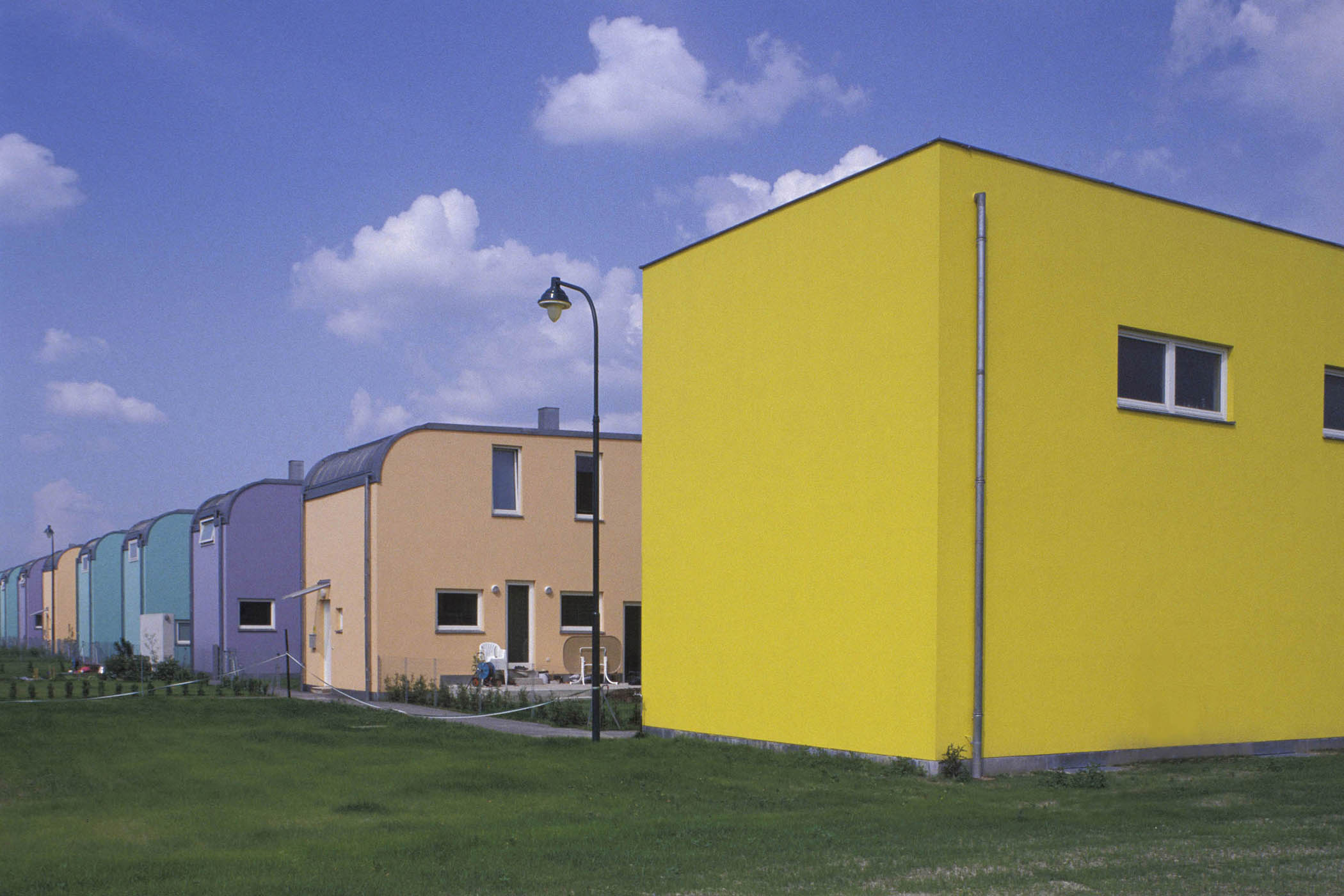
Most of the 10 ideas Kampfner focuses on will be familiar to policy wonks, from adult social care in Japan to social housing in Vienna and digital services in Estonia. These capsule guides are engaging and informative, and there’s no pretence that these are new ideas. In almost every chapter there’s a discussion of how being seen as paragon of global best practice has affected those responsible for its delivery.
But that does raise the question as to why, given we’ve known about these examples for years, they remain so unusual. Countless delegations have stumped through Japan and Estonia, including plenty from the UK. So what’s stopping us?
Kampfner implies it’s all political cowardice and “not invented here” syndrome. Yet, in my experience, ministers are desperate for big ideas from other countries to help make their name. It’s not lack of desire that’s the issue.
What are the barriers? One is boring old money. There may be cultural reasons why we don’t have a properly funded social care system, and there isn’t enough social housing, but to become like Japan or Vienna would require many billions that we don’t have. Path dependence – the way past decisions constrain future possibilities – matters too. Even if one thinks social insurance-based health systems – like Kampfner’s example of Taiwan – work better than taxpayer-funded ones, changing from one to the other would be wildly complex and have huge opportunity costs. Likewise, William Beveridge’s decision to design our welfare system as a safety net rather than a European-style contributory model makes copying their policies difficult.
Another problem is that it’s not always clear why something works. The education chapter looks at Finland, which, in 2000, achieved worldwide recognition after topping the first OECD PISA league table (comparing pupil achievement across multiple countries). Yet in the years since, Scotland and Wales, which attempted to emulate Finland’s more relaxed and progressive approach, have seen grades drop. Meanwhile, England, which has done more or less the exact opposite, now outperforms Finland on the same metrics. Kampfner acknowledges the disquiet this has caused in Helsinki but that doesn’t stop him castigating England’s approach with cliches about rote learning and exams. Maybe this is one area where we can teach the world something.
It’s axiomatic to Kampfner that an open, internationalist world is desirable
It’s axiomatic to Kampfner that an open, internationalist world is desirable
There’s also the question of politics itself. Liberals can complain that politicians don’t have the courage to push policies they like, but it doesn’t follow that the public will buy them. Canada’s approach to immigration is attractive to those who find the performative hostility of our politicians unappetising, yet it seems unlikely it could realistically be sold in Britain. Even in Canada the more welcoming approach is losing popularity.
One of the most stimulating questions Kampfner asks is what we should make of autocratic nations, where leaders use the lack of organised opposition to ram through big infrastructure projects or policy changes that no politician here would dare risk.
Newsletters
Choose the newsletters you want to receive
View more
For information about how The Observer protects your data, read our Privacy Policy
The chapter on renewables looks at the massive expansion of solar power in Morocco, driven by an ambitious monarch. But Kampfner is oddly squeamish about probing further, noting in the introduction that he has deliberately excluded countries like China from his study.
The underlying assumption is that ultimately the lack of democracy is too big a price to pay, and a threat to long-term stability (see for instance Xi’s purges). It would have been interesting, though, to see more of a discussion of the successes of countries like Singapore and Dubai, even if it makes for uncomfortable reading.
This raises a broader challenge. Kampfner concludes with a list of general lessons, most of which are hard to argue with. But one asserts that leaders should “accept that what matters is delivery not ideology”. This is at the end of a book that repeatedly argues for liberal positions, from an open immigration system to collective housing.
One reason that liberalism is struggling so much against both the radical right and left is that centrist politicians keep pretending it’s not an ideology. Which means they don’t make the principled argument for why these approaches are worth pursuing. It’s axiomatic to Kampfner that an open, internationalist world is desirable. For many, though, it’s not. Having the ideas is one thing, persuading people they’re the right thing to do is more difficult.
Braver New World: The Countries Daring to Do Things Others Won’t by John Kampfner is published by Atlantic Books (£22). Order a copy from The Observer Shop for £19.80. Delivery charges may apply
Photograph of Vienna social housing by Viennaslide/Construction Photography via Getty Images