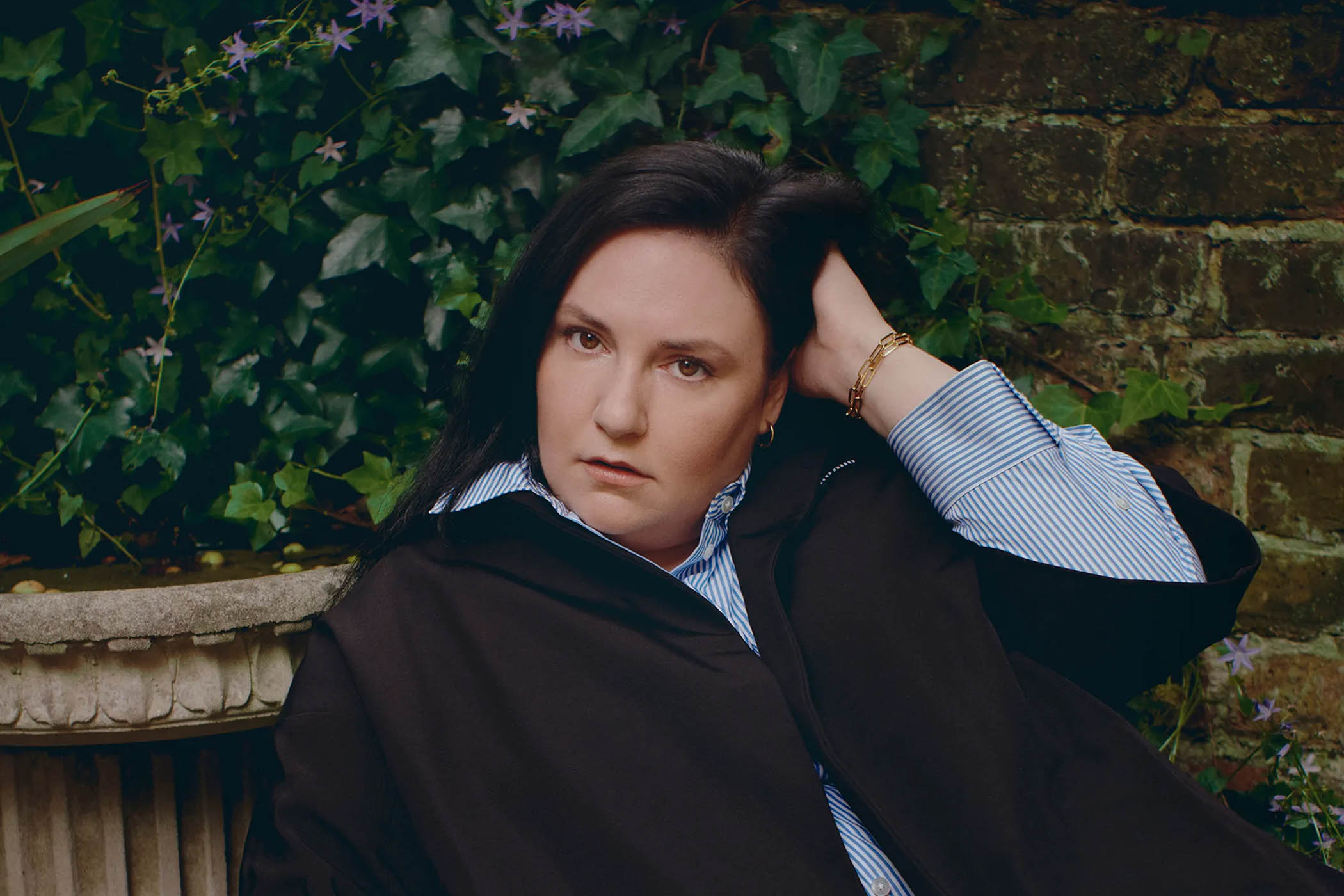



When Lena Dunham got famous, she got sick. The writer and film-maker was only 24 years old when HBO commissioned her to produce a comedy pilot about young millennial women in New York City. She was given her own office at the studio where Sex and the City was made; paper taped to the door read: “LENA DUNHAM, WRITER AND DIRECTOR, THE UNTITLED LENA DUNHAM PROJECT”. Full of pride and terror, she worked furiously, barely eating or sleeping. A few weeks before shooting, she woke up in her family’s Manhattan apartment with a burning sensation in her pelvis and fainted. In the emergency room, she was diagnosed with acute colitis. When a colleague called about her sudden absence, Dunham’s mother picked up the phone. “She’s been in the hospital. Colitis. SHE’S TWENTY-FOUR AND GETTING A COLONOSCOPY; WELCOME TO HOLLYWOOD.”
In her memoir Famesick, Dunham sets out to examine the destructive twin forces that attacked her mind and body through her 20s and 30s – the toxic attention she received after her series Girls became one of the most talked about shows on television, and the physical symptoms that frequently left her hospitalised. There was an aptness, or an irony, to the timing: “My body turning on me many years before it was meant to and right in sync with the public.” But along with the vertigo of notoriety and the incapacitating effect of being physically unwell, there are many types of sickness documented here – heartbreak, addiction, mental illness, childhood trauma, grief, workaholism, sexual obsession and a deep, punishing sense of shame – all messily intermingled, coursing through Dunham’s nervous system.
So Dunham finds herself hungover on the set of Bridesmaids with her mentor Judd Apatow, jumping up from a director’s chair to dry-heave into the toilet. Or bursting her own eardrum with a Q-tip after receiving a barrage of furious emails from producer Scott Rudin. Or being photographed for the cover of Vogue by Annie Leibovitz, while sporting a lurid green-yellow rash of impetigo down one side of her face (“it was determined that rubber gloves and retouching would have to be employed”). Or scrolling through social media, reading comments about her “bad body, irritating voice, clearly horrific politics”, then weeping on the phone to her dad: “I feel like I’m in a car driving away from my own soul.” Or unconscious on the floor of a bathroom at the Met Gala due to complications from recent surgery, a concerned Maggie Gyllenhaal leaning over her, saying: “I know, this place is overwhelming.” (A security guard would meet her in the emergency room to collect and return her borrowed jewellery.) Illness and fame, Dunham notes, both have a “maddening circularity” – “one medicine causes side effects that must be treated by another”. As time went on, she found it harder and harder to separate the symptoms and the cause, to really understand “what ailed me”.
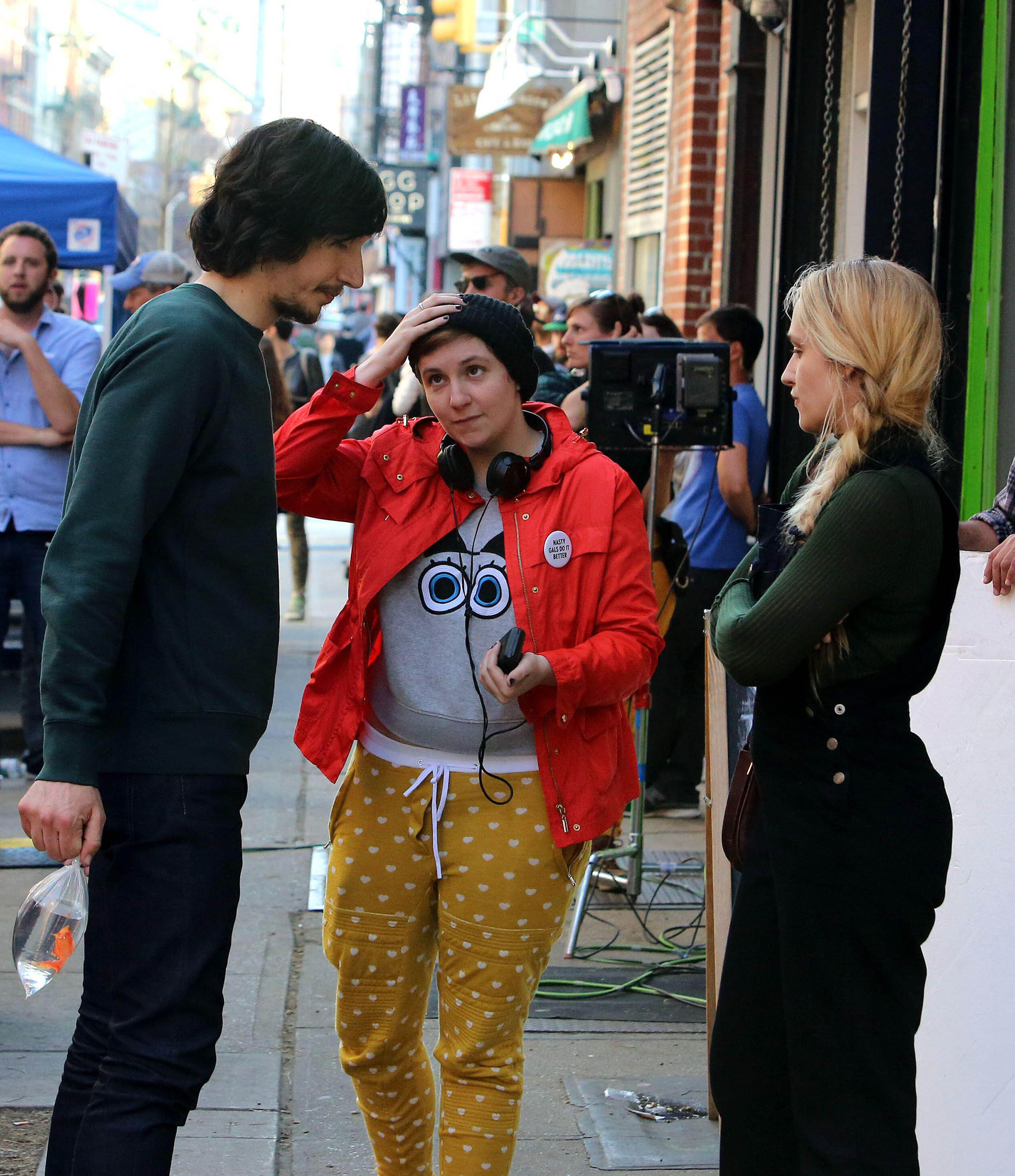
Dunham (centre) with co-stars Adam Driver and Jemima Kirke on the set of Girls in New York, 2015.
Dunham’s memoir begins when she is 20 years old. She paints an affectionate portrait of an anarchic youth writing and directing short films alongside Josh and Benny Safdie, Greta Gerwig and Noah Baumbach. The sections on how Girls came to be are some of the most compelling (this is a book largely about the chaos that swirled around the work, rather than the work itself). In her pitch meeting with HBO, she gives “an unrehearsed response that came out in complete sentences”: “We’re the first generation that can’t reasonably expect more than our parents had. We all grew up on Ritalin and AOL Instant Messenger. We’re having sex fuelled by the availability of porn, and we’re feminists who don’t know how to live our politics.” Her characters were “overeducated and underemployed”; they had come to New York “looking for Sex and the City and gotten dead-end internships, bedbugs and HPV”.
HBO gave her a pilot deal, and set her up with a “supervisor”, Jenni Konner, an experienced producer 15 years Dunham’s senior. Despite the age gap, the two become best friends and Dunham is devoted to her. She describes the early days of their relationship as “like falling in love”. They would be creative partners for years, starting their own company together, and the relationship would only break down in 2018. When filming starts on Girls, the first bitter note of dysfunction, the fundamentally transactional nature of their relationship, is glimpsed, as Konner tells Dunham without compassion that she has lost too much weight for her lead character, Hannah, to seem funny on camera. “‘It’s not that hard,’ she hissed. ‘Just put food in your mouth.’”
We learn that Hannah’s on-off boyfriend Adam is based on a humiliating, abusive sexual relationship Dunham had with a man known as “Lip”. Auditioning Adam Driver – “half-man, half-beast” – she knows he was “at the very beginning of an ascent”. As co-stars, their relationship is intimate, trusting and fraught: Dunham describes how Driver ignored her careful blocking of their first sex scene, but that they both knew it was for the good of the show; she depicts him throwing a chair at a wall when she gives a lacklustre performance. They hug at the start and end of every day. “One Saturday afternoon, as I reached for a glass of water in his galley kitchen and chatted offhandedly about something meaningless, I looked up to see him smiling at me with something so tender, it felt like it could only have been love.” He calls her beautiful, and they spend a week together when Driver’s girlfriend is away. Just when it seems that they might have sex, Dunham pulls away, otherwise “the return to work would be tinged with humiliation”.
She is equally candid about her five-year relationship with the pop producer Jack Antonoff, chronicling its development from a sweet, naive love affair to a distant yet tumultuous one. There are tidbits about Antonoff’s rumoured affair with the pop star Lorde, not named: Dunham describes how he was often locked in a studio in their apartment “ensconced with a teen pop star I was too oblivious to be jealous of”, returning home one day to find her “sprawled across our sectional couch, weeping into Jack’s lap”. As Antonoff and Dunham eventually “pause” their relationship, she returns to the unhealthy sexual dynamics of her youth, throwing herself into an “engagement” with an addict.
When her uterus is removed, it’s found that it ‘was worse than anyone had imagined’
When her uterus is removed, it’s found that it ‘was worse than anyone had imagined’
The response to Girls became extreme. It was a critical hit, but “by the time the third episode had aired, it was becoming clear that people were having a strong reaction to the show”. Thousands of people called her names online. She was becoming hated. “While everyone involved with the show could feel the intensity of the response, I was the one whose identity had to hold the weight.” Her own name became a shorthand for narcissism. The cruelty ranged from trivial – people she used to know wrote blog posts about her with headlines like: “I saw Lena Dunham serve her dog salmon on a china plate” – to devastating. After the release of her 2014 memoir Not That Kind of Girl, in which she described her childhood curiosity about her younger sibling’s body, she was characterised as a “child molester”. She became locked in a “long cycle of publicly erring and apologising”. “It seems to me, looking back, that I thought the cure to such widespread disdain … was not to show less of myself, but to show more, as if revealing myself down to the guts would allow for some kind of renewed understanding.”
The memoir is both a psychological nightmare – what if you got everything you ever wanted, and were tortured for it, in public, for ever? – and a grim body horror. She starts taking the anti-anxiety drug Klonopin; soon the maximum dose. She develops constant pain. Her period starts and doesn’t stop. She is diagnosed with endometriosis and has her first surgery in 2014. “Knee-deep in scandal, I almost felt relief that I would soon be forced to pause and have the blessed vacation of anaesthesia.” She is prescribed oestrogen-suppressing injections (side effects included “slapping yourself in the face, over and over, when your boyfriend tells you you’re making it hard to love you”).
At the age of 30, she has 37 lesions removed from her bladder, liver, abdominal wall and spine. The pain returns, and her doctor discovers a large ovarian cyst, but she is refused further time off work without an “unbiased” diagnosis. The doctor provided by HBO gives her a physical examination that is so painful she begs him to stop, but he doesn’t, bursting the cyst. As well as endometriosis, she realises she has Ehlers-Danlos syndrome when an acquaintance of a friend writes her a letter telling her she recognises the symptoms. At the age of 31, she goes into the hospital and refuses to leave until she is given a hysterectomy. When her uterus is removed, it’s found that it “was worse than anyone had imagined”: “It was the Chinatown Chanel purse of nightmares.” Her period flowed backwards, filling her stomach with blood; her ovary was stuck between muscles in her back, making it hard to walk. “The only beautiful detail was that the organ … was shaped like a heart.”
Recovering from all this, Dunham finally admits she has an addiction to Klonopin and Percocet. She goes to rehab, and writes down a list of her “values”:
ART
FAMILY
MAKING PEOPLE FEEL SEEN
Dunham’s career has been marked by a compulsive form of candour; this memoir is no different. It is written in her characteristically direct, chatty, comic voice, both self-absorbed and self-aware. She tells us things she doesn’t need to, and the tabloid-style headlines that proliferated as the book’s release date approached – “Lena Dunham admits to cheating on Jack Antonoff”; “Adam Driver screamed at me and threw a chair, claims Lena Dunham” – reinforce how her openness often hurts her.
As she notes: “I’m here because of an almost unrelenting drive towards self-expression … that actually runs counter to a skilled manipulation of fame.” At times, it runs counter to a skilled manipulation of memoir too. This is not the novelistic curation of events that might make for a more cohesive, neat elucidation of her central theme of fame and illness, this is the kind of book written by someone driven by a need to get it all out on the page, as truthfully and messily as possible. By the end, I found her commitment to vulnerability as necessary and moving as it is baffling. It’s this honesty that makes her best work – Girls – so enduring. On page and on screen, few people are willing to be as human as Lena Dunham.
Famesick: A Memoir by Lena Dunham is published by Fourth Estate (£18.99). Order a copy from The Observer Shop for £17.09. Delivery charges may apply
Photography by Charlotte Hadden, Alamy
Newsletters
Choose the newsletters you want to receive
View more
For information about how The Observer protects your data, read our Privacy Policy