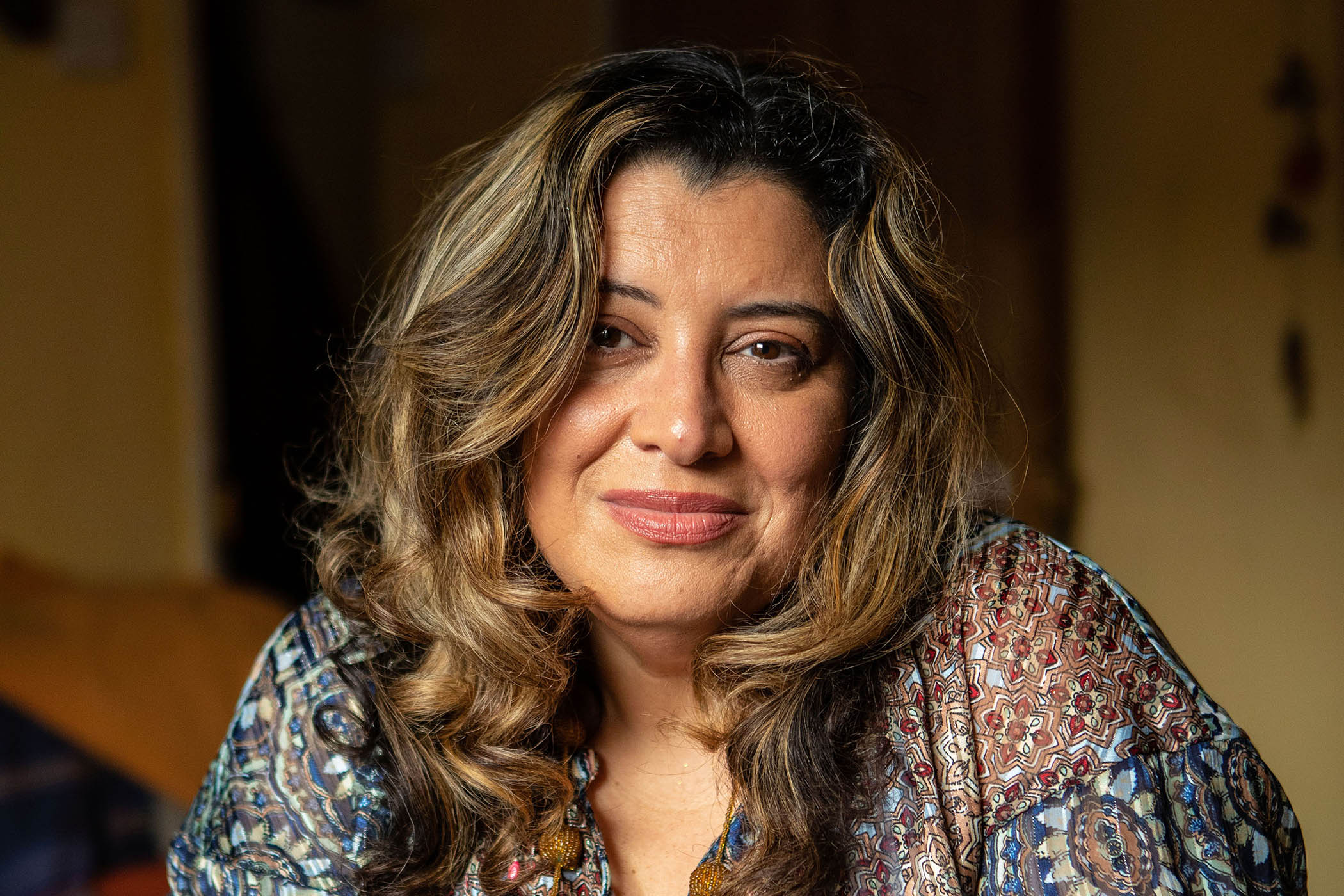
Leone Ross, 56, was born in Coventry, moved to Jamaica at the age of six, and returned to England in her 20s. She is the author of three novels, including the Goldsmiths prize-shortlisted This One Sky Day, and the short-story collection Come Let Us Sing Anyway. The recent republication of her 1996 debut novel, All the Blood Is Red, a story of three women whose lives are upended by a sexual assault case, was followed last month with a new edition of her second novel, Orange Laughter (1999). It follows Tony, a man who is haunted by the memories of his civil rights-era childhood in North Carolina.
Where in your life were you when you wrote Orange Laughter?
I started writing Orange Laughter as a short story around the age of 19. I was at the University of the West Indies doing a literature and social sciences degree. Being introduced to Toni Morrison and Gabriel García Márquez in the same term blew my mind to pieces and gave me permission to use my voice, sensuality and imagination.
So why was Orange Laughter not your first book to be published?
The story is what got me my tiny first publishing deal, with a small but high-quality outfit called Angela Royal Publishing, who also published Bernardine Evaristo, so they clearly had taste. Angela read the story and said: “This is not a short story. This is a novel.” But I just knew I wasn’t ready to write it. So All the Blood Is Red was the one I wrote first because I felt like I could manage it. Then I turned myself to what felt like the more serious and scary job of writing Orange Laughter.
Why serious and scary?
Because even though I have lived for bits and pieces in America, I’m not American. How dare I write about such hefty topics as civil rights and a man going mad in the subway tunnels of New York City? I was anxious about it. But I did a lot of research. And I knew one thing that I think remains true so many years later: there is a commonality of trauma – not exclusively but particularly among Black people – that I could speak about with authority.
Would you write the story in the same way now?
I wouldn’t write it now. I don’t know that I’d have the courage. But [the character of] Tony stayed with me. He felt like some of my most honest writing. He was one of the reasons I later got writer’s block. I couldn’t get him out of my head.
All the Blood Is Red has a heavy subject matter too. How did you come to write the women at its centre?
It was my own way of exploring and honouring the two sets of women in my life: Black British women and the Jamaican friends I’d left behind. When I arrived in London in the early 1990s, I could not believe how ignorant I was about racism in this country. In Jamaica, I had all kinds of colourism advantages. I am mixed-race, light-skinned. Such a thing brings tremendous amounts of complex privilege in a Caribbean context, which I’d always thought was bullshit, by the way – I’d always felt like my mother’s daughter in that I felt Black. So I got here and began to make friends, and my first feeling was: why is everybody so mad? [So] I began to interview Black British women. All the Blood Is Red was a way of bringing those two groups of women together in the context of friendship.
Given that racist context, it was a brave choice to make Sean, the character who rapes Jeanette in the book, Black. Tell me more about that.
Around that time, Mike Tyson raped Desiree Washington, and I became extremely angry listening to all communities, including my own Black community, saying: “She shouldn’t have gone to the hotel...” And I’m going: “And he shouldn’t have raped her.” I wrote All the Blood Is Red knowing that my community would feel protective. I thought about it a lot. I thought about the responsibility I had. I took a lot of pushback when I stood up in front of Black audiences, who were my primary readers at that time, and they said: “How could you?” And I said: “Tell me there aren’t Black rapists as well. This is a conversation we need to have amongst ourselves, the ways that we hurt each other, the ways that misogyny affects us.”
What would you change, if you rewrote it today?
I wish that this book [did not need to be] republished; [that its theme] would now be seen as old-fashioned. I wish, but that’s not the case. [But] I don’t think I’d change anything, because I don’t think #MeToo – as much as it was popular and important – has shifted anything, really. Roe v Wade has been overturned. We are all talking about The Handmaid’s Tale [as being a reality]. Women are being slaughtered in Palestine. What progress are we making, really, in our relationships between men and women?
More than 20 years separated the publication of Orange Laughter and This One Sky Day. Why?
Because I worked so very hard on Orange Laughter, I thought it was going to be the one that made me famous and rich. Not because I cared about those things, but because it would mean I could write another book. I knew so little about the publishing industry. I know now that it is a construct of capitalism and sales are everything. It’s still a model in which most writers don’t make a living wage and having a rich husband, which I don’t have, is almost a requirement. I think that’s disgusting. But back then, because I wasn’t famous and rich, I got quite ashamed. I started a career as a teacher and academic, which was the saving of me. And I started writing short stories that got me away from Tony’s voice.
What are you writing now?
Another polyphonic novel. It tells the stories of a nomadic troupe of self-named monsters; wonderful dancers making art in an apartheid desert world. It’s grimmer than This One Sky Day, but they all swan around in outrageous costumes. The protagonist is a woman called Sweeti Come-Brush-Me. Her head changes every day into a new object.
Orange Laughter is published by Faber (£9.99). Order a copy from The Observer Shop for £8.99. Delivery charges may apply
Portait by Antonio Olmos/Guardian/eyevine
Newsletters
Choose the newsletters you want to receive
View more
For information about how The Observer protects your data, read our Privacy Policy
Related articles: