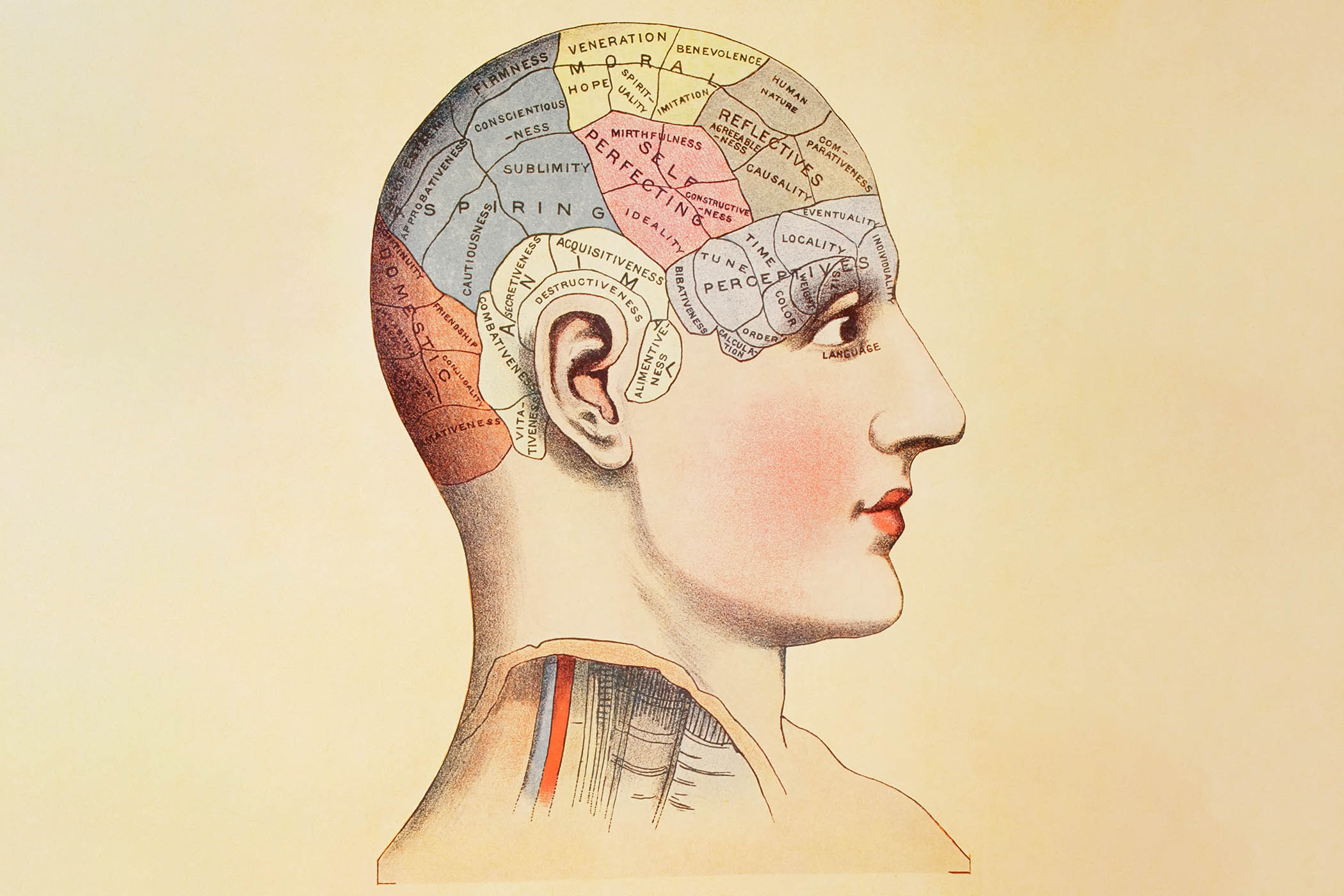



Michael Pollan’s new book on consciousness seems to promise readers alarmingly little. He writes in his introduction that he cannot guarantee that, by the book’s end, the reader will know any more about the subject than they did at the beginning. But at the same time, he brims with ambition, hoping we will finish A World Appears more conscious than we were before, and better able to appreciate the miracle of being alive.
This combination of boldness and intellectual humility, dogged curiosity and an openness to wonder makes Pollan, a veteran science journalist, an ideal guide to the mysteries of consciousness and science’s many frustrated attempts to understand it. Few writers possess the same skill for translating notoriously abstruse theories – from scientists such as Karl Friston and Mark Solms or Immanuel Kant, torturer of philosophy undergrads everywhere – into readily understandable prose. Even fewer would then proclaim with such slick confidence what they believe the experts got wrong.
It helps, too, that Pollan’s interest in consciousness grew out of his interest in psychedelics, the subject of his two most recent books. One reason consciousness has proved so hard to pin down is that we cannot step outside of it. To borrow one of Pollan’s phrases, a psychedelic trip can “smudge the windowpane” of our consciousness – and it’s no coincidence that many of the researchers Pollan encounters are also seasoned psychonauts.
In 1998, the neuroscientist Christof Koch – a protege of Francis Crick – and the philosopher David Chalmers made a bet. Chalmers had recently formulated what he called the “hard problem” of consciousness: the difficulty if not impossibility of explaining why physical matter should give rise to our own private, subjective experiences. Scientists might make progress on the easier (though hardly simple) challenge of mapping the parts of the brain associated with various feelings and thoughts. But how could mechanics or physics fully explain what it feels like to be you? Koch bet Chalmers a case of fine wine that within 25 years scientists “would find the physical footprint of consciousness in the brain”.
If consciousness is indeed a property of physical matter – perhaps an emergent quality of certain information networks – then it might be possible to build conscious machines. This is close to a consensus position among computer scientists. The 2023 Butlin report, written by scientists and philosophers, concluded that there were “no obvious barriers” to giving AI consciousness. Some of the scientists Pollan meets are already attempting to build conscious machines.
Few writers have the same skill for translating notoriously abstruse theories into readily understandable prose
Few writers have the same skill for translating notoriously abstruse theories into readily understandable prose
One of them is the neuroscientist Mark Solms, who believes that the root of consciousness is feeling. Feelings are how the body signals to the mind what it needs to stay alive, and consciousness is “felt uncertainty”, he argues. Compared to simpler organisms, which have a more basic form of consciousness and are feeling but not necessarily capable of rational thought, humans must balance multiple, competing needs and navigate complex, ever-changing environments, which is why we have evolved with the ability not only to feel but to contemplate our own existence. Solms is leading a team attempting to build an AI agent that is conscious because it feels. These feelings emerge because it must juggle competing needs while maintaining certain homeostatic set points: the equivalent of not getting too hot, or too hungry, or too exhausted to survive. He believes he will have succeeded when his programme starts seeking out pleasure for pleasure’s sake.
Other scientists see the promise in building “soft robots” with delicate, human-like skin that makes them vulnerable – and therefore, in theory, capable of feeling.
Pollan is sceptical of such efforts. First, biological minds are nothing like computers. Our “hardware” – our brain cells and structure – is forever changing, and our memories are malleable, while digital memory is fixed. But more significantly, if the root of consciousness is feeling, then true feeling requires a body, Pollan argues. It requires the vulnerability and mortality of flesh. We feel, and we think, because we are dying creatures tasked with staying alive. A computer does not have to contend with the same stakes. It might profess to feel love or loneliness, but it exists only in the digital world, the equivalent of Plato’s cave, watching the shadows of real life. As AI becomes ever more powerful, we must find ways of defending the primacy of human and animal consciousness over the interests of intelligent machines.
Pollan’s position is both humane and persuasive. He also steers readers away from attempts to understand consciousness in purely physical terms. One reason the hard problem feels so intractable is because modern science has maintained a stark, possibly artificial, divide between objective reality and our subjective experience of it, a bifurcation that can be traced to Galileo’s scientific method and to Descartes’ mind/body split. But are we right to maintain a distinction between our scientific understanding of what red “really” is, a specific frequency of light, and what red looks like to us? Pollan agrees with the philosopher Evan Thompson that science has for too long neglected phenomenology, the study of how we experience the world. To understand consciousness, perhaps we need a new science – or at least, Pollan argues, to look beyond science to literature and philosophy, disciplines that have spent more time trying to describe the nature of our streams of thought and inner lives.
As for Koch, he lost his bet – and had a late-life change of heart. Now in his late 60s, he has started taking an interest in psychedelics. He went on an Ayahuasca retreat in which he felt his sense of self dissolve as he accessed a kind of universal mind. He is no longer certain he can explain consciousness in purely physical terms. In fact, he tells Pollan: “The challenge for me as not only a conscious entity but a thinking entity is to reconcile my experience with the scientific worldview.”
The science fails, we cannot explain it, and yet here you are, reading this book review, contemplating your own consciousness. I’m inclined to agree with Pollan that this is, in itself, a small marvel.
A World Appears: A Journey Into Consciousness by Michael Pollan is published by Allen Lane (£25). Order a copy from The Observer Shop for £21.25. Delivery charges may apply
Photograph by Universal Images Group/Getty Images
Newsletters
Choose the newsletters you want to receive
View more
For information about how The Observer protects your data, read our Privacy Policy