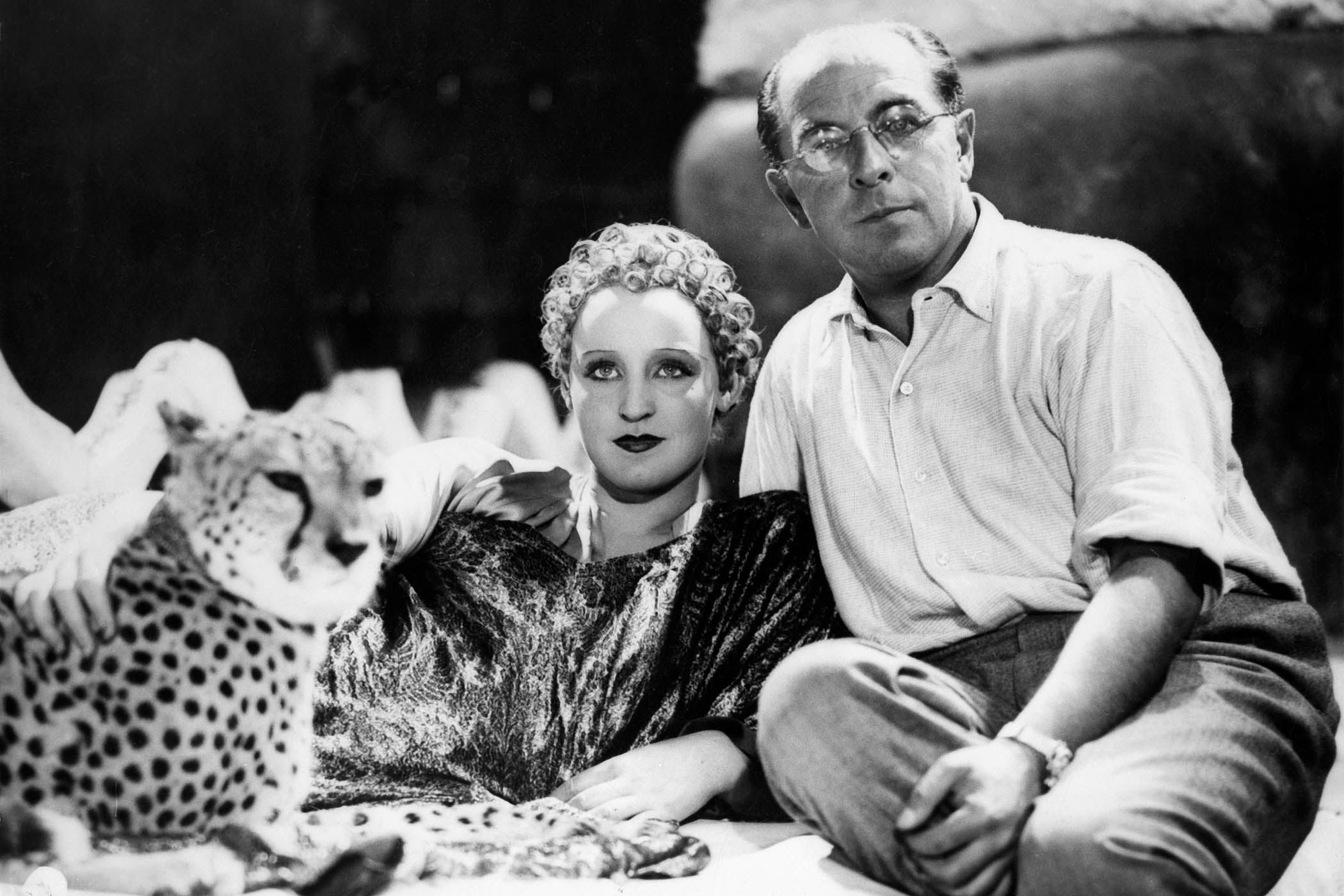


The first description we get of GW Pabst in The Director, Daniel Kehlmann’s fictionalised account of the film-maker’s life, is from his erstwhile – and invented – assistant, Franz Wilzek. “He always wanted to lose weight,” an elderly Franz tells an interviewer. “He wasn’t very tall, but somewhat round, and on set he laughed a lot, but when the lights went out, he often looked emptied out. Like a costume that no one is wearing.”
Kehlmann’s novel, shortlisted for this week’s International Booker prize, shoots Pabst from an array of angles to determine what, aside from empty space, might be within that costume. The book skips from Garbo to Goebbels, from the film-producing Warner brothers to PG Wodehouse, and from Hollywood to France and the Greater German Reich, to tell the story of one of the most significant directors of the 1920s and 30s – and who, had history not had other plans, might have been one of the greatest of all time.
In 1939, Pabst and his family are in Austria, visiting his sick mother, when war breaks out and the borders close. Pabst first resists, then capitulates to, the offers made to him by the Reich Ministry of Public Enlightenment and Propaganda. Once the work starts, so do the rationalisations: “what about Shakespeare,” he tells his wife, “who had to make accommodations with Elizabeth. Poems can be written alone, pictures can be painted alone, but films? That always takes power and money. For every film, a vast machinery.”
Kehlmann switches from past to present tense, third, second and first person, performs leaps forward in time and bold tonal shifts
Kehlmann switches from past to present tense, third, second and first person, performs leaps forward in time and bold tonal shifts
Kehlmann’s Pabst is bewildered by the world. At first we presume this is because he’s in Hollywood, hampered by his English and his unfamiliarity with American ways. But even back in Germany he often seems lost in a dream – and by no means a pleasant one. Only when he’s devising a shot, coaching an actor or envisioning a series of edits is he truly focused and present. This is why the predicament he finds himself in – only able to do the thing that gives his life meaning under the auspices of a uniquely cruel regime – is such a fiendish one.
The Director is restless in its methods; Kehlmann switches from past to present tense, third, second and first person, performs leaps forward in time and bold tonal shifts. There is a Pinteresque scene with two Gestapo agents who come to arrest Pabst’s scriptwriter, a surreal and farcical encounter with Goebbels, and several instances of apparent supernatural horror.
If there are faults, one is that Kehlmann sometimes makes a point subtly only to make it again unsubtly. Another is that his sentences occasionally disappoint. A party, for example, is lazily described as being “in full swing”, while in the line “he felt ossified, as if immured in his own habits”, the similes get in each other’s way. I hesitate to put the blame for this on the translator, Ross Benjamin, who did such extraordinary work a few years ago with Kafka’s diaries.
Then there’s the challenge presented by the vignette approach. At first, it gives things a giddy, pleasurable momentum, every chapter offering some new element. But about halfway through the book I found my eagerness to return to it tapering off, chiefly because the constantly shifting focus and tone of each episode – all of which are involving in their own right – diffuse the book’s energies when they should be building.
In the final third, however, The Director settles into a sustained account of the filming of The Molander Case, which Pabst was editing in Prague when the city was liberated by the Red Army. The film was lost but Kehlmann gives a stunning account of it, imagining certain sequences, and Pabst’s evolving understanding of what the film is becoming, in intense detail. “It’s in editing that you make a film,” Pabst tells Franz. When Kehlmann eases up on the jump cuts and whip pans, this very good novel soars.
The Director by Daniel Kehlmann (translated by Ross Benjamin) is published by Riverrun (£10.99). Order a copy from The Observer Shop for £9.89 (10% off RRP). Delivery charges may apply
Photograph by Ullstein Bild via Getty Images
Newsletters
Choose the newsletters you want to receive
View more
For information about how The Observer protects your data, read our Privacy Policy