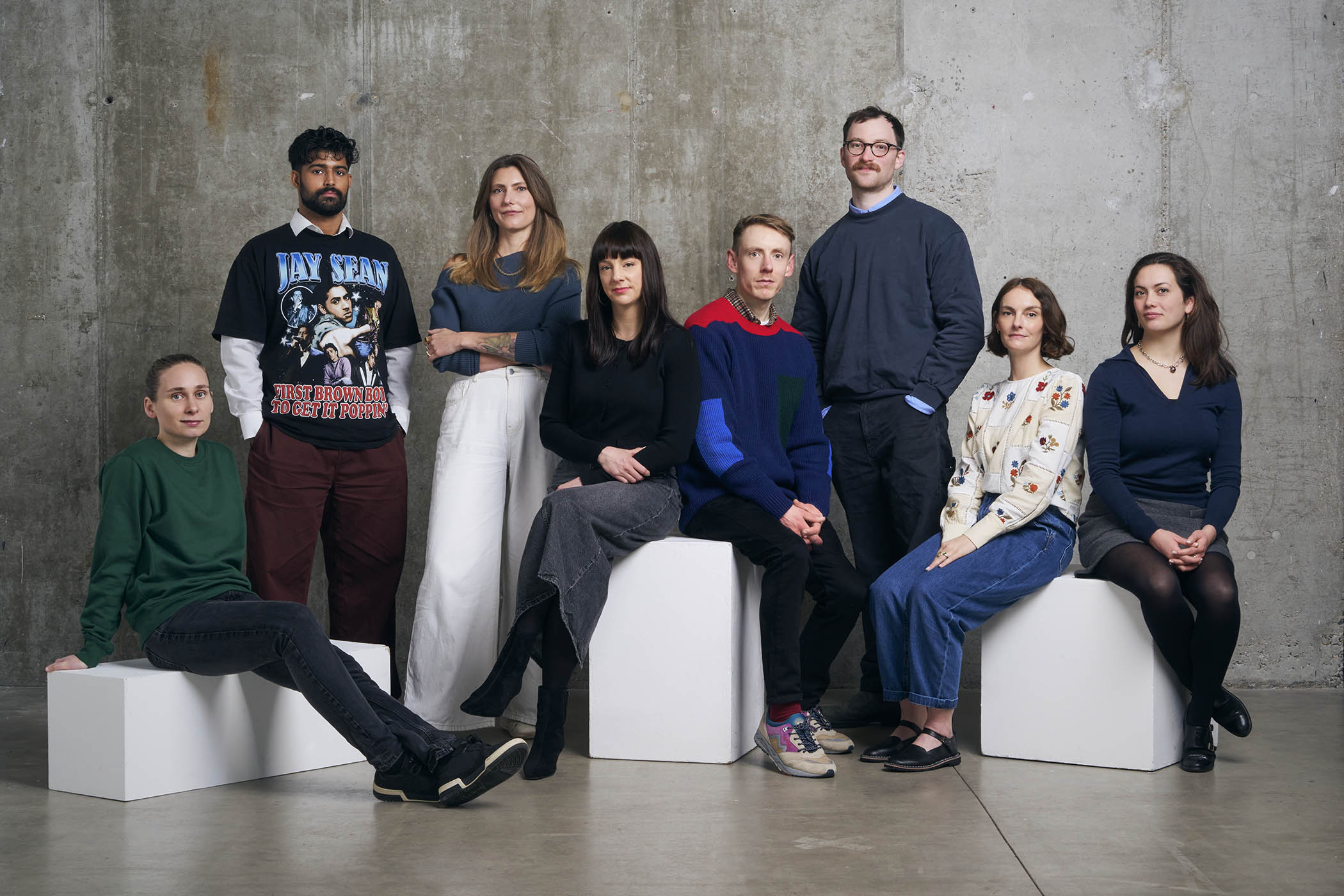
Portraits by Suki Dhanda for The Observer
Every year since 2014, writers and editors on The Observer New Review come together in the weeks before Christmas to read dozens of upcoming debut novels to spotlight the titles you won't want to miss. With only one rule in mind – the novels must be the first for adults by authors who are resident in the UK or Ireland – we bury ourselves in publishers’ catalogues, PDFs and spiral-bound manuscripts in search of the best new fiction. With past novels including Douglas Stuart’s Shuggie Bain to Sheena Patel’s I’m A Fan, Jessie Burton’s The Miniaturist to Michael Magee’s Close to Home, this is the list that gives you advance warning of future prize-winners, bestsellers and underground hits.
This time, reading and rereading one another’s yeses and maybes to find our favourites from a longlist of nearly 90 titles, it felt more than ever that the future of fiction is up for grabs. While post-millennial social comedy continues to thrive – perhaps turning a little more acerbic in the wake of Vincenzo Latronico’s Perfection – other recent trends (dystopia, autofiction) seem to be receding.
The novels we liked best set their own agenda. Their protagonists include a teenage girl with learning disabilities, three British-Pakistani men enjoying a lads' night out, and a werewolf. Plot points run from the death of Kurt Cobain to the opening of a new branch of Gail’s. Weighty topics such as alcoholism, deindustrialisation and perimenopause are crept up on from surprising, even startling, angles.
It's an international list, with books set in 1990s Sydney and postwar Rome, written by authors with roots around the globe, from south Wales to South Africa. There are names you might recognise – two prize-winning poets and the author of an acclaimed short story collection – but also a GP and a schoolteacher. One writer got a helping hand from Sally Rooney; another from Stormzy. The publishers behind the class of 2026 include a science fiction and fantasy imprint and a tiny independent press – Weatherglass Books – founded by two friends in lockdown. Corporate houses are for the first time a minority on the list.
In these books you can find sober social realism and rowdy comic horror, prose that is exquisitely crafted or thrillingly unkempt, stories that are centred on the past or hyper-contemporary (or, in one case, both at once). Whatever your taste, there’s a novel here for you.
Meet these eight debut novelists at The Observer’s exclusive event in London on Wednesday 15 April. See here for more information and to buy your ticket. Stephanie Sy-Quia, Rebecca Perry and Jem Calder will also appear at Cambridge Literary festival in conversation with The Observer’s literary editor Tom Gatti on Sunday 26 April; see here for details.
Receive a 10% discount when you order a copy of the debut novels by these authors from observershop.co.uk. Delivery charges may apply.
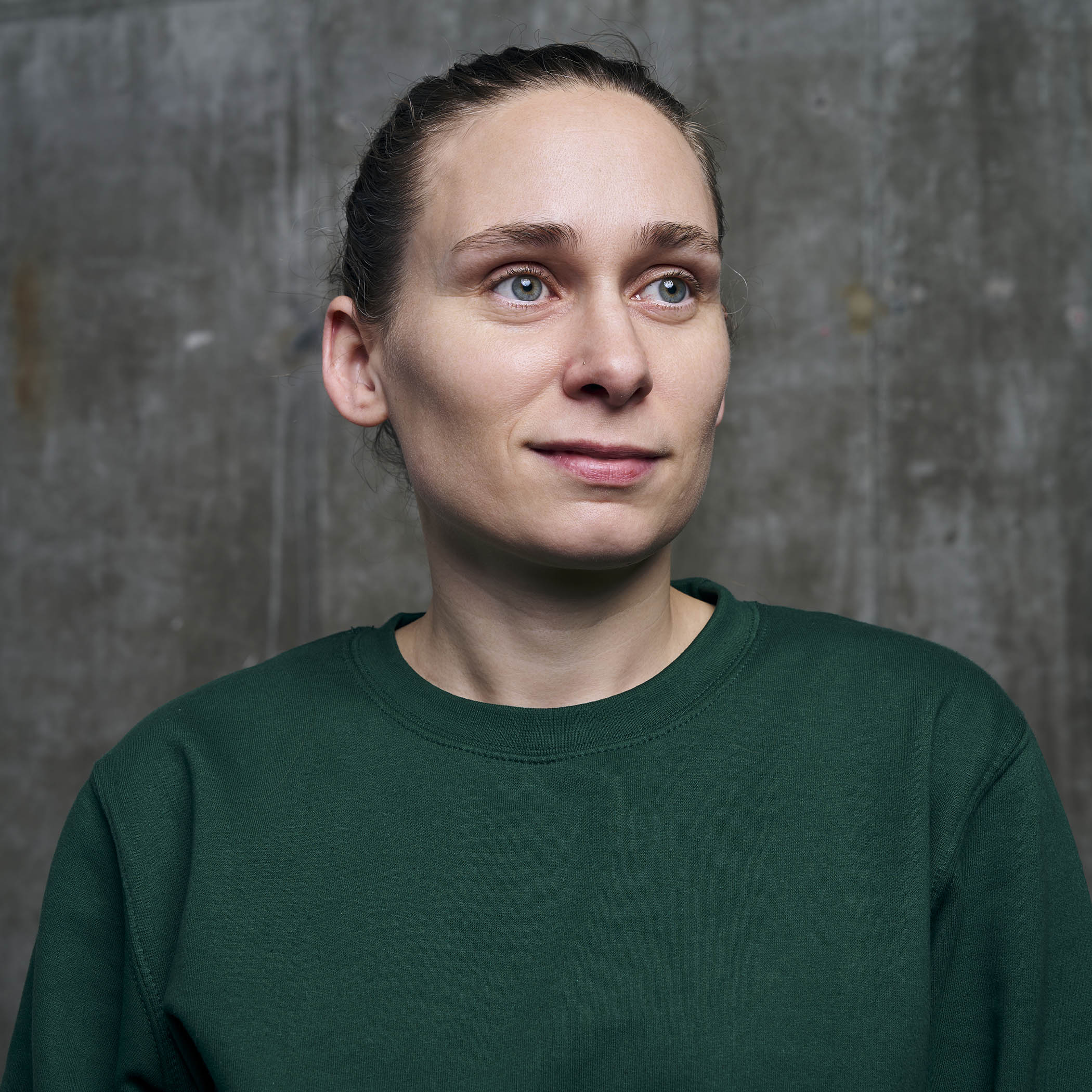
Lucy Apps: ‘I just wanted to go home and carry on writing. It’s addictive’
Lucy Apps: ‘I just wanted to go home and carry on writing. It’s addictive’
The eponymous heroine of Lucy Apps’s challenging but tender debut, Gloria Don’t Speak, is a young woman with a yearning inner life and significant pluck. She also has learning disabilities, which 39-year-old Apps encounters in her day job as a GP and through volunteer work. Where she hasn’t encountered them is in literature.
Doing her bit to remedy this chronic imbalance presented distinct challenges: although Gloria does actually speak, it takes her a little longer than most to put her thoughts into words, and she’s drawing on a more limited vocabulary. How, then, to represent her fully in language?
“I did initially start trying to write in the first person and it felt inauthentic,” recalls Apps, whose manner is calm, precise. “Having another character narrate wouldn’t have worked [either] because I wanted it to be Gloria’s perspective, her worldview.”
Another writer might have thrown in the towel but Apps had already completed a number of books – albeit unpublished – and had faith in Gloria from the start. It helps, too, that she’s one of those enviable authors who simply enjoys writing. “You know when you’re reading a really good book, and you just want to go home and carry on reading? I have that feeling about writing – it’s addictive.”
The novel took off when she started using the close third-person narrative voice. Previously, Apps’s plots, rather than being structured in advance, “revealed themselves out of the fog”, but she knew early on that Gloria would fall in love with a man named Jack. Their dynamic – volatile and instantly disquieting – galvanises a piercing drama that illustrates the vulnerability of adults with learning difficulties, while also illuminating just how much they have to give.
Aside from its indelibly observed protagonist, what marks this novel out is its deep sense of place. It’s set in Newham, the east London borough where Apps grew up and has lived almost her entire life, infusing her voice on and off the page. She has set previous works there too, and the specificity that she brings to its depiction makes her next book a departure in more ways than one. Not only is it historical, based on a Victorian true story, it’s also set on the far side of the city, in Paddington.
Apps began to make writing the focus of her life about 15 years ago, and has received encouragement along the way from her younger brother and first reader, the journalist and author Peter Apps. Even so, a succession of industry rejection letters had her questioning the time and energy she was investing, before the novel was picked up by the independent imprint Weatherglass Books, founded in 2020 by two novelists, Neil Griffiths and Damian Lanigan. “I was at a point when I was thinking: ‘Maybe I just need to knock this on the head now.’ Getting published has been a huge deal for me in terms of having permission to keep going.” Hephzibah Anderson
Gloria Don’t Speak is published by Weatherglass Books on 26 February

Sufiyaan Salam: ‘Stormzy took me out for dinner. His prize gave me crazed confidence to write’
Sufiyaan Salam: ‘Stormzy took me out for dinner. His prize gave me crazed confidence to write’
“It’s a coming-of-age story with men who aren’t equipped to deal with the actual coming-of-age bit,” says Sufiyaan Salam of his riotous first novel, Wimmy Road Boyz. The men in question are Immy, Khan and Haris, three British Pakistanis in their early 20s, who we first see cruising through Manchester in an ice-white BMW en route to the city’s “curry mile” – “that shisha-haze mecca of mischief and magic”, as the emcee-style narrator puts it.
On the outside, the men are all swagger and machismo, but each harbours a secret that they’re terrified to share with the others. As the night unfolds, these secrets rise to the surface with destructive and darkly funny consequences.
Salam, who is 28, grew up in a working-class area of Blackburn, absorbing the language of Shakespeare and Charles Dickens alongside that of Kano and Kendrick Lamar. He studied English literature at Manchester University, developing a love of experimental fiction, and was working as a script editor at the BBC when he embarked on Wimmy Road Boyz.
The idea was sparked by a night out with friends in Manchester during a period of “madness” in his personal life in early 2022 – a combination of heartbreak and getting kicked out of his flat. “The night was all surface level: everyone was having a good time, chatting about inane stuff,” he recalls. “The next day, I began to wonder if the other guys were also dealing with all kinds of stuff and none of us were talking about it.” Exploring male reticence – about romantic rejection, sexuality and mental health issues – through the lens of British Muslim identity felt like an especially intriguing prospect.
He won the 2024 #Merky Books new writers’ prize on the basis of the first 5,000 words. Stormzy, the imprint’s founder, took him out for dinner and they ended up playing card games at a fancy London restaurant. The win gave him “crazed confidence” to write the rest of the novel as audaciously as possible. “I wanted every sentence to be big and energetic and interesting. As a writer, I’m not interested in writing a sentence like, ‘He sat down.’ I want to come up with new ways of describing someone sitting down.”
In the opening chapter, Khan doesn’t simply zoom in on his phone’s Google Maps: his “fiendishly long fingers” engage “in a pinching-waltz” across the screen. Later, in an extended sequence, Immy gains new perspectives on life by staring into a pool of his own “hot, gurling, golden piss”, which spreads to form an outline of Pakistan.
In the past year, Salam quit his BBC job and moved to London, where he is writing full-time. A short film he co-scripted, Magid/Zafar, won a British Independent Film award in December. “It was not what I was expecting to be able to do with my life,” he says of his new career. “Writing was something I always just enjoyed doing for myself.” Now his raucous, wildly inventive prose is bound for a much bigger audience. Killian Fox
Wimmy Road Boyz is published by #Merky Books on 28 May
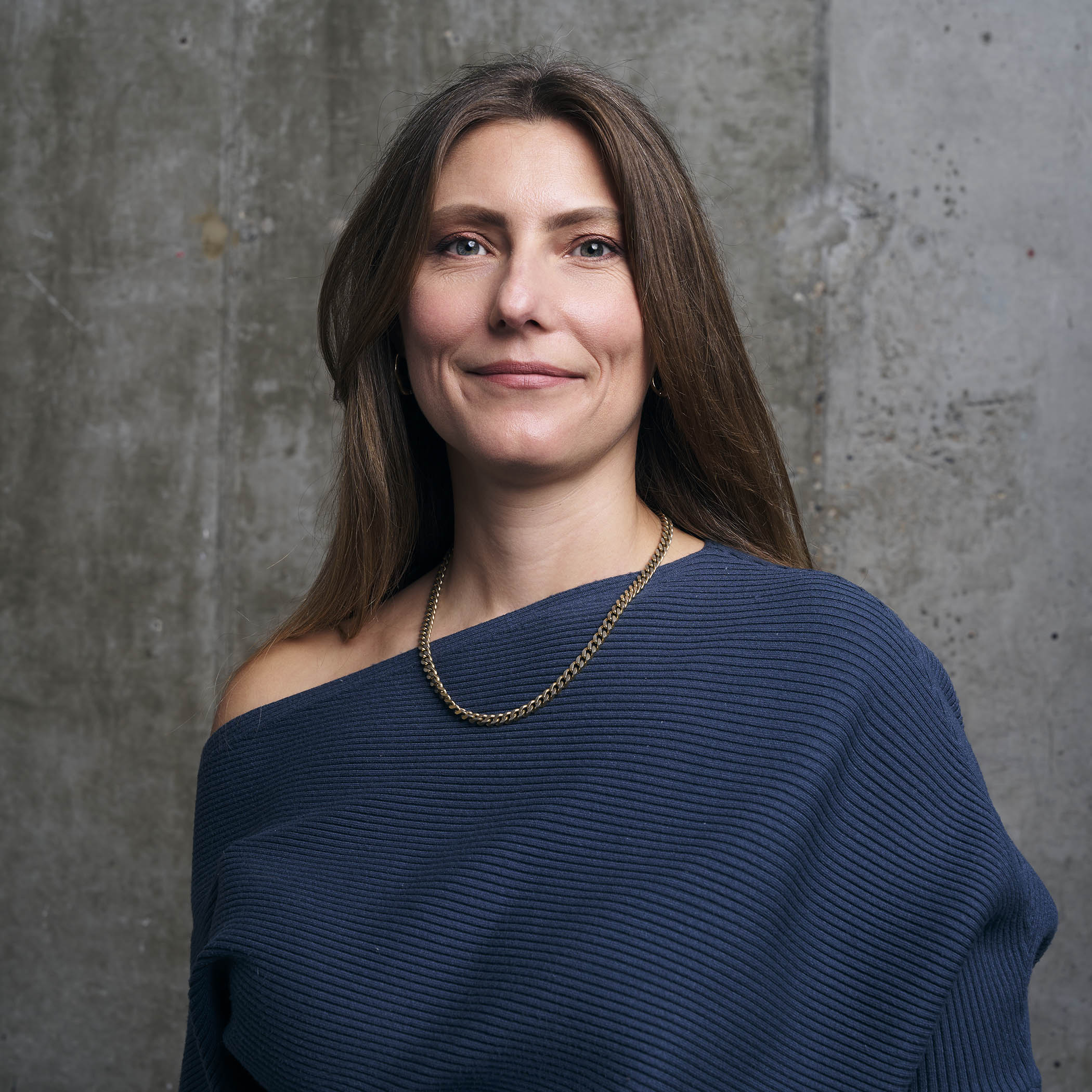
Sam Beckbessinger: ‘Female rage is so unacceptable in our culture’
Sam Beckbessinger: ‘Female rage is so unacceptable in our culture’
Ten years ago, Sam Beckbessinger was on her way from her home in Cape Town to a party at a friend’s house. “I was walking,” she recalls. “It was a beautiful summer’s day, one of those where you have a spring in your step and a song in your heart. And then I realised someone was following me.”
The experience was one “most women in the world have had”, the now 38-year-old author recognises. It had happened to her before, too, but this time she realised that, as well as feeling scared, she was furious. “I’ve always thought of myself as not at all an angry person,” she says. “But I had this fantasy, suddenly, of wishing I had a gun in my bag. I think guns are terrible. But in that moment, I wished I could turn around and make [that man] feel afraid.”
Beckbessinger ended up ducking into a 7-Eleven supermarket, where she waited until the man had gone. But this experience of pure rage stayed with her. A decade on, it is the central theme of her rollicking, unexpected and utterly hilarious debut novel, Femme Feral.
The book follows 46-year-old Ellie, a highly successful financial executive at a tech startup. After collapsing at work – and reporting symptoms of hot flushes, insomnia and general mental chaos – Ellie is diagnosed with perimenopause. But when she finds herself waking up in strange parts of London with her clothes covered in blood, she fears something stranger is going on. On the other side of the city, retiree Brenda is investigating a series of local cat murders. Beckbessinger weaves these two women’s lives together into a feminist satire-cum-werewolf horror that is full of sharply observed, taboo-breaking moments.
“Female rage is so unacceptable in the culture,” says Beckbessinger, who worked in fintech (financial technology) in South Africa before moving to London in 2020, and is now a full-time writer. She has published a book on personal finance, is the co-author of a young adult novel and writes for children’s TV. “Women are trained from an incredibly young age to absorb bad feelings. That’s why Ellie cracks to pieces – because of how much her rage has been repressed.”
The book’s horror twist was a natural undertaking for Beckbessinger, given she started reading Stephen King and Dean Koontz novels when she was 10. She finds it easier to write truthfully if she is “telling it slant”, she says, and points out that her book’s premise contains a “cruel joke” about those working in the medical industry: “They understand as much about perimenopause as they do about lycanthropy.” Ellen Peirson-Hagger
Femme Feral is published by Bloomsbury Archer on 9 April
Liz Allan: ‘All I wanted to do was make my daughter proud. And she’s so proud’
Liz Allan: ‘All I wanted to do was make my daughter proud. And she’s so proud’
Liz Allan was a teenage rebel. The writer grew up in Victor Harbor, a cute beachside town in Australia known for its horse-drawn tram. “To anyone looking from the outside, it’s the perfect place to grow up,” she says. “Because of my circumstances, I had a different experience.”
Allan, 43, was raised in a single-parent, low-income family; as a child, she was abused by her mother’s partner. She bonded with a group of “fatherless” girls, whose “mothers were busy working really hard to keep us alive”. They spent their days unsupervised, roaming the streets.At 14, Allan ran away from home, briefly living in an abandoned house behind a supermarket for two weeks. By 20, she was a single mother herself, working multiple jobs – bar work, hotel reception – while also studying writing.
In Bloom follows a group of wayward 14-year-old girls in the fictional Australian town of Vincent in the 90s. They idolise Kurt Cobain and form a band, the Bastards, encouraged by their beloved music teacher, Mr P. But when one member, Lily, grows withdrawn, Mr P is suspended and rumours circulate that he has abused her. The girls, who know Lily has long been abused by her stepfather, are determined to prove Mr P’s innocence. “The events are fictional,” Allan says, “but the group of girls are very similar to my upbringing.”
It’s a book Allan never intended to write: “It’s always felt too cringe to write about myself.” But during Covid she reflected on her childhood and then, one morning, she phoned her mother. “I said to her: ‘Why didn’t you protect me?’ That was the first time I‘d ever spoken to my mum about the violence I experienced when I was little.” Allan’s mother hadn’t known; their conversation, she says, was “really positive”.
Allan had written three unpublished novels that “all sucked”, she says. As a PhD student, surrounded by middle-class peers, she was insecure, “trying to pretend I was as smart … When I started writing this, I was, like: ‘Fuck it. I’m gonna have fun.’” The first draft came out in a rush, in the idle hours of her reception job.
Written in an eerie first person plural – “We practise our songs on the skate home, singing in harmony, over and over” – that narrates short, propulsive chapters, In Bloom is deeply evocative of 1990s suburbia, passionate teenage friendships and the looming shadow of patriarchal violence.
Allan struggled to find a home for her novel – “I couldn’t get a publisher in Australia to reply to my emails” – so when her daughter became an adult, she sold “everything I had” and arrived in London “with two suitcases and 10 grand”. Within four months, she had an agent. “All I wanted to do was make [my daughter] proud. And she’s so proud.”
Now working as a secondary school teacher, Allan has taken domestic violence training to support children in situations such as hers. Sometimes, they reject her help. “It’s humbling,” she says, “to go from being like the teenage rebel to being the authoritarian figure that the teenage rebels hate.” Anna Leszkiewicz
In Bloom is published by Sceptre on 12 March
Jon Doyle: ‘I was writing to preserve a part of Port Talbot that’s being lost’
Jon Doyle: ‘I was writing to preserve a part of Port Talbot that’s being lost’
“Lying in bed, I’d hear all these different industrial sounds; the next day, there was nothing,” says Jon Doyle, 35, recalling the hush last summer in his south Wales home town of Port Talbot, as the blast furnace was switched off at the steelworks that employed two generations of his family. “Writing Communion took on deeper meaning: preserving a part of the town being lost.”
Sparely told yet brimming with big themes – faith, masculinity, activism – Doyle’s tense and absorbing debut follows Mack, a security guard at the steelworks, as it undergoes industrial action in the same week that Port Talbot's most famous son, a feted Hollywood star, returns home to stage an epic community play about the crucifixion of Jesus.
Readers may recognise the unnamed actor as Michael Sheen, whose 2011 production The Passion of Port Talbot brought global attention to a town long synonymous with neglect. While Communion isn’t about Sheen, its seed lay in Doyle's unease over the adulation the actor received: “What did it mean about our self-image that we were willing to celebrate this person, who’d left the town, as some sort of messiah?”
Watching disciples on his doorstep also made Doyle wonder what kind of mischief a present-day Judas might get up to in Port Talbot. The answer – reached while examining his own Catholicism and longstanding environmentalism – ultimately led him to the character of Mack, an enigmatic ex-seminarian who abandoned the priesthood in his early 20s. Doyle changed path at a similar age after falling out of love with postgraduate zoology. “I thought I’d be saving the rhino; instead, I was on my own in a windowless lab torturing tropical fish with microscopic parasites.”
Wowed by the American maximalists he read while waiting for the results of his experiments, he decided to try his hand at short stories, earning a creative writing scholarship that helped him sound plausible to his family as he set about brewing the next Infinite Jest.
The contrastingly low-key style of Communion – Doyle’s third attempt at a novel – arose once he began to value the rhythm of a sentence over its volume. Another breakthrough came when he shook off his instinct that Port Talbot couldn’t rival Don DeLillo’s Bronx as a setting for fiction. “I saw a global corporation slowly shutting things down, the unions atrophying... I realised there’s a struggle here, same as anywhere else – and I didn’t need Google Maps to know what it looks like.” Anthony Cummins
Communion is published by Atlantic Books on 2 April
Jem Calder: ‘If fiction doesn’t reflect contemporary life, why should anyone read it?’
Jem Calder: ‘If fiction doesn’t reflect contemporary life, why should anyone read it?’
Set in post-pandemic London, Jem Calder’s first novel, I Want You to Be Happy, is an agonisingly bittersweet comedy about a cross-generational hook-up between a 23-year-old barista, Joey, and Chuck, a millennial copywriter in his mid-30s on the rebound from his fiancee. The longer Joey spends in Chuck’s bed, away from her poky sublet, the more she wonders why she hasn’t met any of his friends, but we can see what she can’t: Chuck is a pratfalling liar in the grip of an escalating drink problem.
“I was interested in the idea of a romantic comedy where, in the margins of the text, one of the characters is basically having a complete nervous breakdown,” says Calder, 34. The novel was born out of a sense that he’d been overly simplistic in portraying a toxic age-gap affair in his 2022 story collection Reward System; this time, he sought to pull readers in two directions at once, compelling you to root for Joey and Chuck's relationship, even as it makes us wince.
Raised in the Essex countryside, Calder began trying to write after moving to London 10 years ago. In 2017, Colin Barrett’s New Yorker story Whoever Is There, Come on Through inspired him to dedicate six months to a story of his own - an idea about a dating app, already nibbled at while turning out copy for a phone company based in China. He submitted the result on spec to the Dublin literary journal the Stinging Fly because its editor at the time was Sally Rooney and he loved Conversations with Friends; her acceptance – still amazing to Calder – helped smooth Reward System’s path to print.
Calder wrote I Want You to Be Happy over two and a half years in a single draft, proceeding to the next sentence only once he was satisfied with the previous one. His uncluttered style, bright with comic timing, is a product of his awareness that readers nowadays hardly lack for reasons to put a book down – if they even pick one up, which his friends mostly don’t.
“It’s because they read the novels that get recommended and think: ‘This isn’t that good.’ You can only blame the internet and video games and pornography for so much. Contemporary fiction needs to reflect contemporary life in a way that’s funny and meaningful: if it doesn’t, why should anyone read it?” Anthony Cummins
I Want You to Be Happy is published by Faber on 21 May
Rebecca Perry: ‘I never once opened my laptop and thought, I have to work on this’
Rebecca Perry: ‘I never once opened my laptop and thought, I have to work on this’
Rebecca Perry wrote most of her first novel, May We Feed the King, in the bath at home in London. Laptop balanced on a wooden tray, candles lit (depending on the season), her cat stationed on the rim, she would lower herself into hot water after work and stay there until the book reasserted itself. “It’s a self-imposed rule,” she says. “You have to stay.”
That deliberate enclosure suits a writer preoccupied with artifice, interiors and the emotional charge of constructed scenes. Perry’s novel unfolds between two worlds, following a female curator who stages displays in historic buildings and the very scene she’s reconstructing. The narrative floats between the present and an imagined past in which a reluctant young king and his attendant move through a palace thick with unease and bound by rituals. Characters names are withheld and time is unstable. What feels real is texture: the feel of air in a room, the glint of light on an elaborate feast.
Food appears frequently in the book, and as research, Perry read recipe books across several centuries, deliberately avoiding historical accuracy tied to one period. In the contemporary sections, food is plastic and staged; in the imagined past, it becomes painterly. “I wanted it to move between the brushstrokes of a painting and something hot and steaming,” she says
Perry never expected to write a novel. She had been a successful poet, shortlisted for the TS Eliot prize, with two published collections and a lyrical memoir on the world of competitive trampolining. “I don’t dislike poetry,” she says. “I just don’t have the compulsion any more. And if the compulsion isn’t there, you can’t force it.”
Fiction felt possible after Perry discovered novels that felt formally permissive, such as Percival Everett’s The Trees. Her prose follows his fragmentary style – strange and unbothered by linearity. “I realised I could treat it like a very, very long prose poem,” she says.
Perry, 39, works full-time for a literacy charity running creative projects in prisons, but she is careful to separate that work from her fiction. “I would never write about prison,” she says. “For me, my role there is to bring opportunities to other people, not to take from it creatively.” Still, she acknowledges that exposure to confinement has sharpened her interest in power; who holds it and who resists it. The novel’s young king, tender and afraid, emerged from that curiosity.
“I never once opened my laptop and thought: ‘I have to work on this,’” she says. “I genuinely loved being with the characters. That was enough.” Lily Isaacs
May We Feed the King is published by Granta on 29 January
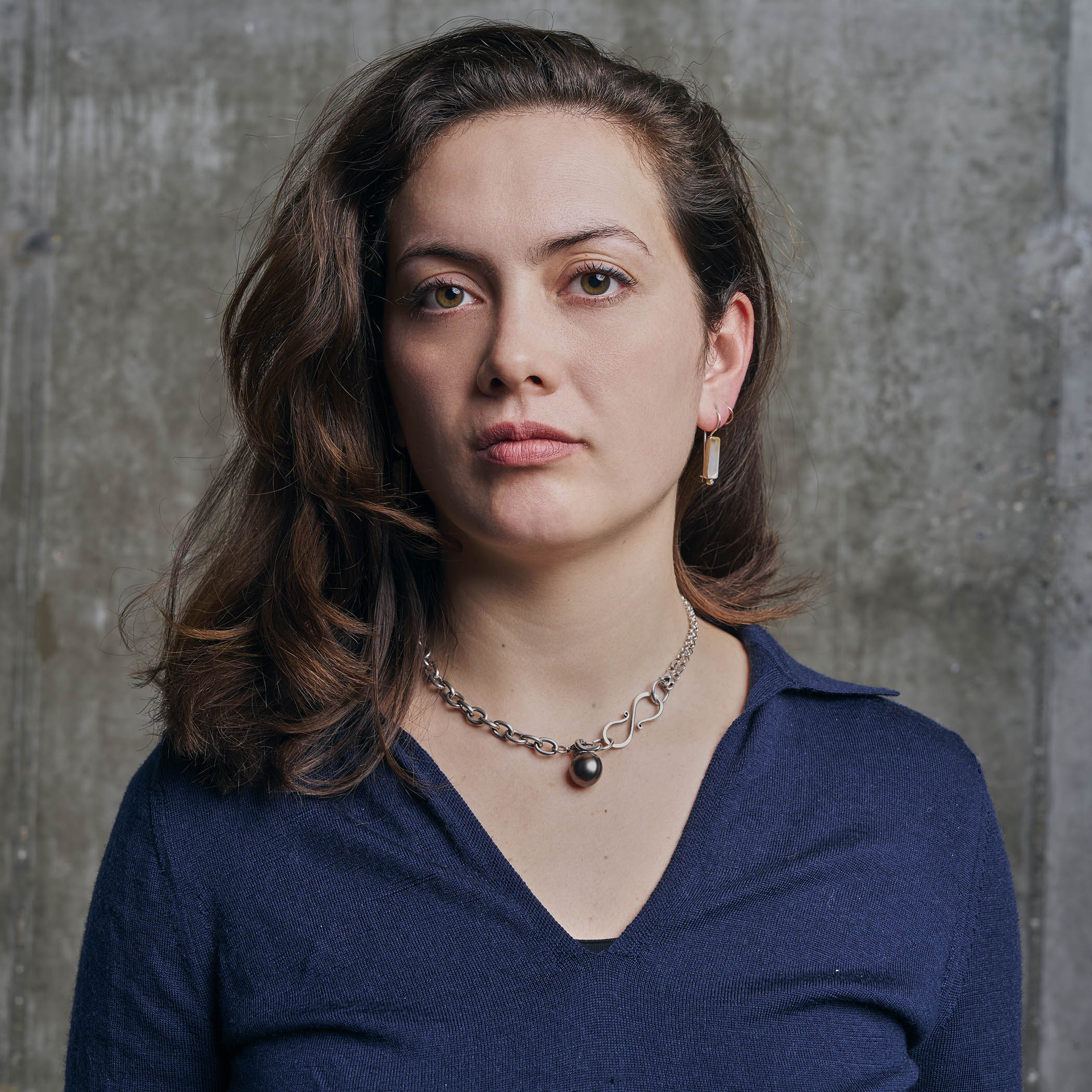
Stephanie Sy-Quia: ‘I pulled down the blinds and sat in the nude writing all day’
Stephanie Sy-Quia: ‘I pulled down the blinds and sat in the nude writing all day’
Stephanie Sy-Quia was 16 when she learned about her family’s remarkable past. “My grandfather was a Catholic priest,” says the author, 30. “He and my grandmother fell in love, he got expelled violently from the church and they ran away” from Staffordshire to Libya. Sy-Quia’s grandfather died when she was six. Years later, after university, she went to France to care for her grandmother, who was “sliding into dementia” while “throwing out the odd little bone” of intrigue from her past. It dawned on Sy-Quia that her grandparents had endured “two different experiences of Catholicism that were thwarted by the 20th century. I wanted to write about that.”
The result is A Private Man, a fictionalisation of this thrilling true tale. It is a love story of intellect and passion, and a treatise on the repercussions of Catholicism’s lack of willingness to modernise, particularly in terms of gender. We follow David, who in the 1950s trains for the priesthood in Rome, returning to England to serve in a Staffordshire parish. There he meets Margaret, a laywoman who teaches theology. Sy-Quia tracks their relationship alongside a 21st-century plotline featuring their grandson, Adrian, who is caring for his elderly grandmother.
Sy-Quia was born in California, spent her childhood in France, attended boarding school in England and now lives in London, where she teaches at an independent school. Her grandparents never returned to England and lived in numerous places, including West Germany, where Sy-Quia’s mother was born. The author, whose father is Filipino, explored migratory histories in her 2021 book-length poem Amnion, which won multiple awards.
Sy-Quia received her grandmother’s blessing for A Private Man, which she wrote in fits and starts over several years, including – after becoming a teacher – in intense bursts over the holidays. One Easter in London, during a heatwave: “I pulled down the blinds in my flat, took off all my clothes and pulled a real Joan Didion, sat there in the nude writing all day,” she recalls.
The novel contains rich theological discussions and lush descriptions of religious art, for which Sy-Quia’s research involved reading debate transcripts of the second Vatican council, as well as a self-mapped “Bernini walking tour” around Rome’s churches. She had a lot to learn about Catholicism.
After all, “neither my mum nor my siblings and I were raised at all religious, and that is a direct consequence of my grandparents’ experience with the church”, she says pointedly. “It was very interesting to think: ‘I am so ignorant of this, and that is because of the story I’m trying to tell.’” Ellen Peirson-Hagger
A Private Man is published by Picador on 19 February
The debut novelists were selected with additional input from Tim Adams, Lynne Brannan, Tom Gatti, Tara Joshi and Olivia Ovenden.