


Dave Eggers’s new novel takes us back. Contrapposto begins in a basement in 1970s Indiana, where nine-year-old Robert Dibb is lying on the floor drawing a ringed planet surrounded by stars. It is an early attempt at wrangling life on to the page, with all of the frustration and elation that process brings. It is also the first time he learns that the world and its ugliness can be kept at bay as, while he draws, his mother’s abusive boyfriend (also named Robert) skulks around upstairs. As his grandfather Silas tells him: “You can go into the world outside and look at its endlessness. And always you have the life you can conjure on your own. You can produce beauty there in your notebooks, from scratch.”
To avoid any potential character confusion, the boy becomes known as Cricket, named for the clicking sound he emits before making a decision. Soon, Cricket starts to learn about the power of art as a refuge in periods of darkness, first when Silas dies suddenly, and again and again as the world tests his faith in its beauty. Art is his steadfast companion, but the other relationship that both sustains and torments him is with Olympia, whose golden eyes and lemon scent intoxicate Cricket from their first meeting as children. Over 65 years, through an almost cradle-to-grave retelling of their relationship, we follow Cricket and Olympia as they each try to resist giving in and selling out despite many invitations to do so.
Eggers keeps the lens tight on them as they grow and travel away from each other, across America, Europe and beyond, with stints in Turkey, Phuket and Paris. There is a sense of narrative safety in knowing they will keep returning to one another before too long, the same pleasing pattern as in Gabrielle Zevin’s Tomorrow, and Tomorrow, and Tomorrow, Sally Rooney’s Normal People and David Nicholls’s One Day. But Eggers manages to avoid their will-they-won’t-they dynamic becoming a tedious tease with the gentle reminder that we don’t end up with anyone but ourselves.
Contrapposto takes us back in other ways. A sincere and sweeping American novel that feels like the product of another literary time, it is free of the nudging cynicism and despondency that is the de facto tone of so much fiction now, instead cleaving tenderly to the idea that it is possible to remain unjaded in this world if you hold on to yourself. The idea of art as a salve occasionally feels too heavy-handed, but for the most part the novel succeeds not in spite of its emotional purity but because of it. When Cricket is at art school, he sits through his peers praising a polaroid of a magazine advert, which is described admiringly by one classmate as “a transgression against presence” that “dislocates place and repurposes the void”. Meanwhile, the best painter in the class is scorned and eventually drops out.
Cricket sees through the phoneys and the fakes, at college and again when he encounters art hustlers in the real world. Eventually, he realises that authenticity is expensive, and selling out in some ways means setting yourself free in others. By avoiding scaling his business and “mundane” conversations “about production and money”, he can simply paint. As he discovered on his grandfather’s floor, this miraculous act of conjuring and “the obligation to get it right” are all he needs to guide him.
Contrapposto was 20 years in the making and feels deeply personal, littered with clues and jokes and moments that seem as if Eggers is talking directly to the reader. The life drawings that appear in the book are his own. He also trained as a painter and went to art school, and his scepticism of that world is apparent. “That’s the whole point of conceptual art,” Olympia says at one point. “Take something interesting and make it tedious.”
There is a sense of narrative safety in knowing they will keep returning to each other before too long
There is a sense of narrative safety in knowing they will keep returning to each other before too long
Eggers suffered the loss of his parents to cancer in quick succession, a period he wrote about in his 2000 memoir, A Heartbreaking Work of Staggering Genius. In Contrapposto, he returns to a more personal, character-driven mode of writing after conceptual and satirical works such as tech allegory The Circle and its sequel The Every, or the stark war parable The Parade. Cricket loses his childhood friend, Jed, who is serving in the Gulf War when he is involved in a car accident in Kuwait after being discharged. The terrible luck surrounding his death, and the disorienting blackout of crazed grief that Cricket is thrown into afterwards, are a reminder of life’s meaningless cruelty and make for some of the most potent writing in the book. Everything Cricket paints comes out wrong, and he is tormented by what he is trying to say about himself by immortalising his friend.
That isn’t to say Eggers doesn’t have fun with Contrapposto, not least in its portrayal of the cringe of adolescent lust. Olympia and Cricket’s youthful sex scenes are sloppy bodily collisions of “involuntary pumps”, after which he “burst open within seconds”. The characters are so nakedly sincere that you can believe that a teenage boy looking at his worldly, ferocious best friend on top of him would see “all the world’s storms combined and contained”.
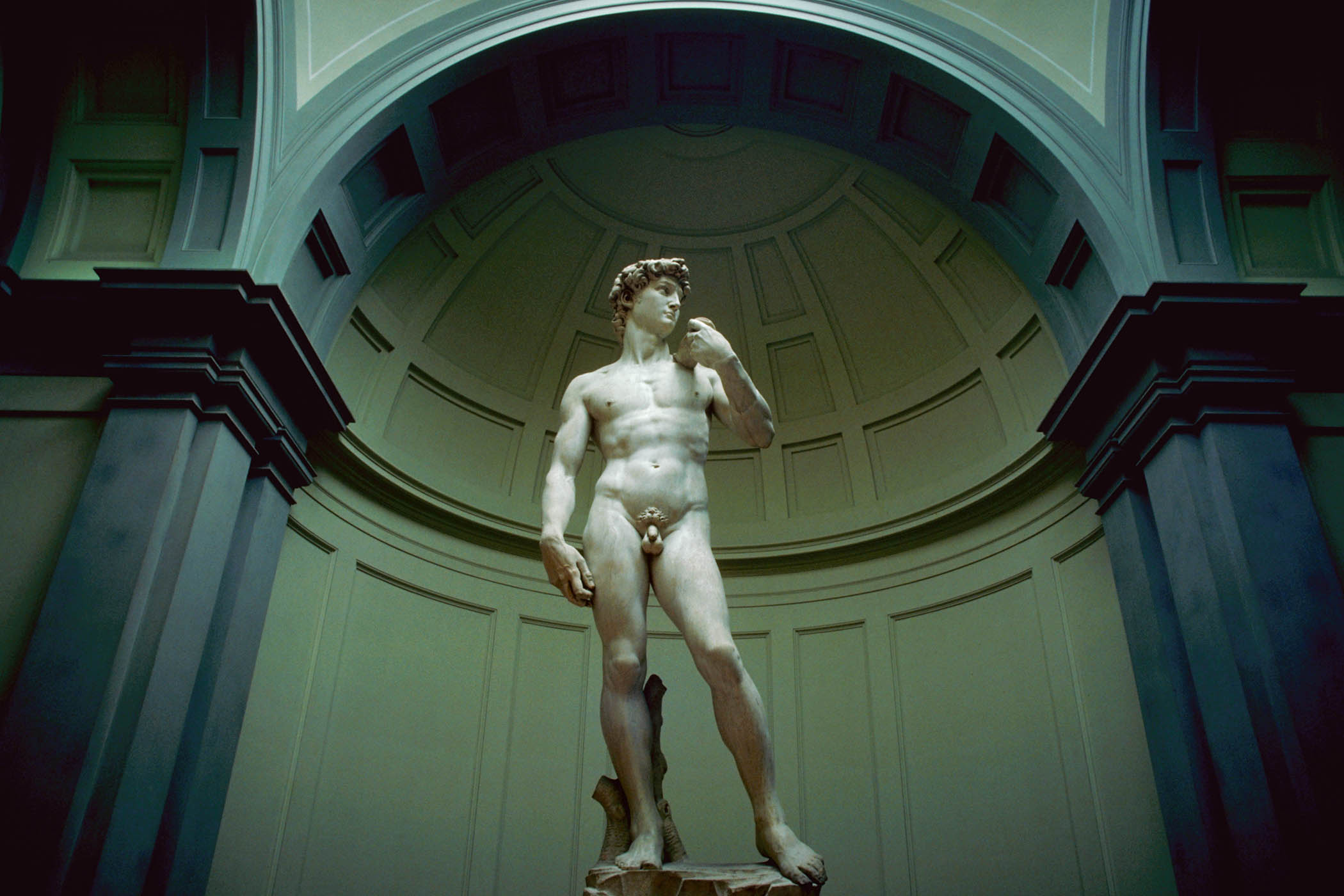
Contrapposto refers to the position of a human body standing with its weight on one foot, so that there is a slight curvature in the spine. Throughout, it is concerned with the body and the stories our forms tell about us: the scars we collect and the beauty in the body’s inevitable decay. Later in the book, when they are deep into their 50s, Cricket admires Olympia’s breasts floating in the sea, “their curves outrageously fake but vibrant, too, a happy ripeness just below her wrinkled sternum”. After spending the night together they fight about how much each of them would have to compromise to really be together, to overcome the clashing personalities that have kept them apart for so long. “You want me to need you?” Olympia says. “Isn’t it enough to choose you?” This feels like another nudge from Eggers: what we choose is who we are.
Contrapposto by Dave Eggers is published by Canongate (£20). Order a copy from The Observer Shop for £18 (10% off RRP). Delivery charges may apply
Newsletters
Choose the newsletters you want to receive
View more
For information about how The Observer protects your data, read our Privacy Policy
Photography by Todd Gipstein/Getty Images