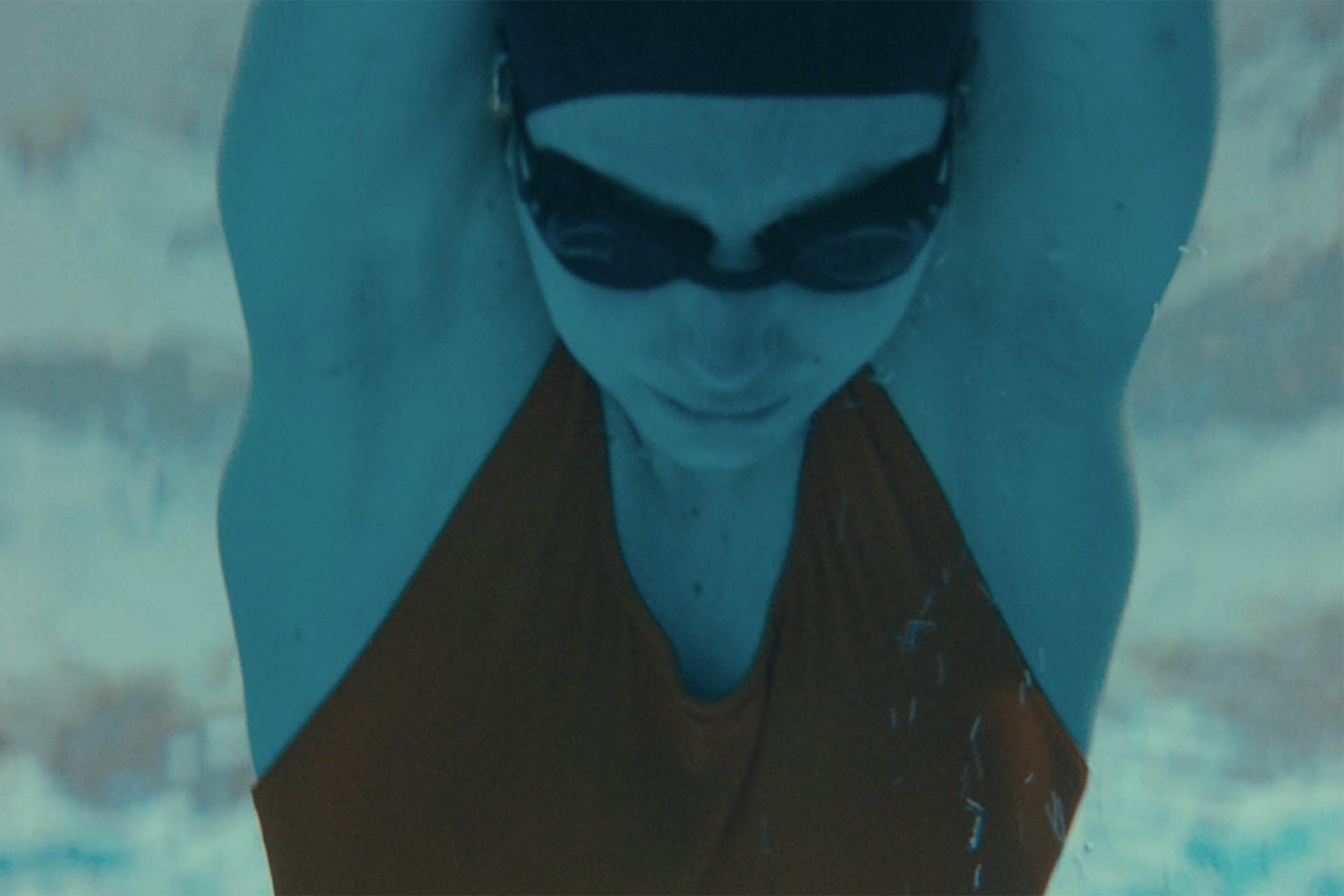



Anyone who has paid attention to Kristen Stewart’s intriguing, wilfully idiosyncratic acting career will agree that her abrasive and uncomfortable directorial debut is very much in character for the former Twilight star. Adapted by Stewart from Lidia Yuknavitch’s poetic “anti-memoir” and starring a sensational Imogen Poots as Lidia, The Chronology of Water is a heady immersion in themes of sexual and emotional abuse, addiction, toxic relationships and self-destructive impulses.
It’s not an easy watch, but this celebration of unlovely femininity – of bodies that leak blood and pain – is a perfect fit for Stewart, who has repeatedly been drawn to women who refuse to fit tidily into society.
Lidia’s childhood is the kind that leaves scars. Her father Mike (Michael Epp) is a looming presence in the lives of the women in his family. His wife Dorothy (Susannah Flood) numbs herself with alcohol so she doesn’t have to see the ugly truth about her husband. Lidia’s beloved older sister Claudia (played by Thora Birch as an adult and Marlena Sniega as a teenager) flees the family home as soon as she can, leaving Lidia as the focus of her father’s attention.
The sexual abuse is implied rather than overtly depicted; even so, it’s harrowing. But the emotional abuse – the bullying, the controlling, the gloating, thin-lipped smirk when he tells Lidia that she can’t go to university unless she is offered a full scholarship – is shown in all its spittle-flecked spite and rage. The camera cowers below Mike’s face, his features distorted into something between hate and hunger, inches from Lidia’s fearful stillness.
She seeks an escape, first as a competitive swimmer; throughout the film, water is a place of safety for Lidia. Then, at Texas Tech and relishing the distance from her father’s anger and judgment, she slides into alcohol and substance abuse. She pinballs between dysfunctional relationships, and when eventually she discovers writing, it comes a kind of redemption.
It’s not an easy watch, but this celebration of unlovely femininity – of bodies that leak blood and pain – is a perfect fit for Stewart
It’s not an easy watch, but this celebration of unlovely femininity – of bodies that leak blood and pain – is a perfect fit for Stewart
All of which makes the feature sound far more linear and conventional than it actually is; taking her cue from Yuknavitch’s book, Stewart explores the nature of trauma and memory through a fractured timeline and disorienting structure. This is film-making filled with bold and creative ideas – perhaps too many at times – that announces Stewart’s serious auteur ambitions.
The picture can feel a little overstuffed with symbolism and tricksy devices. And, at more than two hours, it’s something of an emotional workout: watching it is like eavesdropping on a long and gruelling therapy session. But Stewart demonstrates a creative connection with the material and much of the picture works rather well, evoking the shards of remembered trauma that slice into Lidia’s psyche.
Shot on gorgeous, textured 16mm film, images fray around the edges in the same way memories do; there’s a nod to the work of Terrence Malick in the whispered fragments of narration, the collage-like sound design and the dreamy, saturated look of the movie. But Stewart subverts Malick’s ecstatic visions of beauty by employing the same techniques and training the lens on ugliness instead.
Stewart has chosen her collaborators astutely; editor Olivia Neergaard-Holm does sterling work navigating the shattered storyline, while cinematographer Corey C Waters’s camera is intimate and unflinching. But her main asset is Poots, who is fearless and raw, stripping the skin from her character to reveal the screaming nerve endings beneath. Her Lidia hurls herself at bad decisions, driven towards disaster by an insatiable urge to feel something that isn’t shame or guilt.
It’s a remarkable performance that prises open, internalised conflict, and makes it immediate and readable. Lidia has giddy, reckless highs and moments of hollow happiness, cheaply bought with bourbon. In Poots’s fluid facial expressions, we see joy curdling and souring, the spark extinguished as quickly as it was ignited.
It’s not all bleak: a writing retreat with the author Ken Kesey (Jim Belushi) is revelatory. With a subtle posture shift and a bright, wide-open gaze, Poots shows us the exact moment at which life changes for the better for Lidia. Elsewhere, a poetry reading is another electrifying piece of acting. This is courageous, career-best work from a performer who deserves to be rated as one of the very finest of her generation.
Newsletters
Choose the newsletters you want to receive
View more
For information about how The Observer protects your data, read our Privacy Policy