People still seem to care about Cannes. Not just the streams of tourists, upscale scammers and hopeful film producers who arrive each year, but actual stars. It’s true that the big Hollywood bucks are no longer splurged on the festival, so that “talent” flies in now without the razzmatazz evident just 10 years ago. But it comes all the same.
In the opening phase of the event this year, star wattage has beamed out from some unexpected corners. Within a couple of days, the Croisette had welcomed Seth Rogen, promoting his wife Lauren Miller’s new directorial venture, Babies; Jason Statham, here for a glitzy private screening of his film John Doe; and Irish star Barry Keoghan, who took a bow for Butterfly Jam, a movie screened in the Directors’ Fortnight strand that casts him in the unlikely guise of a Russian Circassian in New Jersey.
Looking across the aisle during my easyJet flight down, I spotted another big name. There, smiling under his customary pork pie straw hat, was Mark Rylance, being quietly pleasant to his fellow passengers, as you might hope. He is in town to push his directorial debut, Nice Fish, a gentle comedy in which he co-stars with Michelle Williams.
But the lure of mixing with the latest international contenders for the Palme d’Or, from Pawel Pawlikowski to Pedro Almodóvar, is only part of the appeal of Cannes. Why do stars really turn up? Often it is a contractual matter, of course, but it is also because Cannes is the place where a certain brand of film nostalgia holds sway. The town showcases not just the history of the art form, but also of the hoopla and flimflam that surrounds cinema. Each May, merely by getting under way, it is commemorating all those previous acts of obeisance to the form. The festival’s poster, for instance, usually features a film from some previous belle epoch rather than a new release. This year, it is a still from 1991’s Thelma & Louise; often, it is an image from the 50s or 60s.
Happily, legends of film are still being created. Cannes favourites Sandra Hüller, who stars in Pawlikowski’s Fatherland, and Renate Reinsve, cast in Cristian Mungiu’s Fjord, are both arriving and will no doubt each grace festival posters of the future.
A seduction meal over a plate of KFC makes the famously sexy dinner in Tom Jones look restrained
A seduction meal over a plate of KFC makes the famously sexy dinner in Tom Jones look restrained
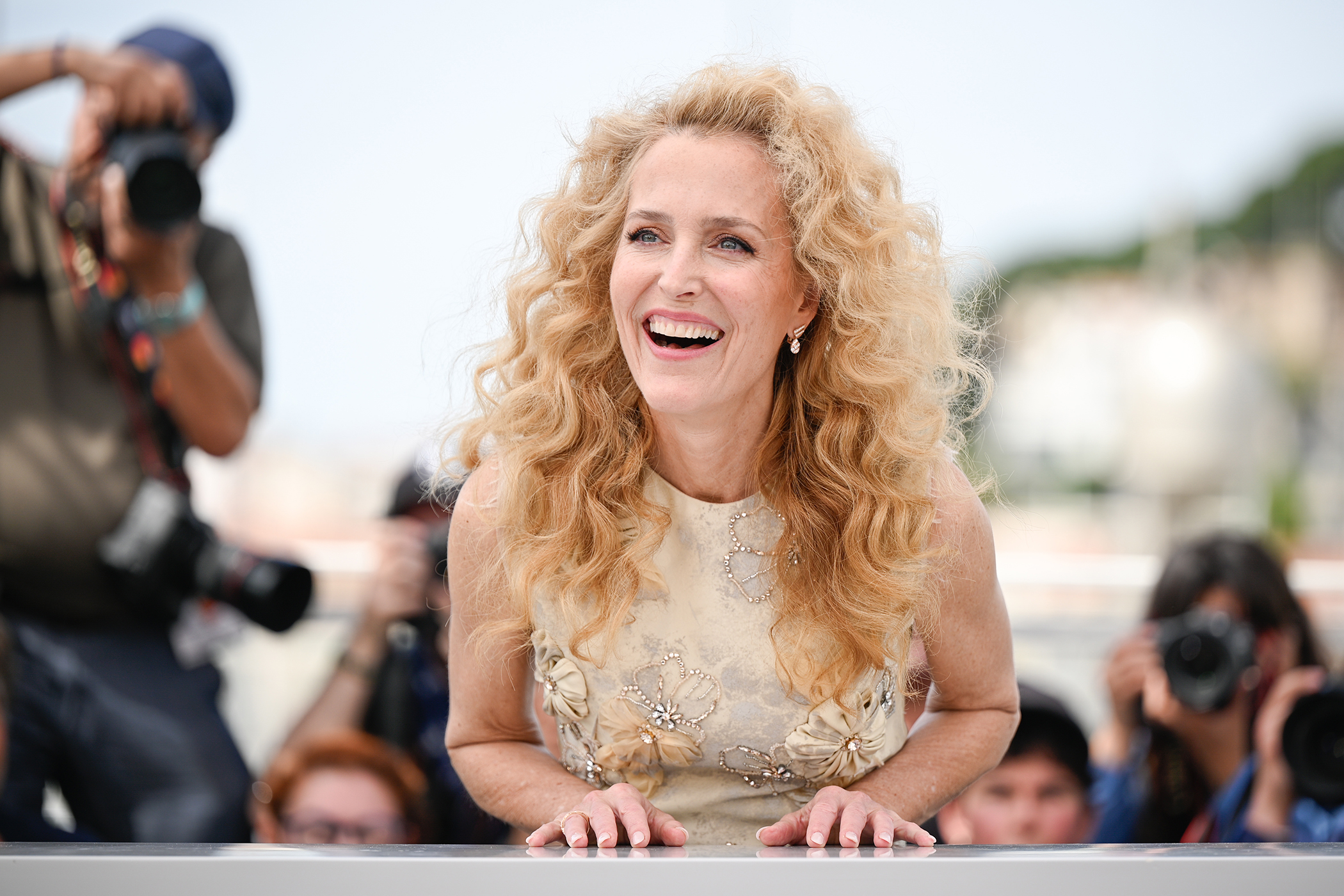
One of those to light up the Palais des Festivals last week was Gillian Anderson, who is in a wacky queer slasher horror with PhD pretensions. She gamely plays a role that cements her image as a sexual healer, after her TV hit Sex Education and having recently edited a book about erotic fantasies. The movie, Teenage Sex and Death at Camp Miasma, earned one of the festival’s first prolonged standing ovations for the American director Jane Schoenbrun, who made a splash in 2024 with the indie feature I Saw the TV Glow. It is screened in the Un Certain Regard section, so is not vying for the festival’s big prize, but made headlines all the same.
It tells of a defunct franchise of gory thrillers and its impact on one young film-maker, played by Hacks star Hannah Einbinder. On a mission to revive the very camp Camp Miasma horror series, she seeks out Anderson, the reclusive “final girl” of the first movie. This character is repeatedly compared to Sunset Boulevard’s Norma Desmond, and even dons a turban. In fact, she is closer to a mutant blend of Tim Curry’s Frank-N-Furter and Tennessee Williams’s Blanche DuBois, with Anderson’s accent sometimes veering into Dolly Parton territory. Aside from all the spurting blood and meta-horror references, one scene features a seduction meal over a vast plate of KFC that makes the famously sexy dinner in Tom Jones look restrained. One of the film’s themes is the guilt we feel about our secret tastes, and so the whole thing is shot against a hyper-real CGI landscape, reminiscent of the lurid, Christmas card works of Thomas Kinkade.
For such a layered pastiche, it occasionally takes a blunt approach; the serial killer is called Little Death, as in petite mort, a French euphemism for orgasm. Desire’s link to fear is the subject on the mortuary slab here, but the picture never lives up to its witty opening credit sequence, which sees the legend of the cult film series built up with fake ephemera and press cuttings.
Schoenbrun says it was hard to get the feature made because of “the limits of what kinds of queer and trans stories are deemed commercial or not commercial”. Although her horror flick suffers badly from the contagion known as “galaxy brain” – meaning that it thinks it is cleverer than it is – it does at least take risks and asks a few questions about what the big screen can tackle nowadays.
Einbinder explains at one point how hard it is to reboot a “zombie IP” franchise: “zombie”, not because it is about the undead, but because it is misogynist or homophobic. The only way to do it, she says wryly, is to hire a gay director.
Newsletters
Choose the newsletters you want to receive
View more
For information about how The Observer protects your data, read our Privacy Policy
Schoenbrun’s is not nice cinema, but after sitting through Koji Fukada’s Nagi Notes, it is hard not to be grateful for any attention-grabbing premiere. Fukada’s tasteful tale of a slowly burgeoning relationship between a sculptor and an architect in rural Japan is so careful and sensitive, it makes you cry out for such a shocker.
Photograph by Stéphane Cardinale/Corbis via Getty Images