
Maggie Gyllenhaal’s riff on Mary Shelley’s enduring creation is by no means a straightforward remake of James Whale’s 1935 horror classic Bride of Frankenstein. Saturated in lurid 1930s Americana, its influences span from a colour-popping comic-book aesthetic to a glamorous yet sordid Brechtian underworld.
Gyllenhaal has created her own Frankenstein’s monster of a movie, chopping up film references and carving out themes that tap into a more contemporary cultural landscape, then threading it all together into a mismatched patchwork. It, too, is a messy creation, one that shouldn’t be viable. You could argue about whether it’s a work of misguided hubris or of deranged genius. Perhaps it’s both. But thanks to Jessie Buckley’s immense, feral performance in the title role, and the picture’s lack of stylistic inhibitions, The Bride! is a fascinating folly.
The writing of Shelley has had a monster-sized influence on popular culture. Gyllenhaal’s film – her second as director after 2021’s The Lost Daughter – is the latest of many to tackle the enduringly popular story, arriving in cinemas just a few months after Guillermo del Toro’s extravagantly gothic (and rather more faithful) adaptation of Frankenstein. At the latest count, there are more than 450 known feature films that include some version or interpretation of the character of Frankenstein’s monster.
What sets Gyllenhaal’s version apart? For a start, she incorporates the unquiet spirit of Shelley herself into the story. Her Mary, also played by Buckley, speaks to us from beyond the grave in a throaty, theatrical drawl (“Darlings!”). She might be long dead, her mouth filled with earth, coffin dust and moth-eaten curses, but she still has a story she needs to tell.
Mary identifies in bleary, boozy escort Ida (Buckley), half-heartedly entertaining a table of Chicago gangsters in a bar, a suitable vessel for this new chapter of her tale. The author’s malicious spirit waits for a suitable moment and then takes possession of Ida, spewing out an elliptical stream of consciousness, plus a few choice accusations levelled at the local mafia kingpin. Ida doesn’t last long – people who publicly mock toad-faced 1930s mob bosses rarely do.
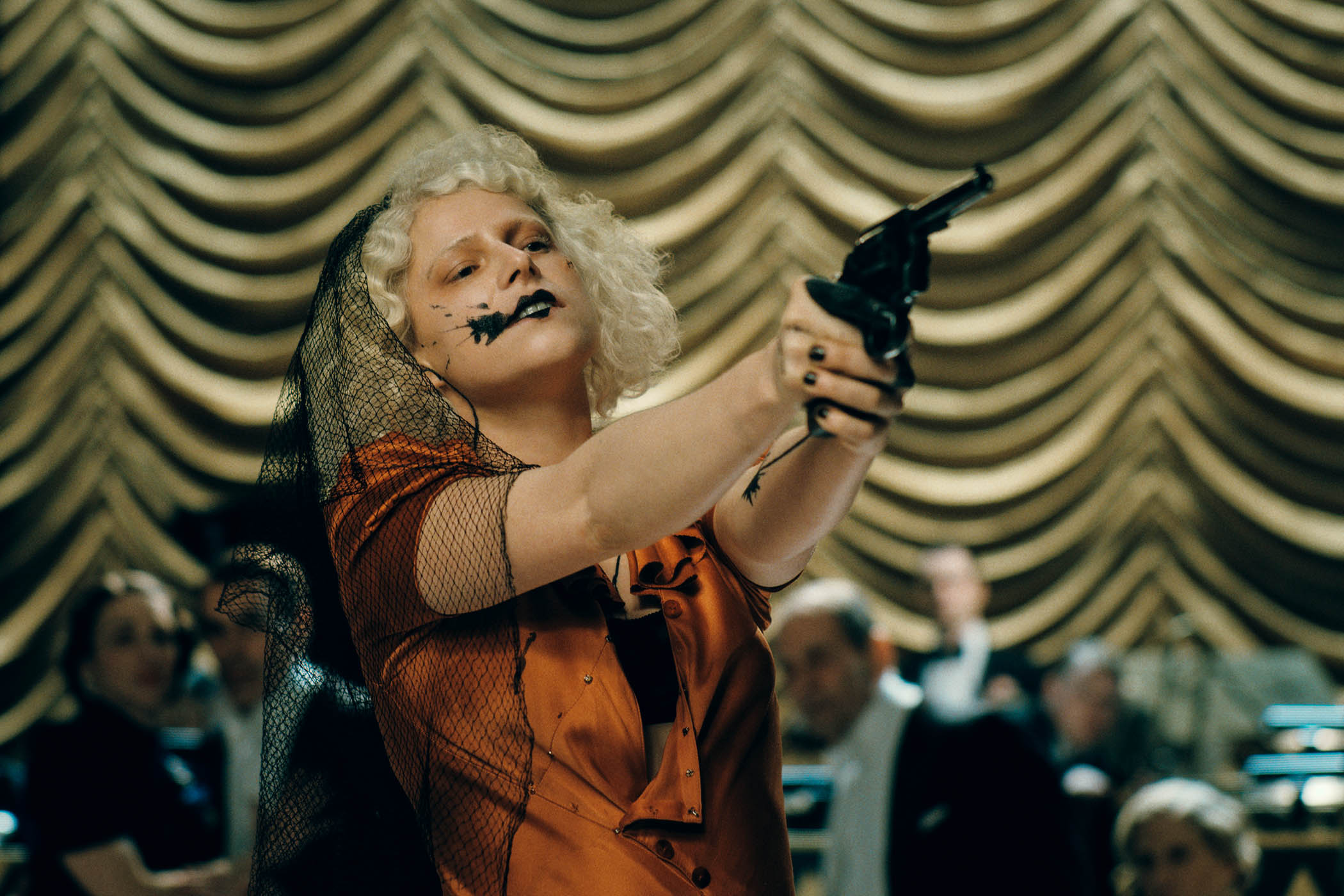
Buckley’s Ida is extraordinary, flinging herself around like a rag doll caught in the jaws of a pitbull
Buckley’s Ida is extraordinary, flinging herself around like a rag doll caught in the jaws of a pitbull
Elsewhere in the city, a man with a stapled face and oozing wounds seeks the help of Dr Euphronius (Annette Bening), a discredited scientist who claims to be an expert in “reinvigoration”. The monster, who calls himself Frankenstein (Christian Bale, bringing a gauche sweetness to his version of the creature), has spent more than a century alone and shunned.
He longs for a companion and asks the doctor to create one. Euphronius is initially reluctant to oblige (“I’m sure there are easier ways of getting sex”) but the monster appeals to her pride as a mad scientist. And so the body of Ida is disinterred from its shallow grave, still in a cheap tangerine satin party frock, teal stockings and new red boots. (Sandy Powell presides over the wardrobe department; everything else may be wildly all over the place, but the costumes are consistently superb.)
As she coughs up a lung full of inky black chemicals and a mouth full of profanity, it becomes clear that the reanimated Ida is not just a mate, but a monster in her own right. Gyllenhaal rather inelegantly weaves a proto #MeToo subtext into the story, with the bride somehow inspiring a pushback against the patriarchy. She might have no memory but this bride has her own mind. Except, of course, she doesn’t. Ida’s shattered consciousness is cohabiting with the erratic presence of Shelley, who intervenes – rather showily – at key moments. Buckley gives it her all, tackling the demands of the duelling personalities in a single body. She is extraordinary, flipping between accents and flinging herself around like a rag doll caught in the jaws of a pitbull.
Gyllenhaal’s magpie’s eye for movie references is fully indulged. The outlaw cross-country dash after a double murder is pure Bonnie and Clyde; 1930s Fred Astaire and Ginger Rogers-style musicals provide both a plot device and a stylistic reference (yes, there’s a dance sequence, because – why not?). Hildur Guðnadóttir’s lush, rippling orchestral score takes its cue from old Hollywood, but there’s also a contemporary flavour courtesy of the Swedish electro artist Fever Ray, who has an eye-catching cameo as a cabaret performer. Jake Gyllenhaal, meanwhile, charms his way through a supporting role as the monster’s suave movie star hero, song-and-dance phenomenon Ronnie Reed, who has overcome polio and disability to dominate the silver screen.
This gorgeously debauched film amounts to a chaotic, an uneven but oddly beautiful collision of ideas, all captured by an agitated camera as electrically charged as the life force that reanimates the bride herself.
Newsletters
Choose the newsletters you want to receive
View more
For information about how The Observer protects your data, read our Privacy Policy
Photograph by Warner Bros