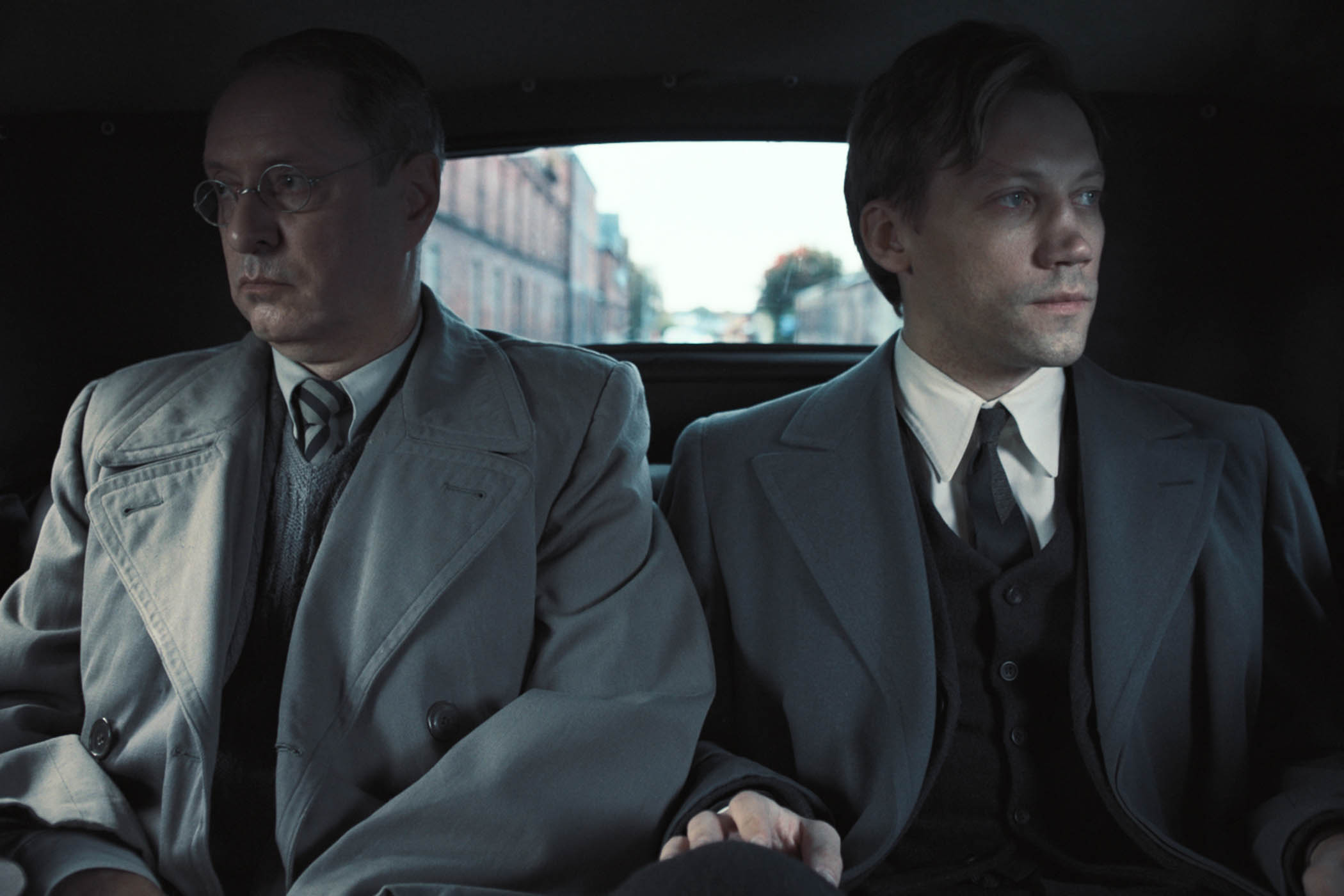

Honour and idealism collide with brute force in this masterful work of slow cinema from the Ukrainian director Sergei Loznitsa. The backdrop is the Soviet Union in 1937. Joseph Stalin’s great purges are cutting a swath through the old guard of Communist party members, while an oppressive atmosphere of suspicion looms over everything.
When Kornyev (Aleksandr Kuznetsov), the newly appointed investigative prosecutor for the Bryansk region, learns of corruption in the local branch of the NKVD secret police, he does his duty to his country and his job by the book. But he finds himself in a bureaucratic labyrinth in which every corridor is corpse-grey and every door is slammed in his face.
The film is extraordinary: the measured pace exerts an ever-tightening chokehold of tension, and the period details are brilliantly evoked. And, as with any examination of the savagery of totalitarianism, this story set nearly 90 years ago manages to feel chillingly relevant.
The consistently excellent Loznitsa comes out fighting with each new feature. He has an eye that is repeatedly drawn to stories of tyranny, injustice and crimes of the state: his documentary work includes Maidan, which traced the 2013 and 2014 civil unrest in Kyiv’s central square; Babi Yar. Context, about the 1941 Nazi atrocity in Ukraine; and State Funeral, which explored the aftermath of Stalin’s death. Loznitsa’s dramatic film-making, meanwhile, has explored themes such as propaganda and misinformation (Donbass), and the unrelenting shittiness of life (My Joy).
His filmography may seem unremittingly bleak, and it’s true that, as an experience, Two Prosecutors is like watching an unwitting woodland creature wandering perilously closer to a bear trap. But there are flashes of savage humour that cut through, in much the same way that sharp accents of Soviet red slice this film’s frostbitten colour palette.
He finds himself in a bureaucratic labyrinth in which every corridor is corpse-grey and every door is slammed in his face
He finds himself in a bureaucratic labyrinth in which every corridor is corpse-grey and every door is slammed in his face
Adapted from a novella by the writer and political prisoner Georgy Demidov, the drama gains its power as much from what it doesn’t show as what it does. There are unimaginable horrors hinted at from the opening scene, in which the latest group of emaciated convict labourers file into a prison yard. Their bodies speak of the ordeals they have endured: so frail, they seem to buckle under the weight of their ragged clothes; so thin that clawlike hands are perpetually clutching at the waistbands of trousers. One of the labourers gets assigned a relatively cushy job: to incinerate a sack of letters – petitions to Stalin – in an iron stove. Peeking at the contents, he finds a scrap of card with a message scrawled in blood, pleading for a meeting with a prosecutor. This discovery sets in motion the central story in which the recently graduated Kornyev braves the belligerent stares of the guards to request an interview with a high-profile political prisoner, Stepniak (Aleksandr Filippenko). What he witnesses will change his life.
It’s not exactly a thunderous freight train of a plot, but Loznitsa is a skilled architect of atmosphere. The locked, static shots are ominously protracted; the wary silences last a lifetime. Claustrophobia is created with the choice of the tight, almost square Academy aspect ratio. The edges of the frame close in on each scene like the walls of a cell.
Loznitsa fills the frames with faces and bodies that each tell a story. The fanged smile of an overly friendly passenger on a train is more threatening than the bullet-eyed glares of the uniformed thugs. Stepniak, with his hollow face and a cough that rattles his ribs, has a piercing gaze and a keen intellect. He is a man who has endured through sheer force of will.
Even the quiet, solemn Kornyev, whose innocence becomes a running joke among the older men he meets, has a broken nose and scar that suggest life has already roughed him up. Stalin’s regime cares little for honourable men.
Photograph by Janus Films
Newsletters
Choose the newsletters you want to receive
View more
For information about how The Observer protects your data, read our Privacy Policy