

Dead Man’s Wire
(106 mins, 15) Directed by Gus Van Sant; starring Bill Skarsgård, Dacre Montgomery, Colman Domingo
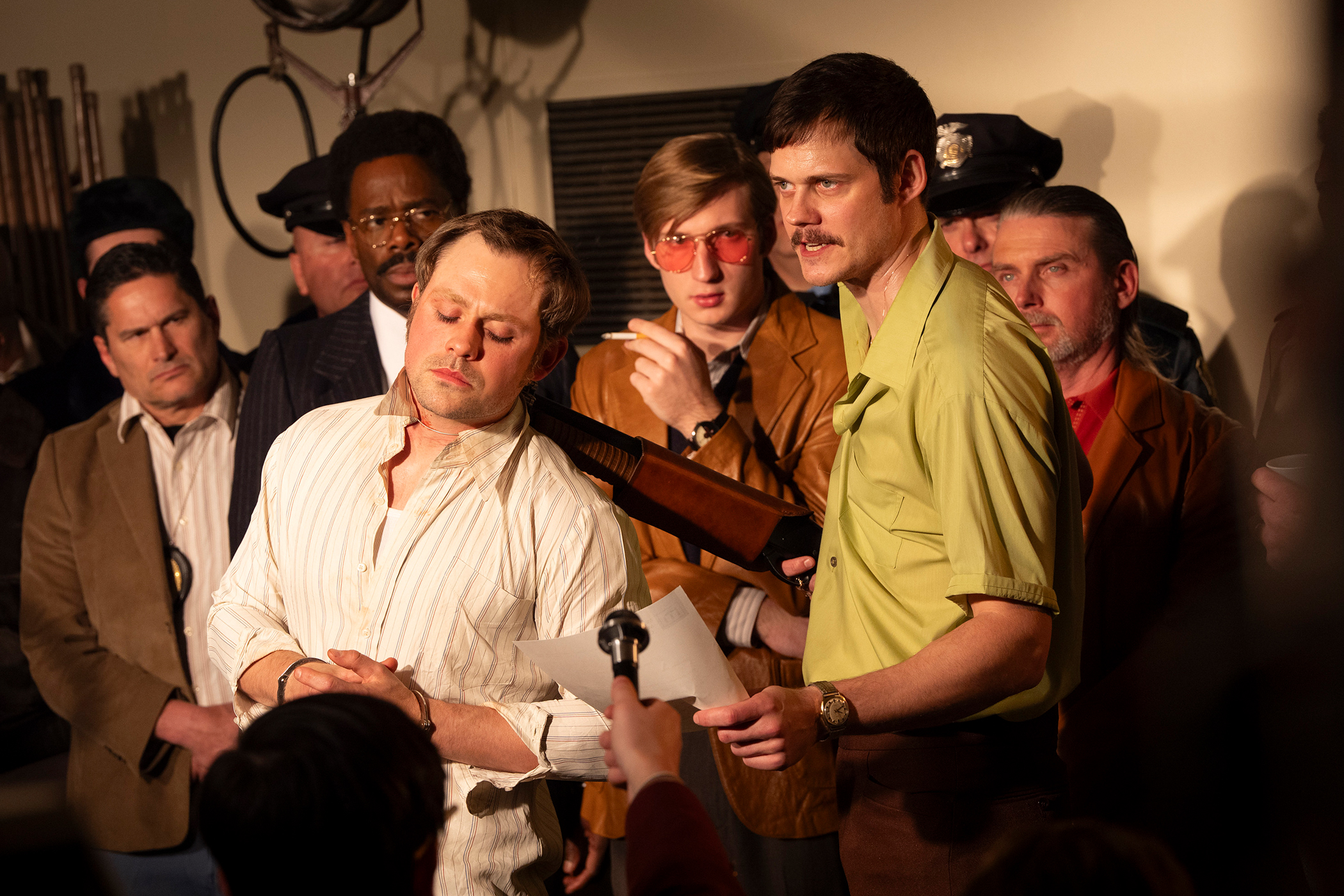
It’s not quite in the same league as Sydney Lumet’s Dog Day Afternoon, but Gus Van Sant’s no-frills account of the real-life abduction of mortgage executive Richard Hall (Dacre Montgomery) by aggrieved aspiring property developer Tony Kiritsis (Bill Skarsgård) is cut from the same sweaty, 1970s acrylic cloth. Kiritsis believes that Hall and his father (a savage cameo by Dog Day’s Al Pacino) have cheated him out of his investment in a piece of land.
Paranoid and tightly wound, he smuggles a shotgun into the offices of Hall’s mortgage company, where he places a wire contraption around his victim’s neck. The “dead man’s wire” is designed to trigger the shotgun rigged to Hall’s head if police sharpshooters attempt to kill him.
Played with jittery, boggle-eyed intensity by Skarsgård, Kiritsis is positioned somewhere between delusional crackpot and anti-establishment folk hero. But while there’s an element of sympathy for this desperate, misguided man, Austin Kolodney’s caustic screenplay is laced with dark humour, much of it at the protagonist’s expense.
Van Sant’s first feature since Don’t Worry, He Won’t Get Far on Foot in 2018, this is a taut and enjoyable thriller, albeit one that skimps slightly on characterisation. But elsewhere, the detail is spot-on: the backdrop – Indianapolis in 1977 – is recreated with meticulous attention to the textures and nicotine-stained tones; and the soundtrack, as broadcast by a suave local radio DJ played by Colman Domingo, is a suitably soulful affair, with tracks by Donna Summer, Barry White and Labi Siffre, plus Gil Scott-Heron’s ubiquitous The Revolution Will Not Be Televised.
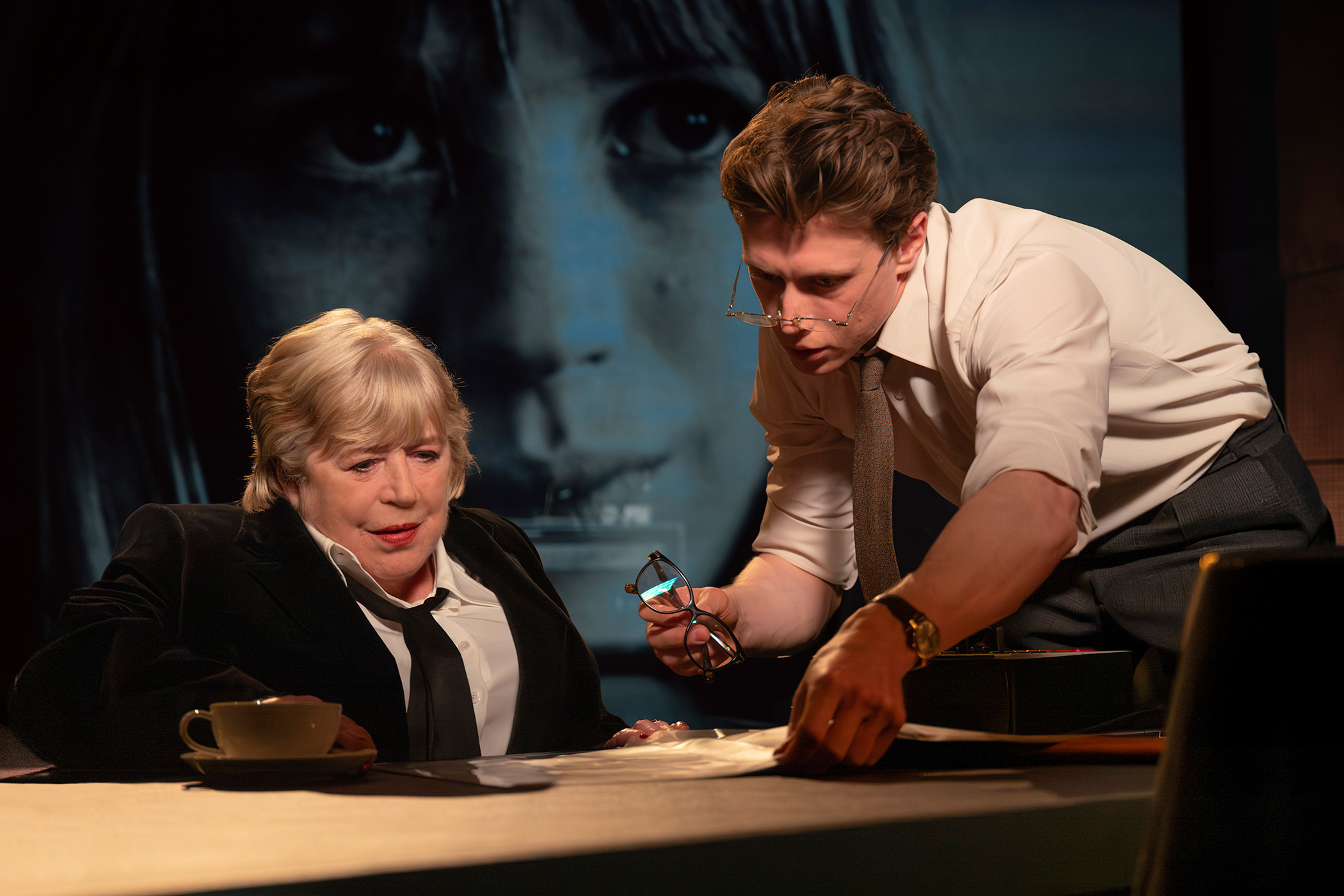
‘As much like an installation art piece as a documentary’: the late Marianne Faithfull and George Mackay in Broken English
Broken English
(99 mins, 15) Directed by Iain Forsyth, Jane Pollard; featuring Marianne Faithfull, Tilda Swinton, George MacKay
For too long, the story of Marianne Faithfull was written by other people. Men, usually, smirking and superior in late-night television interviews, with their prurient assumptions on show. But this playfully creative and unconventional portrait redresses that balance. Directed by Iain Forsyth and Jane Pollard, whose previous films include the Nick Cave picture 20,000 Days on Earth, and made in close collaboration with Faithfull in the final years of her life, this is an idiosyncratic project that seems as much like an installation art piece as a documentary.
A dramatised device – a fictional government department, named the Ministry of Not Forgetting – provides an entry point to her story. On the ministerial instructions of the Overseer (played by Tilda Swinton), the Record Keeper (George MacKay) is investigating the life and work of the singer-songwriter and actor. A deft and sensitive interviewer, MacKay leads Faithfull through an extensive collection of archive material.
Newsletters
Choose the newsletters you want to receive
View more
For information about how The Observer protects your data, read our Privacy Policy
The approach can feel at times arch and gimmicky, but there’s a cumulative power to the feature, leading finally to a shattering final live performance of her 2018 song Misunderstanding.
Arco
(89 mins, PG) Directed by Ugo Bienvenu; voiced by Margot Ringard Oldra, Oscar Tresanini, Nathanaël Perrot
A French animation with stylistic roots in Japanese anime and a familiar buddy movie plot, Arco might not be the most original picture, but it has a great deal of charm. Arco (Oscar Tresanini) is a boy from a distant future in which humans over the age of 12 can fly through space and time. He is still too young to do so, but on a whim, steals his older sister’s rainbow-hued flying suit, only to crash land in the year 2075. There, he meets 10-year-old Iris (Margot Ringard Oldra), who hides her new friend from the authorities and creepy brothers who are also hunting the boy.
The 2D character design is rudimentary, but the lush, richly detailed backdrop brings Arco’s techno-agrarian homestead and Iris’s blighted world to vivid life.
The Good Boy
(110 mins, 15) Directed by Jan Komasa; starring Stephen Graham, Andrea Riseborough, Anson Boon
This bracingly nasty drama introduces us to its reprehensible central character through a jump-cut montage of coke, pills, booze and violence. Teenager Tommy (Anson Boon) is an unapologetic thug with a TikTok following and taste for chaos. But one night, he is snatched from the streets and wakes, bleary from chloroform, chained in the basement of a country mansion. It’s the home of Chris (Stephen Graham) and Kathryn (Andrea Riseborough) and their 10-year-old son.
The plan, explains Chris calmly, is to re-educate Tommy with the judicious use of Tasers and a retractable baton, with the ultimate aim of making him part of the family. This is a curious, unsettling picture, with parallels to A Clockwork Orange: in this meeting of monsters, Chris is every bit as repellent and inhuman as Tommy at his rampaging worst.
La Grazia(133 mins, 12A) Directed by Paolo Sorrentino; starring Toni Servillo, Anna Ferzetti, Orlando Cinque If Paolo Sorrentino’s previous film, the showy, shallow Parthenope, was a hedonistic riot of excess, his follow-up is a sober, morning-after contrition. The director’s regular collaborator Toni Servillo plays a widowed Italian president close to retirement, who must wrestle with ethical dilemmas from euthanasia to clemency for a convicted killer. It’s a pensive, soulful work elevated by Servillo’s superb performance.
But the director’s penchant for wistful shots of the leader in various scenic locations means there are long stretches of the film in which nothing of consequence is happening. Sorrentino’s 2008 film, Il Divo, is a much more dazzling foray into the world of politics.
Photographs by Stefania Rosini/Row K Entertainment