

You first hear the nightingales from several fields away; the males can sing at 90 decibels. We’re walking through Sussex woodland at midnight, 60 of us, all in single file and in complete silence, with no light but the full moon. It already feels like a quasi-mystical experience, something that few of us – women in particular – would ordinarily dream of doing; becoming part of the hidden nocturnal world, ears pricked for the rustles and scuffles of the night and the frass of caterpillars falling like fine rain. As we approach, otherworldly music appears to solidify out of the air: liquid, fluting trills followed by riffs that sound, at times, like electronic beats. In the pale light, I can see the faces of my fellow pilgrims open in wonder.
At the head of our procession is the folk musician and activist Sam Lee, who has been leading the Singing With Nightingales experience in this secret location near Lewes for 11 years. For the six or so weeks of the nightingales’ breeding season, Lee hosts these events with a different guest musician each night (artists this season include Charlotte Church, Soweto Kinch and Olivia Chaney). There’s food, music and stories around a campfire as Lee shares his passion for these small migrant birds, so unassuming to look at, but so much a part of our collective consciousness that they have been intimately woven into our folklore, music and poetry for centuries.
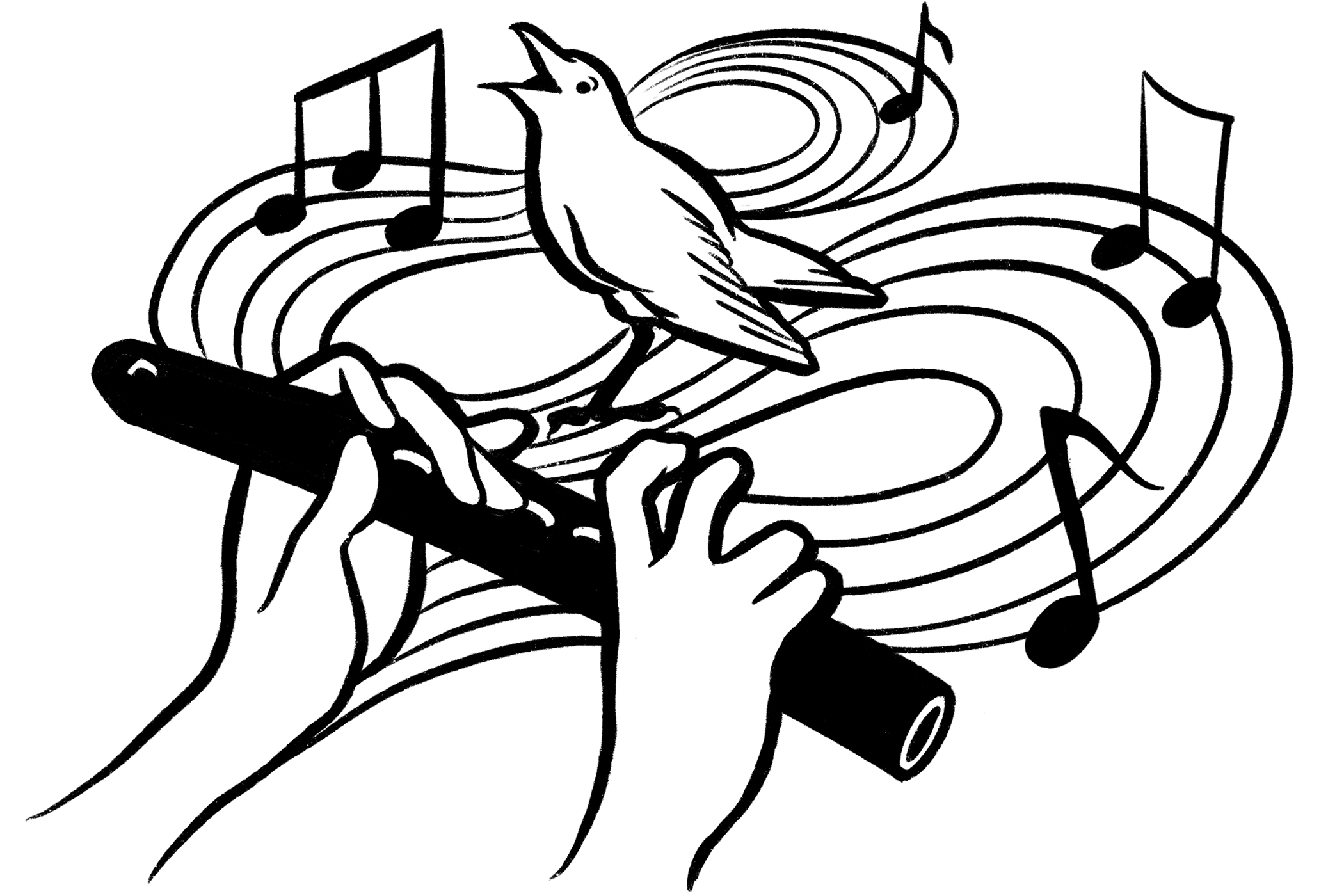
At the heart of the experience is the midnight foray into the woods to hear the birds up close. We emerge silently from the trees and gather in a semi-circle about six feet from a hedge where one of the nightingales is pouring forth his soul in ecstasy, as Keats more or less has it. Then something extraordinary happens: Lee plays soft drone notes on an Indian shruti box and the bird modulates its pitch to accommodate the music. As the musicians perform, the nightingale responds, adapting the tempo and repetitions of its phrases.
Newsletters
Choose the newsletters you want to receive
View more
For information about how The Observer protects your data, read our Privacy Policy
Lee – who possesses the kind of charisma that makes me think of those itinerant medieval sages who would travel from village to village, attracting followers by force of personality – was inspired by the story of the cellist Beatrice Harrison, who performed with a nightingale in her garden on the BBC’s first outside broadcast in 1924. He explains that the male nightingales appear to sing not only to secure a mate, but also out of simple delight in the music; males will sometimes duet with one another, or pass the same phrase down a line of birds.
There are few moments in modern life that can be described as “transcendent”, but after my third Singing With Nightingales event, I still can’t find a better word. This is supercharged nature connection, but it’s more than just a feelgood festival vibe for middle-class hippies. The nightingale is now red-listed in the UK; loss of habitat, rising temperatures in their sub-Saharan winter homes and other environmental threats have reduced numbers in the UK to around 5,500 breeding pairs.
Lee maintains that we won’t protect what we don’t love; the hope is that through an intimate experience of this remarkable bird, we will be galvanised to effect change. Whether that’s enough to halt the decline is open to debate. But if the last nightingale might sing in England in my lifetime, I intend to be there to hear it.
More In Real Life:

Illustration by Oscar Ingham