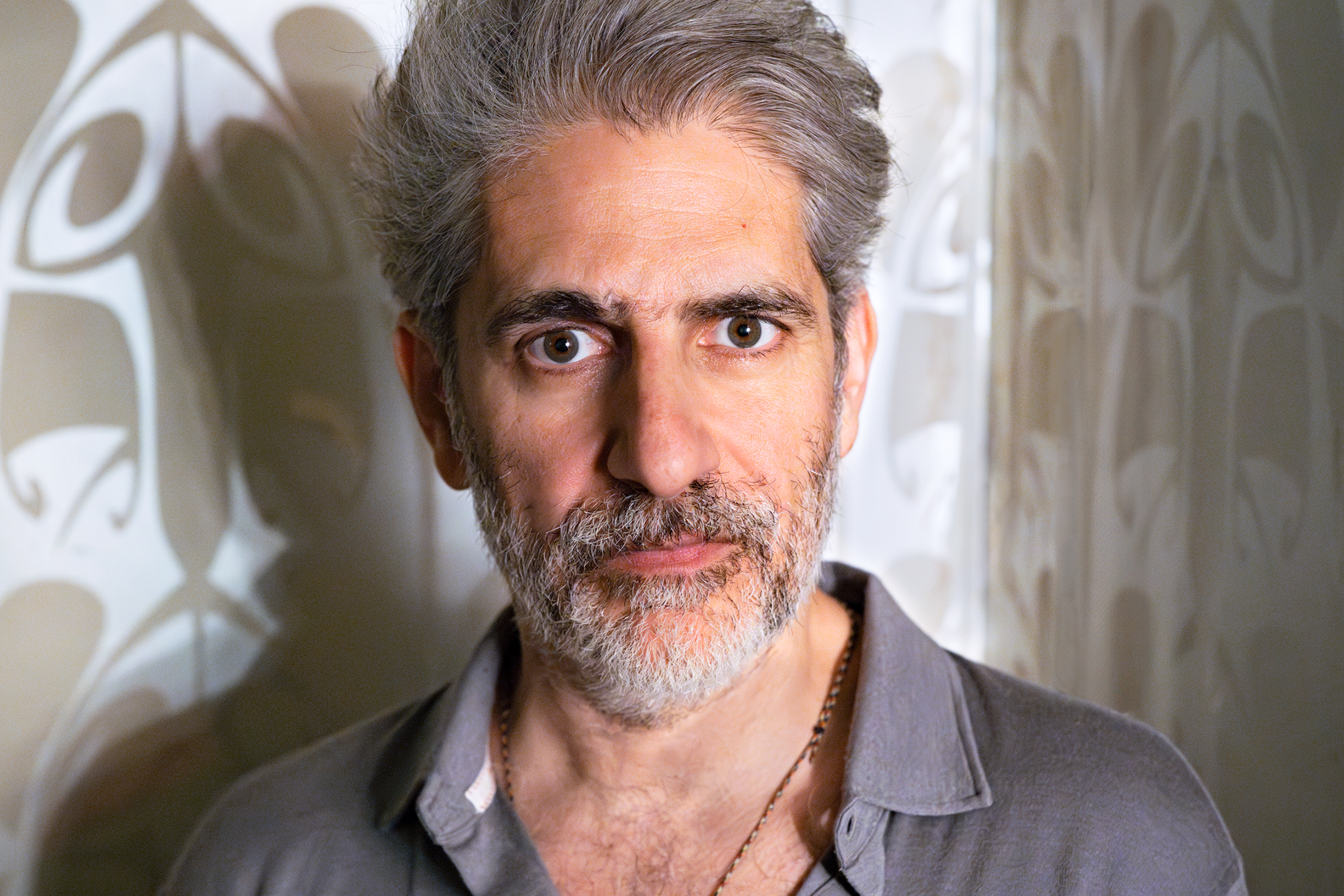
Michael Imperioli, 59, made a mark as Spider in Martin Scorsese’s Goodfellas in 1990 before playing the role of Christopher Moltisanti in David Chase’s groundbreaking TV show The Sopranos (1999-2007), for which he was awarded an Emmy for outstanding supporting actor in a drama series. He has appeared in six Spike Lee films and was in the second season of Mike White’s HBO series The White Lotus. He is the author of a New York-set novel, The Perfume Burned in His Eyes, and plays in a rock band, Zopa. A committed Buddhist, he leads online classes in meditation. Talking Sopranos, the podcast he hosts with fellow cast member Steve Schirripa (Bobby Baccalieri), is coming to the UK as a live show in February and March.
It’s been nearly 20 years since The Sopranos ended. Did you think you’d still be talking about it after all this time?
No. Most series never have that kind of life. I started to notice it around 2019, the 20th anniversary of the first episode. I was shooting in Central Park, this kid and his father were tourists from Scotland, and the dad said his kid was a fan. He was 19 and he had a tattoo of my character on his calf! I started becoming aware, particularly through Instagram, that this whole young generation had adopted the show. Now, every Halloween, I get all these Instagram tags from fans who dress up as Christopher and Adriana for Halloween. And they’re all kids.
Is there anything challenging about having to keep re-engaging with something from your past?
Listen, this business is very hard. To work in this business and make a living is pretty much miraculous, and to be known for some piece of work you did in this way is exceptional. If I hadn’t had a career beyond The Sopranos, I don’t know if I’d be so enthused about the stuff I do – like the podcast and the live podcast and all that stuff. But I’m pretty satisfied with my career. So, I don’t feel stuck in the past. Being known publicly has its own challenges; and it feels like I’m a lot more known than I was when the show was on. But you know, I’m not going to gain any sympathy talking about that; that’s a luxury problem.
Christopher Moltisanti and Dominic Di Grasso in The White Lotus seem to know that they’re not the men they could be. Christopher’s addiction to drugs and alcohol; Dominic with this destructive pull towards young women at the hotel. What draws you to those characters?
The fascination is with this big obstacle that they’re trying to claw their way over. With Dominic, sometimes he felt he could conquer his demons; but sometimes he couldn’t. The question always is: OK, can we live with this? Can I be this way and still be a family man? A husband? Can I still be loving? And with Christopher, it’s a similar thing: can he have this successful life that is often at the expense of a lot of blood? There’s this internal struggle of the forces that are out of your control, that take over and take possession of you. That’s really fun stuff to play. With The White Lotus, what drew me to that first was four months in Sicily! But then I watched the first season of the show, and I just thought it was brilliant and the characters were so well-written. The whole production was a joy, every aspect of working with Mike White; he was directing all the episodes, he was writing all the episodes. And we were all living in the hotel, the San Domenico Palace, which was closed to the public for the first couple of months. It was just us and the staff and we just took the elevator to work, which was really fun.
What’s been most satisfying about doing the podcast and the live shows?
Realising what kind of space The Sopranos occupies in people’s lives. For some reason – and it’s a little strange to me – they feel safe watching it. They feel like, in a world that’s constantly changing, in flux, that’s difficult and scary, there’s a constant where they know what’s going to happen. It’s a world with rules, too. They know these characters. That’s what we’ve tried to connect with.
You have a lot of strings to your bow. You’re a novelist, for one. What made you turn to prose fiction?
I’d been developing a few projects for television and none of them came to fruition. I just got really frustrated with the interference and the obstacles: I thought, I want to do something where it’s down to me. Of course, with a book you have to get a publisher, but as far as the making of the content goes, it’s just you from beginning to end. And I love books, I love literature. At the time I was living in Santa Barbara, and it was so different from New York, where I’d been playing music, where I had an artistic community. So I started writing a novel.
In talking about the characters of Christopher and Dominic, I was struck by the way you asked, ‘Can we live with this?’ Does that question connect to the practice of Buddhism?
To really practise Buddhism, you have to be brutally honest with yourself. That’s a big, big part of it. I don’t think of it as a religion; it’s more like a science, of working with your own mind. It’s not about having faith in things you can’t see. So the idea of denying reality becomes a lot more difficult if you’re really trying to be honest with yourself. You can do it without judgment, but you’re really figuring out, for your life: is this something I have to change? That’s what I’ve discovered about it. I think that’s the connection for me. Buddha wasn’t a Buddhist, you know, he was just like: this is what I’ve discovered, and this is what I’ve done to get there. He says: “Don’t take my word for it. You test the waters and see if this works for you.”
I found myself saying to someone recently that if you want to understand US politics these days – Donald Trump’s crew – you should watch The Sopranos. I wonder how that strikes you.
I think they’d probably be flattered by that. I’m not being facetious. I think, sure, there’s an element of might makes right, now. That’s the Tony Soprano ethos, right? But that’s a whole other conversation.
The Talking Sopranos UK tour begins in Belfast on 15 February and runs until 2 March
Photograph by Lauren A. Krohn