Nisreen Qawas has developed a technique to help her face the relentless pressures of her job. “I have this trick called ‘freezing’, which is a kind of defence mechanism that I use for my mind and my body whenever I am in an extreme stress situation,” she tells me over a video call. “I don’t cry. I show a calm face, but inside me, there is a volcano that is ready to erupt at any moment.”
Since October 2021, Qawas has been director of mental health and psychosocial services for the Palestinian Red Crescent Society (PRCS), whose headquarters are in Ramallah in the occupied West Bank. The humanitarian organisation, which is affiliated with the International Red Cross, provides aid and support for communities caught up in the conflict there and in Gaza.
She grew up in the nearby village of Jifna, and studied psychology and counselling at the universities of Damascus and Jordan. I spoke to her in early December 2025, just weeks after the ceasefire between Israel and Hamas was agreed on 10 October. I begin by asking her if Ramallah is relatively peaceful.
“Actually, no,” she replies, shaking her head. “We are situated on the border of al-Amari refugee camp and, less than an hour ago, Israeli forces bombed some of the buildings there. We were told to not open windows or go outside until the operation finished.”
This, it turns out, is a regular occurrence: “It happens sometimes once a week – sometimes more than that.” Her team deals with about 100 requests for help daily from across the West Bank and beyond. “Since the war started, the demand for psychosocial support has been extremely high,” she says, “but we don’t have nearly enough clinical psychologists and psychosocial support workers. We lost two volunteers in this war and in Gaza there are only 10 Red Crescent workers operating there now. We depend on trained volunteers to do what is called ‘psychosocial first aid’.”
With the dead in Gaza now estimated at more than 70,000 and about 90% of the population displaced, the amount of trauma experienced by survivors is, I say, almost unimaginable to an outsider such as myself. “Yes, it is of a different level. In Palestine, we don’t have post-traumatic stress disorder because the conflict is not post; it continues.”
Almost two years ago, Qawas’s resolve was tested in a way that even she was utterly unprepared for. “We are all very well trained, but none of us had ever faced the experience of a young girl dying over the phone,” she tells me solemnly. “None of us had sat for hours with a five-and-a-half-year-old child begging for her life, begging to be rescued. No training in the world can prepare you for such a call.”
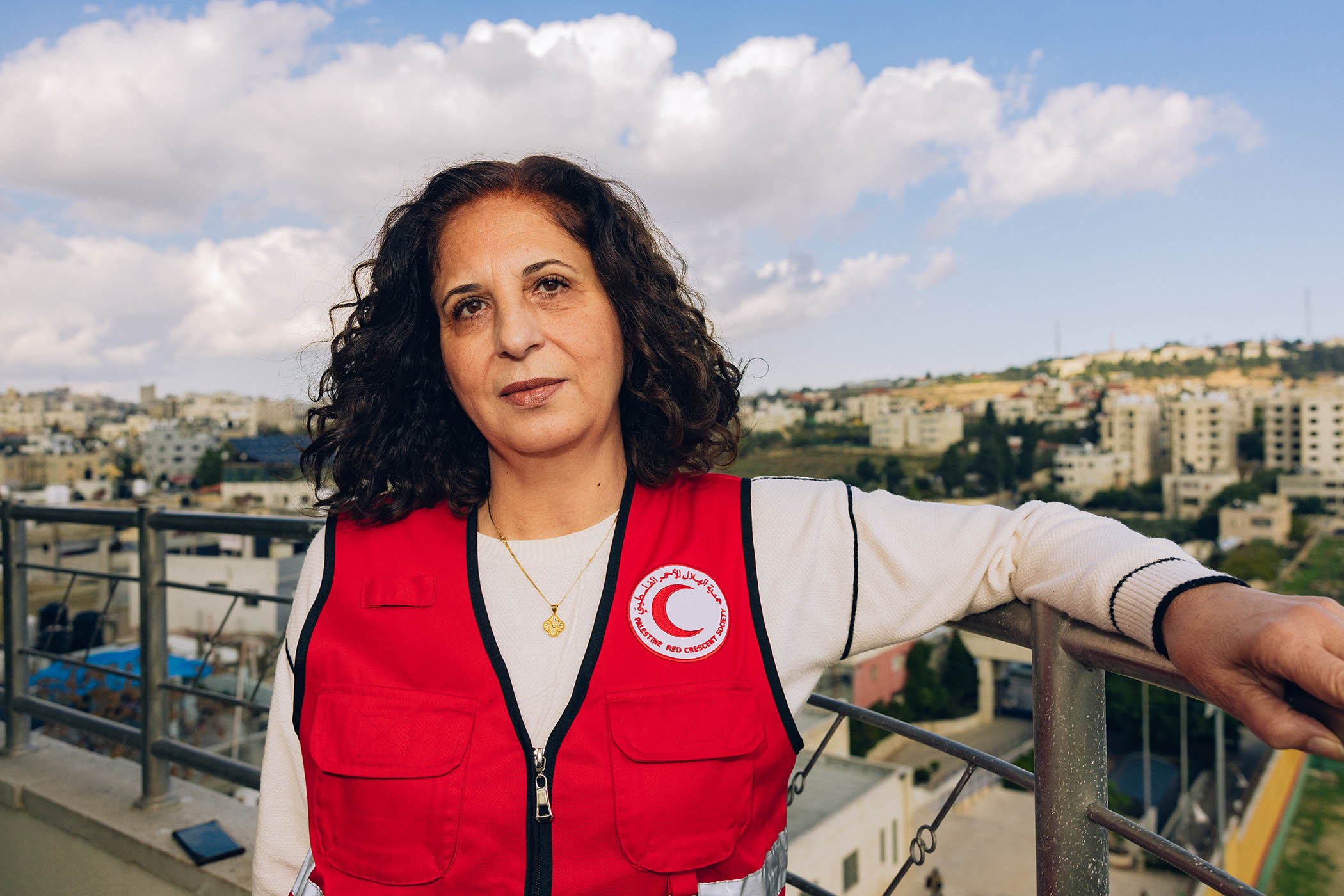
Nisreen Qawas of the Palestinian Red Crescent Society
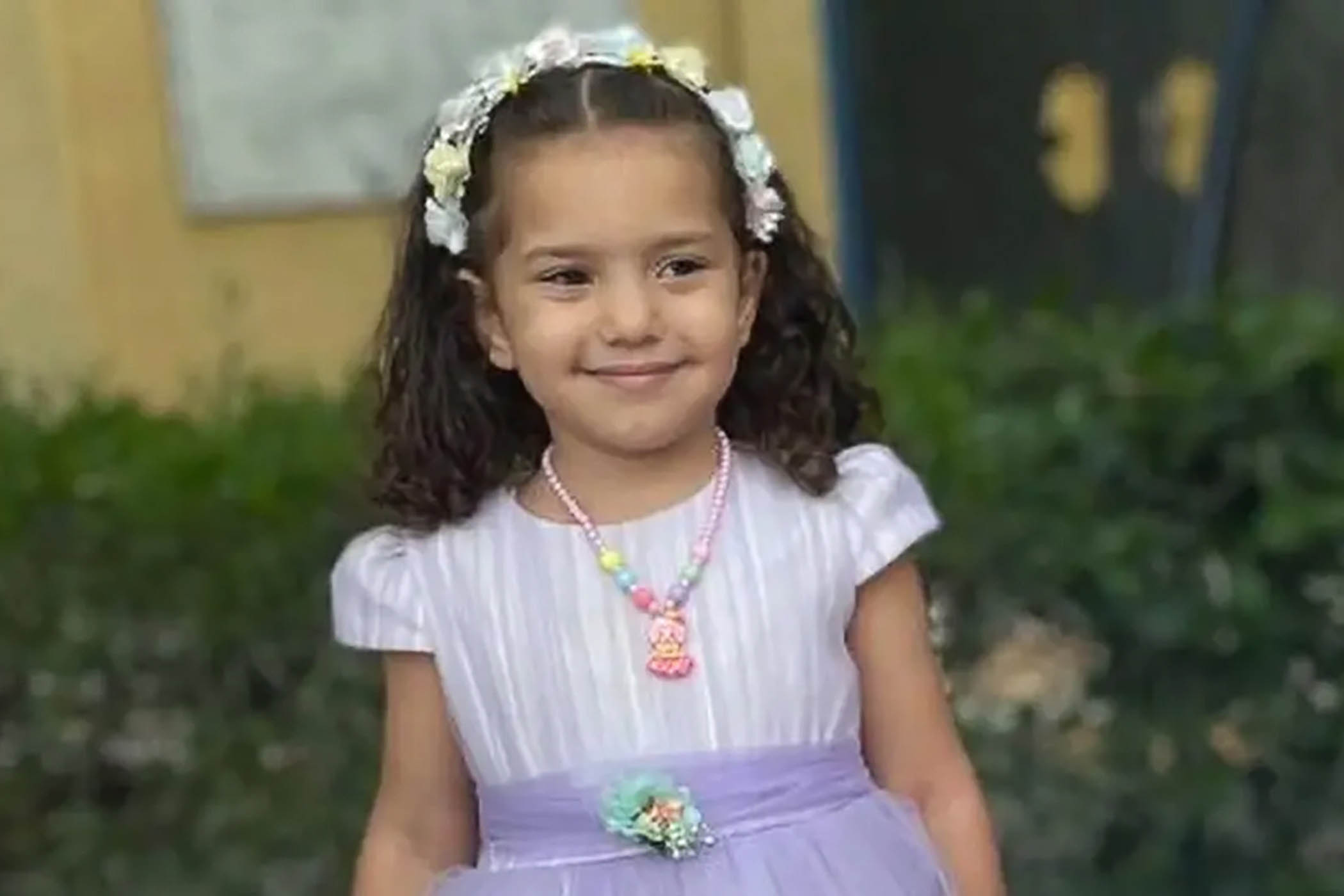
That young girl’s name was Hind Rajab. Her voice echoed around the world when an audio recording of her final hours was posted on social media by the PRSC on 30 January 2024, the day after her death. On the recording, she pleaded with responders to come and rescue her from the car her family had been travelling in, which had come under fire from the Israel Defense Forces (IDF). She was surrounded by the bodies of six members of her extended family, who had been killed while they were fleeing an area of Gaza that had been designated a high-risk red zone by the IDF.
Hind had been wounded in the attack, but spoke with the responders for three hours as they tried to reassure her that help was on the way. When paramedics were finally given the green light to follow a designated route to the car, their ambulance was shelled by the IDF. Two paramedics, Yusuf al-Zeino and Ahmed al-Madhoun, were killed instantly. In the immediate wake of the explosion, Qawas was speaking to Hind when the phone went silent.
“That silence did not just last the following hours, but for 12 days [until Hind, al-Zeino and al-Madhoun were confirmed dead],” she says, “while we were asking the whole world: ‘Where is Hind? Where is Yusuf al-Zeino? Where is Ahmed al-Madhoun?’”
Investigations published months later by the Washington Post and the British human rights research organisation Forensic Architecture contradicted Israel’s claims that none of its troops were in the area of the killings at the time and concluded that an IDF tank’s machine gun had fired 335 rounds on the car from close range.
By then, Hind’s voice had become a clarion call for pro-Palestine protesters across the world. Her plaintive pleas for help remain for many a symbol of the brutal inhumanity of Israel’s relentless assault on Gaza, where it is estimated that more than 20,000 children have been killed since October 2023. That’s at least one Palestinian child killed every hour.
Now the events of that day have been distilled into an almost unbearably emotive docudrama, The Voice of Hind Rajab, by the Tunisian film director Kaouther Ben Hania. Set in the control room of the PRCS’s offices in Ramallah, it features powerful performances from Palestinian actors who play members of the response team.
It is a distressing film that centres on their increasingly frantic attempts to organise a safe route for an ambulance to reach the wounded girl.
Throughout, Ben Hania uses real audio recordings of Hind’s voice as she pleads with the responders to save her. Some critics have expressed reservations about the director’s blending of reality and drama, but I found it utterly compelling – formally and emotionally. The film received a 23-minute standing ovation after its world premiere at the Venice film festival last September and, when I attended a screening at last year’s London film festival, the long silence that followed was as deep as any I have experienced in a cinema.
A few weeks before we spoke, Qawas had attended the Middle East premiere of the film at the Doha film festival, where she and her team met the director and cast members, including the actor who played her, Clara Khoury. “We had not met in person until then, but we had spent hours and hours talking over the phone while Clara was preparing for the film,” says Qawas. “When we first spoke, she said to me: ‘I just want you to tell me your life story. I want to hear you and where your voice goes when you are stressed and when you are angry.’”
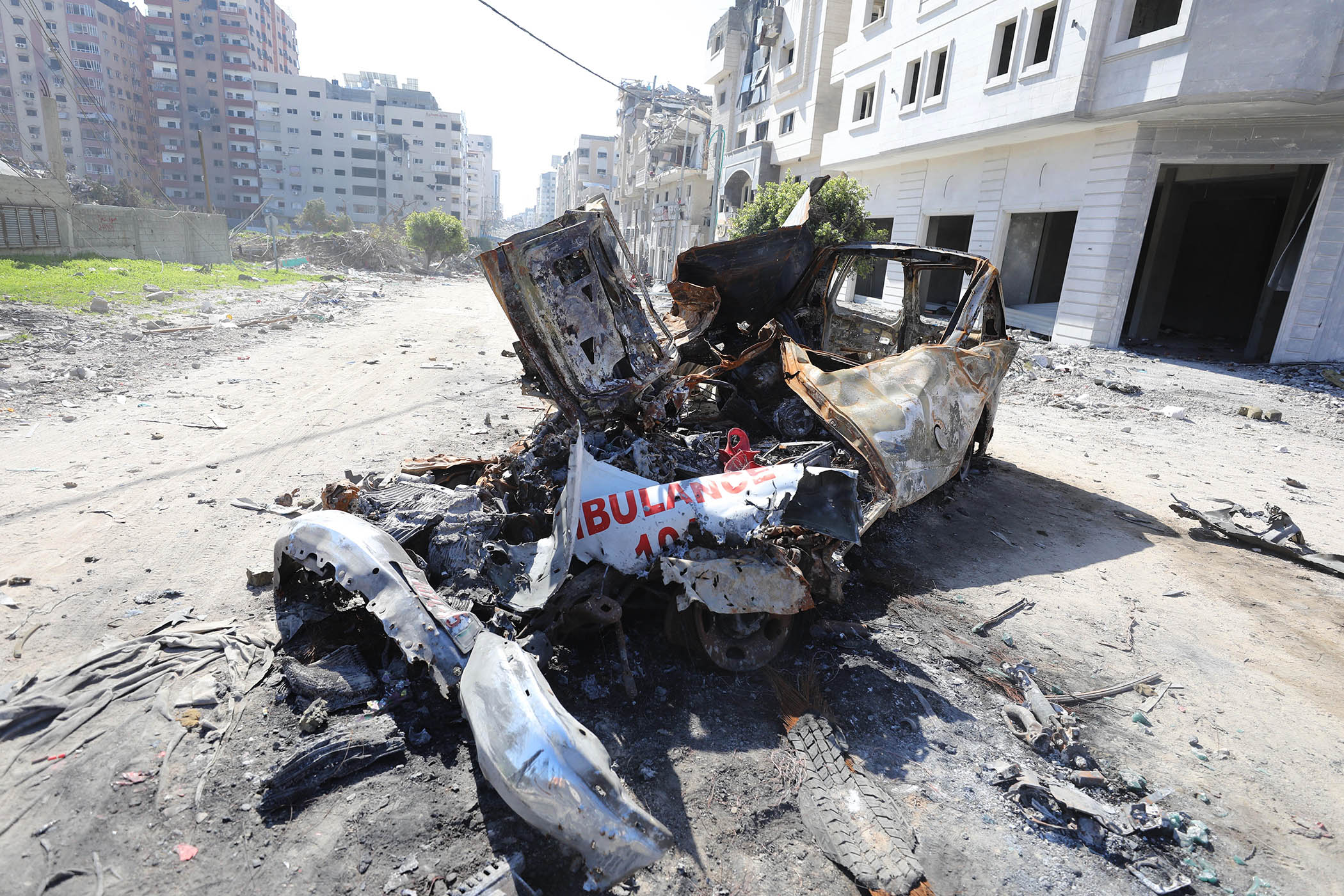
The ambulance sent to help Hind Rajab’s family in Gaza City
When I ask Qawas to describe her experience of watching the film, she falls silent for a long moment. “It was very, very difficult. For one and half years, we were trying to heal from the wound of that day and the film brought it all back to the zero point. But I am glad the film was made so all the world will know what really happened.”
She says that seeing the film did not trigger her because of the freezing technique. “It was a trick used when I was on the phone with Hind and, ever since, no matter what happens, it is very hard for me to cry. It is hard for my tears to drop.”
When Qawas revisits the day of Hind’s death, she seldom uses the word “Israel”, referring to the country and its army as “the occupation”. She begins by telling me how, on that day in January 2024, her colleague Omar al-Qam answered a call from a Palestinian man, Mohammed Hamada, who lived in Frankfurt. He had heard from relatives in Palestine that his aunt’s family had been “shot” by Israeli forces in Gaza.
When Qam called the number Hamada had given him, a 15-year-old Palestinian girl, Layan Hamada, answered. She was crying and pleading for help. “They are shooting at us,” she sobbed. “The tank is right next to me. We’re in the car, the tank is right next to us.” He then heard the sound of machine gun fire echo down the line, followed by the girl’s screams. Then all was silence.
A few moments later, another responder, Rana Faqih, called the number and Layan’s five year-old cousin Hind answered. She told Faqih that everyone else in the car – her uncle, aunt and four cousins, one of whom was Layan – had been killed and that the Israeli tank was moving closer to her.
“Layan died over the phone while she was talking to my colleague Omar,” says Qawas. “Her body was lying on one side of Hind and the body of another cousin, Sarah, who had been killed earlier, was lying on her other side,” she adds. “Can you imagine that, for hours, this five-year-old girl was surrounded by the six bodies of her relatives?”
For what would turn out to be the last three hours of Hind’s life, the PRCS team, led by Qawas, tried to comfort her while a supervisor, Mahdi Aljamal, attempted to secure a safe route for paramedics. In Ben Hania’s film, as the hours creep by, tensions simmer in the PRCS control room. At one point, Qawas’s colleague Qam (played by Motaz Malhees) directs his frustration at the lack of progress at Aljamal (played by Amer Hlehel). I ask Qawas if the scene reflected the actual tensions of the day?
“It was accurate, yes. At times, my colleagues were banging their hands on the wall, shouting and crying because time was running out. This is a girl who is injured, darkness is coming soon, and she is alone and afraid.” She pauses for another moment. “It is important to say that the people in the room were not failing – it was the occupation that kept failing us.”
The PRCS does not speak directly to Israeli authorities. Therefore, from 3pm to 6pm, a complex negotiation between several intermediaries was under way to grant access for an ambulance to rescue the girl. Meanwhile, both Qawas and her colleague Faqih, alongside Hind’s mother, Wissam, who was connected to her daughter on another phone, were trying to distract and console the increasingly distressed young girl by chatting to her about her everyday life. All the while, Qawas tells me: “Hind kept asking the question we could not answer: ‘Why don’t you come and get me?’”
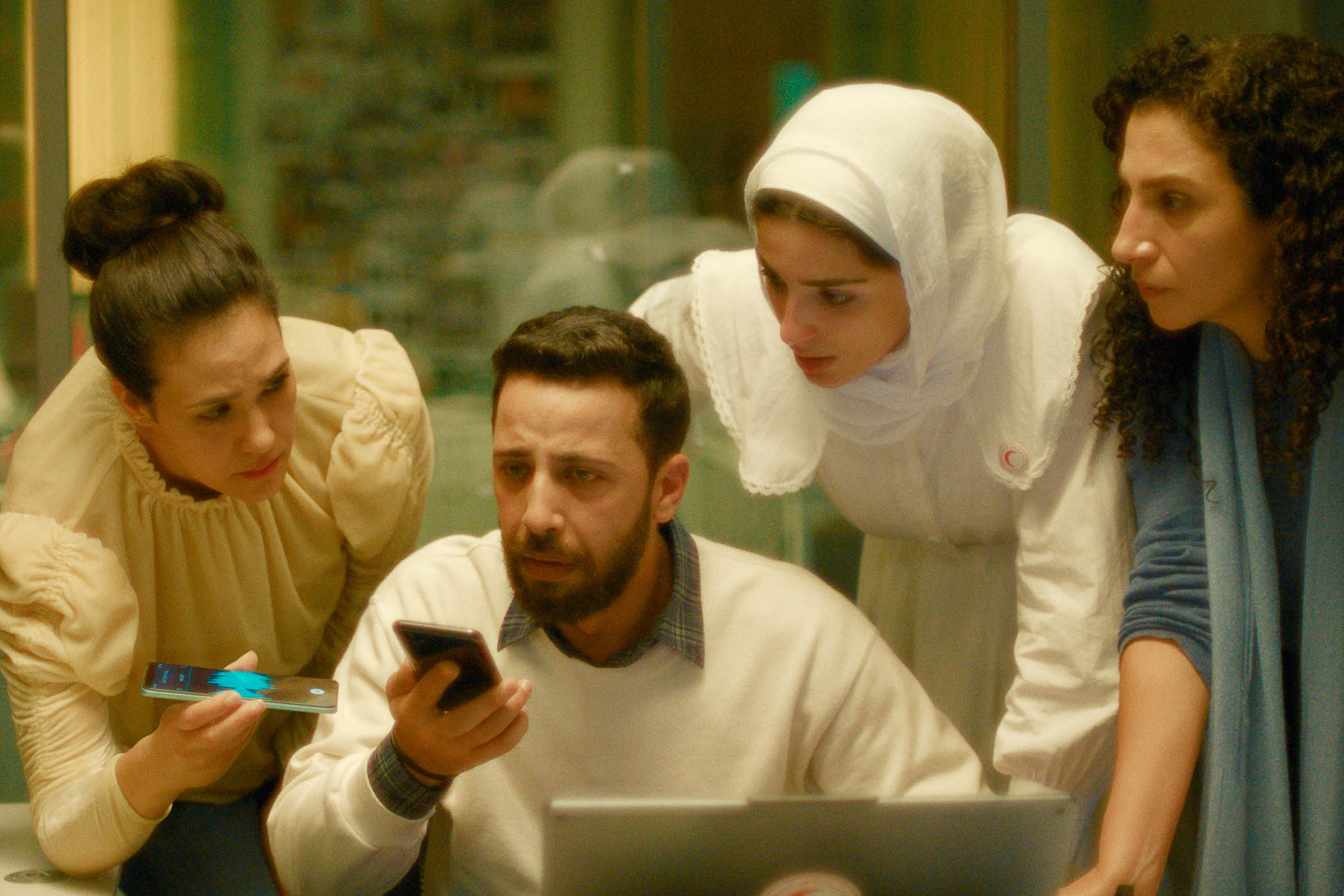
A scene from the The Voice of Hind Rajab, starring Clara Khoury, far right, as Qawas
I ask her if she is haunted by that simple, but ultimately unanswerable, question?
“I would be lying if I said I wasn’t,” she says quietly. “It was impossible to make a five-year-old girl understand that we need to coordinate with the occupation and we need to wait until they give us an answer. Anywhere else in the world, if anyone calls for help, the ambulance will come immediately. That is what Hind has seen in films, so that was her expectation.”
At about 5.40pm, permission was finally granted for the ambulance crew to proceed, but even then, progress was slow because of a point on the designated route that was blocked by stones and rubble. “We were telling Hind: ‘It will only be five minutes and you will be rescued.’ In that last hour, I was inventing conversations just to take her mind off the question she kept asking: ‘Where are you?’” Qawas pauses for a moment. “In the end,” she says quietly, “she lost trust with me, because I gave her so many promises.”
When the ambulance crew was finally given a designated route around the obstruction, it reached a point in front of a petrol station. “They could see the car in front of them,” says Qawas quietly. “That is when the ambulance was bombed.” A transcript of the conversation between the control room and the paramedics paints a stark picture of those final moments.
Control room: “Can you see the car?”
Ambulance: “I can’t see a thing here.”
Control room: “Do you have your siren and flashing lights on?”
Ambulance: “Just the lights, not the siren ... oh there it is!”
[Explosion]
There was a sense of stunned disbelief in the control room and then Qawas asked Hind if she too had heard the explosion. “She answered: ‘Yes, I heard it,’” recalls Qawas. “I did not want to believe that, so I asked her to count from one to 10 to try to access her level of consciousness. Then I asked her again and her answer was the same.”
By then, Hind was sounding increasingly panicked, though Qawas was uncertain if that was because of the proximity of the explosion, or her fear of the approaching darkness, or because she was losing blood. “She told me she was bleeding,” says Qawas. “And when I asked her from where, she said: ‘My mouth, my tummy, my legs, everywhere.’ I said: ‘Sweetheart, can you use your blouse to try to wipe out the blood and see if it comes back again?’ I will never forget the answer she gave me. She told me: ‘I don’t want to do that because I don’t want my mother to be tired from washing my clothes.’ Her mother told her: ‘Don’t worry, habibti [my love], do as Nisreen tells you. I will wash everything for you.’
“Can you imagine this? She is a child, she is wounded, hungry, thirsty and afraid and she is thinking of the effort her mother will put into washing her clothes.” She pauses again. “Those were the last words that Hind said. The phone went down and I kept trying for one more hour to connect with her again, but nothing.”
At 8pm, Qawas returned home exhausted. “I left knowing in my heart that they had all died,” she says. “When I met my sister later, the first words I said to her were: ‘They are gone. All of them are gone.’ But, strangely, the following day, I had hope. None of us wanted to believe what we heard, while we wrestled in the operation room.”
Newsletters
Choose the newsletters you want to receive
View more
For information about how The Observer protects your data, read our Privacy Policy
Two weeks later, on 10 February, Hind’s body was found in the car alongside the bodies of her family members. The bodies of the paramedics were found in the shell of the ambulance, which was just 50 metres away. Both vehicles were riddled with bullet holes.
“It is not human to say this,” Qawas tells me, “but they only found some bones there. They collected bones.” Her voice shifts in tone: “This is what is happening in Gaza, Sean. On the streets, hungry animals pass by, hungry birds come down. It is beyond belief.”
When Qawas reflects on the events of that long day, her thoughts turn to the first moment she saw a photograph of the young girl she and her team had tried to save. “I was at home and there was a photograph of Hind in the media. It was the first time I could put a face to her voice. It was only then I asked myself: ‘Where did this innocent baby get such maturity to negotiate with me and my colleagues for all those hours?’ Her survivor’s skill and her emotional maturity was extraordinary for one so young.” In this respect, Hind was exceptional, but she is also, as Qawas puts it: “A child of thousands. She is the heard voice of thousands of unheard voices who died without us hearing them.”
I ask how she and her team persevere in the face of such suffering without giving into despair. She answers without hesitation. “We take out strength for our colleagues and from the people in Gaza. We are witnessing it, but they are living it. How can I complain of my suffering? It is on such a small scale by comparison.”
Before the call ends, I mention that, in a previous interview, she had sometimes referred to Hind as “daughter”, as well as habibti. Is that how close she feels to her? She nods. “Yes, and this is a story that I have not shared with anyone until this moment. I am the mother of three boys. My mother-in-law’s name was Hind and, if I had had a daughter, I wanted to call her Hind, but I have to accept this terrible coincidence now the only Hind in my life will be Hind Rajab.” For the first time in a long while, she seems close to letting her tears fall.
The Voice of Hind Rajab is in UK and Irish cinemas from 16 January
Photographs by Maen Hammad for The Observer, Dawoud Abo Alkas/Getty Images, Willa