


A concert with 20,000 teenage girls. The girls are singing. “MDMA in the back garden, blow our pupils up. We kissed for hours straight, well, baby, what was that?” They sway, they lift their phones, they raise their arms, they move as one. They sing, and they keep on singing.
A different concert. Twenty thousand teenage girls are singing again: “But I see her in the back of my mind, all the tiii-iii-iime.” Another concert. They sing: “The boy’s a liar, the boy’s a liar.” Another: “You can go ahead, cry those Oscar-winning tears.” The girls sing of revenge, regret, desire, of deep emotions and complicated situations that some may think exclusive to adults. As they do, their sincerity and love blaze from their eyes, their throats, their whole selves – up and out towards the stage.
It’s intense, but that intensity arrives casually. One minute they’re leaning on each other, making jokes, twisting around to watch a TikTok, posing for photos; the next, the artist comes on, a switch clicks and they’re focused. These girls are the elite athletes of pop fandom. This is what they do.
Over the past year I have been to 15 concerts with my 15-year-old daughter, F, plus two multi-act events and a three-day music festival. (“Are you sure it’s not more, Mum?” she says. “I think it’s more.”) In one particularly nutty week we went to four gigs in eight days, one of which was in Bristol and another in Berlin (we live in London). Going to gigs feels like our job, or maybe a mission, a cause. We go to so many concerts that, outside of work and other family commitments, I don’t seem to do much else. Mostly because I can’t afford to.
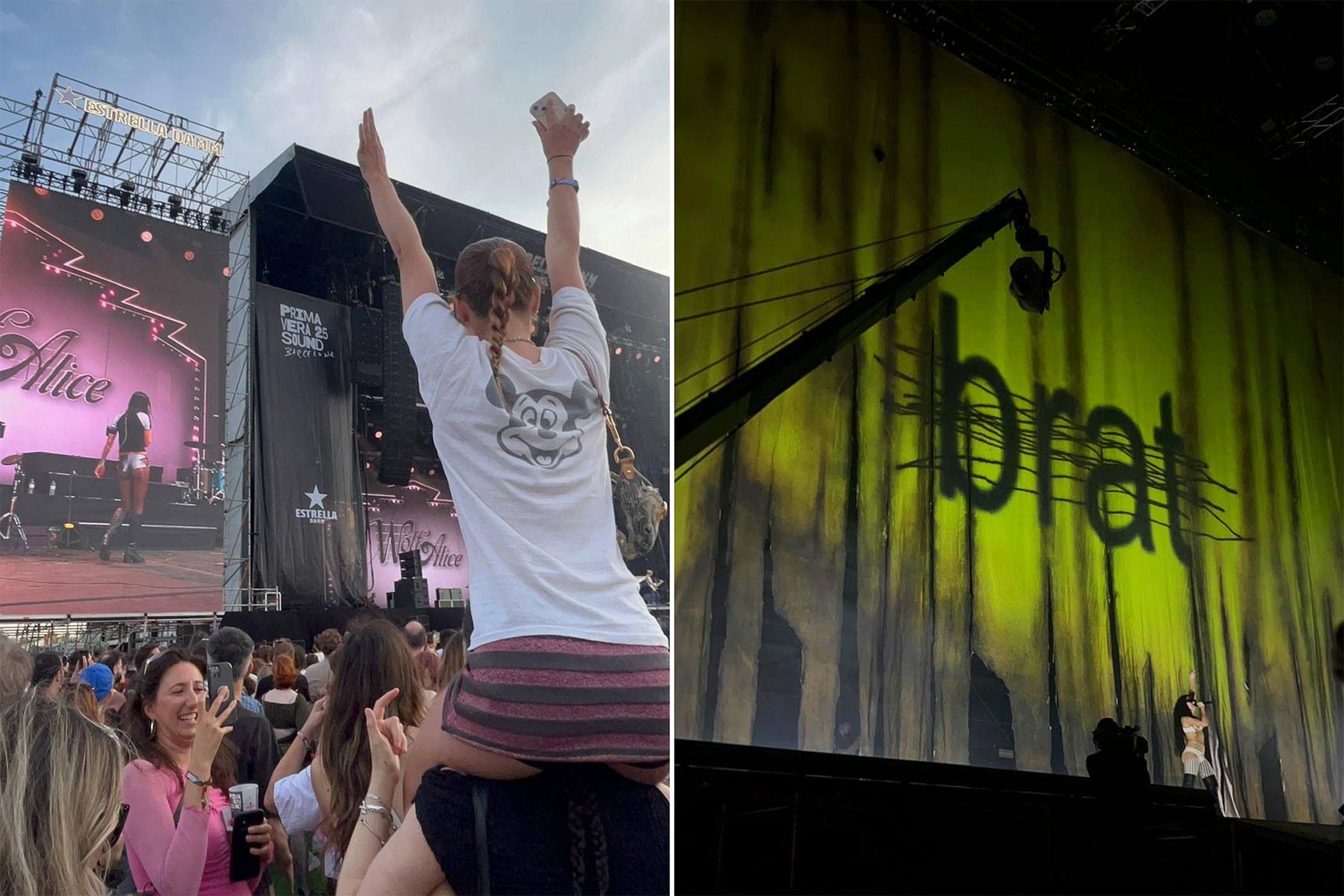
F’s snapshot from Wolf Alice and Charli XCX at Primavera festival in Barcelona. Main image: fans at Taylor Swift’s Eras tour
F suggests an act, we book a couple of tickets (the most stressful part of the whole procedure) and then, weeks, months later, we go to the gig. Off we trot to Billie Eilish, to Lorde, to Wolf Alice, Dizzee Rascal and Tyler, the Creator. We watch experienced stadium-fillers like Coldplay; one-album newbies such as PinkPantheress. We go to acts we both love: Raye, Rizzle Kicks, Radiohead. We see acts I don’t care for (Tom Odell) or don’t know anything about: Ravyn Lenae (diva), Lord Huron (swoony), Arthur Hill (guy with a moustache). “Don’t be mean,” says F to me about Hill. “He’s sweet. Let’s go.” So we do. What’s the alternative? Staying in?
Lorde at Manchester’s AO Arena, half an hour before she plays. A girl next to us on the floor spots someone she knows in the stands. “It’s Bella!” she says to her friend. “Bella!” she shouts. “BELLA! BEEELLLLAAAA!” She writes BELLA in capital letters on her phone and holds it up. She waves it around, another white light in a sea of lit-up phones, and shouts. After 15 minutes of shouting and waving, her friend says, “Have you tried calling her?”
You start taking the drug because it’s fun, and you continue taking it because you can’t stop. Primavera Sound 2023 in Barcelona was our gateway, and I was the pusher. I wanted to go because Pet Shop Boys, Blur and Kendrick Lamar were playing. F, then 12 (still free for her to get in!), said, OK, she’d come too. It was a success. Primavera is easier than most British festivals because the crowd isn’t as drunk and there isn’t any camping, or mud. You can wear normal shoes.
After that there was Billie Eilish at the O2. Blur at Wembley. Then smaller gigs at Brixton Academy, the Roundhouse in Camden, Hammersmith Odeon; on the balcony at first, and then down on the floor, right in the crowd. It was exciting, and, for me, gratifying. I felt useful, a rare feeling when parenting teenagers: once your kids get past the “how you hold a knife and fork” stage, your utility is 70% financial, 20% driving, 10% stroking their hair and saying: “You’re completely right.”
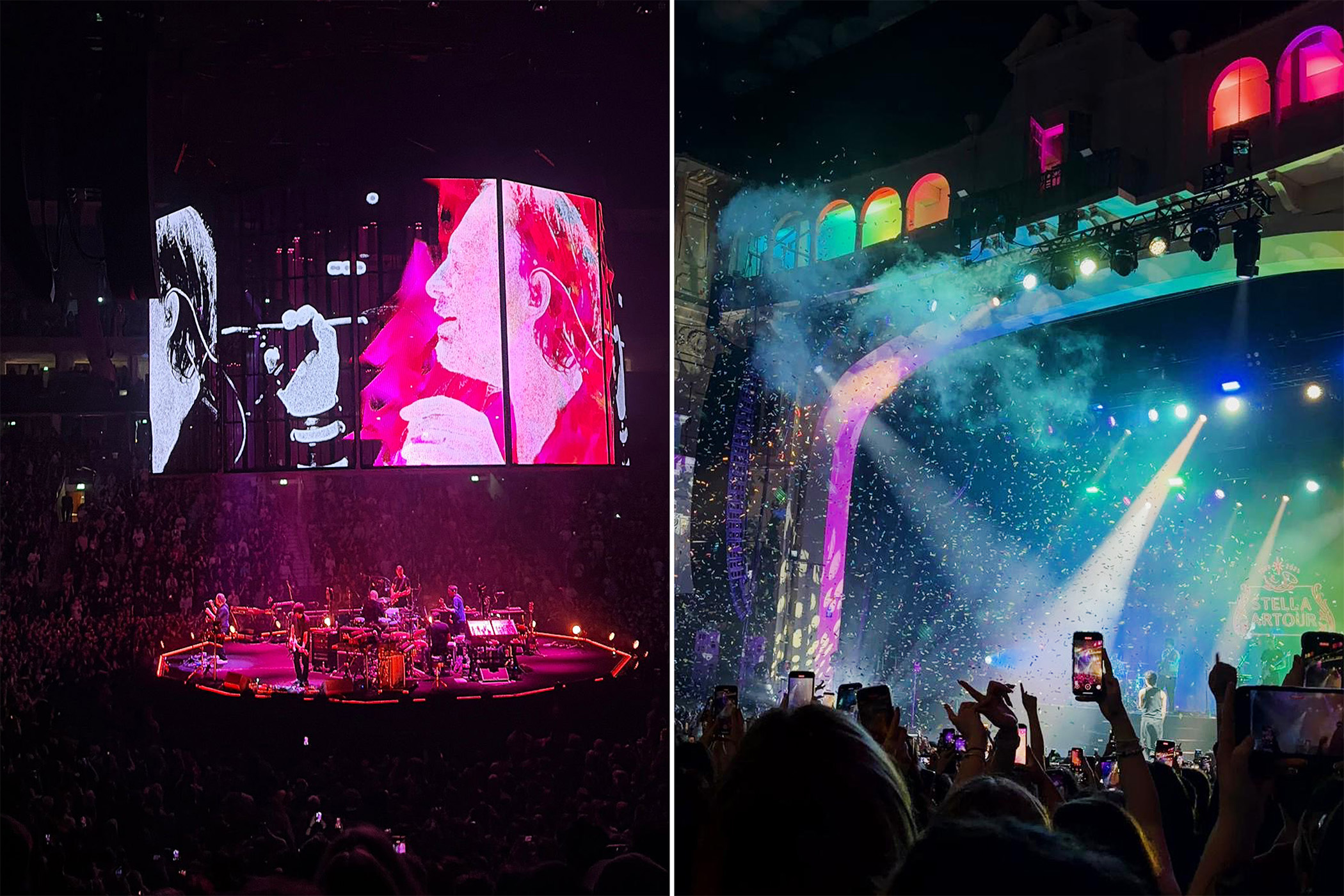
When Miranda and her daughter went to Radiohead (left) and Arthur Hill
But I’m good at gigs! I’ve spent years at them. I know what to do! So I diligently showed my beloved and, like me, not-too-tall teenager where to stand for the best view. I taught her how to charm herself into a spot where you’re surrounded, but not swamped, where you make allies just because you’re all in the same space. Don’t bother with the cloakroom, tie your jacket round your waist. Never bring a rucksack, and never put anything on the floor; this isn’t a Tube carriage.
At Brixton Academy we know one of the old ticket touts. F says hi to him when he’s leaning on the outside barrier. He isn’t touting any more: QR codes on phones mean that the days of people rocking up to a gig on a whim and handing over £70 for two tickets are over. Now, he charges gig-goers a fee to store their work bag for the duration of the show, and sells posters and fake merch outside the venue after the gig.
Newsletters
Choose the newsletters you want to receive
View more
For information about how The Observer protects your data, read our Privacy Policy
Really, I’m like him: my gig techniques are out of date. They might work at the Academy, but they aren’t useful at a modern concert, in a high-ceilinged arena inside a glitzy shopping mall, with tens of thousands of people, airport security and no touts anywhere. At places like the O2, what you need is a small cross-body bag, a tolerance for queueing, no snacks or liquids of any sort and, most importantly, a fully charged phone and a fully charged debit card, as a pint of coke and a single V&T aren’t going to leave you with any change from 20 quid. Merch? A sweatshirt will be over £50. The new ways are not the old ways.
Pop music is built on teenage girls. They have long been pop’s biggest consumers, and have long been ridiculed for it. The Beatles took the mickey out of them. Essayists worried about them. “To abandon control – to scream, faint, dash about in mobs – was, in form if not in conscious intent, to protest the sexual repressiveness, the rigid double standard of female teen culture,” wrote Barbara Ehrenreich in 1992.
And music snobs hate them. The idea is that such girls are somehow too young and too female to truly understand music; unable to appreciate the artistry, the technique or what songs really mean, especially if the artist is male. Somehow, teenage girls love music in the wrong way. Too earnest and yet too hysterical, too passionate, too concentrated. They know all the songs inside out, but that’s not enough. Real fans don’t cry, right?
But gen-Z stream the most music on YouTube and Spotify; they spend the most time listening to music out of the general population. Teenagers live with music, day in, day out, and girls are the biggest audience. They spend – or they get their parents to spend – on merchandise, memorabilia and concert tickets. When they go to gigs, they embrace it all. No standing at the back head-nodding. “Boys don’t really like music,” says one girl to me. “They don’t know the words.”
Teenagers have very little power in their lives. Adults tell them what to do, all day, at school; and then break into their leisure time too, by monitoring them. Girls are tracked by their parents, watched by older men. To be a teenage girl is to constantly be assessed. They check on each other too: in real life and through social media, always portrayed (by adults) as toxic, though often the girls are supporting each other.
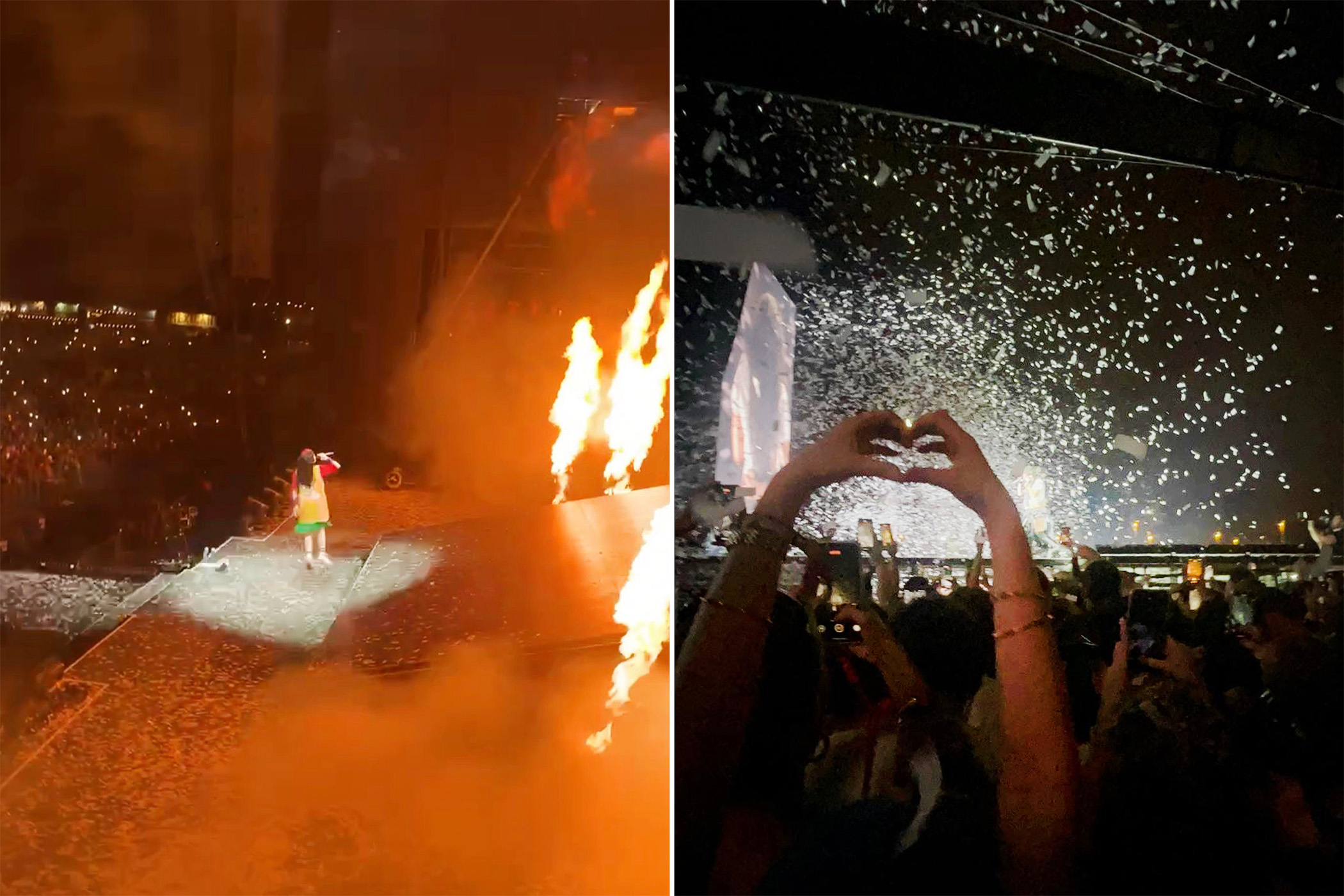
At Billie Eilish (left) and Troye Sivan and Charli XCX
They bring that supportiveness to gigs. We were always told that when we screamed at men on stage, it was a sexual thing. Which it was, a bit; but it wasn’t just that. It was the freedom to make a noise, in a world that wanted us to shut up, be silent and pretty. And also, we wanted our pop stars to do well. We cared. They were up there, doing it for us. Like us, they were being looked at; unlike us, they were doing what they wanted.
Now, the girls have the artists to match them. They no longer need boybands, who might sneer at them. Their heroines understand: Lorde was 16 when she released Royals; Eilish just 13 when Ocean Eyes came out. Taylor Swift, a grown woman of 36, exists in a permanent state of girlhood; never reaching emotionally further than a 14-year-old girl is her exact appeal. Charli XCX, Chappell Roan, Lana Del Rey retain adolescence’s intensity and weirdness; the concentrated, articulate expression of exactly what they’re going through. These young women know how it feels to be a teen. They still feel it too.
At Primavera this year, the headliners were Charli (with Troye Sivan), Sabrina Carpenter and Chappell. Teen idols. Charli XCX is one of F’s favourites. We arrived at 7pm and went to the stage where she was due to perform. We watched a strange local band play wafty songs with violins. Then F left me to go right to the front, to the barrier, to a neck-cricking spot underneath the stage. After a little while, I picked my way through everyone sitting on the ground and gave her a bottle of water and a phone charger. She remained at the barrier, by herself – “Not really by myself, Mum, I was talking to this couple, they were nice” – until 1.30am, when Charli came on. In those six-and-a-half hours, F watched Beabadoobee, FKA twigs, Jamie XX and another band she texted me about. “Why is this old man so angry?” she texted. It was Idles.
My first gig as a teenager was not with my mum, it was with a friend: Tears for Fears at Manchester’s Palace theatre. The internet tells me it was on 20 March 1983. Being a theatre, the Palace has seats, so it was a sedate affair where my friend and I got told off for standing up. It wasn’t until the next year that I got the experience I wanted, at Depeche Mode at the Manchester Apollo. I pushed my way forward through the standing crowd towards the right-hand side of the stage (still my preferred gig side). Dave Gahan was in leather trousers and a vest. In my mind’s eye I can still see his dance, which involved a sort of sideways jump and a wiggle. He was astonishing; the band were amazing. I was hooked.
These days, when I go to a non-teen gig, I’m astonished at how terribly everyone behaves. The constant talking and beer-drinking. The moving about, the lack of concentration. At Baxter Dury, two fiftysomething men next to me didn’t stop yapping – analysing, assessing, explaining – the whole way through.
In a couple of years my daughter won’t want me to come with her to these gigs. For now, we go, a lot, and when we come back we check her videos. Often the crowd is bellowing so loudly that you can’t hear the act. Just the sound of the girls, singing for their lives.
Photographs by F Smiley/Aldara Zarraoa/Getty Images