
Jacques Henri Lartigue’s singular creative journey began when he was given a camera, aged seven, in 1901. It reached an apex of sorts more than 60 years later, when he was belatedly recognised as an innovator with an acclaimed solo show at the Museum of Modern Art (MoMA) in New York in 1963.
For most of the time in between, Lartigue, who was born in Paris into a wealthy French family, took photographs primarily for his own pleasure. With unselfconscious enthusiasm and great skill, he recorded the world around him in the manner of an obsessive and supremely gifted amateur. It was a world of extraordinary privilege and creative playfulness, which stretched from the final years of the belle époque in the early 1900s to his death in 1986 at the age of 92. His first book, published in 1970 with the support of Richard Avedon, was simply titled Diary of a Century.
The images that so impressed MoMA’s illustrious curator John Szarkowski were created during Lartigue’s childhood, when his fascination with speed and movement compelled him to photograph various compliant family members and friends, often in motion – leaping, diving and whizzing around in go-karts. His main subject was his older brother, Zissou, an eccentric who invented several flying machines and was happy to risk life and limb for Lartigue’s unwieldy plate camera. His father later noted that Zissou was the daredevil of the family, while Jacques, a delicate child, hugged the periphery as a detached, but acutely observant, onlooker.
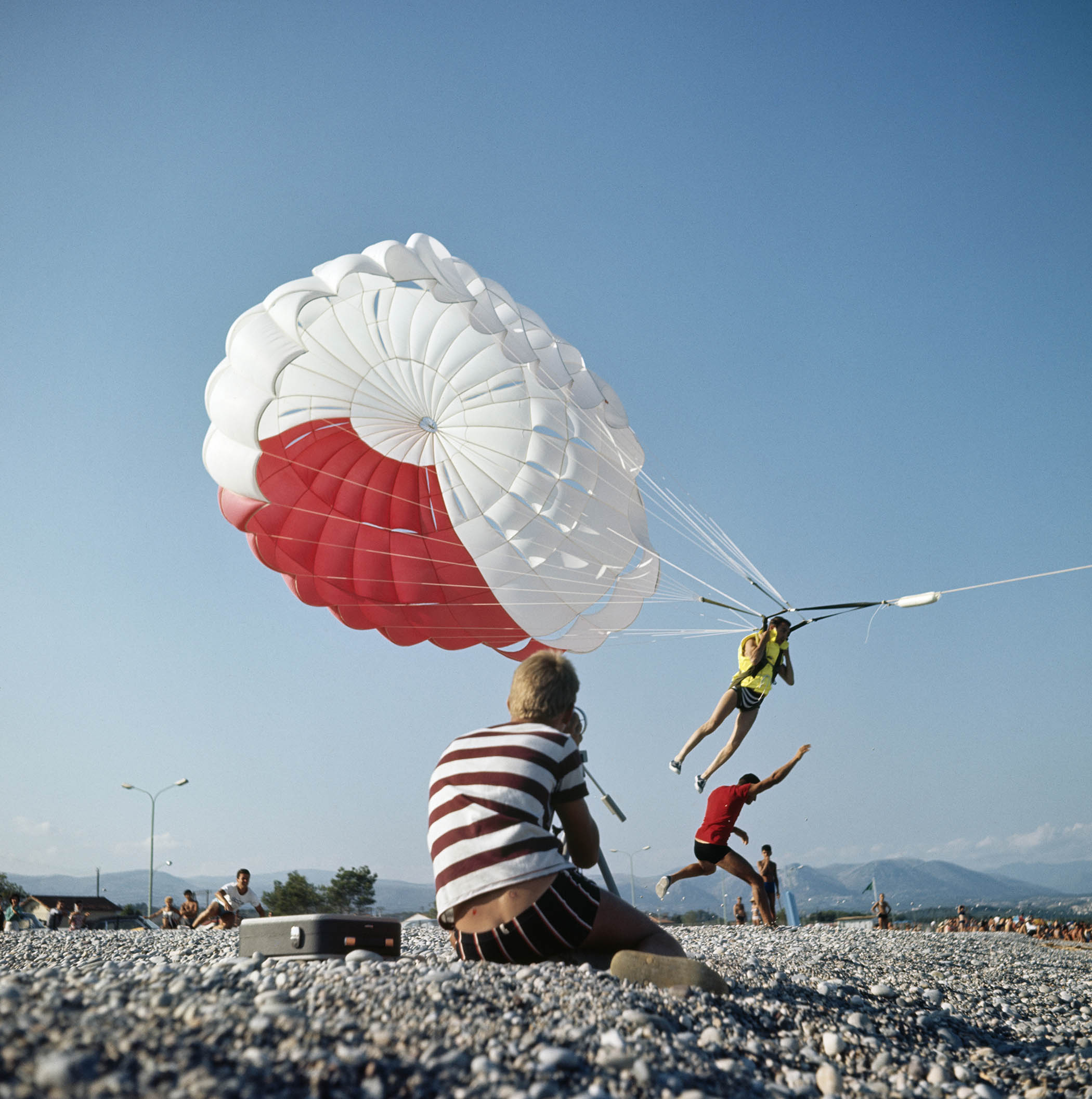
Jean Creff in parachute jumping, 1964; main image: Silvana Empain, 1961.
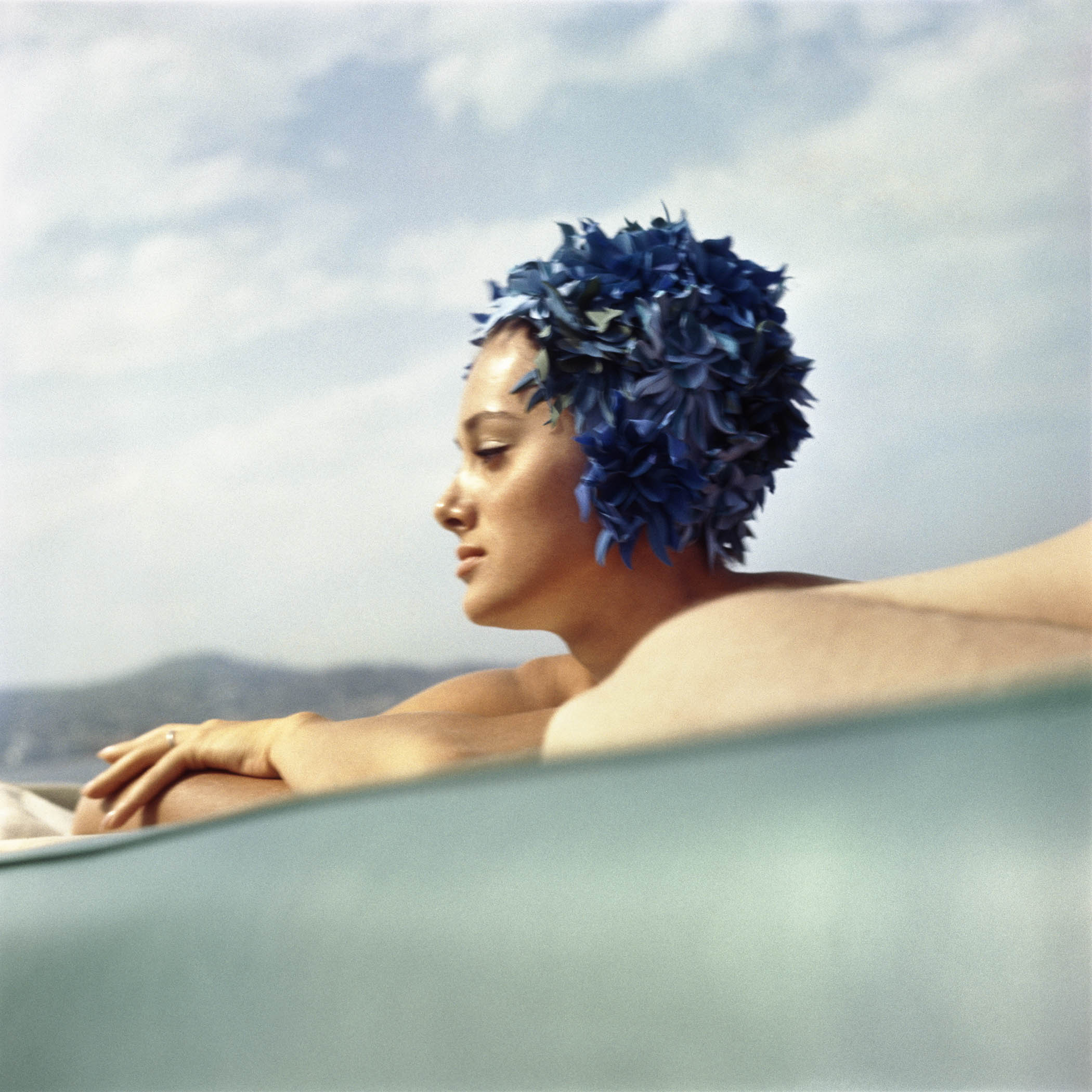
Lartigue’s vicarious love for speed and risk underpinned his later images of grand prix races, all blur and motion, as well his portraits of early aviation pioneers. But by the time of his “discovery” at the age of 69, he had also amassed an archive of what might be called society photographs that reflected his gilded life. He tracked the rich at play and in repose at Cap d’Antibes and on the Côte d’Azur, often using his various beautiful partners as his main subjects. They include his first wife, Madeleine Messager – known as Bibi – and the mesmerising Renée Perle, his lover in the 30s, both of whom he iconised in portraits that speak of effortless elegance and style.
For a time, too, he took up painting, and later tentatively embraced photojournalism; his images of the liberation of Paris are oddly detached, which is perhaps unsurprising, given that the war seemed to have barely impinged on his family’s leisurely lifestyle, except as a mild inconvenience.
In the immediate postwar era and on into the 1960s and 70s, the gilded world in which he had flourished began to disappear with the advent of cheap air travel and mass tourism, and with it his primary subject matter. Although he continued to work, shooting fashion editorials, celebrities and on-set portraits of film stars, he became a man out of time.
In the 1963 MoMA show, Szarkowski repositioned Lartigue as an unlikely formal innovator of the supposed “snapshot aesthetic” adopted by 60s iconoclasts such as Garry Winogrand and Lee Friedlander, whose urban American street photography eschewed traditional composition values for a more edgy energy and immediacy.
Now comes the intriguingly titled Jacques Henri Lartigue: Life in Colour, a touring show that, as its title suggests, concentrates on his lesser-known colour photographs, which comprise almost 40% of more than 100,000 images in his archive.
It traces Lartigue’s colour experimentation from his embrace of the early, fussily complex and distinctly painterly autochrome process, first marketed by the Lumière brothers in 1907, through to his dalliances with street and fashion photography in New York in the 1970s. The result is fascinating, if uneven: a bold shadow history of a now celebrated figure known primarily for his elevation of the beautiful and the glamorous.
As context, the first room features some early works, both monochrome and colour, including a characteristic 1911 portrait of Zissou in a tweed suit and hat, floating in one of his homemade inflatable boats. A vividly bright colour shot of a man being dragged into the air by a billowing parachute is from the early 1960s, but looks oddly modern, all motion and kinetic energy, save for the crouched onlooker in the foreground. A snapshot, but an artfully composed one, like many of Lartigue’s action pictures.
Newsletters
Choose the newsletters you want to receive
View more
For information about how The Observer protects your data, read our Privacy Policy
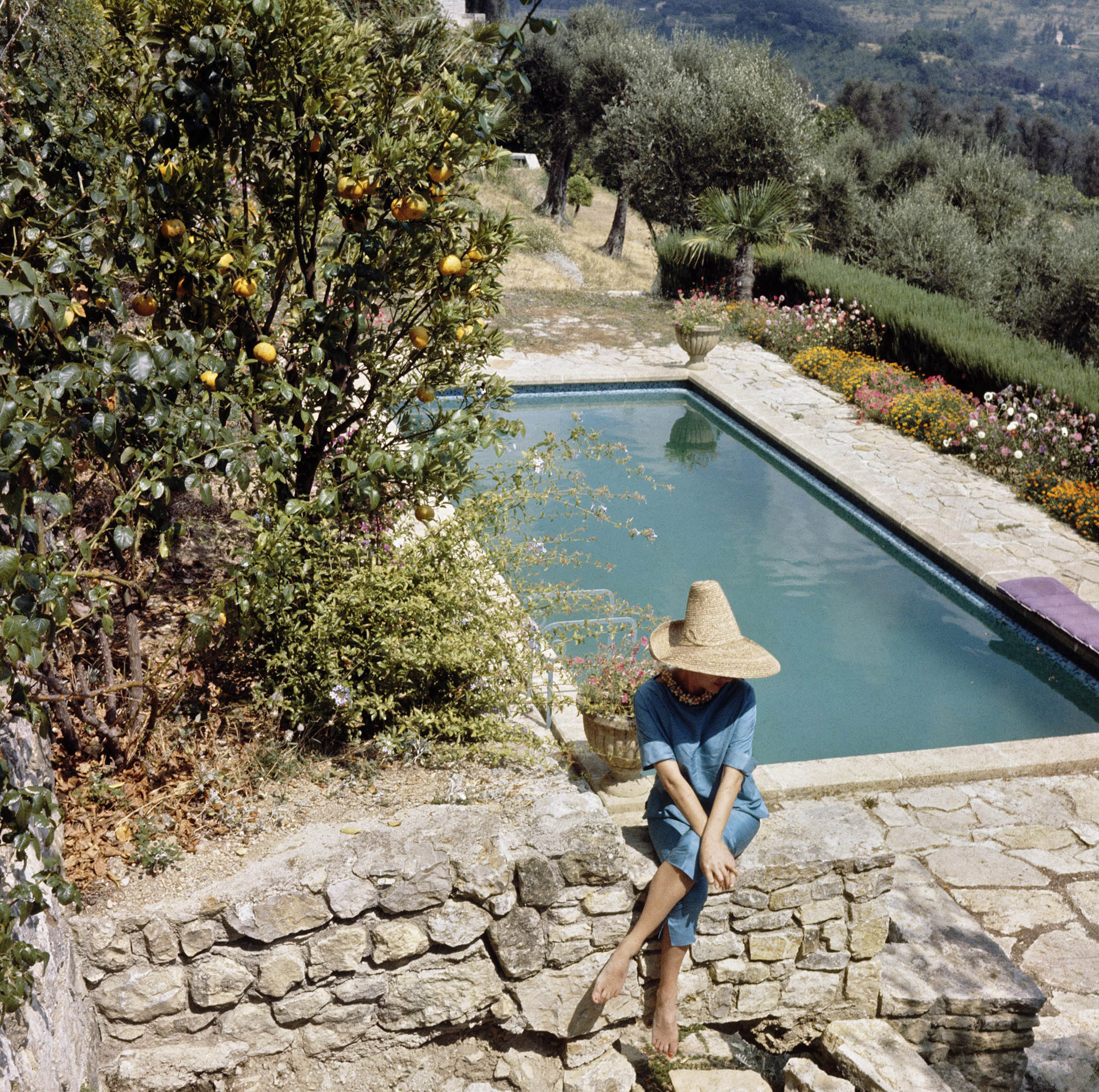
Martine Carole, Magagnosc, 1961.
In the second room, a small selection of his 300 early autochromes are on display. These are stereoscopic plates that are viewed through binoculars mounted on to the walls; the results are both evocative and elusive – stylishly ghostly portraits from another time.
From there on, though, things become more uneven, as Lartigue’s curiosity and experimentation leads him down some interesting, but often unrealised, paths. In 1915, he painted geometric decorative designs for fabrics and wallpapers, and in the 1920s and 1930s, exhibited his paintings alongside the likes of the French avant garde artist Francis Picabia, albeit to scant critical acclaim.
Lartigue’s restless creativity was such that he grew frustrated by the technical complexity of early colour processes, forsaking the medium altogether in the 1930s and 1940s.
Afterwards, until his creative resurrection at MoMA, he seems, on the evidence assembled here, to have been an artist in search of a late style. There are some rather average portraits of his artist friends, most notably Jean Cocteau and Pablo Picasso, a series of commissioned fashion photographs that lack the aura of his more personal work, and a set of wonderful impressionist colour studies of flowers from the 1970s, which, here and there, shade into abstraction.
His struggle to reinvent himself was in stark contrast to the seeming effortlessness of his earlier work, which emerged instinctively out of his opulent lifestyle. Put simply, he made his best pictures when there was absolutely nothing at stake, when he did not have to depend on photography – or indeed any career – to make a living.
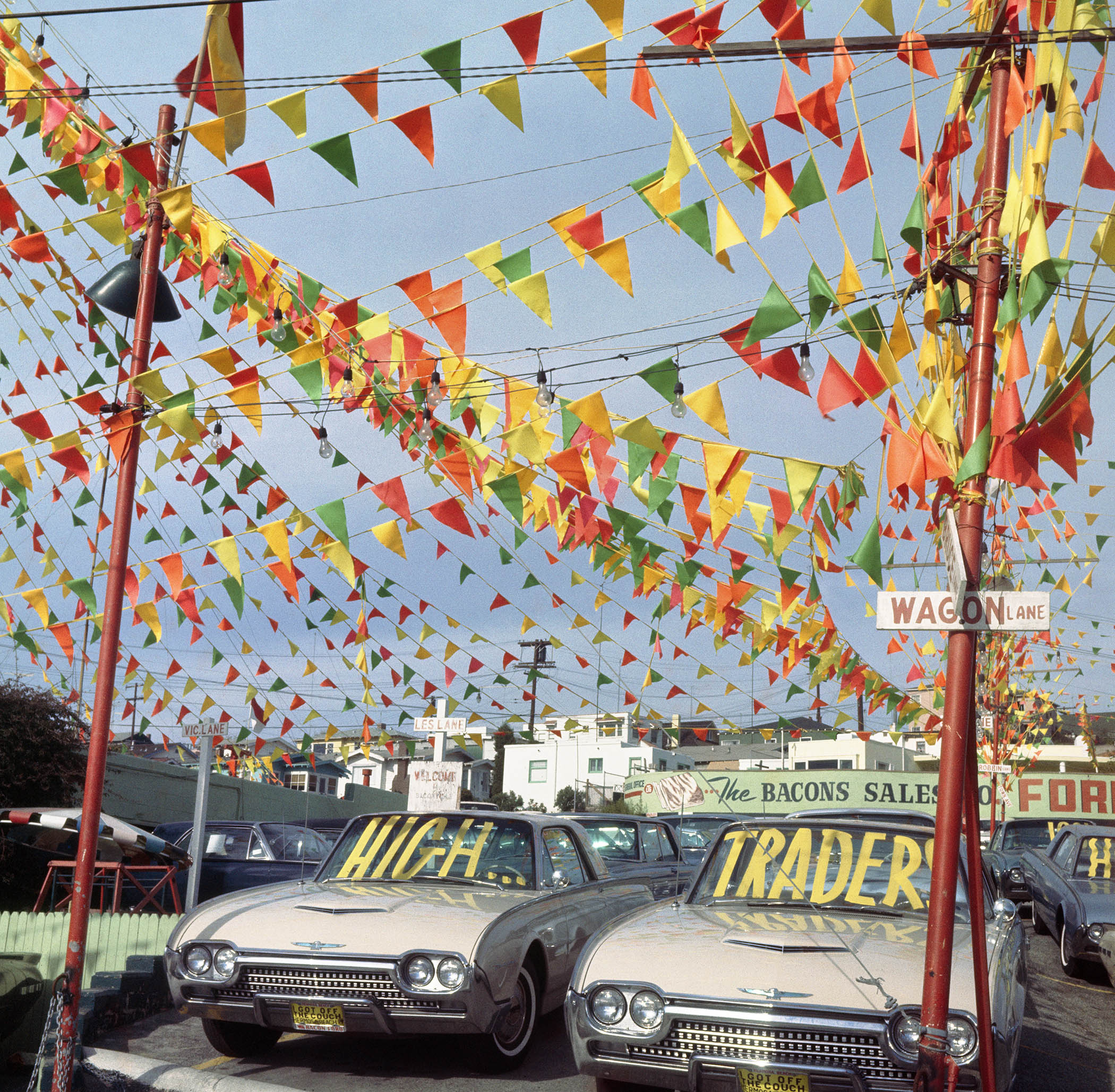
Los Angeles, 1962.
That said, there are some brilliant later images. An early 1960s photograph of a bunting-bedecked car dealership in Los Angeles, a city that seems to have invigorated him, dazzles with its dance of light and colour. A snapshot of a French aerobatic display team, its jets trailing vividly coloured vapour trails above the heads of the crowd, is a late echo of his early experiments in motion, but here all is immaculate and sharply focused.
Elsewhere, though, his few portraits of ordinary people, whether Italian religious pilgrims or workers painting towering cargo ships seem, well, simply ordinary. Indeed, a snatched portrait of a bride and groom on a pier on the Normandy coast seems positively amateurish in all the worst senses of the word.
Life in Colour is an exhibition that assumes a certain degree of prior knowledge about its subject. What it emphasises, perhaps unconsciously, is that his snapshot aesthetic, though formally groundbreaking, was anything but democratic in terms of its subject matter.
It depended entirely on the glamorous aura of his subjects, with whom he felt utterly at home, socially and aesthetically. And without them, he floundered.
Jacques Henri Lartigue: Life in Colour is at MK Gallery, Milton Keynes, until 4 October
Photographs by Jacques Henri Lartigue/ Ministère de la Culture, France