
In six hours, snowfall in New York City will trigger a state of emergency, but it’s nearly 2pm in Broadway’s John Golden Theatre and the audience are making it rain. The queue for the bar is a paltry three people, but the merch line snakes around itself as fans seek out $70 Operation Mincemeat sweatshirts and $25 totes. This is the final time the second world war musical caper will be performed by its original cast on Broadway, and devotees have flown in from around the world to catch this 22 February show. The most expensive tickets went for $999.
But they say there’s no business in show business. Last September, Andrew Lloyd Webber revealed he was “very worried” about “the economics” of Broadway after only three out of 46 new musicals made a profit between the start of the Covid-19 pandemic in 2020 and 2025. That number has now increased to four musicals, but Operation Mincemeat isn’t yet one of them – although it did bring in more than $1.1m during its best performing week. “We’ll recoup in 2059 or something!” jokes the co-creator and actor Natasha Hodgson, a day before her final show. But producer Jon Thoday isn’t worried: “We’re building a brand here … By October next year, we’ll have five different productions around the world.”
Operation Mincemeat is set to tour in the UK, America, China, Australia and New Zealand. It’s widely claimed that only 20% of Broadway productions ever earn back their investments. But in 2025, the show recouped in the West End after two years on stage, and the now year-old Broadway production is set to recoup 35-40% of its funding by Christmas. This is all the more remarkable if you consider the show’s origins: in 2019 it had no director and no choreographer, and ran for five weeks in a 77-seat fringe London venue with funding from Arts Council England. It was written by four fantastically non-famous friends and performed by three of them – “We weren’t being paid as writers, so if we wanted to be paid at all, we’d have to be in it,” Hodgson explains.
The Arts Council grant was precisely £14,362. Today, the show’s Broadway budget is $12.2m. How did Operation Mincemeat go from shoestring to showstopper?
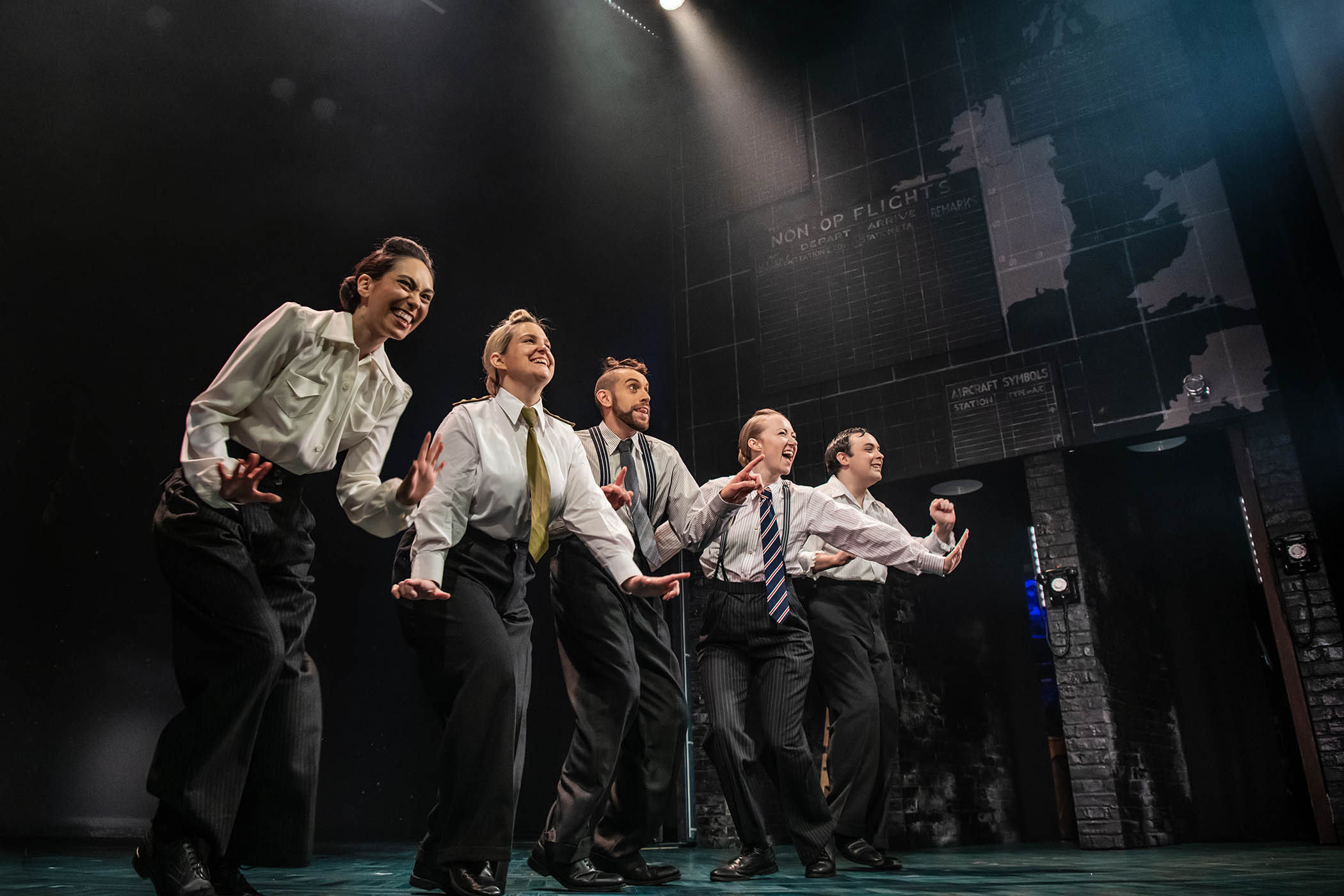
Claire-Marie Hall, Zoë Roberts, David Cumming, Natasha Hodgson and Jak Malone in Operation Mincemeat at the Fortune Theatre in 2023
It all started when Hodgson heard a podcast episode about a real – and really unbelievable – second world war spy operation. In short: MI5 attached falsified “top secret” documents to a corpse, floated said corpse to Spain to ensure the papers reached Nazi spies, and thereby tricked Hitler into moving thousands of troops away from Sicily right before the allies invaded it. Hodgson and her friends had a history of performing comedy horror shows, but in 2017 wanted to try their hand at a two-act musical. The true story of “Operation Mincemeat” seemed perfect because, as Hodgson once said: “We thought it would be nice to get behind a story that we really loved, because of all the needless toil that was ahead of us – unpaid toil.”
Hodgson was no stranger to unpaid toil. When she was 26, in 2014, she moved back in with her parents in Warrington and brought her university friend Zoë Roberts with her, too. “We were sick of working fulltime jobs in London and trying to make theatre on the side,” Hodgson says. Living with her parents rent-free allowed her to save up the money she earned freelancing as a financial copywriter; although she now has an Olivier award, she still gets the occasional offer of work from a bank. (“Sorry Dora, thank you for your support during that time, but I’m not doing that any more.”)
After six months, Hodgson and Roberts had enough money to move into a flat in Manchester, where they could be close to the Lowry, a theatre dedicated to nurturing new talent with its artist development programmes. Together with friends David Cumming and Felix Hagan, they formed SpitLip.
‘We’re building a brand here ... By October we’ll have five different productions around the world’
‘We’re building a brand here ... By October we’ll have five different productions around the world’
The Lowry gave SpitLip a few hundred pounds to aid their songwriting: in 2017 it hosted the first performances of Operation Mincemeat songs. “Basically, they had this scheme where at the top of a different show, they gave 10 minutes to a show that was in development,” Hodgson says. “It’s a cute idea, but kind of weird for an audience!” Hodgson performed Dear Bill, a heartbreaking ballad about loss that remains in Mincemeat today – but the audience had very little context. “At the end of it, I really remember vividly there not being any applause, and being like, Oh, man, I’ve just humiliated myself,” Hodgson says, “Then I realised people were crying.”
It took another two years for the musical to debut – it was co-commissioned by the Lowry and the New Diorama in London, which was supporting fringe companies by offering atypical five-week runs. “Small fringe theatre companies usually get five nights, but that’s not enough time to build an audience,” Hodgson explains. The opportunity was enticing, but even with funding from the New Diorama and an additional £7,000 from the Lowry, SpitLip still didn’t have enough cash to make the show. They applied for Arts Council funding three times but were unsuccessful. “Fourth time’s a charm!” Hodgson quips.
Finally securing Arts Council funding allowed the friends to hire two more actors, but that was as far as it would stretch, which means that even now five actors play 87 characters in the show. Of the staging, Hodgson recalls “three small filing cabinets on wheels and two chairs”. One person was the stage manager, set dresser and prop master – they also ran the lights. The result was a frenetic, high-energy show, bending both genre and gender as Hodgson embodied the brash chauvinist naval officer Ewen Montagu and costar Jak Malone movingly performed Dear Bill as an uptight, matronly secretary.
Newsletters
Choose the newsletters you want to receive
View more
For information about how The Observer protects your data, read our Privacy Policy
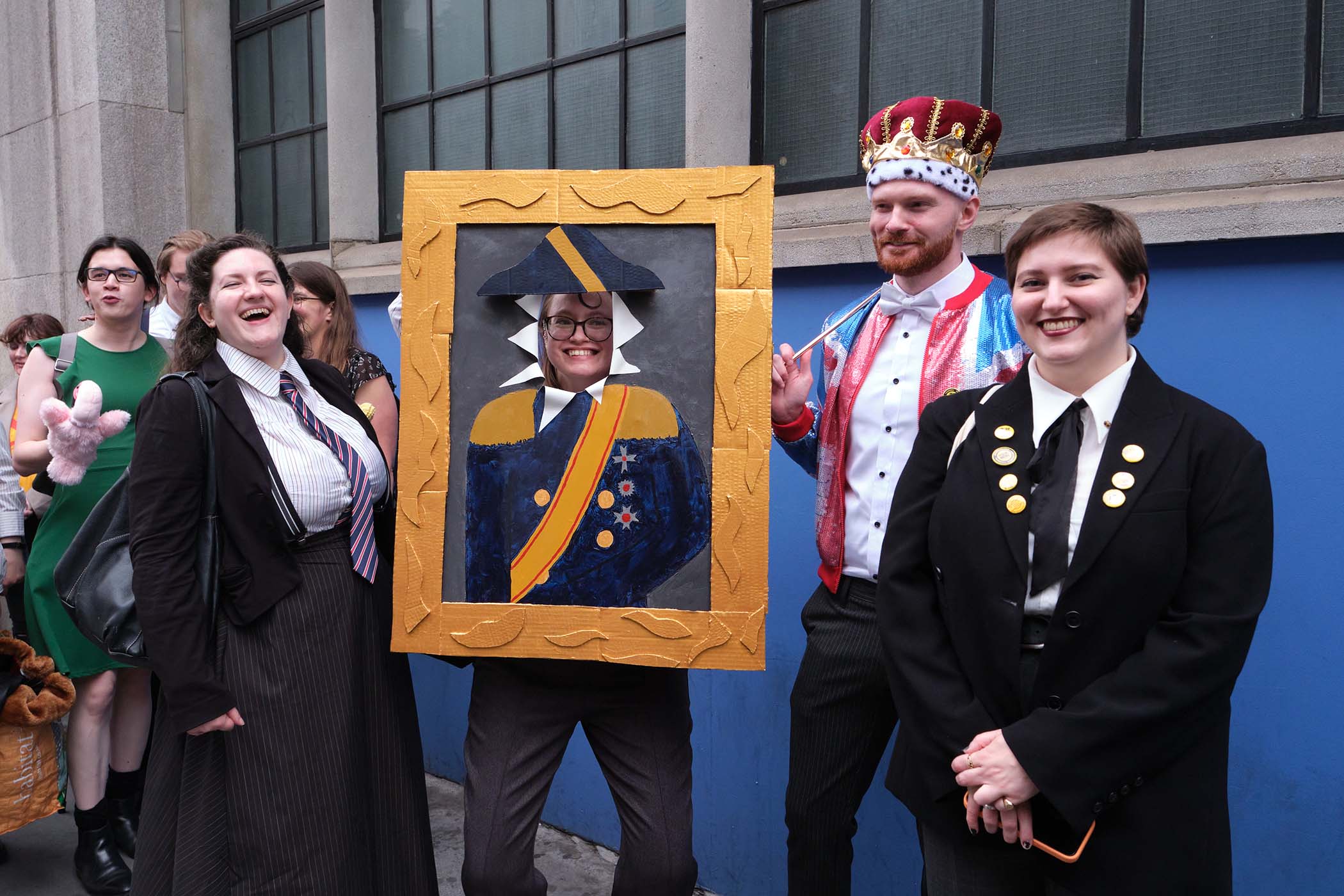
A group of ‘mincefluencers’, Mincemeat’s dedicated fanbase, dress up for a West End show in 2023
“I thought they were really talented, it was really funny,” says producer Thoday, who saw Mincemeat at the New Diorama after a colleague recommended it. Thoday’s company Avalon bought the rights and invested £251,826 on further development runs in lesser-known London venues between 2020 and 2022. Only then – after significant rewrites and rehearsals – did Thoday think it was ready for the West End. “I’m a great believer in slow up, slow down,” Thoday says. “Somebody who suddenly became a star one day can suddenly not be a star the day after that.” Thoday wanted to build Mincemeat’s fanbase – now called “mincefluencers” – to alleviate risk. In the absence of a star cast or recognisable intellectual property – the show itself gradually became the star. It became IP.
In 2023, Operation Mincemeat opened in the West End’s Fortune Theatre on a budget of £2m – in 2025, it recouped, attracting audiences that included Robert De Niro and Queen Camilla. The producer Steve Reynolds was one of the show’s first investors; together with a friend, he invested 5% of Mincemeat’s West End capital. “When you invest and you recoup it always feels good … but we don’t invest to recoup per se,” he says. “We invest in shows that have some redeeming social value … that for us is a superior objective than merely having it returned. I’ve had many, many flops. It’s a tough business, but if it’s a business you love, you’re happy to encourage talented people.”
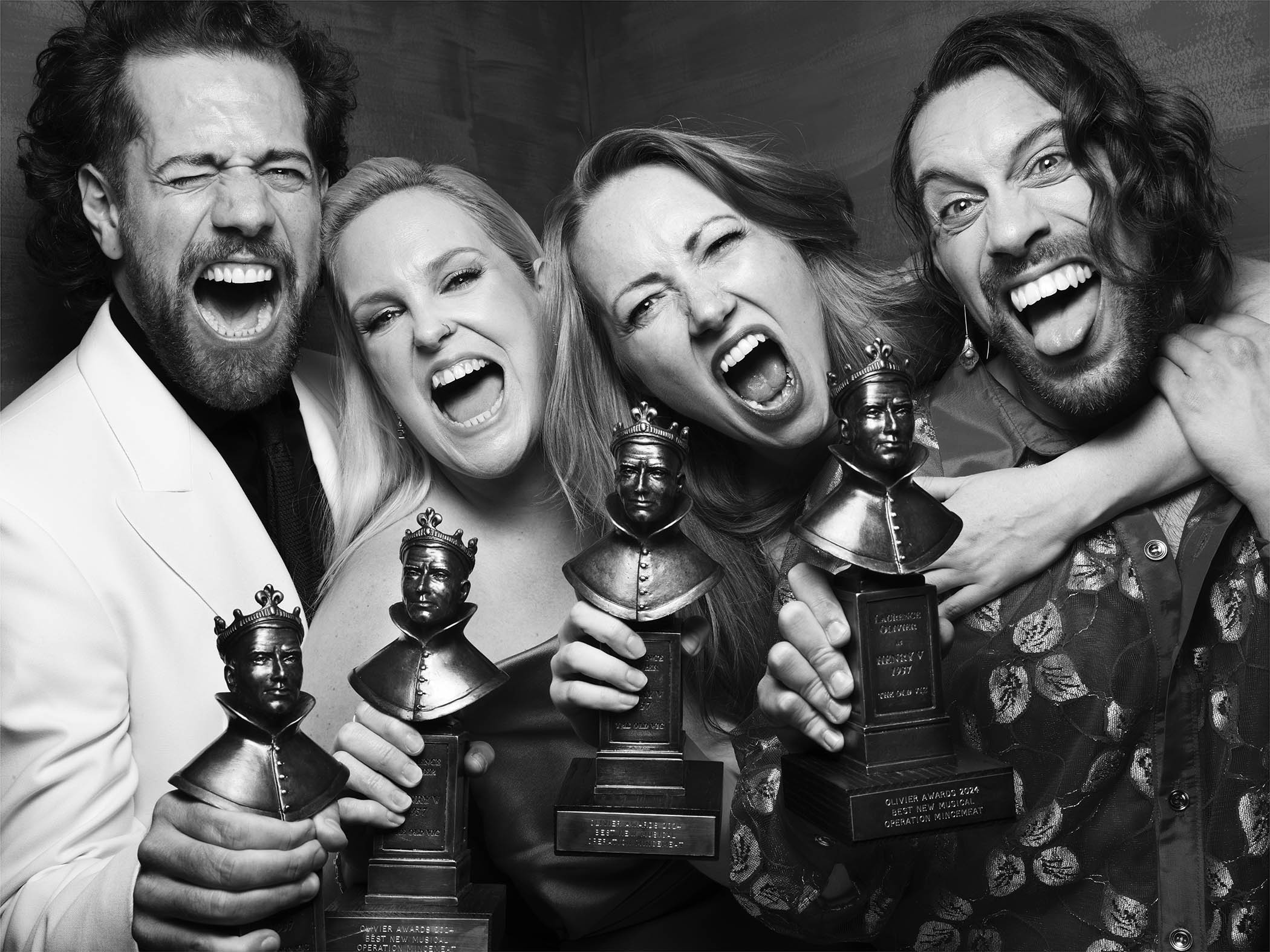
That talent was officially recognised when Mincemeat won best new musical at the 2024 Olivier awards – four cast members also received individual nominations, and Malone won best supporting actor in a musical. Accepting the production award, Roberts said: “We really hope the success of this show proves that if you invest in potential then incredible things can happen.”
Yet American investors were “sceptical” about a transfer across the pond. “A lot of people said it was too British for Broadway,” Thoday says. He was still $6m short of the budget by the time he’d chosen a New York theatre and brought in general managers. They decided to host a ticket pre-sale and took $1m in 24 hours. It wasn’t too British at all.
I see that firsthand during the original cast’s final Mincemeat matinee, with theatregoers clamouring for their caps and cups. “Getting really good merch is actually incredibly useful in terms of the bottom line,” Hodgson says – the resurgence of vinyl has also helped boost takings. And the show is clearly now so successful that it can afford to send a reporter (this reporter!) from London to New York to see the show, almost a year after it opened.
As of early February, the West End production of Mincemeat has brought in more than £28m in revenue – on Broadway, more than $40m. But the expenses can be eye-watering – the Broadway budget is much higher than London’s because of union fees, ticketing charges, and more expensive marketing. And while it cost nothing for the show to get its Oliviers, $2m was spent on the show’s Tony Awards campaign. “You’re sending stuff to the nominators, then to the voters, you have to throw parties,” Thoday explains. In short: “It cost as much to do the Tonys campaign as it did to do the show in London.”
In this environment, arguably the last thing Operation Mincemeat needed was for SpitLip’s final Broadway performance to be cancelled by the mayor. On 22 February, a historic blizzard swept New York City and Broadway productions closed – Mincemeat held out and was the last show to cancel its evening performance, only doing so when Zohran Mamdani announced a travel ban. The revenue lost totals around $175,000. Instead, that afternoon’s matinee became the cast’s last hurrah – audience members gave standing ovations between songs, picked confetti off the floor as a keepsake, and FaceTimed their families during the finale. From the first scene, Hodgson had tears in her eyes. In lieu of the evening’s show, SpitLip performed a medley of songs for an online audience – at its peak, 7,000 viewers tuned in. The performance was streamed live from the cosy Laurie Beechman Theatre – the Mincemeat team quipped that the cast would be used to such a small stage. Among the handful of audience members were actor Jesse Eisenberg and the journalist Taffy Brodesser-Akner. In January, the latter wrote an article entitled “Why on Earth Have I Seen the Same Broadway Show 13 Times?” in the New York Times Magazine – Thoday says it led to $1.5m in ticket sales, as well as calls from movie producers.
Mincemeat’s journey began less than a decade ago: it’s difficult to know whether it could happen again this way today. When Hodgson and friends first started getting Arts Council funding as amateurs, it was for shows with titles such as The Boy Who Kicked Pigs and He Had Hairy Hands. But by the time they were applying for money for Mincemeat, funding was stretched and the criteria stricter. “How do we get resources to the people who are right now making three shows before their great show?” Hodgson says. “I really hope there’s a way in which people can get money not to do amazing art – just art that’s on the way to amazing art.”
Mincemeat’s journey is far from over. Though its original British cast are moving on, it continues in the West End and on Broadway with an all-American cast and kicked off its 40-week UK tour in February back where it began at Manchester’s Lowry. “I’m very proud of it,” Thoday says. “I would love it to make some money, but also: it’s what I believe in about British show business. I think we are one of the countries that can find new things.”
“The idea that there’s still another bit of the adventure to go is a nice feeling,” Hodgson says. Personally she feels she and the cast have gone from being paid like “interns” to “leading professionals”. Thoday would like to make a movie – and Hodgson believes that if he wants it, he can make it happen. “I would love to do a movie,” she says. “Ideally I would love to do a Muppet movie of Operation Mincemeat. The platonic ideal of Mincemeat really is those chickens dancing in Nazi outfits.”
Amelia Tait is a freelance writer and the author of Lily Tripp: Diary of an Accidental Time Traveller (Hachette)
Photographs by Rankin/Matt Crockett/Helen Jones