What shifts when one of theatre’s best-known tragic heroes becomes a heroine? In the case of King Lear, who becomes Queen in the neutrally titled Lear at Pitlochry Festival Theatre, not much.
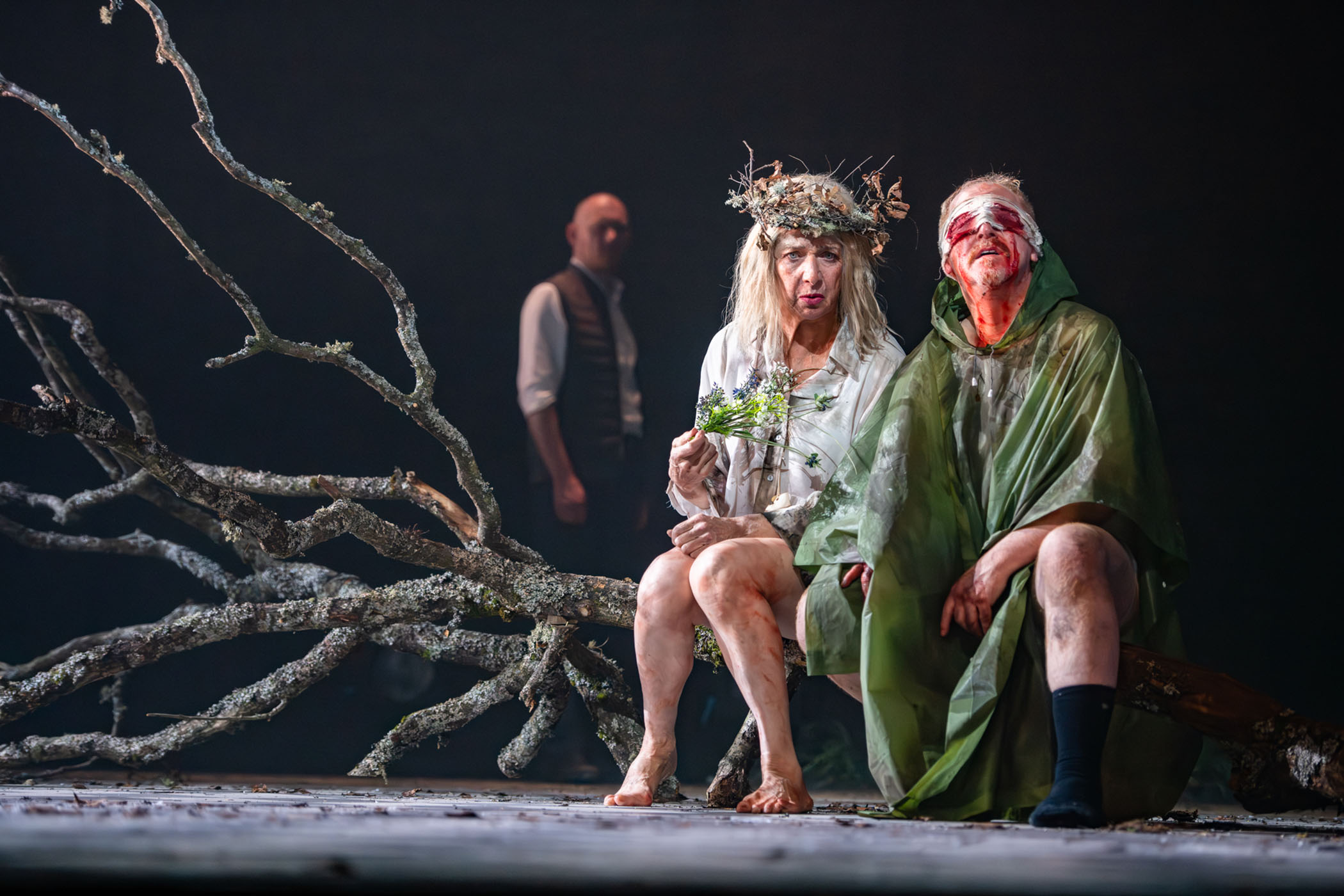
The aesthetic of this new production of Shakespeare’s great, late drama, directed and adapted by Glaswegian Finn den Hertog, is borrowed from a Tory social club at some unspecified point in the last 40 years. Our queen, played by a masterful Maureen Beattie, strides around in a power suit and blond Thatcher blowdry. Her daughters wear an assortment of Alice bands, corduroy and riding boots, while their husbands hang about in quilted gilets. The Lear estate (designed by Emma Bailey) is a once grand manor left for ruin, its dark red walls now with wiring hanging loose, the checkerboard floor left to accumulate dust and gilded furniture covered with sheets.
The dilemma, however, remains the same: an ageing monarch calls her noblemen together to announce her intention to pass on her responsibilities to her three daughters. To help her decide how to divide her kingdom, she asks the young women to declare their love for her. The oldest two, Goneril (Jenny Hulse) and Regan (Lindsey Campbell), play along. But her youngest, Cordelia (Ailsa Davidson), knowing she is the favourite, can’t find it in her. Lear banishes Cordelia, and disaster ensues.
There are moving performances here, especially from Beattie, a grande dame of Scottish theatre. In the first scenes, Lear is on the edge of losing it but just about pretending to be in control. She develops visible tension in her shoulders, stamping her feet in her heeled boots with increasing regularity. “Dear daughter, I confess that I am old / Age is unnecessary,” she says, not knowing what is coming for her. After the interval, she appears suddenly diminished, flopped in a wheelchair in pyjamas, a once powerful monarch barely able to lift her head.
Dylan Read is wonderful as Edgar, the legitimate son of the Earl of Gloucester, who dresses up as a mad beggar to save himself from being killed at the hands of his half-brother Edmund. He camps it up as he covers himself in mud and hides in the woodlands. So too does Davidson in her second role as the Fool, resplendent in a chicken costume. These glimmers of sprightly humour are needed in a play weighed down by the burdens of great age.
But is this version as bold as it makes out? Perhaps the female Lear is more easily flummoxed by her noblemen, her authority brought under question a little more in those group scenes. But the play plays as Shakespeare wrote it; Lear makes mistakes that will affect the family lineage for the rest of time, and it is still her men who are left fighting at the end. This Lear is not a radical revision.
The show is part of the theatre’s first season under the artistic directorship of Alan Cumming, who recently appeared on screen in Russell T Davies’s Tip Toe, and as host of the American version of The Traitors. Cumming was born just half an hour’s drive away from Pitlochry in Aberfeldy, and became well acquainted with the Caledonian Sleeper train, regularly travelling up from London. The walk from the station to the theatre must be one of the most delightful anywhere in the UK. Visitors cross the River Tummel over either an excitingly wobbly suspension bridge or via the imposing Pitlochry Dam, before wandering the length of its salmon ladder.
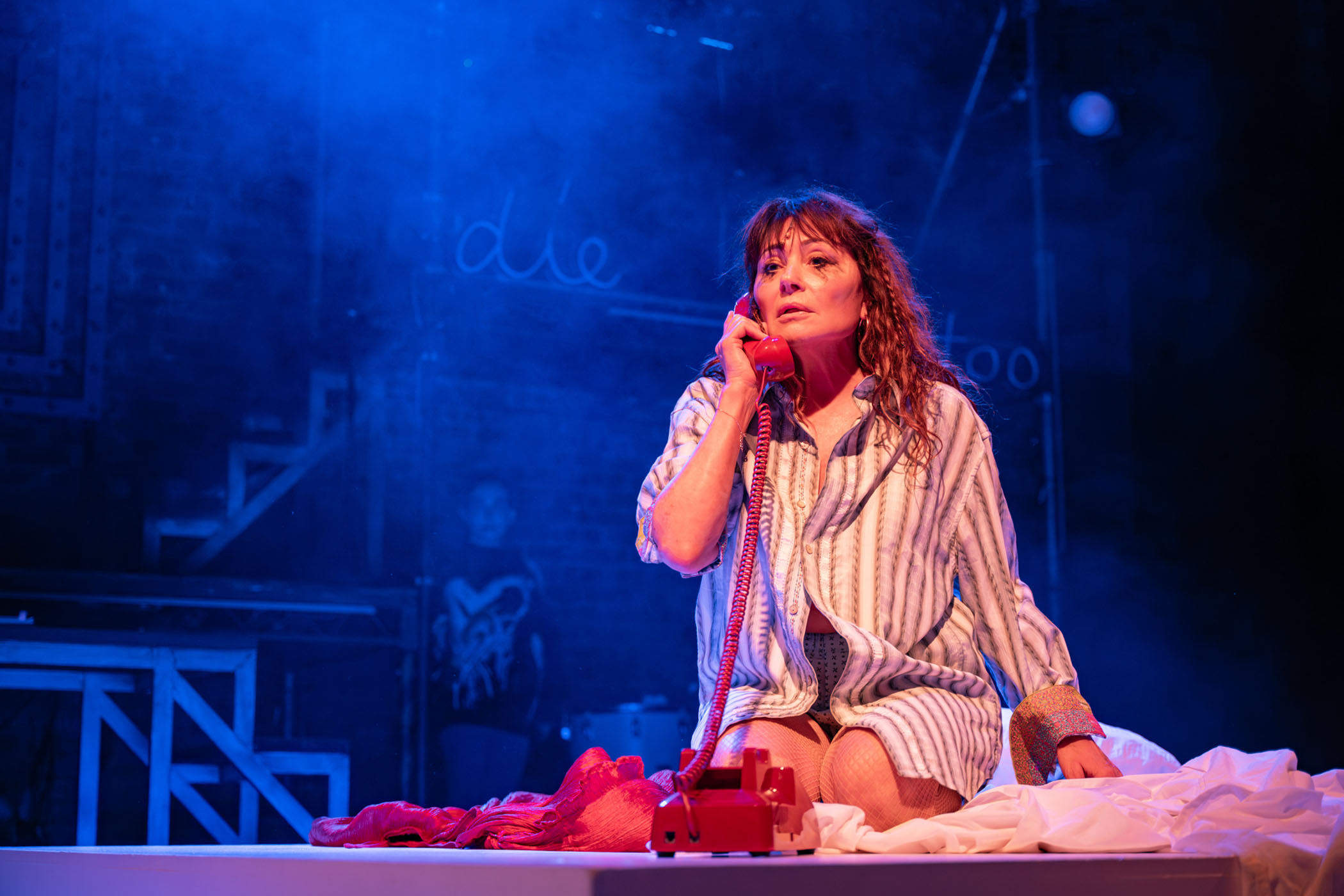
Frances Ruffelle in I Can Die Too
Less spectacular is the theatre’s other new offering. I Can Die Too is a new musical running in the theatre’s smaller venue, the Studio. This play-within-a-play centres on actor Lily, a panda-eyed Frances Ruffelle, who co-wrote the show with Cumming and Sally George. The title, Lily tells us, comes from Jean Cocteau: in October 1963, upon hearing of the death of Édith Piaf, he reportedly declared: “La Piaf est morte. Je peux mourir aussi” (Piaf is dead. I can die too) – and did. Lily is rehearsing a musical inspired by Cocteau’s 1930 play La voix humaine, though she is furious that many of the lines and songs she wrote have been cut.
The staging is sleek, with the audience on three sides of a harshly lit small central platform. The set-up of the five-piece pop band on tiered scaffolding at the back of the stage is equally neat, with violinist Flora Spencer-Longhurst playing a stage manager and Lily’s ally, and keyboardist Stephen Ashfield as the insufferable director.
Talented but stubborn, Lily refuses to finish certain scenes, putting on her own musical numbers instead. The lines and songs written for her are naff – we can hear that. The problem is that the numbers she writes for herself are just as poor, with middle of the road melodies and lyrics full of cringe-inducing rhymes, such as “I’ve been drinking lately / But drinking won’t bring back my baby.”
Newsletters
Choose the newsletters you want to receive
View more
For information about how The Observer protects your data, read our Privacy Policy
Ruffelle is convincing as a has-been femme fatale, and Maya Rugen, playing a shadow character to Lily, is a bright young star belting out perfect harmonies. But this show is derivative, not edgy. It predicates on Lily’s songs and story being distinguishably better than the show she is asked to play. They’re not, and not even an unexpected plot twist can change that.
Lear is at Pitlochry Festival Theatre, Perthshire, until 1 August, and I Can Die Too until 2 August
Photographs by Tommy Ga-Ken Wan