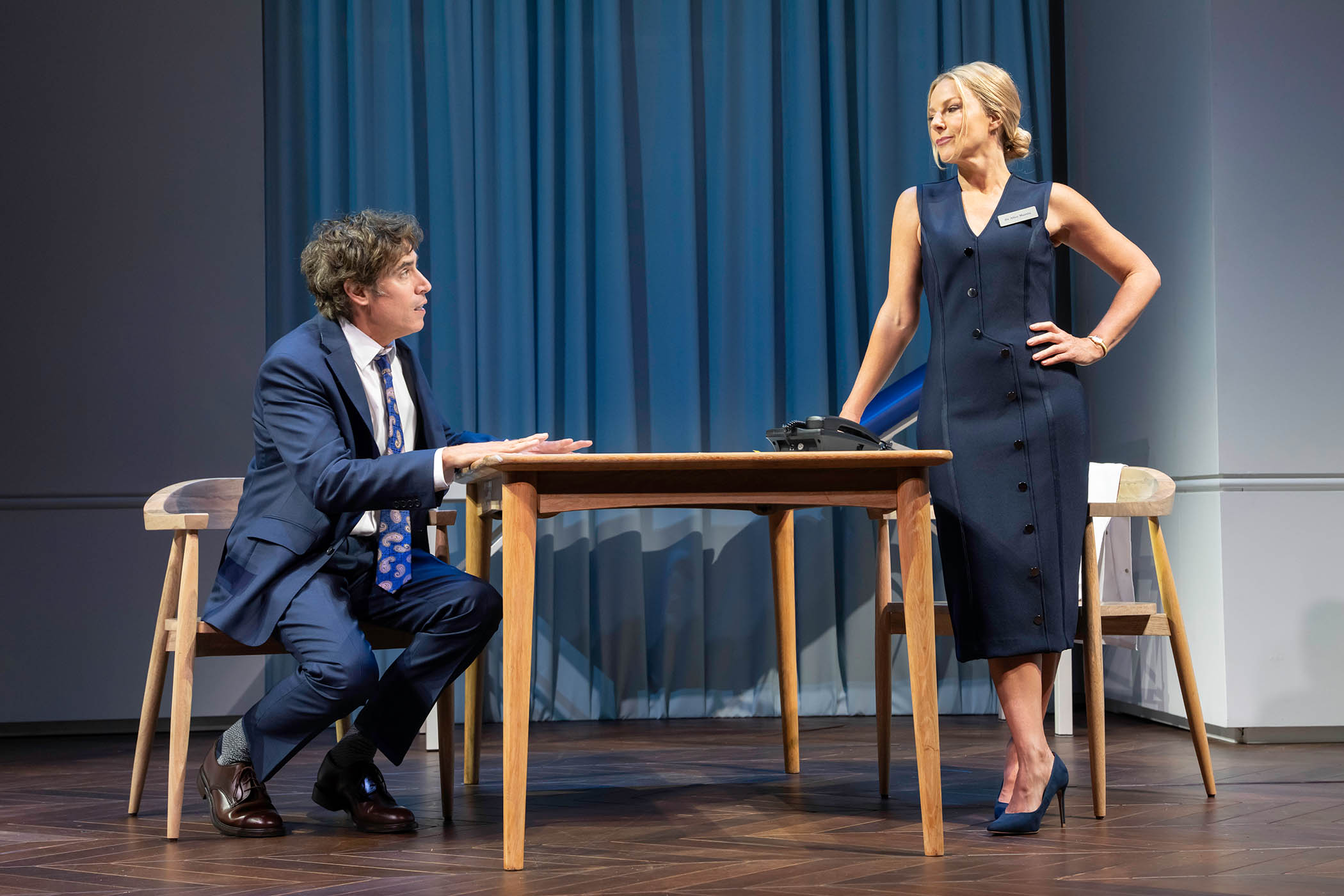
Within a year London has seen two plays about restorative justice after random killings by young men. There is a zeitgeist explanation: James Graham’s Punch and Fran Kranz’s Mass are staged when concern about violence among adolescent boys runs high, carrying echoes of entrenched global strife; here is a means of exploring the chance of a better future. There is also a theatrical explanation: the stage is wonderful at showing alteration, at waking spectators up to the ways in which people may change. Graham’s runaway successful drama (first seen at Nottingham Playhouse in 2024, at the Young Vic last year and due to start touring the country in early 2027) offers practical encouragement. The young man at its centre – an accidental murderer – is still alive.
The circumstances that led him to violence are uncovered; he is remaking his life and has bright prospects; it is based on a real-life story. Mass, first directed by Kranz as a film five years ago, is inspired as much by general anxiety about the state of the world, rather than a single event. It seems to hold out little immediate hope: the boy who gunned down pupils at a school in the United States went on to shoot himself; there is no evident explanation for the attack. Several years after the killing, the parents of one of the victims and the parents of the perpetrator are brought together under a restorative justice scheme. The four of them – drenched in sorrow, utterly bewildered – meet in rooms attached to an Episcopalian church. What follows is a study of slowly revolving pain.
Carrie Cracknell’s production is exquisitely focused, finely wrought: the performances vibrate. The play itself is foggier, less dynamic. Gun laws are discussed: the boy used a firearm belonging to a friend’s father. As are bullying, inflammatory social media, incel culture. The mother of the killer remembers the day he threatened her: how could she not think that significant? Because she didn’t want to; because she loves him.
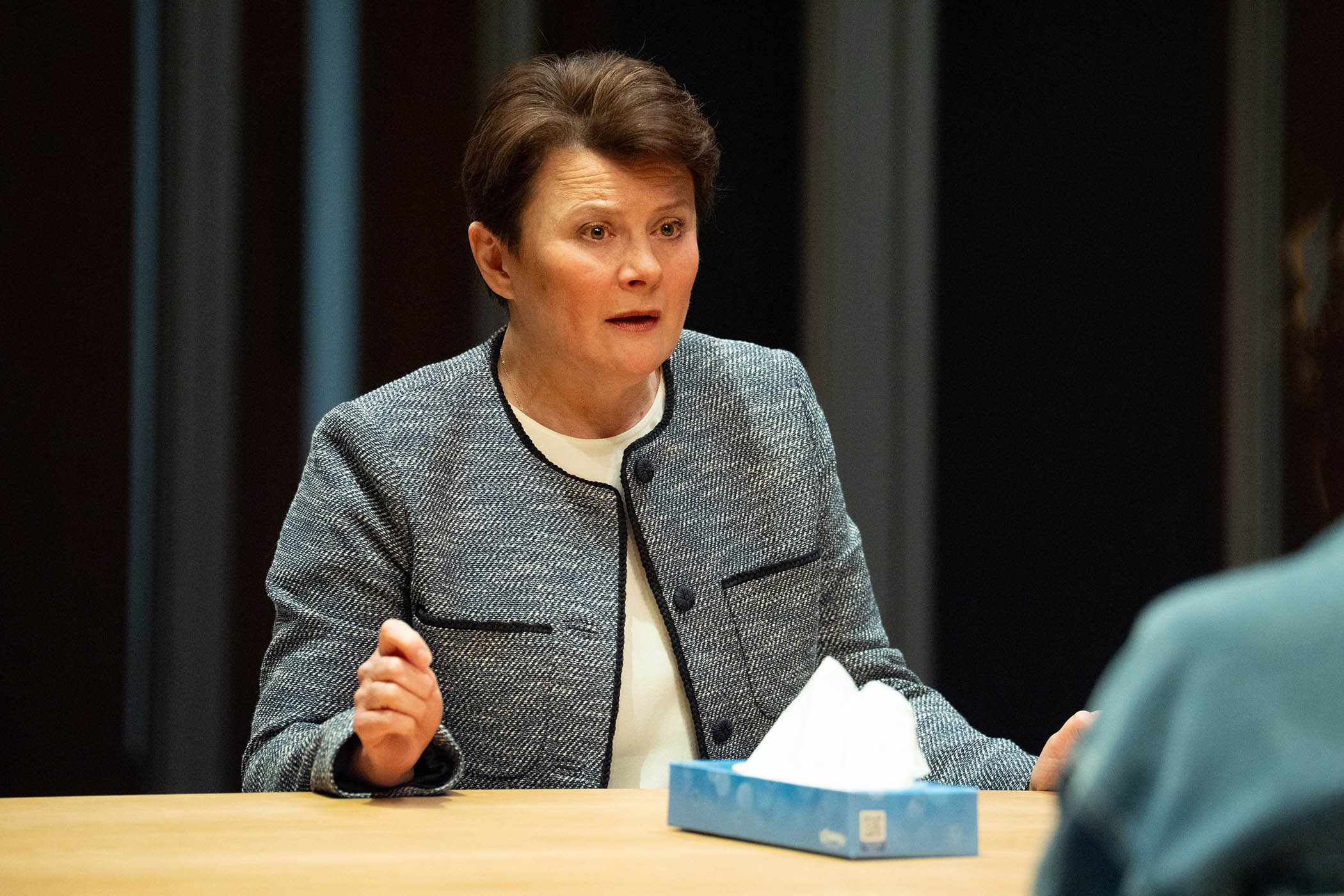
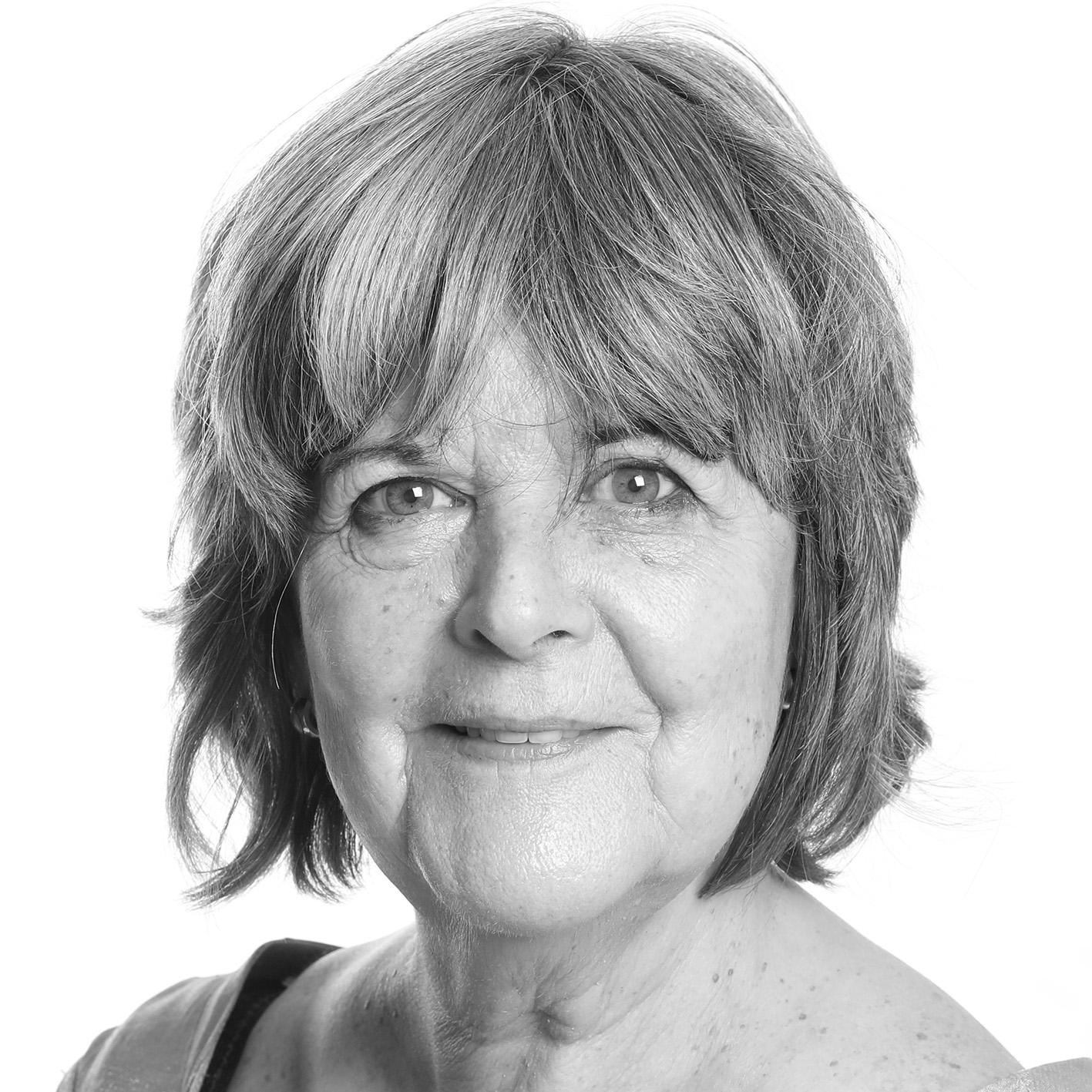
Monica Dolan is ‘one of the best actors of the last 30 years’
The mother of the murdered boy pleads for any detail, however ordinary, however painful, about the day of the shooting, eager to hear about anything that touched her son. All explanations, inadequate and partial, slip away; so do blame and self-blame. The parents find no practical help. Nevertheless, after two hours of shared desolation they are – somehow – less swamped.
The force of the evening is not in the faint promise of easing – accompanied by a distant choir and rays of evening sun – but in what comes before. A common insult among film critics of a performance is that it is “theatrical”, meaning florid, booming. Cracknell plays against that possibility, tugging the audience in to see everything in hyper-realistic closeup.
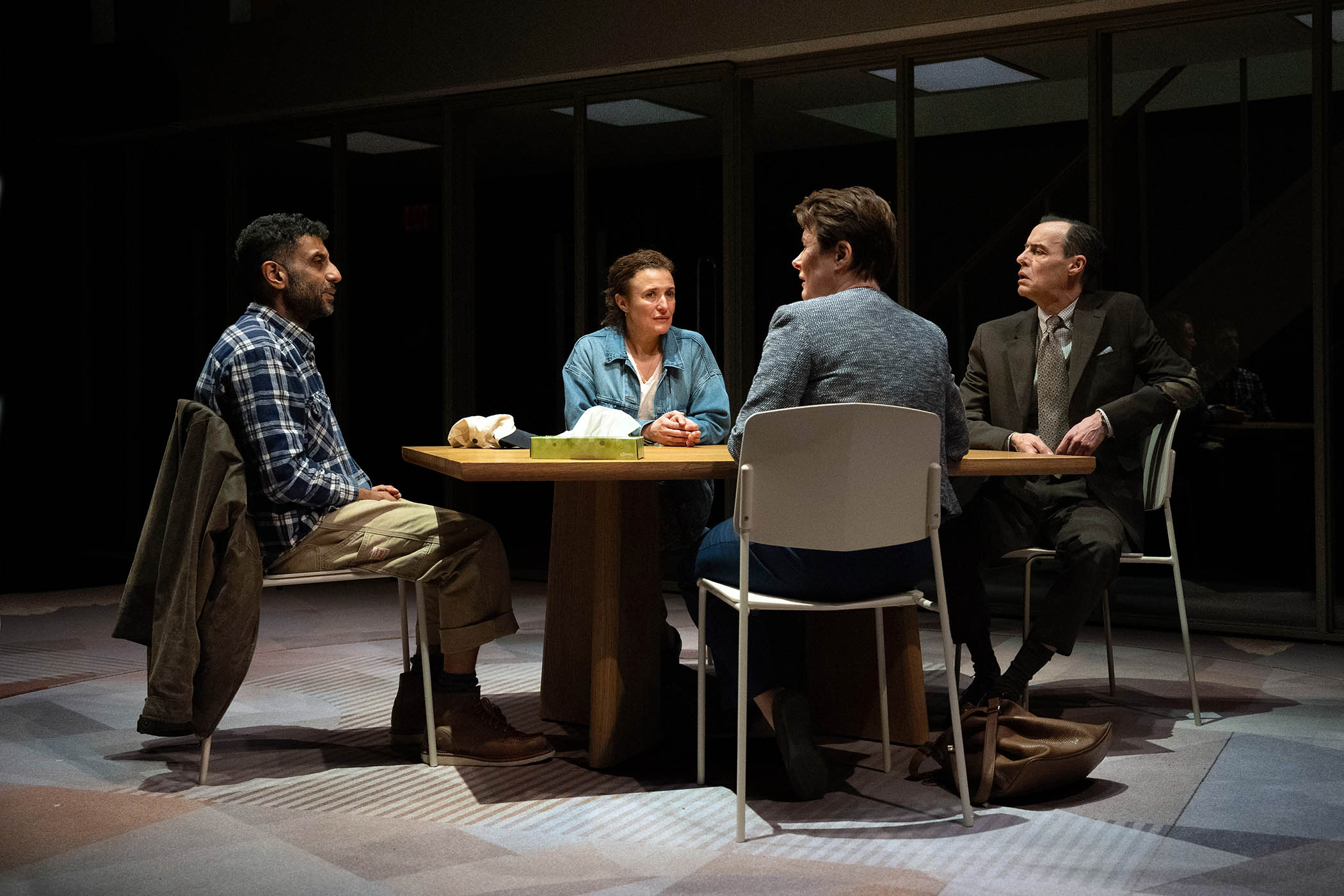
Designer Anna Yates, adept at enabling large movement in a small space, as she did in The Forsyte Saga, has created unembellished cream rooms overlooked by a walkway and clear glass windows: the blandness emphasises the intensity of top-notch acting and precise direction; every facial flicker, every small gesture, is magnified. As the organisers of the meeting prepare for the parents’ arrival, they fidget with the arrangements.
Should that box of Kleenex be on the table, or put to one side where it does not too obviously anticipate tears? Later, those tissues are shoved across the table towards a weeper: the velocity says more about concealed contempt and anger than any overt explosion.
Lyndsey Marshal, mother of the murdered boy, straggles in with wispy hair and baggy jacket (Yates’s costumes are as spot-on as her set), looking always as if she is about to melt. As her husband, Adeel Akhtar is all anguish, as if he is struggling to get out of his skin. Paul Hilton, father of the killer, is contained, still rigid with shock. And Monica Dolan? With cockatoo hair, clamped in a stiff jacket, clutching an inappropriate offering of flowers, she is fear incarnate, trembling without actually shaking. She is one of the best actors of the last 30 years: has she turned down a damehood?
A touch of genius captures the drift of Kranz’s drama, which does not so much progress as rotate. With a turn so gradual it is almost imperceptible as movement, the table at which the two couples sit continually revolves throughout the evening. One face after another is first hidden from the audience and then seems the most vital; one experience after another is brought into focus; one viewpoint gives way to the next. Arguments and anger dissolve together.
Photographs by Richard Hubert Smith
Newsletters
Choose the newsletters you want to receive
View more
For information about how The Observer protects your data, read our Privacy Policy