
Kurt Jooss is a virtually forgotten figure in the story of dance in Britain, celebrated mainly as a teacher of Pina Bausch. Yet the German choreographer’s style – a pioneering mixture of the theories of Rudolf Laban with a bit of expressionism and a lot of balletic technique – was influential on British choreographers such as Antony Tudor.
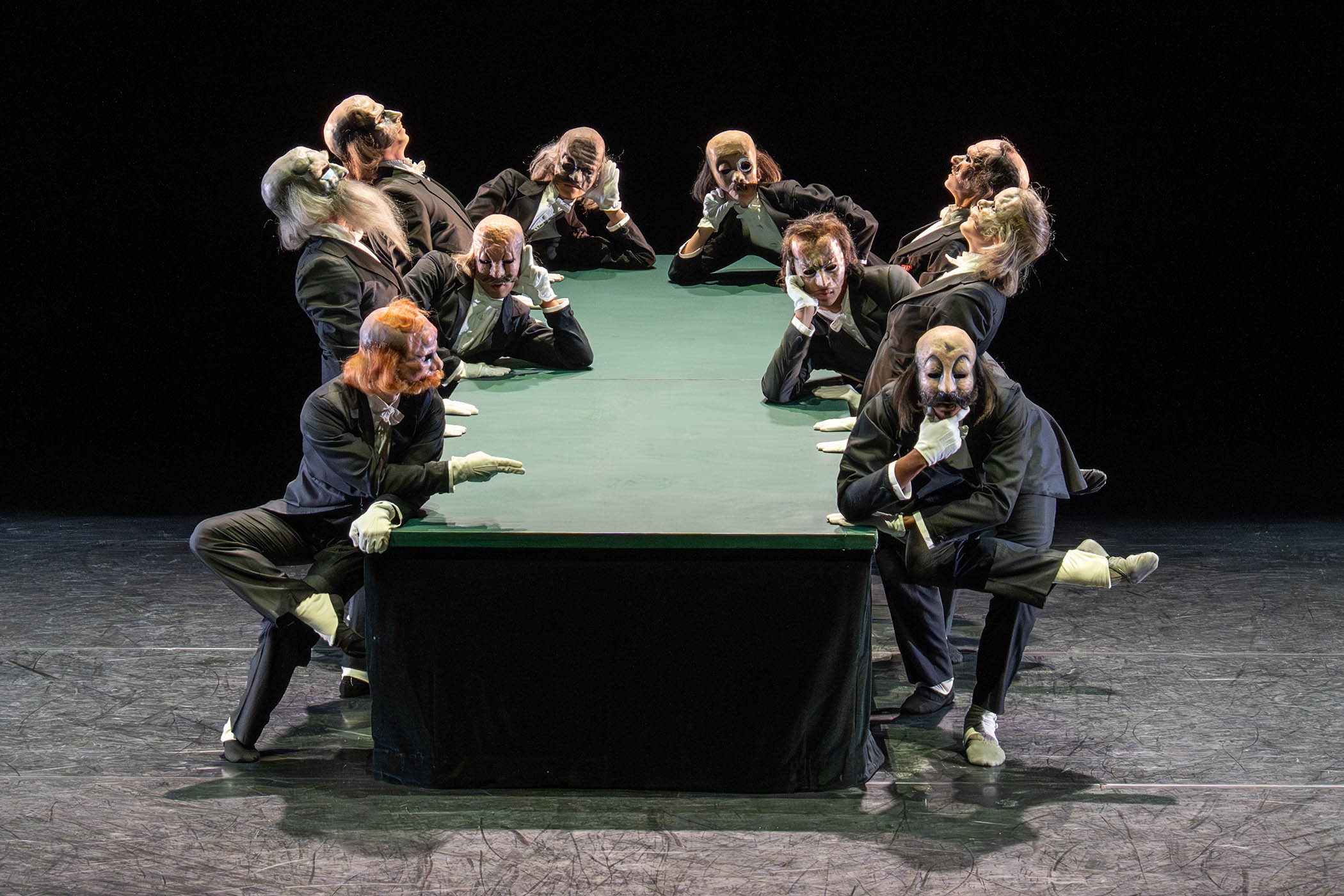
Jooss’s most famous work The Green Table premiered in 1932, just before Adolf Hitler was elected chancellor. It was an impassioned clarion cry against the futility of war as a means of settling arguments: it begins with a group of grotesque old men around a table, gesticulating and posing before sending the young to battle and to inevitable death.
By late 1933, the rise of antisemitism in Germany and Jooss’s refusal to dismiss the Jewish dancers in his company forced the choreographer, who was a pacifist, out of his homeland. He and his company settled in England in 1934, but he was arrested as an enemy alien in 1940, and Maynard Keynes had to intervene to free him. His company toured widely during those war years, exposing British audiences to a radical, communicative dance that supplemented the classical fare provided by the fledgling Royal Ballet.
It was the great gift of Birmingham Royal Ballet’s gala for its founding director Peter Wright to bring The Green Table back to British stages after an absence of nearly 20 years. Wright, who is 100 in November, began his career as a dancer in that ballet and brought the work into BRB’s repertory in 1992. Its revival was the highlight of an affectionate gala, in which the BRB’s current director Carlos Acosta praised his predecessor, a great custodian of the 19th-century ballet tradition: “You don’t just stage ballets, you build worlds.”
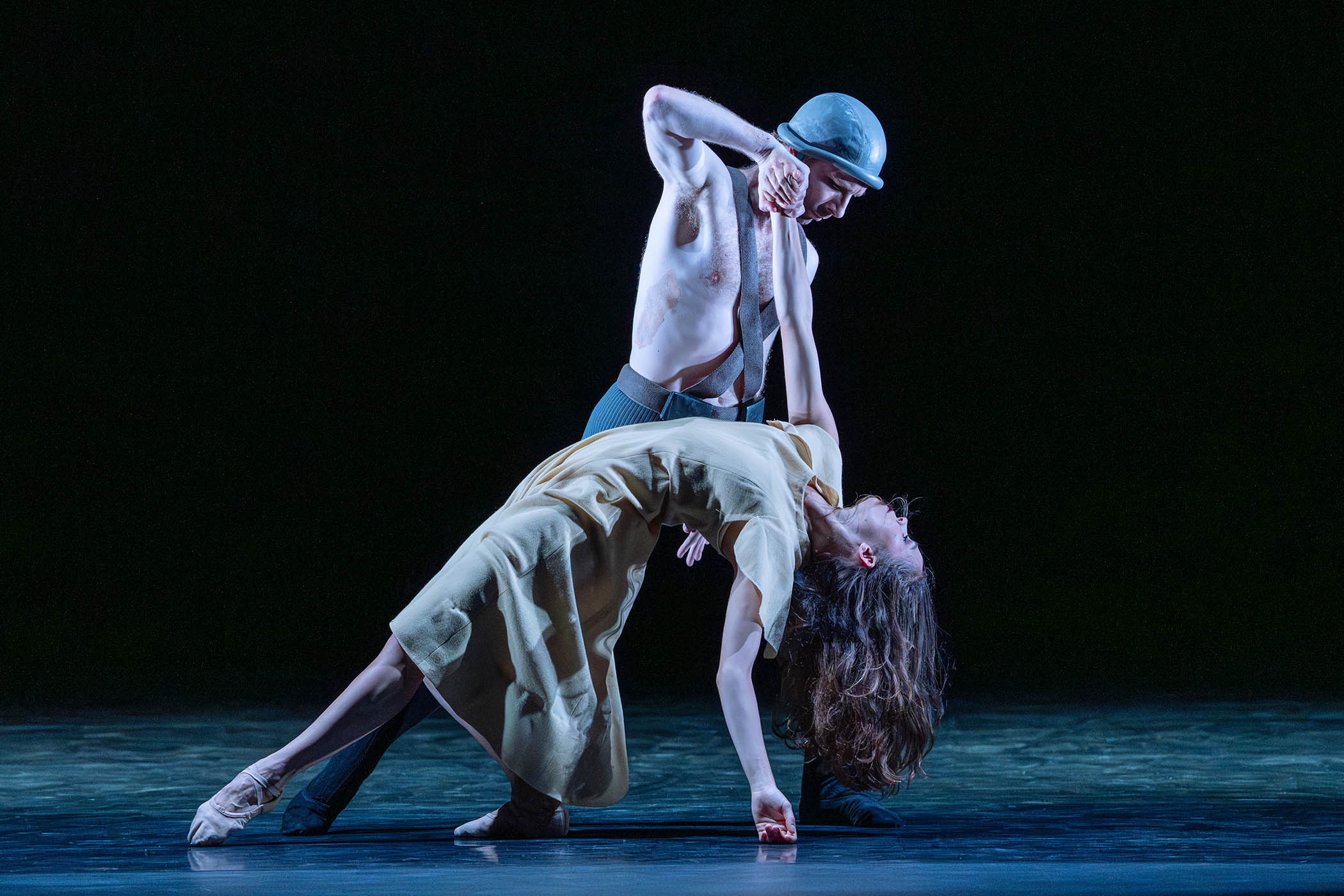
‘A clarion cry against the futility of war’: Birmingham Royal Ballet’s The Green Table
Acosta took the part of Death in the performance of The Green Table that followed. The character, moving with mechanistic precision and implacable weight, lurks in the shadows of six of the work’s eight scenes. In the opening and concluding episode, we see the men who begin the fighting but escape its consequences.
What’s extraordinary about The Green Table, watched at this distance, is just how contemporary it still feels. It’s not just that the theme of constant combat remains so truthful, it’s that every aspect of the production from Fritz A Cohen’s score for two pianos (wonderfully played by Jeanette Wong and Yen Lee) to Hein Heckroth’s stylised designs in silvery greys, soft browns and subtle purple, with flashes of yellow and red, seems entirely apt.
The lighting, recreated by Berry Claassen from Hermann Markard’s original, sets the soldiers and the women who mourn and support them in stark shadows, so they seem to be emerging from a timeless setting. The group of sorrowing figures who make their way across the stage look like so many grieving Magdalenes; the soldiers like the figures from a Crucifixion. Every pose and every action is keenly felt by the company’s dancers. It’s a perfect tribute to Wright – and to Jooss – and deserves to be more widely seen.
Photographs by Johan Persson
Newsletters
Choose the newsletters you want to receive
View more
For information about how The Observer protects your data, read our Privacy Policy