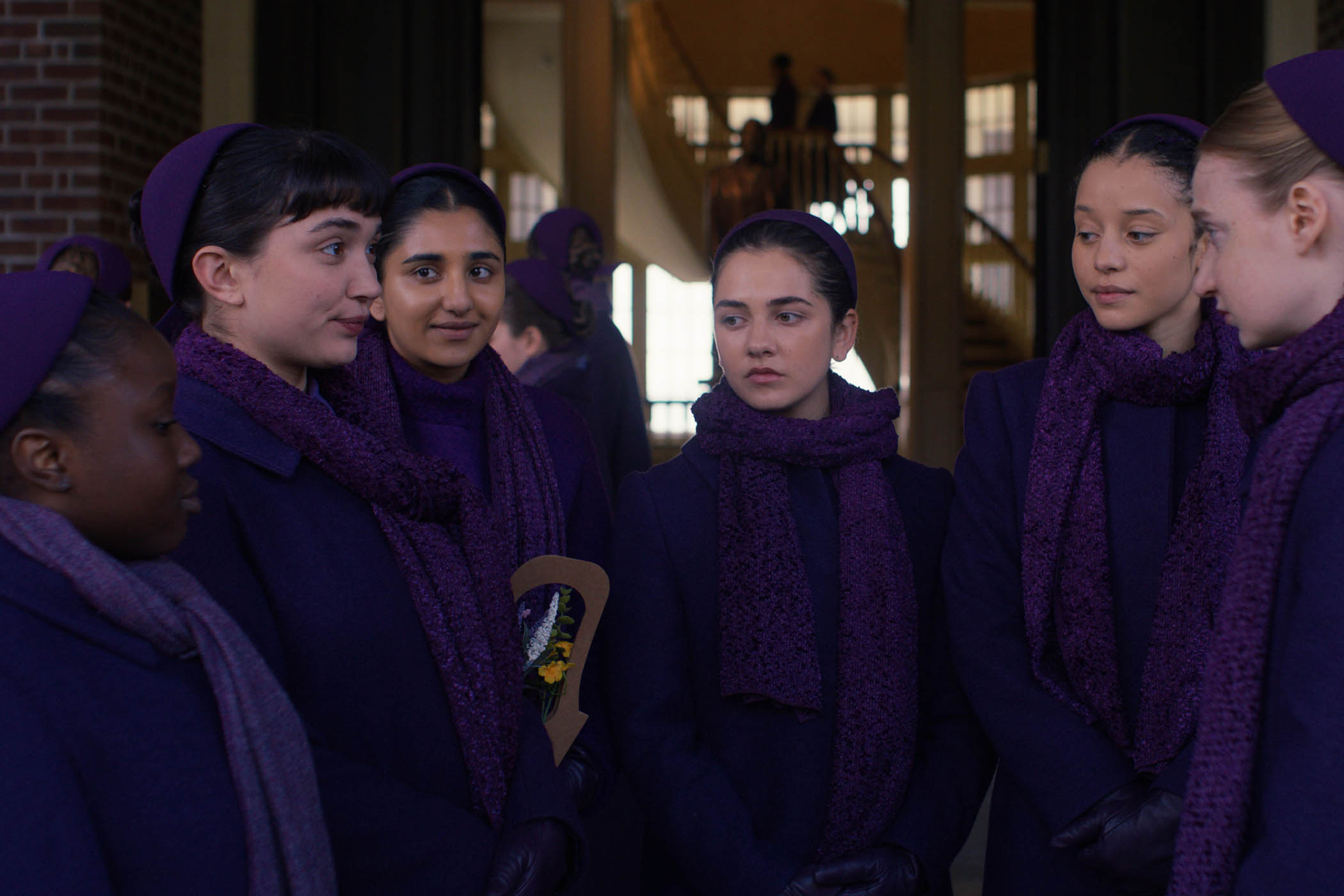

By the time Bruce Miller’s adaptation of Margaret Atwood’s The Handmaid’s Tale ended its eight-year run in 2025, it had hit a rut. The first series – the cloaks, the infertility, the Old Testament dialogue (“Blessed be the fruit”), the erosion of rights, the totalitarian chill – was an Emmy-garlanded cultural phenomenon, not least because it coincided with Donald Trump’s first presidency. By the final season, the peerless iconography of Gilead had been sidelined for rebel Mayday forces yomping back and forth through dark woodland. There were still some brilliant moments, but somehow The Handmaid’s Tale began to look ordinary.
Miller’s new Disney+ adaptation of Atwood’s 2019 Booker prize-winning follow-up, The Testaments, avoids the same mistake. Set a handful of years after its predecessor – just one way this series departs from the book – it sparkles with colour and light. The story focuses on the elite preparatory school run by Aunt Lydia (Ann Dowd, not the only familiar face to return) and dedicated to transforming the daughters of commanders into devout wives.
One pupil is Agnes (Chase Infiniti from One Battle After Another), along with her friends Becka (Mattea Conforti) and Shunammite (Rowan Blanchard). Just like The Handmaid Tale’s June Osborne (Elisabeth Moss), the outwardly virtuous Agnes has an inner monologue: “I’m ashamed to say that I believed in Gilead once.” She pines for Garth (Brad Alexander), the young commander charged with protecting her, but Lydia’s school has plans for girls such as her.
The Testaments becomes that weirdest of things: a dystopian gen Z pyjama party
The Testaments becomes that weirdest of things: a dystopian gen Z pyjama party
Instead of reading and writing, they are taught embroidery, scripture and etiquette, and yearn to start menstruating. Then they can move up the system’s colour chart: pink for little girls, plum for teenagers such as Agnes and green for those blessed with periods – thus ready to marry the usually much older commanders. Also, white for “pearl girls”, such as newcomer Daisy (Lucy Halliday from Blue Jean). She’s defected to Gilead from Canada (“It’s suffocating in sin”), but it’s soon evident that she is a Mayday disruptor and, like Agnes, the offspring of a handmaid.
This series departs significantly from The Handmaid’s Tale, and over its 10 episodes, none of the men have the impact of commanders Nick Blaine, Fred Waterford or Joseph Lawrence (if a show is set within a patriarchy, male characters need to register). And while there’s some violence (hanging bodies, amputated limbs), the menace and brutality are minimal compared with The Handmaid’s Tale, oft-criticised as “torture porn”. Perhaps too minimal: the sense of threat in Gilead should be omnipresent – the air the girls breathe – and it isn’t.
Elsewhere, there are blatant attempts to attract a young audience. The swish school setup feels reminiscent of Netflix’s recent Addams Family spin-off Wednesday, while the ghastly debutante-style balls, where the girls must dance with the commanders, feel like Bridgerton with extra patriarchy. The overarching atmosphere is one of a watered-down dystopia.
On the upside, Infiniti, Halliday and the rest of the young cast are strong. Their privileged darkness is well drawn, with cliques, rivalries, denunciations and hysteria echoing everything from The Crucible to Girl, Interrupted. The Testaments becomes that weirdest of things: a dystopian gen Z pyjama party. It’s beautifully made, highly watchable and makes most sense when viewed less as a sequel to The Handmaid’s Tale and more as a YA companion piece.
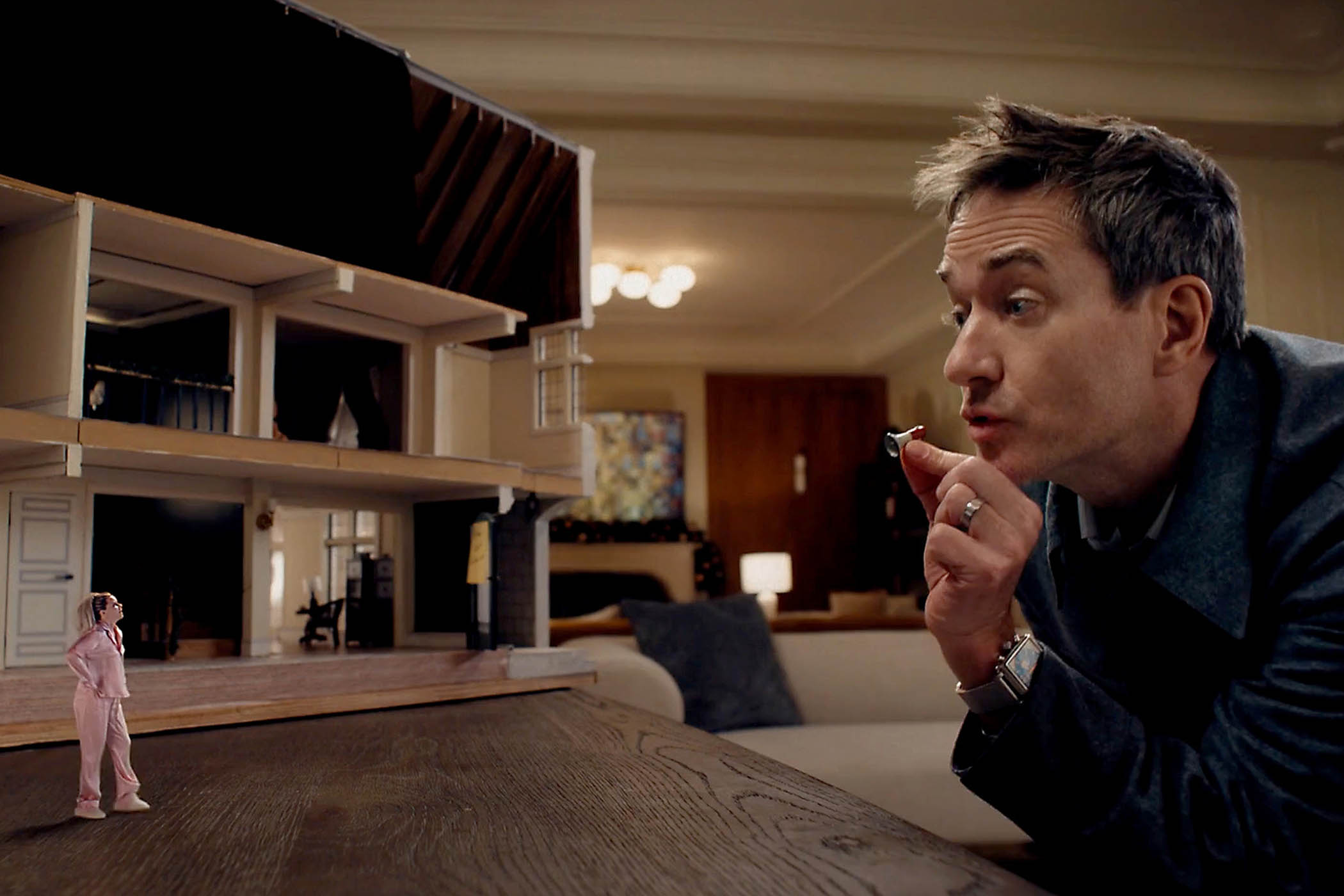
‘Essentially, it’s Honey, I Shrunk the Kids meets The Roses’: Elizabeth Banks and Matthew Macfadyen as Les in The Miniature Wife
Another feminist parable is lodged in The Miniature Wife (Sky Atlantic), a 10-part US sci-fi comedy drama created by Jennifer Ames and Steve Turner. Based on a 2013 short story by Manuel Gonzales, it follows a married couple who are fighting for power in their relationship when they’re placed in a unique situation.
Matthew Macfadyen (Succession) plays Les, a scientist with aspirations of winning the Nobel prize who has invented a gadget that miniaturises food products for ease of transportation. Elizabeth Banks is his wife, Lindy, who won the Pulitzer for her first novel but has since been supporting Les, and hasn’t written in 15 years.
The couple are already at loggerheads when Les accidentally – or otherwise – shrinks her. “My husband made me small,” says Lindy in the voiceover. “No, it’s not a metaphor. He made me 6in tall.” Les must then invent a gizmo that restores shrunken objects to full size, with added pressure from a tech bro investor (Ronny Chieng) and his underling (Zoe Lister-Jones).
Newsletters
Choose the newsletters you want to receive
View more
For information about how The Observer protects your data, read our Privacy Policy
Essentially, it’s Honey, I Shrunk the Kids meets The Roses. Fun is had with Lindy fighting off household bugs, or interacting with suddenly giant objects: train sets, earpods, Hershey chocolate bars and tiny glasses of wine handed to her with tweezers. Lindy is also given an agent (Sian Clifford from Fleabag) and an admirer, played by O-T Fagbenle (who, incidentally, portrayed June Osborne’s husband in The Handmaid’s Tale).
The series is padded with subthemes, among them, genetically modified food, dodgy biotech and plagiarism. The deeper feminist subtext – of the marital sublimation of Lindy, and her frustration and thwarted ambition – is made clear after Les places his wife in a fully functioning dolls house, because it’s “safer”. She often has to shout through a megaphone to be heard: “So this is my tiny little life now?”
There are some sharp lines (“I’m an accidental misogynist and I too blame the patriarchy for that”), but the show doesn’t always work; the premise is stretched, the blackly comic tone is jerky, and the special effects can seem rudimentary (Lindy resembles a peg doll when she’s held by Les). The Miniature Wife is saved by the cast’s brio, which is anything but undersized.
Photographs by Disney/Rafy