
Venice is quiet and dark in the coldest months, with fewer tourists. Half the restaurants close, while those that are open fill up quickly, windows steamy. Stone-faced Venetian ladies wander around beetle-like in fur coats, gondoliers stand idle, their cries of “Gondola gondola gondolaaaaa” plaintive, entreating, without braggadocio.
Nights are accompanied by sea mist and jarring silence. On cloudy days the buildings look as if they are made of near forgotten colours and the canals, in their preternatural blue, seem to glow. On clear bright days the air is sharp and every bridge and boat shines with overdefinition, best seen from a bar. The cold is ever-present, coming up through your feet.
This is Venice at the height of its allure, a powerful being, waiting to transfix. I was on a sort of holiday, working in the mornings and exploring in the afternoons. My first book finished and soon to be published, I was between projects and, like many before me, I’d come to this city for inspiration.
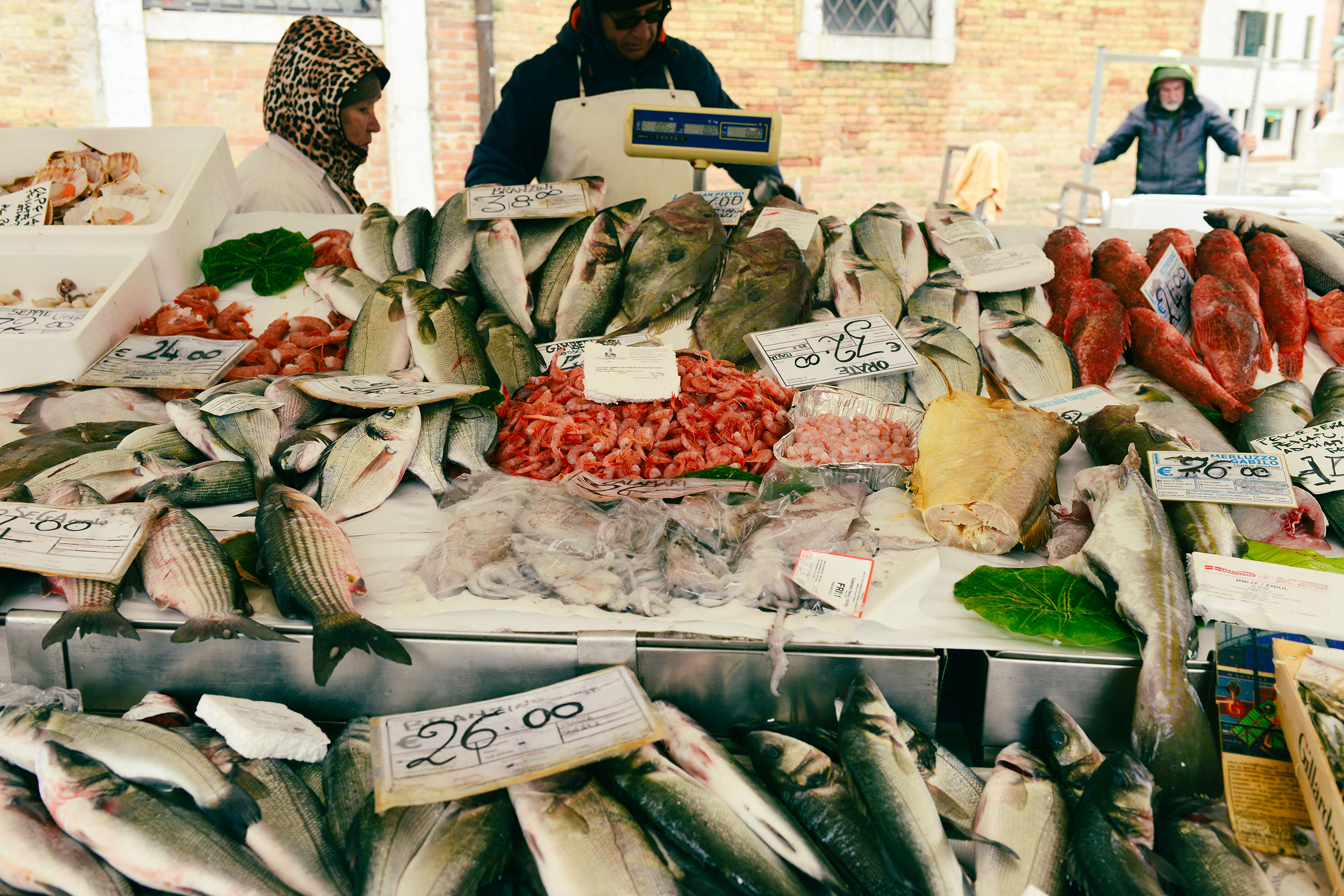
‘I love to shop abroad, it’s how I glimpse ways of living so easily missed’: a fishmonger’s stall in Venice
Inspiration from walking and looking and eating, too, in restaurants beside canals, sea-facing, charming. Venice has a wonderful culinary canon: sardines and onions; horror-black cuttlefish cooked in its own ink; shellfish pastas; deep-fried snacks, like stuffed olives or meatballs, that would make an American blush.
But mostly, I looked for inspiration in shopping and cooking. When I travel I do not only eat at restaurants. I can’t afford to, neither can my body, I’d become sluggish and such excess would dim the delight in eating out. “Oh, another pasta.” But even if I had money to burn and a teenager’s metabolism, I would still cook, for I want to taste the fullness of a place.
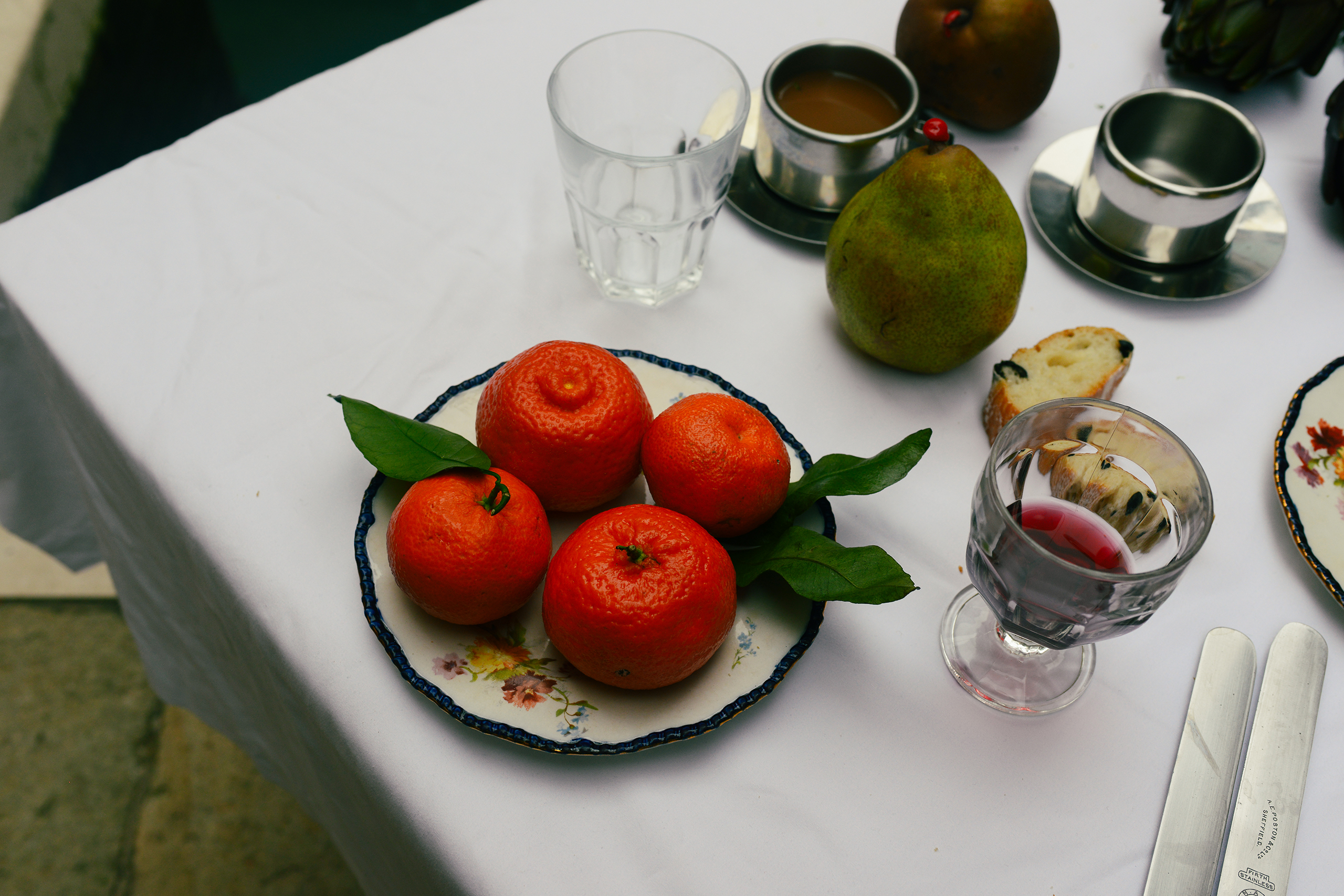
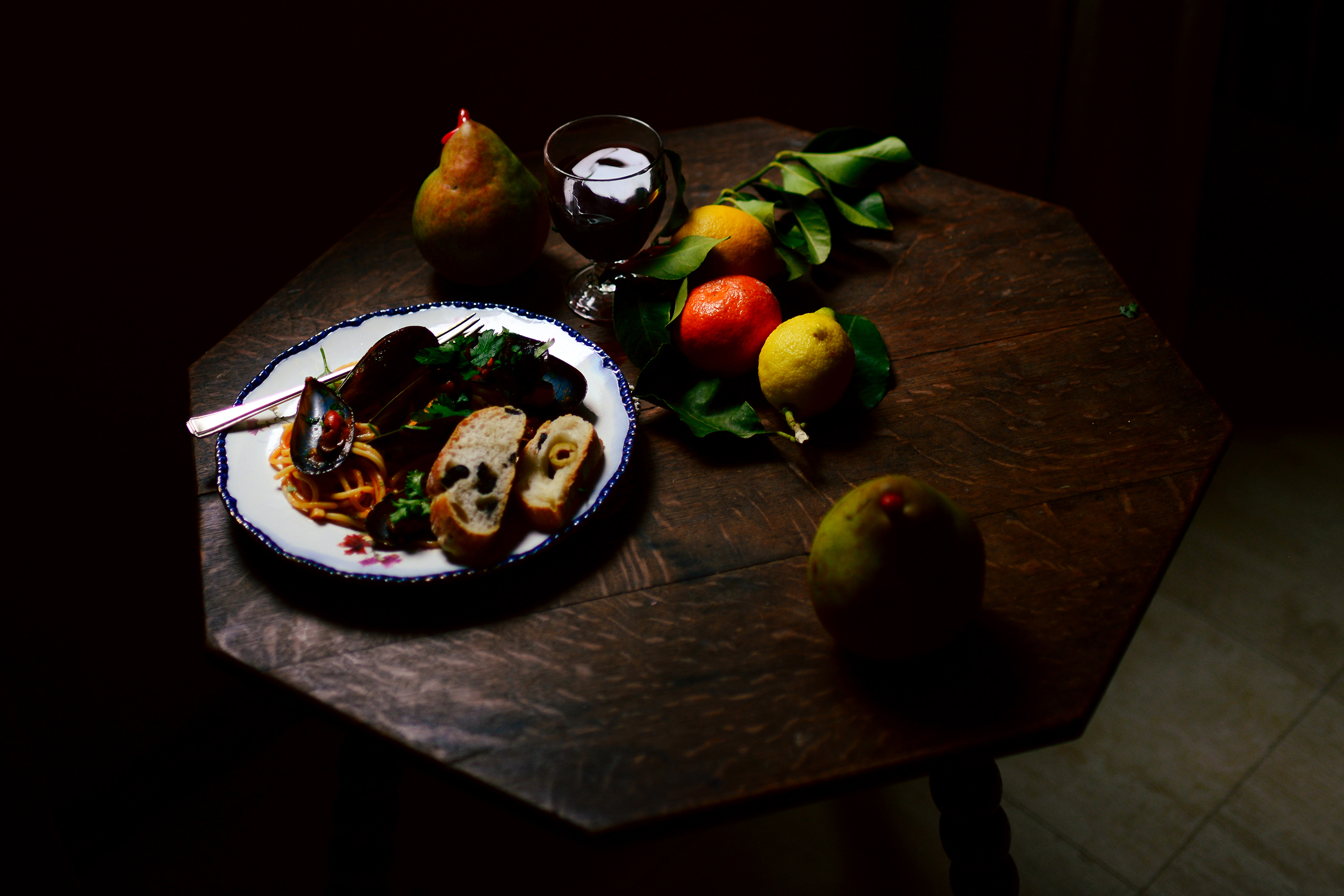
‘A week of restaurants would have you believe that Italians rarely ate anything fresh’: lovely citrus fruit at the table
In Venice, and most of Italy, a week of restaurants would have you believe that Italians rarely ate anything fresh, only occasionally allowing a well-boiled green or a soggy courgette on to their table. (An exaggeration, but small.) And yet any stroller will have seen market stalls and greengrocers heaving with the almost black of cavolo nero, the dinosaur sheen of artichoke, the almost vulgar pinks and purples of bitter leaves.
I love to shop abroad, it’s how I glimpse ways of living so easily missed: what an old lady buys; how a stick of celery and herbs is handed to you, gratis, with your vegetables; differences in butchery; the many sorts of bread. I relish the knowing smile from a shopkeeper that means, even though you’re English, you’ve made a good choice.
My Venetian friends love to cook and enjoy the chase for ingredients. One buys their vegetables from the garden of the women’s prison on Giudecca, another from a small farm in the Veneto, brought by the farmer once a week. “It’s a bit hush-hush.” For the unconnected, there are boats that come each Friday, stopping to fulfil pre-orders of meat, fish and vegetables. It feels like smuggling.
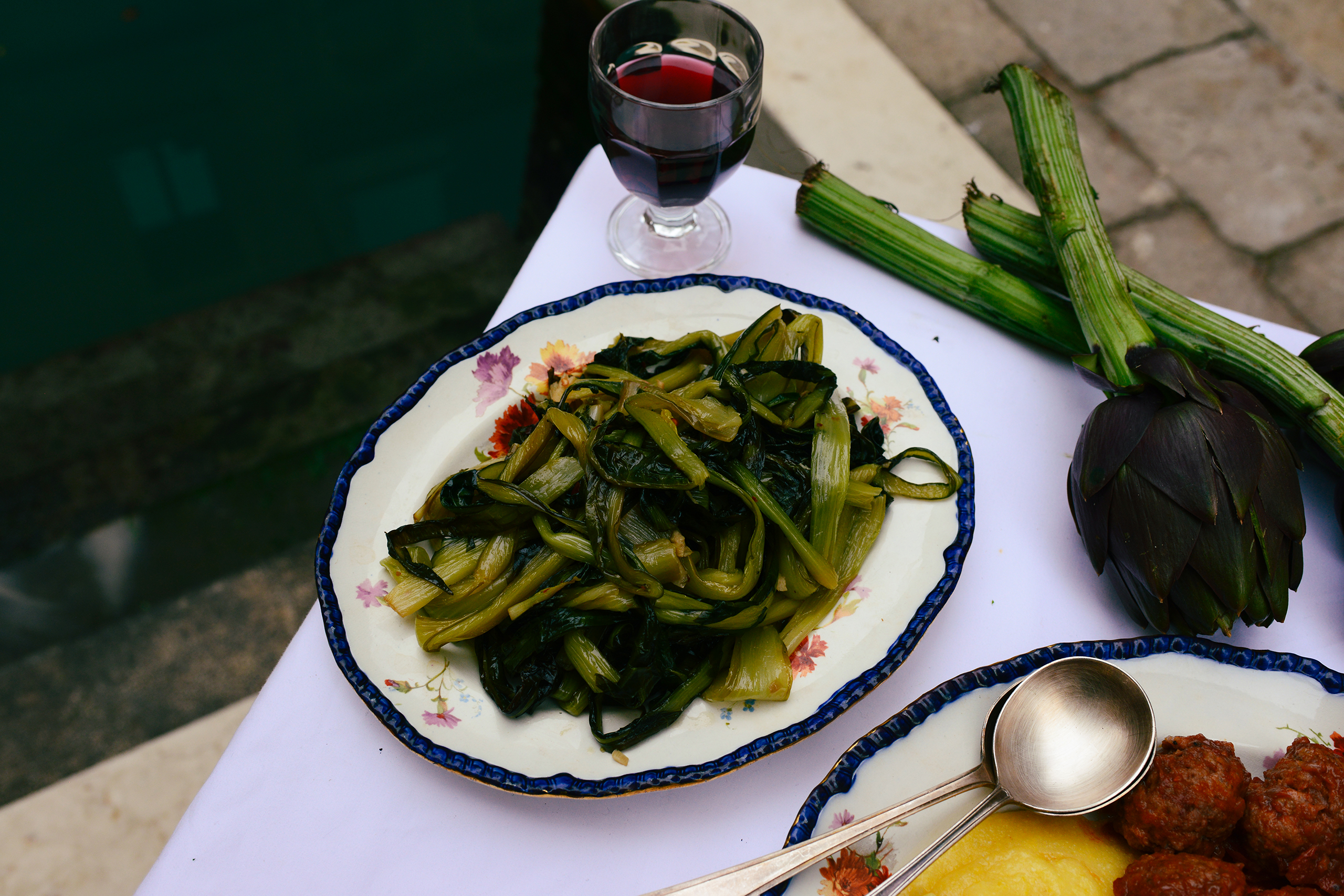
‘Their earthy bitterness goes brilliantly with rich food’: dragged cicoria
But shopping in Venice isn’t such a riddle and good ingredients abound – it’s Italy. Most romantic are boats selling vegetables, moored to the canalside, upon which greengrocers move nimbly. My favourite is in Dorsoduro, on the Rio San Barnaba. Otherwise, there are vegetable stalls in many of the squares away from the centre, the quality of which can be judged quite easily. This illustrates a general rule: when shopping abroad, don’t buy food in tourist areas, prices will be marked up and, most often, quality will decline. Get a bus to a market, walk for an hour – you’ll see things you wouldn’t otherwise.
The city has its good butchers. My favourite is Macelleria Fiore, just off the Campo S Margherita, also in Dorsoduro. It’s small and dark, tightly packed, cupboards of cured meats, and a gleaming counter, above which hang gigantic wooden horns. On Giudecca there’s a butcher which sells coglioni di mulo (donkey balls) – to the shock of any Venetian I told. Because butchers are brick and mortar, they’re usually easy to find on the internet, and a glance will tell you all you need: butchers should be clean and busy.
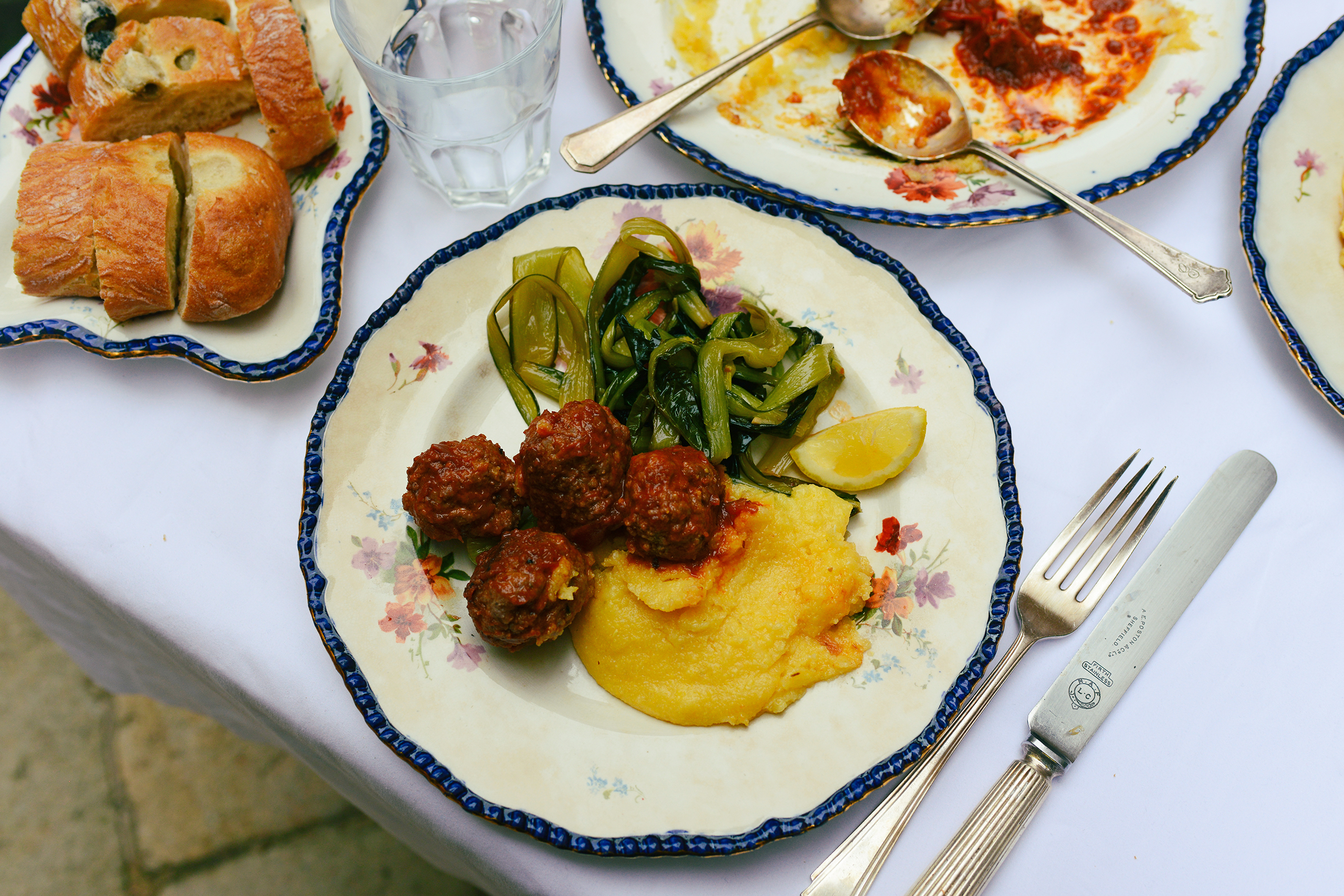
‘Since Venice is in northern Italy, polenta is everywhere’: polpetti in tomato sauce with polenta
Fish is the hardest to find in local neighbourhoods, funnily enough. This is probably because the storied Rialto market has a monopoly. Yet every Venetian I mentioned it to despaired at its declining quality, feeling it a tourist trap. Otherwise, there’s a market stall on the Campo San Margherita. Generally, especially in the Mediterranean, fish is best bought at covered markets, where everything else will be sold. There’s no greater thrill than a quick walk through a market in Spain or Italy, before deciding what to buy.
If you would like to exchange the romance of a square for ease, the best supermarkets are the Conads, while the late-night mini markets are good only for marked-up late-night wine. Before travelling, I like to work out which supermarkets are good – it’s nice to have a safe bet. Besides, a good Italian, French or Spanish supermarket is a treat. Yet no prior research can replace walking and looking, chatting – even with a translation app – and asking advice. The best things I’ve cooked abroad have been the fruit of accident – planning is against the spirit of a holiday. The question, then, is what to buy and what to make? Before shopping I’ll always have a look, count the pans and check the sharpness of the knives. Most rented kitchens are somewhere between pitiable and bohemian, and I prefer to lean into the latter and cook food that’s simple and unshowy. No one cooking on holiday wants to feel the despair of a failed dish, or spend hours peeling vegetables.
Yet do not let yourself be unduly limited. I’ve rolled pasta and pastry with wine bottles and baked cakes in saucepans. Once, really despairing at the bluntness of the knives, I bought a sharpener. In the worst flat I’ve ever stayed in, in suburban Rome, I cooked the best bistecca I’ve had in a near unusable frying pan, grinning with wine-stained lips as the tiny room, whose windows couldn’t be opened, filled with smoke. We ate it in bed after I’d cut it roughly with a horrendous knife.
What you cook should be influenced by what you’ve eaten out, by the flavours in the air. And though I’ve taken cookery books from a particular place with me on holiday, I don’t think attempting to recreate local dishes is best, it can lead to disappointment. My recipes here aren’t authentically Venetian, though they bear similarity to the food of Venice, drawing on the importance of polenta and the lightness of a sauce I ate on my first night.
Tomato and mussel spaghetti
Serves 4. Ready in 20 minutes.
A homage, but not a reproduction, of the pasta at Antica Adelaide, though the addition of lemon at the end would shock Adelaide’s chef, who – bound by traditions – refuses to serve it with fish. To this end he has printed NO LEMON throughout his menu. The almost soupy sauce is rich with oil, sharp with wine, the mussels tender and fragrant. At Adelaide, the dish is made with bigoli, Venice’s thick spaghetti, but it’s hard to find and happily substituted with spaghetti.
garlic 2 cloves, roughly crushed
chilli flakes a generous pinch
olive oil 40ml
cherry tomatoes 1 x 400g tin (the best quality you can find)
spaghetti 250g
white wine 100ml
mussels 500g, soaked for 30 minutes, discarding any that have not closed
lemon wedges to serve
flat leaf parsley a handful, chopped, to serve
In a large pan, fry the garlic and chilli in the oil on a low temperature, stirring every now and then, until the garlic is a rich gold. Watch keenly against burning the garlic, as this will make the dish bitter.
When the garlic is golden, add the tomatoes and mash gently with the back of your spoon. Simmer for another 10 minutes, the heat a little higher.
Meanwhile, boil your spaghetti in salted water, taking it out a minute or two before the packet says, so that it does not overcook when added back to the sauce.
Now add the wine to your tomato and bring to the boil, adding the mussels and covering with a lid. Cook like this for 3-5 minutes, or until all your mussels have opened. Gently mix the spaghetti with the sauce and mussels.
Serve on a large platter with the lemon wedges, sprinkled with parsley.
Polpetti in tomato sauce with polenta
Serves 4. Ready in 40 minutes.
Since Venice is in northern Italy, polenta is everywhere, including with fish. Yet, simple Brit that I am, I prefer it with something heartier, like polpetti (meatballs) in a rich tomato sauce. Untreated polenta takes about 90 minutes to cook and requires frequent stirring. A drag. I’ve never really noticed the difference between this and the easily accessible semi-cooked variety, which cooks in a fraction of the time.
beef mince 250g
pork mince 150g
breadcrumbs 30g
egg 1
salt a big pinch
nutmeg a generous grating
black pepper a generous grinding
quick-cook polenta 50-60g
lemon wedges to serve
For the tomato sauce:
red onion ½, finely chopped
celery ½ stick, finely chopped
olive oil 30ml
plum tomatoes 1 x 400ml tin
red wine 150ml
For the tomato sauce, fry the onion and celery until softened in lots of oil, on a low heat, for about 10 minutes, stirring frequently. Add the tomatoes and red wine, along with a pinch of salt, squashing the tomatoes with the back of your spoon. Bring to an almost boil, then reduce to a low heat, so the sauce simmers away while you make your meatballs.
For the meatballs, mix the minces, breadcrumbs, egg, salt and spices together in a bowl and combine. I quite like the squelching, near disgust, of mixing minced meat with egg.
When combined, roll the mixture into small balls, about two-thirds of the size of a golf ball, and place on a chopping board.
When you’ve made all your meatballs, fry them until they are lightly browned, then transfer them to the saucepan with the tomato sauce. If your frying pan is small, fry in batches.
Lid the saucepan and poach the meatballs in the tomato sauce over a low heat for 10 or so minutes, until they are cooked through. This has the brilliant effect of flavouring the sauce with the juices from the meat, and flavouring the meat with the tomato of the sauce. Keep the meat warm until your polenta is done.
Cook your polenta. Because commercial polentas can differ markedly in cooking time and water absorption, I won’t give a recipe. Simply cook it according to the packet’s instructions, with a little oil. Lots of people add butter to polenta, but I’ve never felt the need – it’s already so rich.
When everything is ready, serve the polpetti with the polenta on a large platter, with wedges of lemon, which brilliantly cuts the richness of both.
Dragged cicoria
Serves 4. Ready in 20 minutes.
Italian bitter greens aren’t yet widely available in Britain, though they can be found in speciality greengrocers. It’s a shame, since they’re perfectly capable of growing here, and their earthy bitterness goes brilliantly with rich food. If unable to find cicoria, an approximation of this dish could be made by mixing 3 parts leafy chard with 1 part endive.
garlic 2 cloves, washed and roughly chopped
chilli flakes a pinch
olive oil
anchovies 6 (optional)
cicoria a big bunch
white wine 100ml
salt a pinch
lemon ½
Fry the garlic and chilli in a glug of oil over a low heat, until golden. (You can add the anchovies now, if using, though I wouldn’t if serving this with the meatballs: too many strong flavours.)
Add the cicoria, stirring to coat with the oil and garlic. Now add the white wine, turn up the heat, and stir until the cicoria is soft and the wine has cooked off. Add salt and lemon to taste.
Newsletters
Choose the newsletters you want to receive
View more
For information about how The Observer protects your data, read our Privacy Policy