It’s 1969. War in Vietnam drags on. Mass protests grab headlines. The first British troops are deployed to Northern Ireland. The US-Soviet cold war is playing out in the exosphere’s “space race”, causing global jitters. In the Amsterdam Hilton, John and Yoko, in white pyjamas, are giving peace a chance with a bed-in. At his desk in Suffolk, Benjamin Britten (1913-76), probably in usual tweed jacket and tie, is at work on his first opera in nine years, commissioned for a medium still in its experimental prime: television.
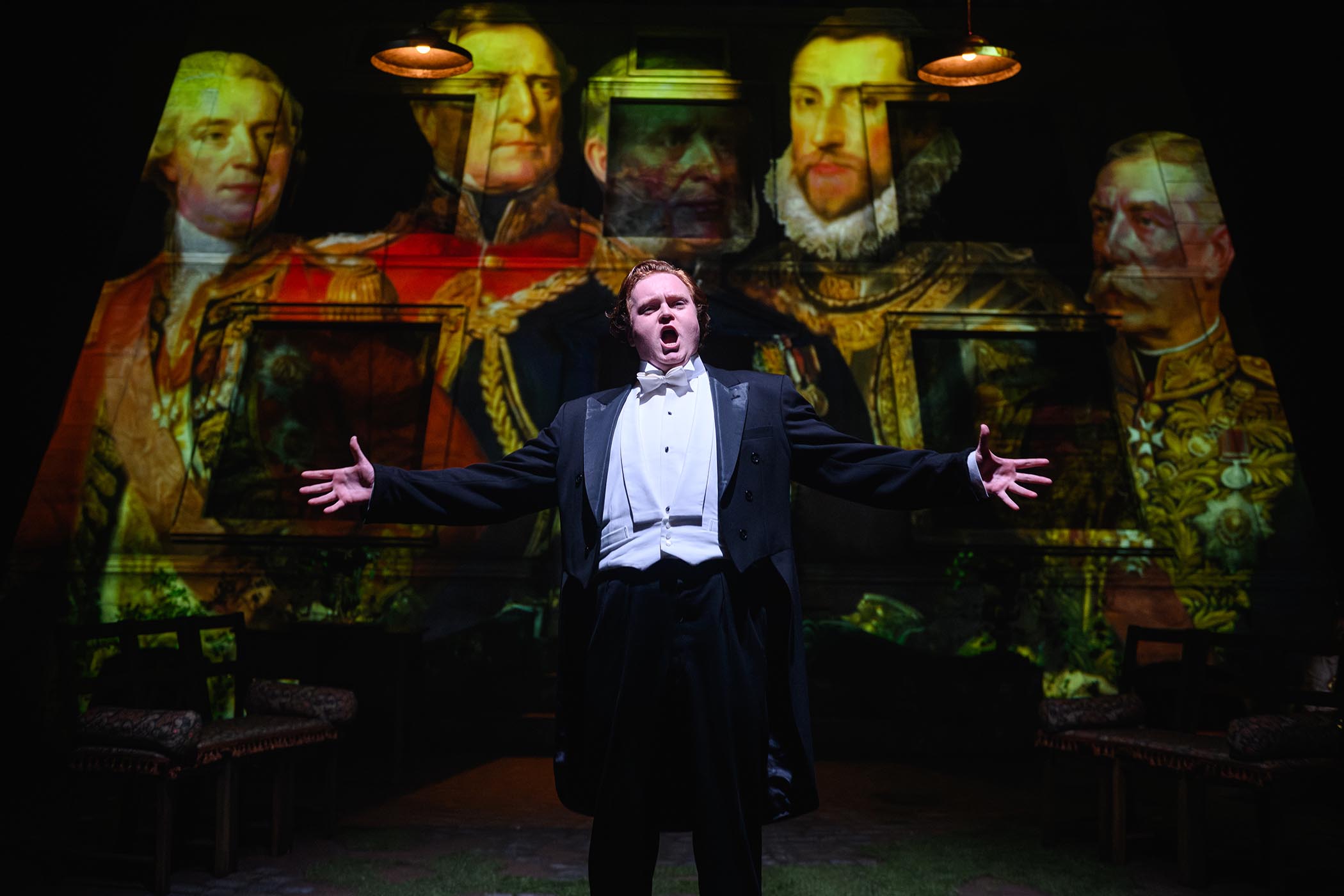
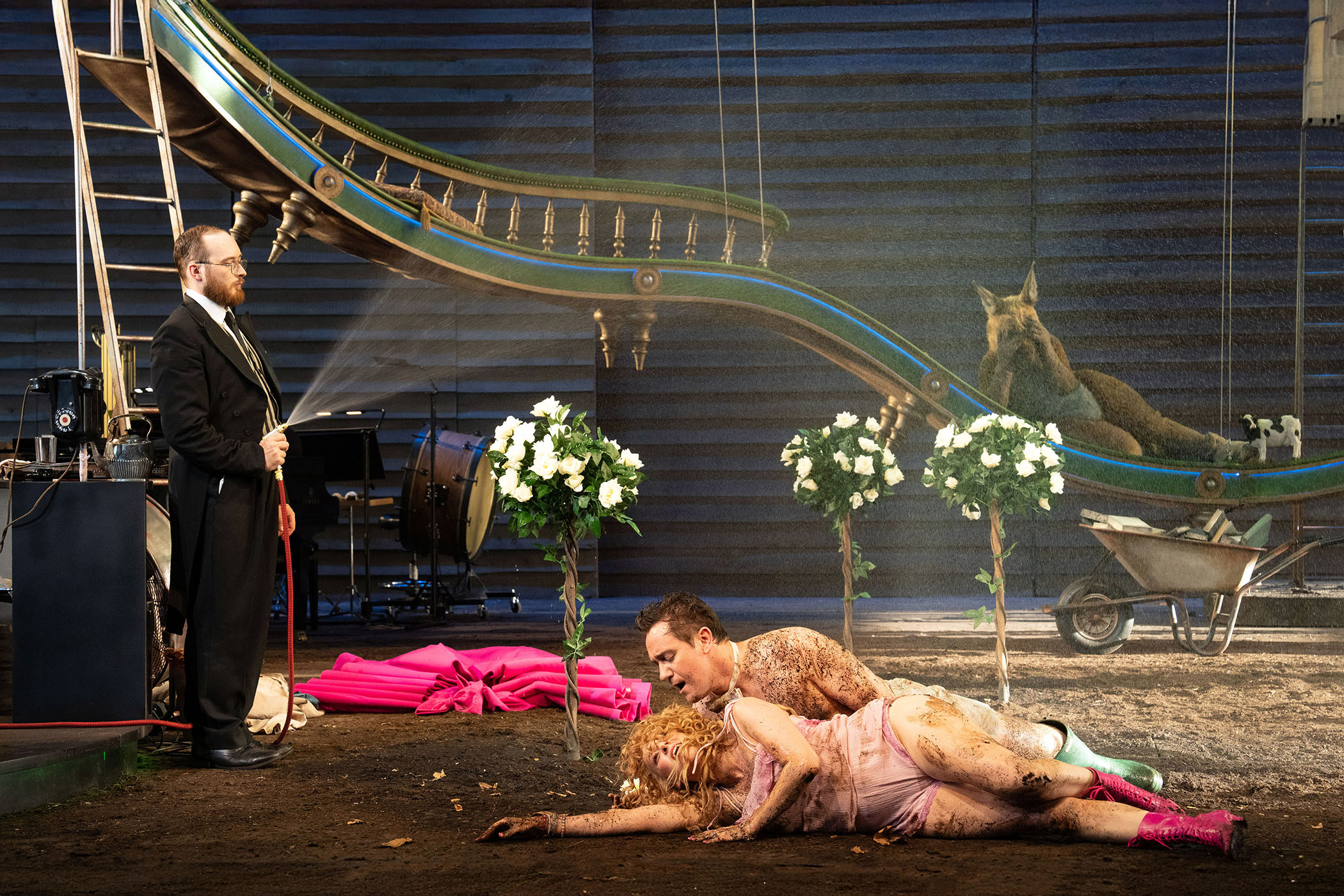
That opera was Owen Wingrave, based on a ghost story by Henry James. Its subject is pacifism. Britten was already known for his anti-war stance, expressed in his Sinfonia da Requiem (1940) and, more openly, his War Requiem (1963). Performances of Wingrave remain rare. A chamber version for 15 instruments by the British composer David Matthews has prompted several stagings since its completion in 2007. Using this arrangement, Guildhall School of Music and Drama has presented Britten’s late work in a clear and skilful new production conducted by Dominic Wheeler, directed in the round by Martin Lloyd-Evans and designed by Laura Jane Stanfield.
The background to Owen Wingrave is worth revisiting. BBC Two, the UK’s third channel, which launched in 1964, commissioned the opera. The channel’s brief was to broaden TV horizons with specialist, high-quality programming not found elsewhere. Owen Wingrave was most certainly not found elsewhere. It fell to David Attenborough, the first BBC Two controller of programmes, to persuade Britten to write a new piece for TV. Attenborough had not yet had his memorable 1978 encounter with a female gorilla, but his whispering power must have proved invaluable when cajoling the prickly and un-matey Britten.
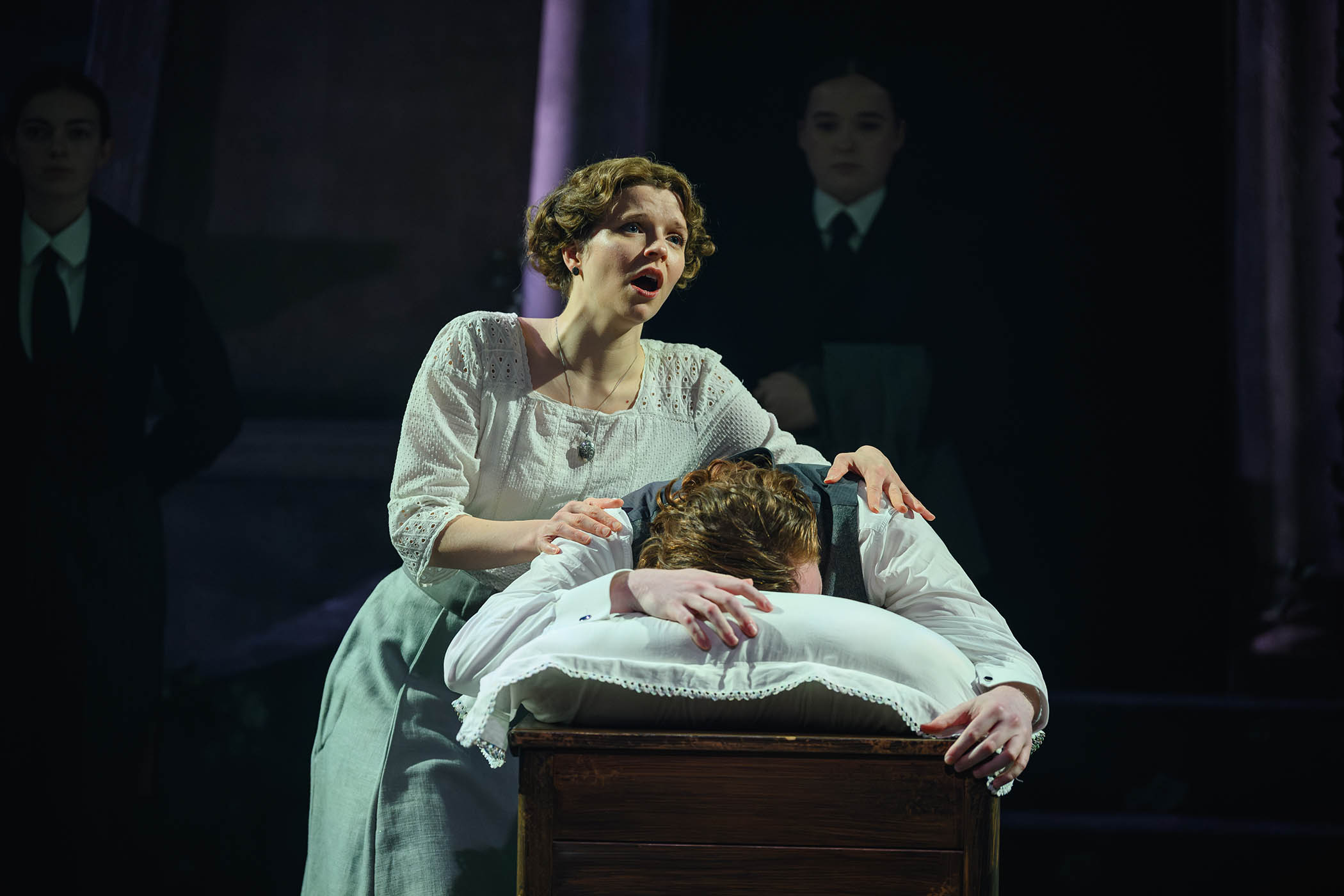
‘A cast rich with talent’: Gabriella Giulietta Noble as bullying girlfriend Kate and, main image, Sonny Fielding
The composer reputedly disliked television and did not own one. He insisted the opera be filmed at Snape Maltings, which required a huge outside broadcast studio to be set up all around the Suffolk concert hall. As Attenborough observed drily in his memoir, he was on top of broadcasting technicality – booms and cameras – but floored when it came to matters of orchestration. He writes: “‘How many horns can you give me?’ Britten asked. I was now out of my depth. ‘How many would you like Mr Britten?’ I replied. ‘I would far rather be told,’ he said, rather formidably.”
The opera premiered on BBC Two on 16 May 1971. Odd and uneasy though the story is, the work ranks as nearly a masterpiece, with beguiling gamelan-inspired music, splashed with dissonance. The use of large and small gongs, woodblocks, whip, cymbals and several kinds of drum creates an ever-shifting spangly texture, offset by a harp, woodwind, piano and string quintet. The late Victorian country house setting, here cleverly suggested by a facade of empty windows and judicious use of video, and the unknowable menace of a supernatural presence, echo Britten’s other James-based ghost opera The Turn of the Screw (1954). Both are to librettos by Myfanwy Piper.
As with many of Britten’s works, a homoerotic undertone has been identified. Wingrave comes out as a pacifist, but also as himself
As with many of Britten’s works, a homoerotic undertone has been identified. Wingrave comes out as a pacifist, but also as himself
Owen, in the first of two casts sung by baritone Sonny Fielding – a Guildhall student with the affecting dignity of a far more experienced performer – is the last of the Wingrave line. In this family of decorated soldiers, Owen alone detests war. Those around him, including Miss Wingrave (soprano Lowri Probert, excellent and clear), castigate him for his “cowardice”. The worst behaviour is that of his doubtful and bullying girlfriend Kate (spirited mezzo-soprano Gabriella Giulietta Noble).
Owen tries to demonstrate that his pacifist belief is a form of strength. A glow of sympathy, after initial dismay, is shown by his military tutor-mentor Mr Coyle (baritone Oliver Williams, persuasive in his changing view of his best-loved pupil). Harry Jacques, Hannah McKay, Manon Ogwen Parry and Tobias Campos Santiñaque completed a cast rich with talent.
As with many of Britten’s works, a homoerotic undertone has been identified. Wingrave is sensitive, artistic, misunderstood and finally tragic. He comes out as a pacifist, but also as himself. Reactions to Britten’s penultimate opera have always been cool. The text is uneven, the characters thinly drawn, the arguments naively overstated, but the moral complexity, conveyed in music of tough originality, is real.
The peace Owen Wingrave finds, when he has renounced war, is a treasured and lyrical still point in this pioneering work.
Photographs by David Monteith-Hodge/Photographise
Newsletters
Choose the newsletters you want to receive
View more
For information about how The Observer protects your data, read our Privacy Policy