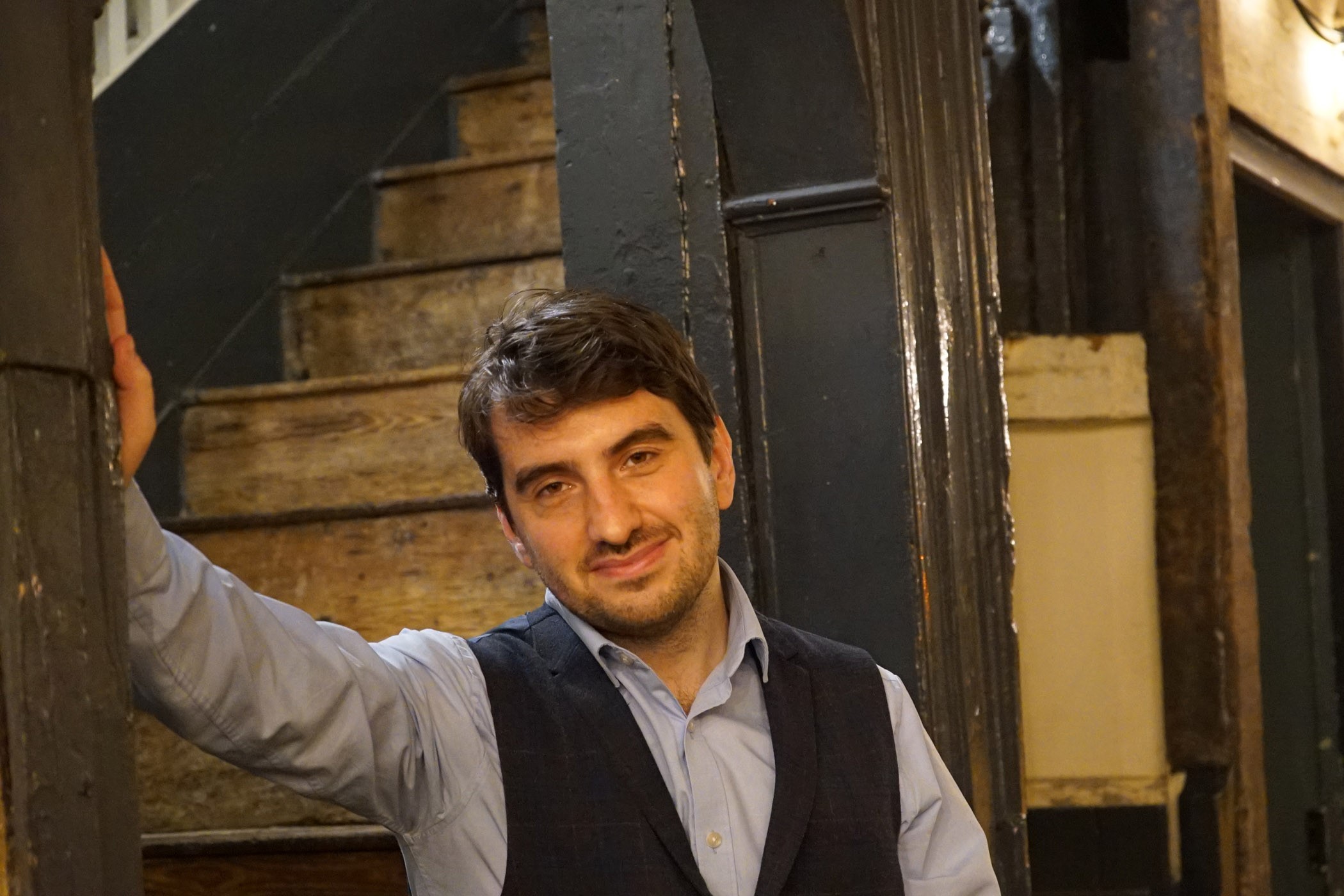

Paid for by Jamie Wilkins
Jamie Wilkins does not fit anyone’s stereotype of a classical composer. Born in west London to a single parent mother, there wasn’t much music in his childhood: “the extended family were more like the Krays than the Kanneh-Masons,” he suggests. Still, at 33, he has just recorded his first album Primo, with the London Symphony Orchestra.
Wilkins’s upbringing was shaped by the challenges his mother faced, which often meant alternating between her care and that of his devoted grandparents. At school, his mind was always on music. Today he might have been diagnosed with ADHD, but in those days teachers were less sympathetic. He would hide away at the back of class keeping quiet, hoping not to be singled out for any questions while scribbling ideas for melodies, hearing chord changes in his head.
Wilkins knew he wanted to write music from an early age. “My early musical taste was very different from what it is today,” he admits. “I grew up on a healthy diet of Meat Loaf, The Who, The Rolling Stones and Status Quo.” He is self-taught, learning musical score and composition originally from a booklet his grandmother gave him. “I taught myself to play from a book I still have called, The Complete Piano Tutor” he says. This – along with an old 1940s book on musical forms – was his first foray into the world of music.
This discovery of musical composition changed his life. Influences on his orchestral work might range from jazz to choral, stage musicals and operas, and memories of his mum’s kitchen discos, he suggests; but all of that is a long way from recording your first album with the LSO. How exciting was it to make Primo with the capital’s famous orchestra?
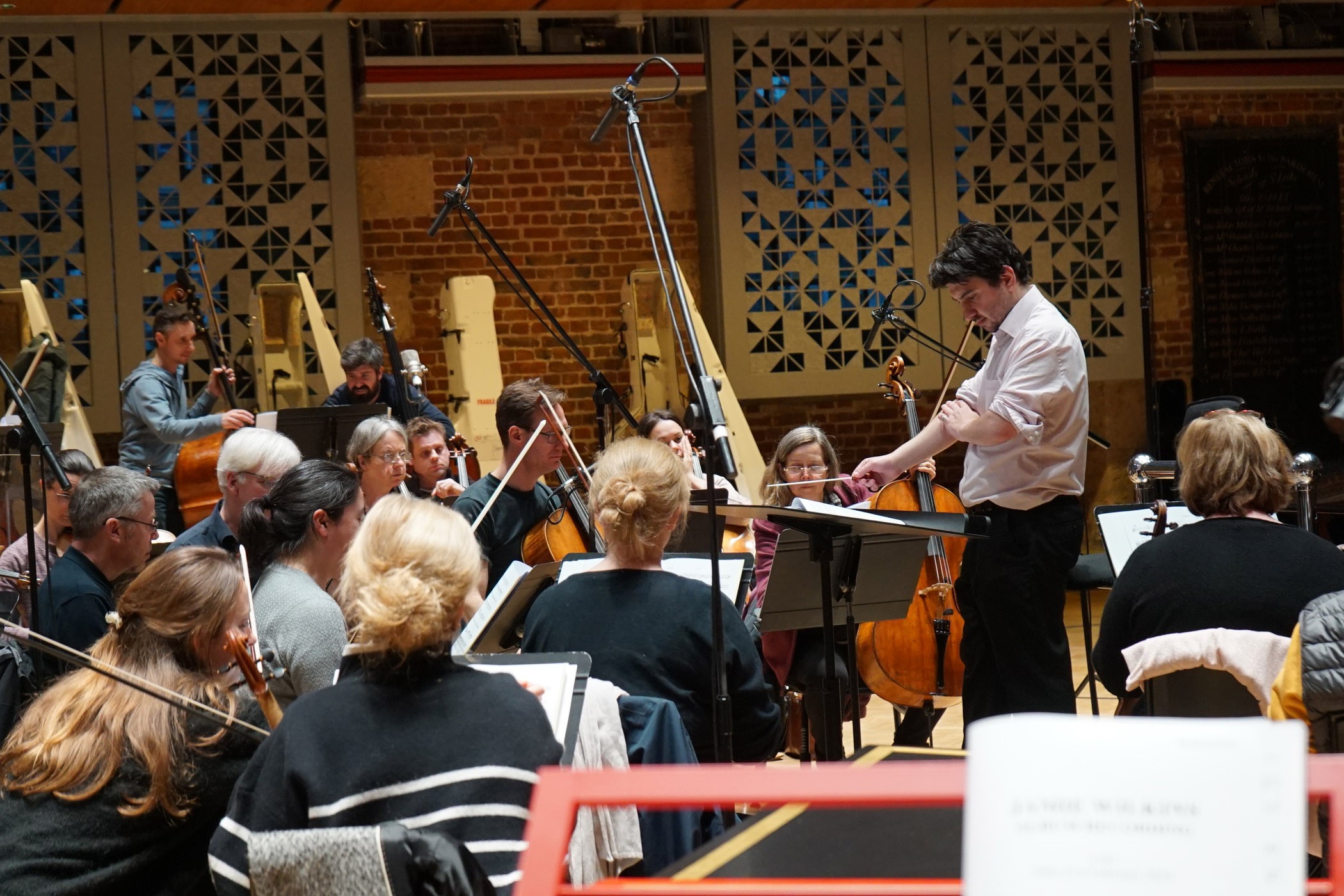
Wilkins conducting the London Symphony Orchestra
“We did the recording over two days with the London Symphony Orchestra at LSO St Luke’s, in London,” says Wilkins. “I was a bundle of nerves on the days leading up to it; it was quite overwhelming at times. But just having the opportunity to record, and to conduct my own music, it’s such a privilege. To get up on a podium and lead an orchestra; it is one of the things that I get a real buzz out of doing.”
The nerves fell away when he arrived at the empty hall and checked out the Steinway piano and the harpsichord which was also tuned up for his Handel’s House, The Alchemist and Tudor Dance tracks.
That debut album Primo is out now on general release on all digital platforms. The tracks, all written by Wilkins, are significant for their variety. “I can point out various influences in the work,” he says. “Handel’s House was written about the psychic activity in George Frideric Handel’s house in Brook Street, Mayfair, which I wrote after filming there with a TV series called Ghostcircle.” The baroque composer is not the only reference point of the piece, however; during the recording the oboe player from the London Symphony Orchestra came up to Jamie having recognised the riff from Jimi Hendrix’s Fire buried in the piece. Jamie laughed and explained how he incorporated it and the idea behind it. “It’s a little known fact,” he explained. “But Jimi Hendrix also lived next door to Handel’s house in Brook Street.” That kind of serendipity and sense of place informs a lot of Wilkins’s work – not least because he has a sixth sense for it.
The TV series was based on a group of psychic mediums – including Wilkins – who visit haunted locations all over the UK, Ireland, and Europe. The musical tracks were all written for different episodes from the series and subsequently reworked into full classical scores. One is a nine-minute piece based on the Ripper murders in London’s East End, written for an episode called “The Bell” about a pub located between Liverpool Street and Whitechapel where some of the murders took place. Other pieces are based on further-flung locations where Wilkins filmed with Ghostcircle. One track, Roman Lullaby, was written after some filming near the Vatican, at a 16th century palace with a strange history.
The piece is composed of piano and strings combination, imagining the streets of Rome at night time. Another favourite is Tudor Dance, which grows out of a Renaissance-style pavane. The piece was originally written for John Milton’s cottage in Chalfont St Giles, where the poet stayed to avoid the plague in London. Other tracks, Charleville and Ardgillan, reference the history of great estates in Ireland with troubling histories; Charleville is in the midlands of Ireland, beside the Shannon; its most famous ghost story concerns Harriet, the young daughter of the third Earl of Charleville, who died tragically in the castle in the 1800s. Ardgillan is another Georgian castle built in the 1700s in north Dublin overlooking the bay, and includes a haunted library and kitchens.
Wilkins has sensed that he possessed psychic abilities since his schooldays, though he learned not to talk about it too often in unfamiliar school company; and among friends for fear of being teased. These days he is more open about it; the album is in part an expression of that extra feeling he has for the uncanny. He has learned to channel those perceptions in productive ways. “These days I meditate first thing in the morning,” he says. “It’s actually really helped me keep balanced. The regularity of meditation has really helped me physically and, more importantly, mentally. I’ve found this has helped calm my racing mind, clear mind fog, and has actually increased my creativity. Most people have the wrong perspective on meditation and maybe if we use the phrase ‘mental exercises’, or ‘mental rest’, people would be more inclined to look into it more and use it. I would definitely encourage people to at least give it a try.”
And after the huge career high of working with the LSO, what does a young composer do next?
He answers: “Well, I have had some interest from the film world and also some TV, there is a big project for an entertainment company. Let’s say it’s top secret!” he laughs. “I can’t tell you who or the details about it, but I am also working on a long-term project that is in 12 parts…” He pauses, “let’s say it’s mystical and I’m excited about it. I’m getting lots of inspiration for it at the moment. So, watch this esoteric space!”
Primo by Jamie Wilkins is available now, to find out more view his Instagramhere