
Elgar, so often regarded as a quintessentially English composer (an impression amplified every year by the inclusion of his Pomp and Circumstance March No 1 at the Last Night of the Proms), was at heart a European. He changed the course of English music by looking to Mendelssohn and Brahms for inspiration, and nowhere is the influence of Wagner more apparent than in his impassioned choral masterpiece The Dream of Gerontius. So who better to conduct the London Symphony Orchestra and Chorus than one of today’s leading Wagnerians, Antonio Pappano?
Never call this piece an oratorio. There are no separate choruses, arias and duets that can stand alone. It is one unified whole, flowing seamlessly from prelude to conclusion, bound together in one long ribbon of intense, musical colour. Perhaps a key to its emotional core lies not just in the perfumed poetry of John Henry Newman’s text but in Elgar’s devotion to the pre-Raphaelite school of painting. We know he much admired the vivid tones of Dante Gabriel Rossetti and William Holman Hunt and, tangentially, had an extremely close friendship with John Everett Millais’s daughter Alice, the muse for his Violin Concerto.
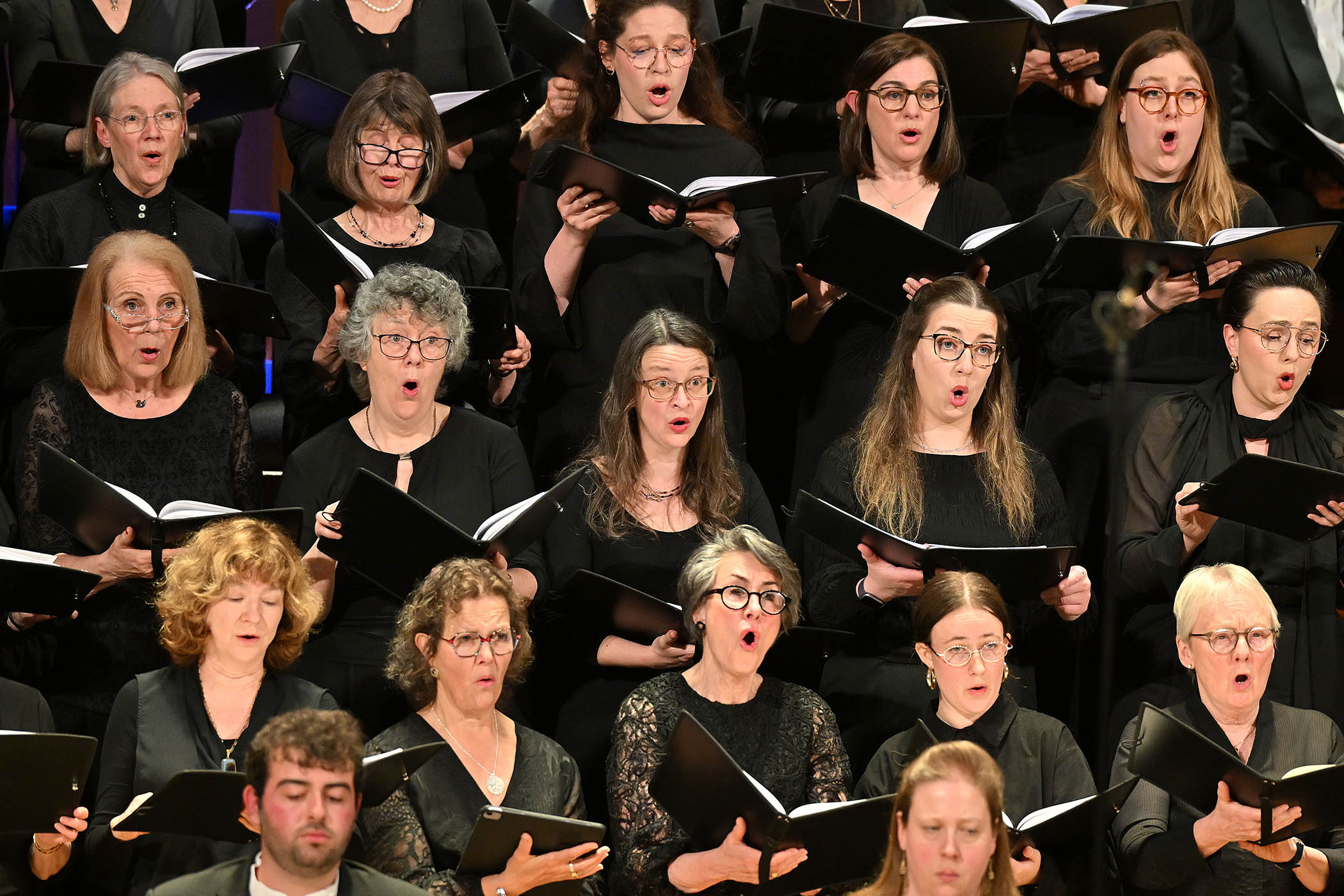
Give Elgar’s strikingly pre-Raphaelite musical palette to a lesser conductor and the result can tend towards the sickly and cloying, but not when Pappano is in charge. His intuitive but forensic understanding of the Wagnerian character of the piece, coupled with his assured direction, inspired some of the best chorus singing heard in a long while on the Barbican stage. Chorus director Mariana Rosas (a prodigy of previous director Simon Halsey) has worked hard to make these singers think about their posture, their breathing, their response to the music. The result is electrifying. They are storytellers, willing you to understand the text, singing with character and excellent intonation.
Crucial to the success of the piece is the central figure of Gerontius, the everyman passing from death to the afterlife, fearful and hopeful in equal measure. Here tenor David Butt Philip excelled, particularly in his massive solo Sanctus fortis, Sanctus Deus, his upper register thrillingly buoyant. As the old man lies on his deathbed, he is visited by a priest who sends his soul on its journey. Young bass William Thomas was that confident presence, easing Gerontius onwards with musical authority.
On his journey, Gerontius meets his guardian angel, his guide past cackling demons (chorus outstanding here) to a cataclysmic glimpse of God and on into purgatory and beyond. Canadian mezzo-soprano Emily D’Angelo was that mesmerising angel, her voice glowing like soft-burnished pewter in the elegiac Softly and gently, dearly ransomed soul. Readings of Gerontius can be off-puttingly overwrought, but this, the second of two performances given last week, was the epitome of controlled expression. “This is the best of me,” wrote Elgar. Yes, indeed.
Photograph by Mark Allan
Newsletters
Choose the newsletters you want to receive
View more
For information about how The Observer protects your data, read our Privacy Policy