‘Always different, always the same,” is how the late Radio 1 DJ John Peel accurately described his favourite group, the Fall. The same could be said of myriad musicians, but it’s a particularly resonant description of Tinariwen, the mighty Tuareg band now touring their 10th album, Hoggar, released in March. It is instantly identifiable as a record by the most famous purveyors of assouf – known as the desert blues – and one of the group’s fiercest, saddest and most forward-looking outings yet: a collaborative LP detailing the continuing unrest and febrile geopolitics in their home region, which spans, among others, parts of Mali, Algeria, Niger and Libya.
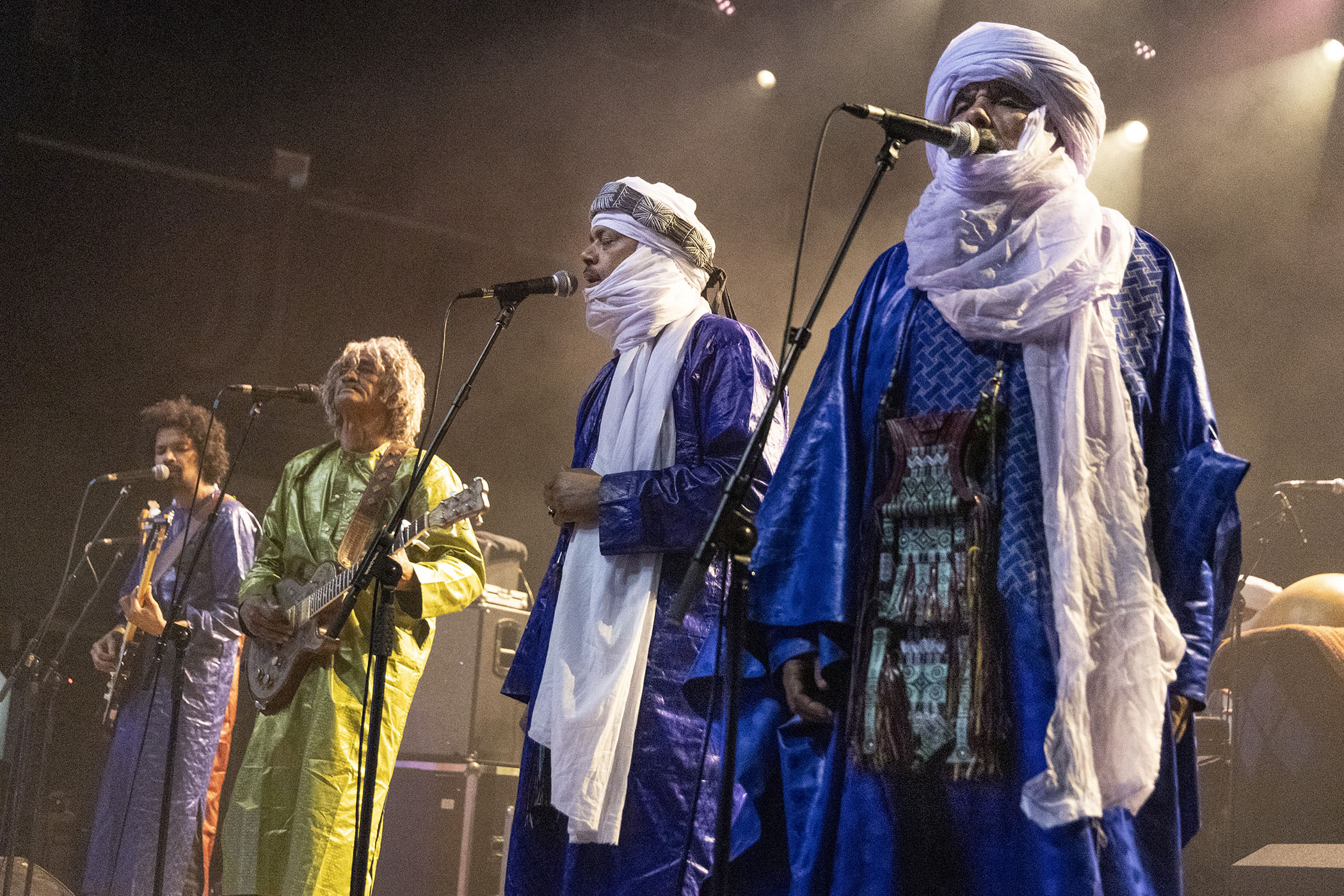
They take to the stage tonight as they have always done, wearing traditional robes and headdresses, accompanied by multiple electric guitarists and two percussionists, all contributing backing vocals. The slow-burn lope of the track Alkhar Dessouf establishes a pattern that will, as the set hots up, spiral off into even more mesmerising and gnarly variations. Call-and-response vocals in the band’s native Tamasheq and hypnotic guitar lines play off against a medley of paces, all of which seem crafted to be sustained indefinitely: a perpetual motion machine designed for long journeys under big skies.
In one form or another, these warriors turned troubadours have existed since 1979, combining Indigenous Tuareg forms with western rock. During the last quarter-century of their wider fame, Tinariwen have expanded and contracted a few times. This evening, they are renewed again, not just sharing out frontman duties but doing so across generations at a pivotal time in their people’s history. “Welcome to the Sahara,” one of them says.
Wearing iridescent green, founder member Ibrahim Ag Alhabib anchors the early parts of the show, singing and playing lead guitar. As the setlist wends on, he’ll hand off to his fellow lifer Abdallah Ag Alhousseyni and the rippling twang of his plugged-in acoustic. Wrapped in a tagelmust headscarf, Touhami Ag Alhassane adds physical movement to the band’s enticing sway, before taking on lead duties himself for the lilting, saturated Amidinim Ehaf Solan, one of a handful of tracks taken from Hoggar. The song’s lyrics long for a peaceful, verdant homeland.
Towards the end, it’s the turn of the younger, lanky Iyad Moussa Ben Abderrahmane, AKA Sadam, whose own band Imarhan are one of the many renowned outfits of the Tuareg diaspora who have followed in Tinariwen’s wake. (Other artists with global profiles include Mdou Moctar, Bombino and Terakaft, while the band Tamikrest have just released a very good album, Assikel, featuring members of Tinariwen.)
Hoggar was recorded in Imarhan’s own studio in Tamanrasset, southern Algeria, in the shadow of the Hoggar mountain range. The massif houses the tomb of the fourth or fifth-century clan matriarch Tin Hinan and serves as a kind of spiritual base for the Tuareg diaspora. Previously, borders were nonexistent or porous; since the post-colonial era, the Tuareg have been beset by wave after wave of conflict over land and mineral wealth, with their pastoral and trading lifestyle also threatened by drought. In 1990, a Tuareg rebellion in Mali included members of Tinariwen; they subsequently gave up arms.
Since 2012, when militant Islamists entered the fray in northern Mali, while some Tuareg forces briefly declared an autonomous state – Azawad – after another rebellion against the Malian government, the situation has gone from troubled to worse. The Malian junta called in Russian mercenary Wagner group and its successor, the Africa Corps, to tackle the jihadist insurgency. Many people – including Tinariwen – were forced to flee northern Mali in 2024.
Now they are based out of Algeria, where they first formed as refugees. It’s the most agonising kind of full circle: the Tuareg are traditionally nomadic, but large numbers are now painfully displaced.
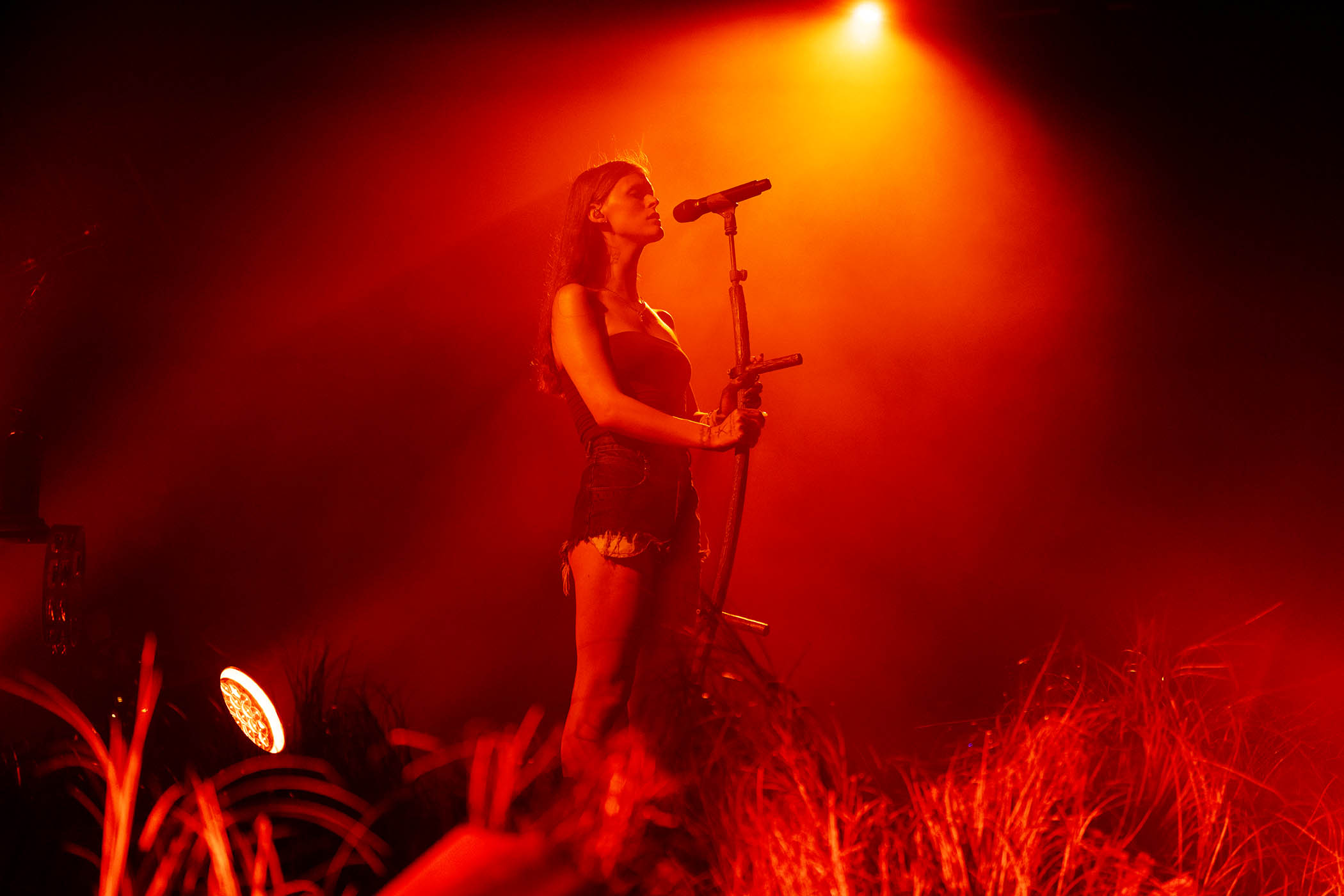
Hoggar welcomed numerous contributing musicians, and this touring iteration of Tinariwen has absorbed two more members of Imarhan: the bassist Tahar Khaldi and percussionist Haiballah Akhamouk. The tour’s support act, the Sudanese singer and oud player Sulafa Elyas, comes on for Sagherat Assani, another mellifluous and absorbing Hoggar album cut in which she trades lines with Alhousseyni, while Akhamouk plays a gourd at the back. Elyas is just superb, her expressive voice climbing to fluttering heights.
There is no space tonight for Hoggar’s angrier tracks; the mood remains wistful, searching and joyous, with the band’s long back catalogue supplying groove after groove. Their muscular massed singing provides a kind of accessible succour in repetition and unity – even if your own Tamasheq is rusty.
Newsletters
Choose the newsletters you want to receive
View more
For information about how The Observer protects your data, read our Privacy Policy
Each member’s individual guitar work acts as a variation on a shared approach, moving from languid to the more searing: Alhousseyni’s notes are molten, Sadam’s electric guitar is more serrated and guitarist Elaga Ag Hamid leans a little psychedelic on a wah-wah pedal.
Born of ceaseless strife, Tinariwen’s music is a modern take on ancient forms that seeks to maintain Tuareg cultural identity, but not by excluding others. It remains at once lulling and electrifying.
Photograph by Andy Hall for The Observer