
Doublespeed’s founders don’t speak like most startup executives. In a video on X, the 21-year-old cofounder, Zuhair Lakhani, boasts that his business is “killing the internet”, a nod to the “dead internet theory” that claims much activity online is now artificial, created by bots.
Behind him are racks of smartphones wired into charging hubs, a set-up known as a bot farm, where real phones are automated to run fake social media personas, making them harder for platforms to detect than conventional bots.
Bot farms have been operating underground for more than a decade, hired to boost a person or company’s social media presence by selling “likes”, views and followers. They broke into the public consciousness in 2016, when Russia’s Internet Research Agency ran an extensive social media influence operation around the US election.
Facebook later estimated its content may have reached as many as 126 million Americans. In 2017, police arrested three men in Thailand selling fake clicks and views on WeChat, a Chinese social media application, using nearly 500 phones. In 2019, regulators banned and fined the US company Devumi, which made $15m in revenue by selling fake social media influence.
Tech companies prohibit covert influence operations, leaving bot farms to operate in the shadows, mostly based in Asia. But Doublespeed’s founders hail from top US colleges. And they aren’t hiding.
Users pay up to $7,500 a month for Doublespeed’s bot farm. This grants access to a platform which controls thousands of social media accounts posing as real humans. There, users use AI to create “synthetic influencers” and publish content in bulk.
“Control is all you need,” reads Doublespeed’s website, next to the outline of a puppeteer pulling the strings on mobile phones. Doublespeed says it is “automating attention” – why pay human influencers to hawk your products when you can deploy hundreds of synthetic ones? An advert that might have cost hundreds of dollars to make, and taken weeks to negotiate, can be generated en masse in a few clicks, without disclosing it is an ad.
“We have public companies and top startups lining up to pay for our platform,” Zuhair, a recent college graduate who lives in New York, said in a statement to The Observer. He also claimed that one customer amassed more than 1m views in the first week, using just two accounts.
In October, Andreessen Horowitz (a16z), one of Silicon Valley’s top venture capital firms, invested $1m in Doublespeed. Among its other investments, a16z counts the tech giants Airbnb, Stripe and Instagram.
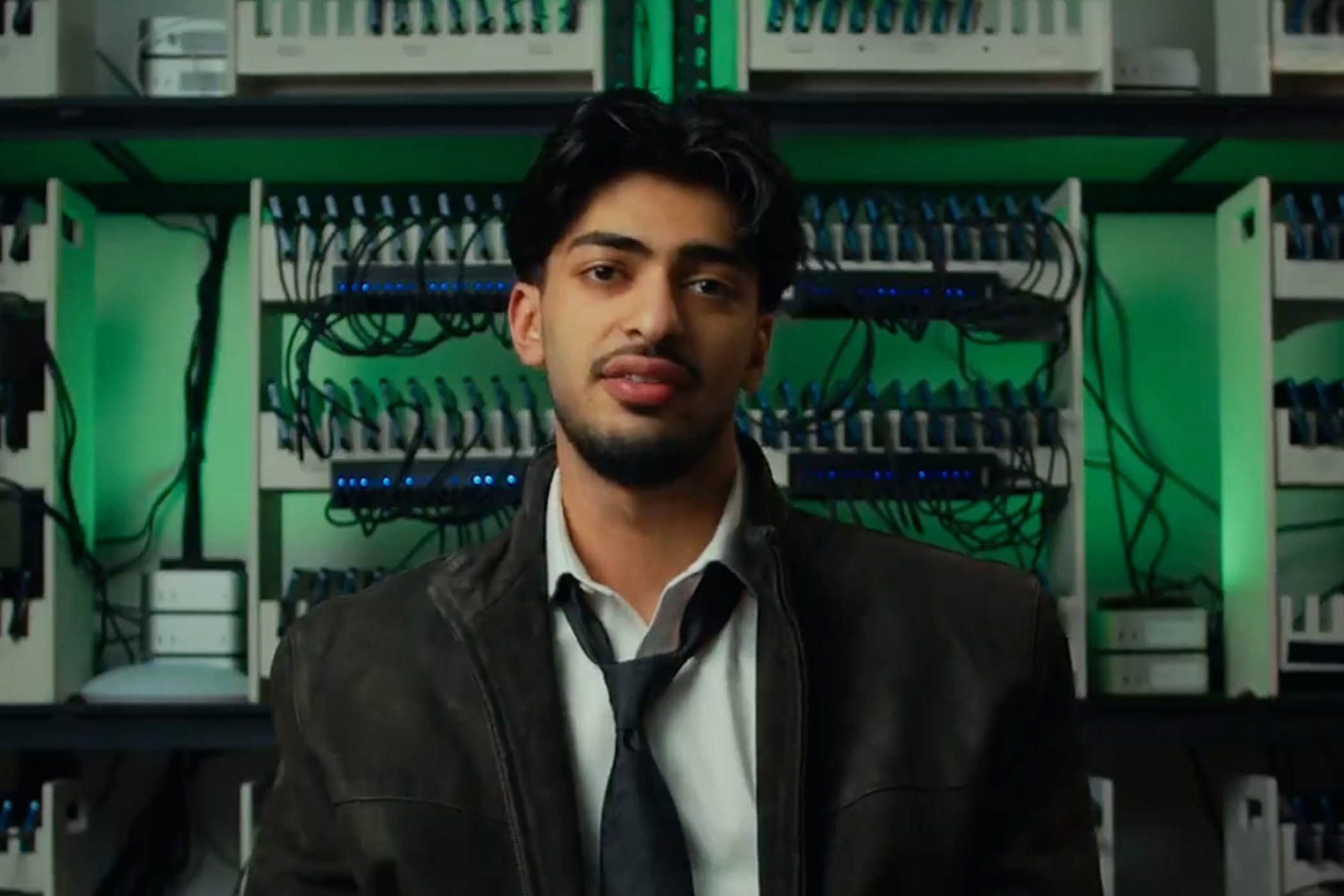
Zuhair Lakhani
The notion of a “vc-backed bot farm” – a title Lakhani likes to tout online – is “completely astonishing,” said Craig Silverman, co-founder of Indicator, a media company investigating digital deception. The existence of Doublespeed “speaks to the acceptance and legitimisation of fakeness and manipulation that really took place in 2025”, he says.
Newsletters
Choose the newsletters you want to receive
View more
For information about how The Observer protects your data, read our Privacy Policy
Since launching in July, Doublespeed says it has been running thousands of “social agents” on TikTok, Instagram and YouTube. A demo video revealed 11 TikTok accounts with variations of the same AI-generated woman in her 60s, posing for selfies and offering tips for foot pain. Bios include things like “health advocate + mom of 3” and “here to help”. The final slides show a foot with a massage roller from a firm called Vibit.
Doublespeed’s website also features a supplement company called Rosabella Moringa. Four TikTok accounts created since July share AI-generated content with every post including brand endorsements. The accounts range from a “spiritual healer” dressed in a kaftan and beads to a doctor, health experts who speak on panels and a “wellness girly” student. No account labelled their posts as AI-generated. A TikTok spokesperson said creators must do so when the content is realistic.
The posts did not disclose that they are advertisements. Whether they’re legally obliged to is an open question. The US Federal Trade Commission says social media posts must be labelled as ads if the creator has a material connection with the brand, but it is unclear how this affects bots.
“We can either wait for the rules, or be powerful enough to write them,” Zuhair told The Observer. Doublespeed is not liable for what customers post or disclose, as it only provides the infrastructure, he claimed, although this is up for debate.
Courts and regulators have warned that businesses can face liability if they help create or enable online deception. Doublespeed could theoretically be targeted for selling tools designed to generate fake likes, views, followers or undisclosed ads, even if its customers ultimately press publish.
The legal grey areas where AI startups like Doublespeed operate are where a16z sees the most opportunity, opting to ask for forgiveness rather than permission.
“When scouting [for potential a16z investments], I’m not really looking at different policy or compliance frameworks,” said an Andreessen Horowitz source, who asked not to be named. “There are currently no comprehensive federal laws in the US when it comes to AI, leaving “blurred lines” when it comes to how agentic systems should be used.
“There’s been a huge explosion of startups like Doublespeed, really leveraging that space and timing.”
Silverman is sceptical of the long-term profitability of this strategy. Entirely synthetic feeds can reduce user engagement, while bots can distort ad performance, he said, with some advertisers already losing confidence in metrics from Meta or Google. “That becomes the biggest risk overall, because it attacks the fundamental business of social media platforms.”
So, will a16z’s bet pay off? Lakhani may dream of a dead internet where bots are “residents among us” but that forfeits knowing when an eyeball or click is real, devaluing the very thing Doublespeed is selling: attention.
Photographs: Doublespeed, Getty