


The tech CEOs who were until recently predicting mass job losses as a result of artificial intelligence are now changing their tune. Sam Altman of OpenAI said last month that he no longer believed the technology would lead to a “jobs apocalypse”, admitting that the impact on entry-level white-collar jobs had been smaller than he expected. Dario Amodei of Anthropic has similarly shifted to talking about AI transforming jobs rather than eliminating them.
Perhaps they’ve been talking to some economists as well as engineers. Two-thirds of the big-name economists polled by the Wall Street Journal recently predicted that AI would lead to either more or the same number of jobs. But if AI can automate all manner of things humans previously did for work, why might that be?
One category of jobs we might expect to be safe from automation is those where human involvement is an intrinsic part of what makes the good or service valuable. This is what Alex Imas, a professor at the Chicago Booth School of Business, and director of AGI Economics at Google DeepMind, describes as the “relational sector”.
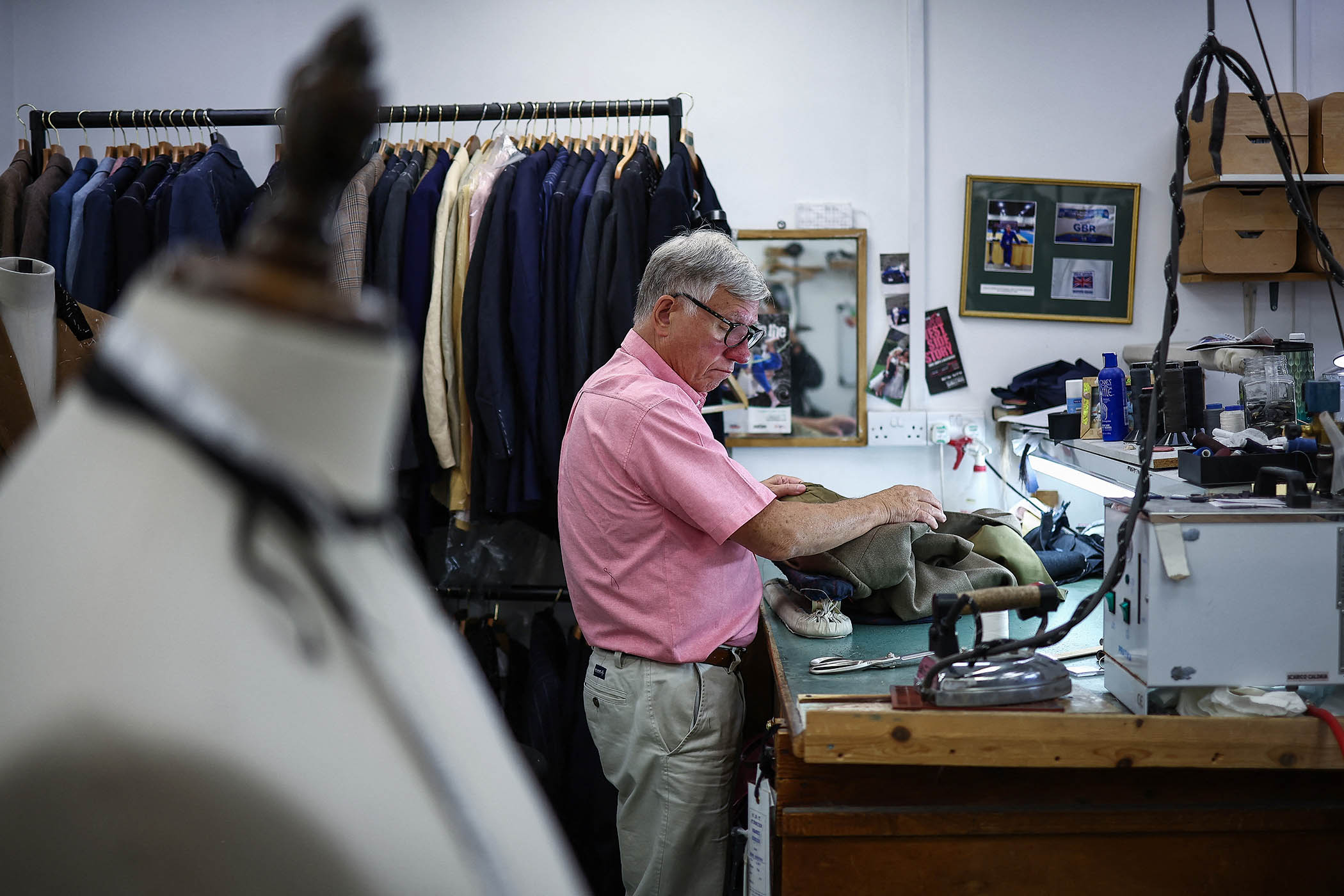
There are two parts to this argument. First, there are activities that we would prefer to be done by a human, even if AI or a robot could conceivably do them. Sometimes that’s a status thing: think about having a suit handmade by a tailor, or the personal service offered in a high-end watch shop or five-star hotel. Sometimes it’s about human warmth, interaction and connection: important for roles in nursing, teaching, caring or the clergy. Or it could reflect the value we place on the human ingenuity and craft that goes into a live musical performance, a piece of art or a meal cooked by a chef. (Readers can decide for themselves whether newspaper columns about economics also fall into this final category.)
Second, as AI makes society richer by allowing us to produce more stuff more efficiently than was previously possible, people will shift their spending towards the sorts of goods and services in which human involvement matters. The result, Imas argues, will be that more people will work in the “relational sector”, where people want, and are willing to pay for, the human touch.
There’s also very likely to be a future in what the London School of Economics economist Luis Garicano calls “messy jobs” – those where you’re responsible for juggling lots of different tasks, and spend a lot of time responding to unpredictable challenges and frictions.
A management consultant, for example, is responsible for formatting slides and crunching data – tasks that AI might be able to automate. But they are also responsible for building client relationships, persuading and cajoling, navigating office politics and bureaucratic hurdles, reading the room and exercising judgment. These are things AI is likely to be far less well equipped for.
Jobs are made up of a bundle of tasks. Just because AI is capable of automating some of those tasks doesn’t mean the entire job will disappear
Jobs are made up of a bundle of tasks. Just because AI is capable of automating some of those tasks doesn’t mean the entire job will disappear
There’s a broader point here. Jobs are made up of a bundle of tasks. Just because AI is capable of automating some of those tasks doesn’t mean the entire job will disappear. Garicano uses the example of radiologists. AI models are now extremely good at reading medical scans. But we still need radiologists to do the “messy” stuff: communicating with other clinicians, explaining the results of the scan to the patient, training up juniors, and solving the many issues that crop up in a real-world hospital environment. If the job involved only the routine reading of scans, it would be more vulnerable.
Radiologists also take legal responsibility for the diagnosis, which points to another set of jobs that might be safe: those in which we’ll decide as a society that we want a human to provide verification, and take the blame if things go wrong. There will in all likelihood continue to be a human bottleneck in high-stakes areas such as safety-critical engineering, law and auditing, even if AI can do the sums or draft the documents.
Then there are the jobs of the future that don’t even have a name yet: 60% of employment in the United States in 2018 was in jobs that didn’t exist in 1940.
Newsletters
Choose the newsletters you want to receive
View more
For information about how The Observer protects your data, read our Privacy Policy
So while there are plenty of reasons to worry about AI, mass unemployment may not be one of them. That’s not to say all will be plain sailing. Economic disruption can be painful. There will be losers as well as winners. Designing effective policy responses will be key.
It’s highly welcome, then, that the UK government has launched a new AI Economics Institute to build the evidence base on how AI is transforming the economy in the UK and beyond. It will be chaired by Simon Johnson, a professor at the Massachusetts Institute of Technology and winner of the 2024 Nobel prize in economics. He may not be a household name, but that’s a proper signing – a bit like announcing that you’ve sorted the catering for your wedding, and Nigella Lawson has agreed to do it. It’s a sign that the government is treating the issue with the seriousness it deserves.
Photograph by Henry Nicholls/AFP/Getty Images