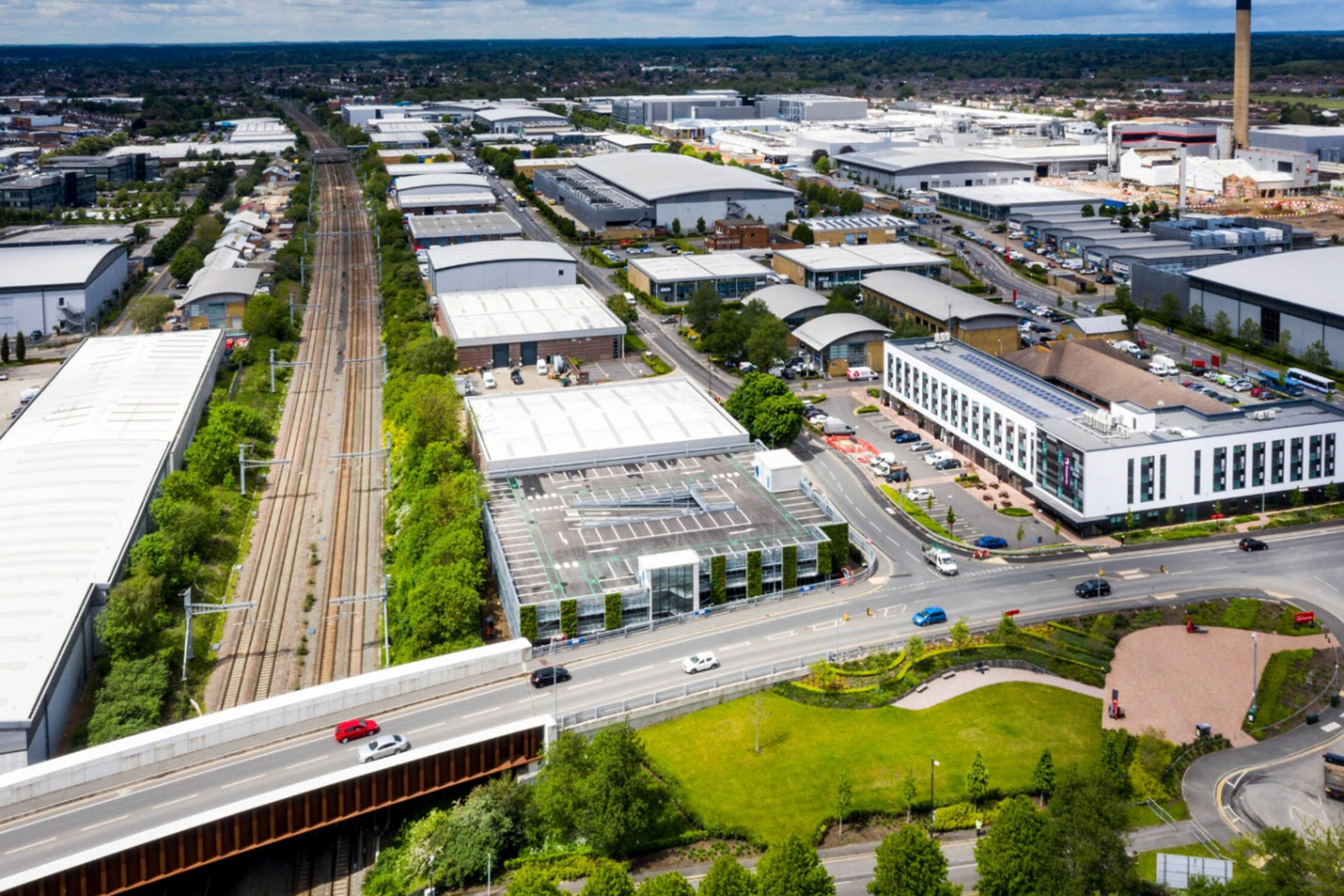



The FTSE 100-listed warehouse giant Segro, one of the UK’s largest listed property companies, is preparing this week to fend off a second hostile takeover attempt by a US suitor. Its survival as a London-listed entity will depend on just how high a price that suitor – San Francisco-based rival Prologis – is prepared to offer.
Prologis went public with its £12.6bn all-share offer for Segro, equivalent to 925p per share, last month. Segro rebuffed the approach, arguing that it undervalued the company, and accused Prologis of taking advantage of geopolitical turmoil, which has dampened UK company valuations. Under City rules, Prologis has until 5pm on Wednesday to raise its offer or walk away for six months.
David Sleath, Segro’s chief executive, has doubled down on the rejection. In a presentation to investors on 8 July, he argued for a valuation closer to £13 per share. Since Prologis’s offer, Segro has cemented its argument for independence with a pair of announcements: an £800m joint venture in Paris with the European data centre developer Pure Data Centres Group, and 540,000 sq ft of lettings to three tenants, including Volvo, at its Coventry development.
But despite Sleath’s ministrations, shareholders say they would be open to an offer – as long as it comes at the right price. Prologis’s offer of 925p a share is not even close. “It’s pretty clear from the conversations I’ve had that anything beginning with a nine is just not even serious,” said Andrew Saunders, a real estate analyst at Shore Capital. “It needs to be at least £10 to be entertained.”
Matthew Saperia, a real estate analyst at Peel Hunt, agreed. “£10.50 is a number where [shareholders] are beginning to be adequately compensated for any future growth,” he said.
The all-share nature of the deal has also put off some shareholders, including exchange-traded funds that track the London market. “There are going to be a number of Segro shareholders that just can’t hold paper in Prologis,” said Saperia. “An element of cash might have to be at least part of the deal to sweeten it.”
Segro was founded in 1920 as The Slough Trading Company; its first asset was a former First World War military repair depot in the town. Until recently, it has been known as a “sheds” operator, buying, building and leasing out warehouses. But as the AI revolution has progressed, investors’ focus has moved to its data centres, which now make up 8% of its portfolio, including 31 in Slough that it says is the largest cluster of centres in Europe.
Segro is one of a flurry of FTSE 100 firms targeted for takeover in 2026. Saunders said the company’s valuation is tied to British borrowing costs, which spiked in March, driving down share prices for many London-listed stocks. Acquisition targets this year include the testing and assurance company Intertek, the asset manager Schroders, the specialist insurer Beazley and, most recently, easyJet, which last week agreed to a £5.7bn takeover by the US asset manager Apollo Global Management. In 2025, just one FTSE 100 firm was acquired.
On Thursday Prologis reported second quarter revenues of almost $2.43bn (£1.8bn), beating analyst expectations of $2.16bn, and raised its full-year outlook.
On an earnings call last Thursday, Prologis chief executive Dan Letter said the company will remain “disciplined on price”, and that its previous proposal “offers a meaningful premium to where the stock has traded”.
Newsletters
Choose the newsletters you want to receive
View more
For information about how The Observer protects your data, read our Privacy Policy
“The value of the Prologis enterprise and everything it offers should not be overlooked,” he warned.
Photograph by Segro