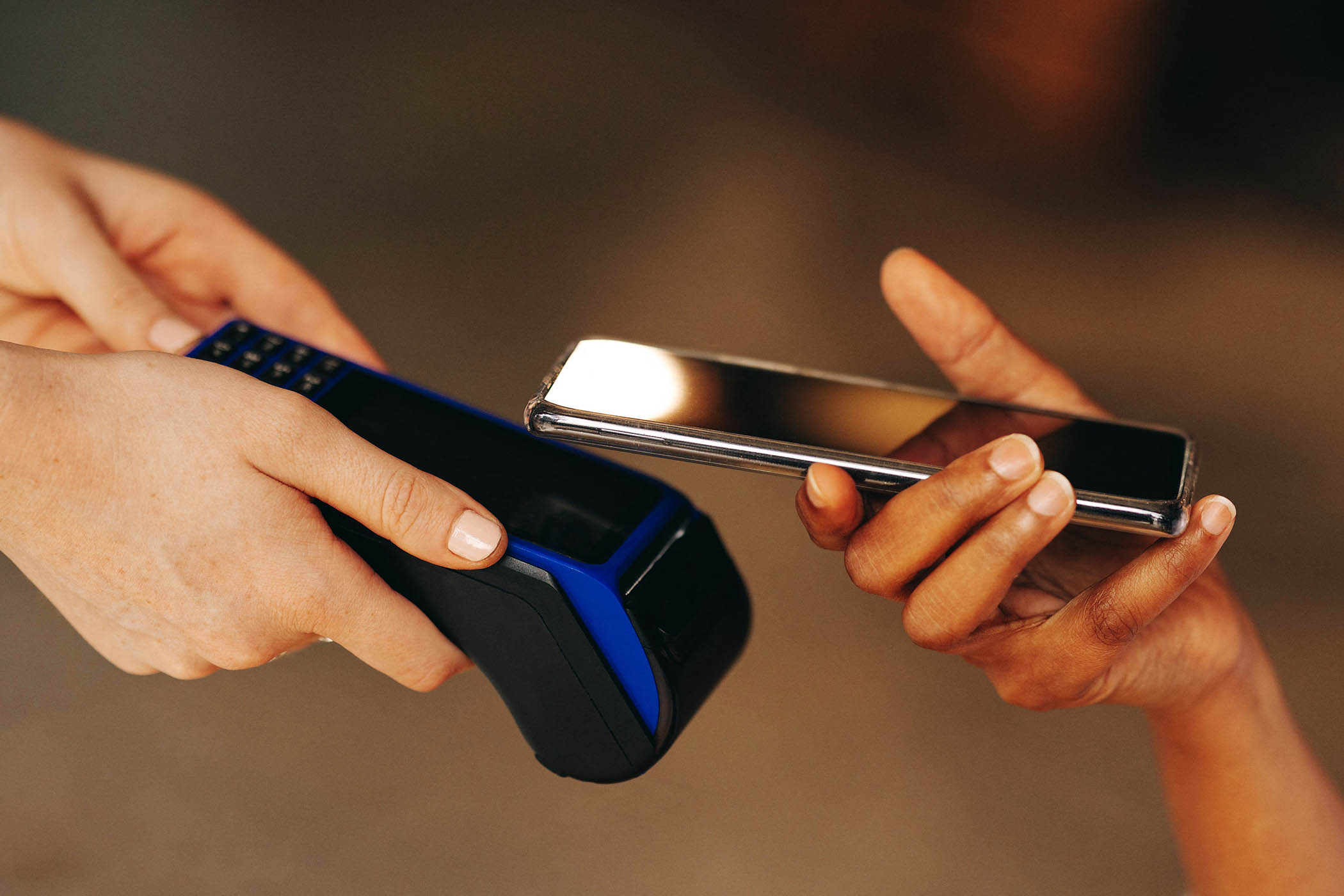



Paying for services or sending money via smart phones and wearable devices has become second nature for many of us. From boarding a bus to the weekly shop, the sound of an electronic “beep” is an omnipresent reminder of how intertwined our economy has become with digital payments. Accordingly, the payments system long ago became critical infrastructure.
It is seamless, frictionless and it (almost) always works. But we should be more concerned that these transactions run on a technical infrastructure and set of rules that are not totally under the control of UK authorities or the government. Instead, our payments infrastructure is being subtly influenced by the strategic and commercial interests of the US.
This is because two-thirds of UK digital payments are made via two US-headquartered global payment networks: Visa and Mastercard. As a consequence, a significant proportion of our economic activity can be influenced by decisions made in US boardrooms and, via proxy, by Washington’s volatile geopolitical agenda, including when it comes to the adoption of technologies such as new fraud control measures or stablecoin wallets.
As of this month, the dominance of these US-based corporate giants, along with PayPal, is the subject of an investigation – by the UK’s Financial Conduct Authority – into alleged anti-competitive practices, including around the fees charged to users. It remains to be seen what will be uncovered.
My own diagnosis is that digital wallets, which typically favour these giants, may restrict new market entrants, while stifling innovation and perhaps slowing the adoption of alternate payment rails – especially bank-to-bank payments, which do not require card intermediaries.
How, you might ask, did we allow this to happen? Decades ago, the UK dismantled its domestic payment network, called Switch. At the time, it made sense to combine domestic and international payments on to two payment rails run by Visa and MasterCard, to help drive scale, efficiency and the adoption of chip and pin and contactless payments. Even back then, the Office of Fair Trading raised concerns about the deepening dependency on the Visa and MasterCard duopoly.
By contrast, our European neighbours followed a different route: as the UK became more embedded into the US schemes, they managed to retain significant digital payment independence by maintaining and promoting their own domestic payment schemes using bank-to-bank payment rails. Our neighbours have also often been able to enjoy a cheaper payments network since bank-to-bank payments (including the UK equivalent, Faster Payments) charge a fraction of the US-based schemes, and while the range varies enormously, and with many elements that make up the final price, it can be as much as 90% cheaper.
Examples of successful national payment schemes using bank-to-bank rails include France, where Cartes Bancaires remains the dominant payment scheme. In Germany, it is girocard; in Italy, massive volumes of payments flow through Bancomat; in the Netherlands, their iDeal system accounts for two-thirds of e-commerce; and Blik is the Polish mobile payment banking system that accounts for 50% of e-commerce spending, avoiding cards altogether. With the benefit of hindsight, European partners seem to have taken a cheaper route, and one that they control.
The success of bank-to-bank payments across Europe is apparent. But the UK has not been left entirely behind, since about 15% of consumer payments are already running on our excellent Faster Payments network. The question is, should we have had volumes similar to our European neighbours?
We should not panic, as the UK’s payment system functions perfectly well today. In fact, it is first class. On average there are 40m digital transactions a day, equivalent to about 460 transactions a second. This is remarkable. But we do need to plan for the future.
Newsletters
Choose the newsletters you want to receive
View more
For information about how The Observer protects your data, read our Privacy Policy
As a country, we’re not alone in this: Canada, Japan, Australia, Brazil and others are just as reliant on US networks. But, encouragingly, the UK government recognises and understands our vulnerability and has established the payments vision delivery committee, which includes UK banks, to investigate the situation. In this fluid geopolitical climate, the pace must quicken, especially as our love affair with digital payments deepens through the adoption of payment technologies such as biometric authentication, “just-walk-out” shopping and stablecoin-based digital wallets.
As we embrace new innovation, we need to speedily develop a robust, independent payment ecosystem to ensure the security of our payments network and deeper use of cheaper bank-to-bank payments. Let’s hope for a future with even less friction.
Steve Perry is a non-executive director at Rezolve Ai and spent 25 years at Visa, including as executive VP for Europe
Photograph by Jacob Lund/Alamy