
Photographs by Richard Saker for The Observer
When I wrote the business plan for Teach First back in 2002, it seemed obvious we should focus on secondary schools. The goal of the charity was to close the attainment gap that existed (and still exists) between wealthier students and their more disadvantaged peers.
We launched in a government era heavily focused on GCSE results and university admittance, and a pop culture simmering with narratives centred on grumpy teenagers and inspirational teachers (think Coach Carter and Dangerous Minds). Secondary schools were the key.
But within a year I realised we’d made a huge mistake.
Great teachers can and do make a life-changing difference with older children. But the attainment gap they are battling is often fully entrenched by the time a pupil dons their year 7 blazer. Within a few years of Teach First going live, we expanded into primary schools.
As part of my role, I visited scores of UK primary schools throughout the 2000s and 2010s. Those classrooms and the teachers leading them were playing a pivotal role in shaping young minds – evidenced by England moving up the international literacy tables and the stronger outcomes we were seeing across longer-term metrics such as Sats and GCSEs.
But back in the early 2010s, just as the macro metrics were turning a positive corner, troubling signs were brewing. Our teachers were reporting a decline in verbal skills, poorer toilet training, less emotional readiness for the school environment. I even encountered reception children who didn’t know how to play.
We now have far more evidence around the vital importance of early years and the science behind how young minds develop
We now have far more evidence around the vital importance of early years and the science behind how young minds develop
Latest reports show these early warning signs have snowballed into a full-blown crisis. According to Kindred² one in four children now start school having not been toilet trained or taught how to eat independently. It’s turning reception classrooms into quasi-nurseries and delaying vital teaching and learning.
Yet again, I realised my initial thinking on closing the educational attainment gap had not gone far enough. Because the true answer to driving up success for all pupils, regardless of their background, isn’t found in schools. It’s found in early years.
By the time they enter primary school, there is already a 4.3-month attainment gap between disadvantaged children and their more advantaged peers. For many, it’s a gap that never closes.
Newsletters
Choose the newsletters you want to receive
View more
For information about how The Observer protects your data, read our Privacy Policy
The government has rightly stepped in to support parents with the cost of accessing childcare. But the quality and strength of our early years education system rarely rises to the top of policymakers’ agendas. We now have far more evidence around the vital importance of early years and the science behind how young minds develop. And yet the appetite to create a first-class early years education system seems to have only diminished in recent decades.
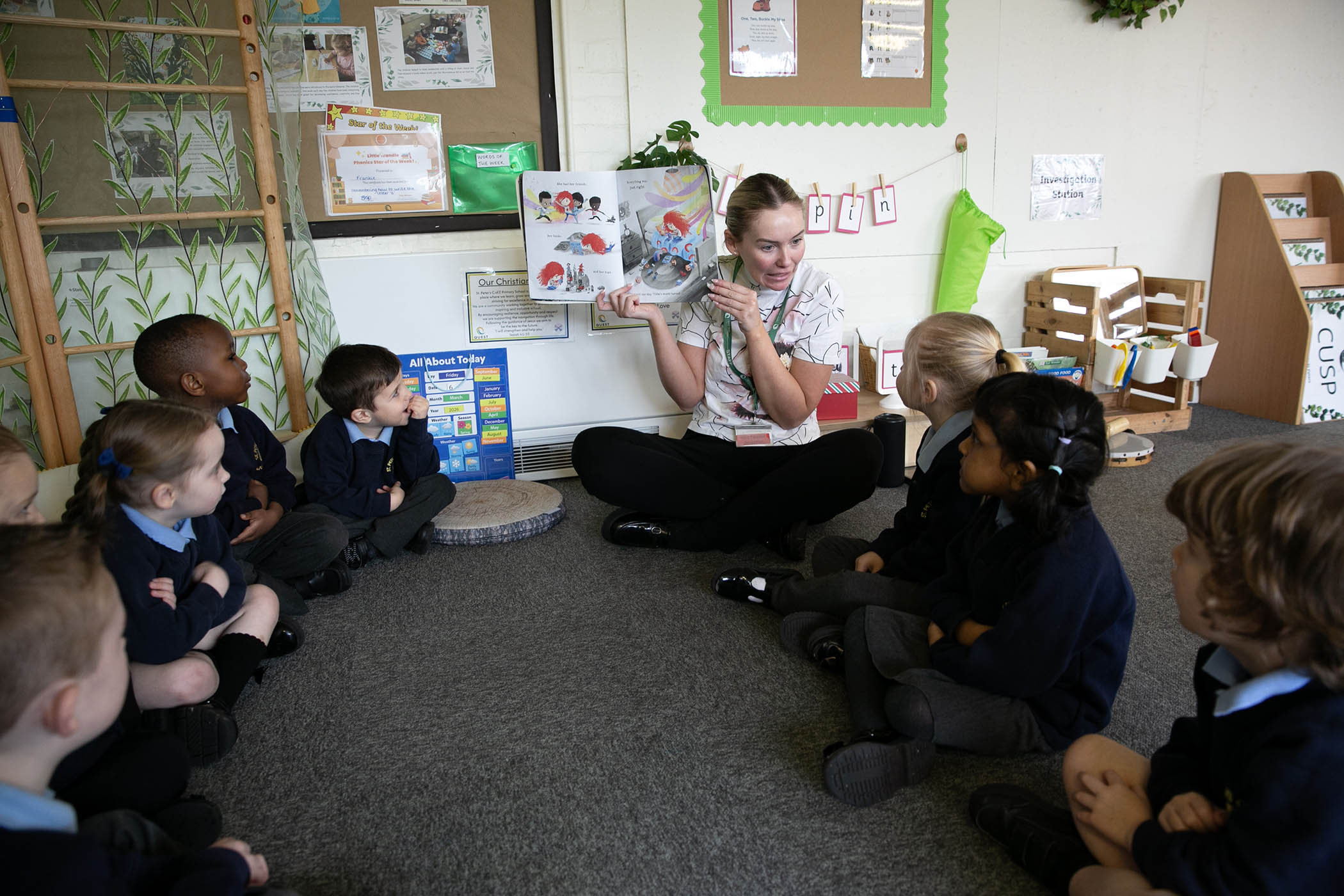
Reception teacher Shauna Grace reads to children in the Reception class at St Peter's Church of England primary school in Wigan.
It was seeing that reception child staring blankly at a toy, not knowing what to do, that inspired me to step away from Teach First and move my focus to even earlier in the education cycle. I launched tiney, an initiative that helps people from all walks of life retrain as childminders and provide world-class education from their homes. We are building a thriving community, working hard to revitalise numbers after decades of decline. But volumes are far from where they should be.
We need better policies and improved incentives to pull talent into early years careers. A recently launched campaign, Childminding2030, which wants to attract 30,000 new professionals into the space, is calling on the government to enact eight relatively simple policy changes to make it easier to retain and recruit this vital cohort. Effective changes don’t need to be complex or costly. But they do need political and societal momentum behind them.
Twenty-five years ago, I set out to spark change in our schools. Since then, I’ve followed the educational thread right back to the beginning and could not feel more fervently that our early years system holds the key to not only the future happiness of our children, but the long-term growth prospects of the nation. It’s time to approach early years education with the zeal, admiration and impetus it deserves, before a whole generation loses the chance to thrive.