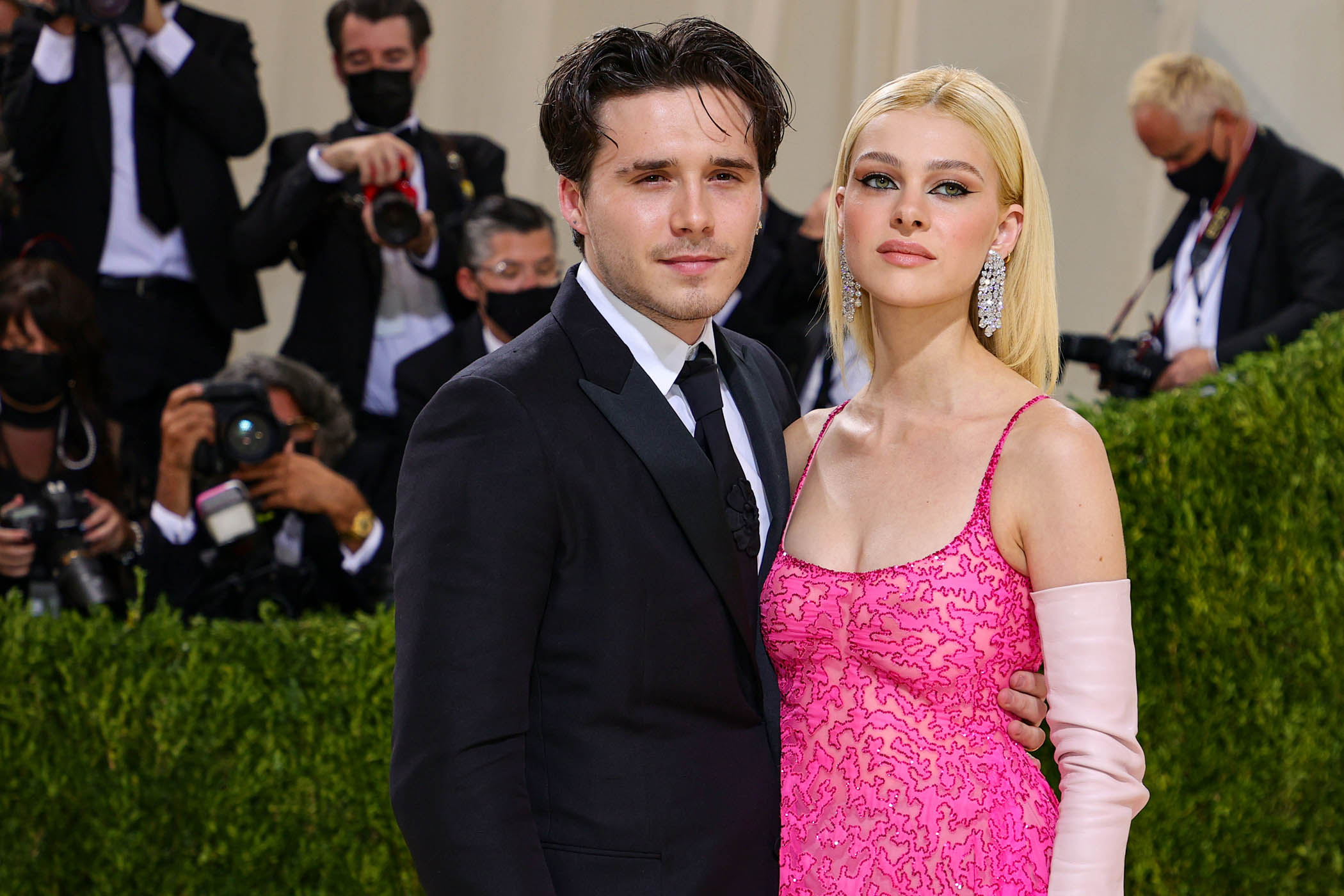

It’s easy not to take Brooklyn Beckham seriously. Among the famous children who have grown up and remained in the public eye, he is often placed in the derided category of “nepo baby”. He was never a briefly beloved child star and his name has increasingly become shorthand for a privileged type of talentlessness. His photography book, What I See, published in 2017 when he was 18, and his multiple attempts to become an Instagram chef since 2021, have been low-hanging fruit for social media commentary (a badly lit picture of an elephant from What I See still goes viral annually).
On Monday night things changed. Across six Instagram stories, Brooklyn spoke out against his parents, David and Victoria, following years of speculation about a rupture in the family. He accused them of bribery, broken promises and alienating his wife, Nicola Peltz Beckham, and accused Victoria of “inappropriate dancing” with him at his wedding. He said plainly that he wasn’t interested in reconciliation and is seeking a life free of “manipulation”.
The Beckhams are yet to respond publicly.
We have been spring-loaded for confirmation of a rift from anyone in the famously PR-savvy family, so a statement that was both detailed and embarrassing went instantly viral. Within hours, thousands of people were sharing impressions of Victoria’s dancing, fact-checking details from the post with the extensive Vogue coverage of the wedding at the time, and musing on the curse of having a “boy mom”. It’s the perfect story to post about.
But amid the mess is the much-overlooked reality of being Brooklyn Beckham and the sympathy he’s due as a young man whose public persona has obscured the emotional toll of never knowing a life without one.
It appears that Brooklyn had little choice in having his life and identity used as a tool to enhance the Beckham brand. And – aside from the more recent vertical video recipes – much of what Brooklyn has been mocked for happened while still under the legal authority of his parents.
He’s been tabloid fodder since he was featured, aged four months old, in photos of his parents’ wedding that were sold to OK! magazine in 1999. He began a modelling career at 15 and was taking photos for brands such as Burberry before his 18th birthday. Of course, even then, there was widespread criticism of the objective reality that Brooklyn was trading off nepotism. But while some of these career moves were inexplicably weird – including a 2016 ambassadorship for Huawei – they were also the ultimate responsibility of his legal guardians.
If they weren’t so famous, if they weren’t David and Victoria, it would be straightforward to look at this situation and class the pair as exploitative stage parents.
As far as A-list celebrities go, the Beckhams are also likeable compared with other famous people, such as the Kardashians, who have been criticised for making their young children part of their brand in similar ways. Yet in Brooklyn’s case the vitriol, particularly when he was still a child, has been directed at him, not at his parents.
In recent years, there has been a societal reckoning with child stardom. Previously famous kids are speaking candidly about the manipulation they experienced from their families and within the entertainment industry, which often left them flailing as adults. We’ve seen the horror stories detailed in documentaries such as HBO’s Quiet On Set, about the abuse of teens starring in Nickelodeon shows, plus books and exposés on the children of influencers who had intimate, personal moments filmed for family vlogging channels on YouTube.
Newsletters
Choose the newsletters you want to receive
View more
For information about how The Observer protects your data, read our Privacy Policy
Brooklyn sits somewhere in this space: a life of overexposure, with no room to grow without an audience of millions watching, his role in the world predetermined as B-plot filler in the story of his parents’ success. (According to Vogue, the rabbi at Brooklyn’s wedding accidentally called him by his father’s name twice.)
While much of the response on social media has been deeply unserious, there has also been an outpouring of empathy for Brooklyn. It may act as a turning point in our understanding of the impact of a life like his.
“I have been controlled by my parents for most of my life,” he wrote in his final Instagram story on Monday. “I grew up with overwhelming anxiety. For the first time in my life, since stepping away from my family, that anxiety has disappeared … [I] have found peace and relief.”
Of all the details in this fundamentally sad story, we should hope that this part is true.
Photograph by Theo Wargo/Getty Images