

Yes, Donald Trump’s kidnapping of Venezuelan president Nicolás Maduro, and his demand for Greenland are helping reset international norms. And, yes, any coercive occupation of Greenland would mean, in the words of the Danish prime minister Mette Frederiksen, that “everything stops, including Nato”.
Yet Trump’s actions are not as “unprecedented” as many have suggested. Rather, the context has changed, transforming America’s relationship to both the western alliance and the “rules-based order”.
The shifting relationship between America and Europe, and the wider shape of modern geopolitics, can be traced historically through three broad periods. The first, from the creation of the American republic to the end of the 19th century, was riven by conflict both between European powers and between those powers and America.
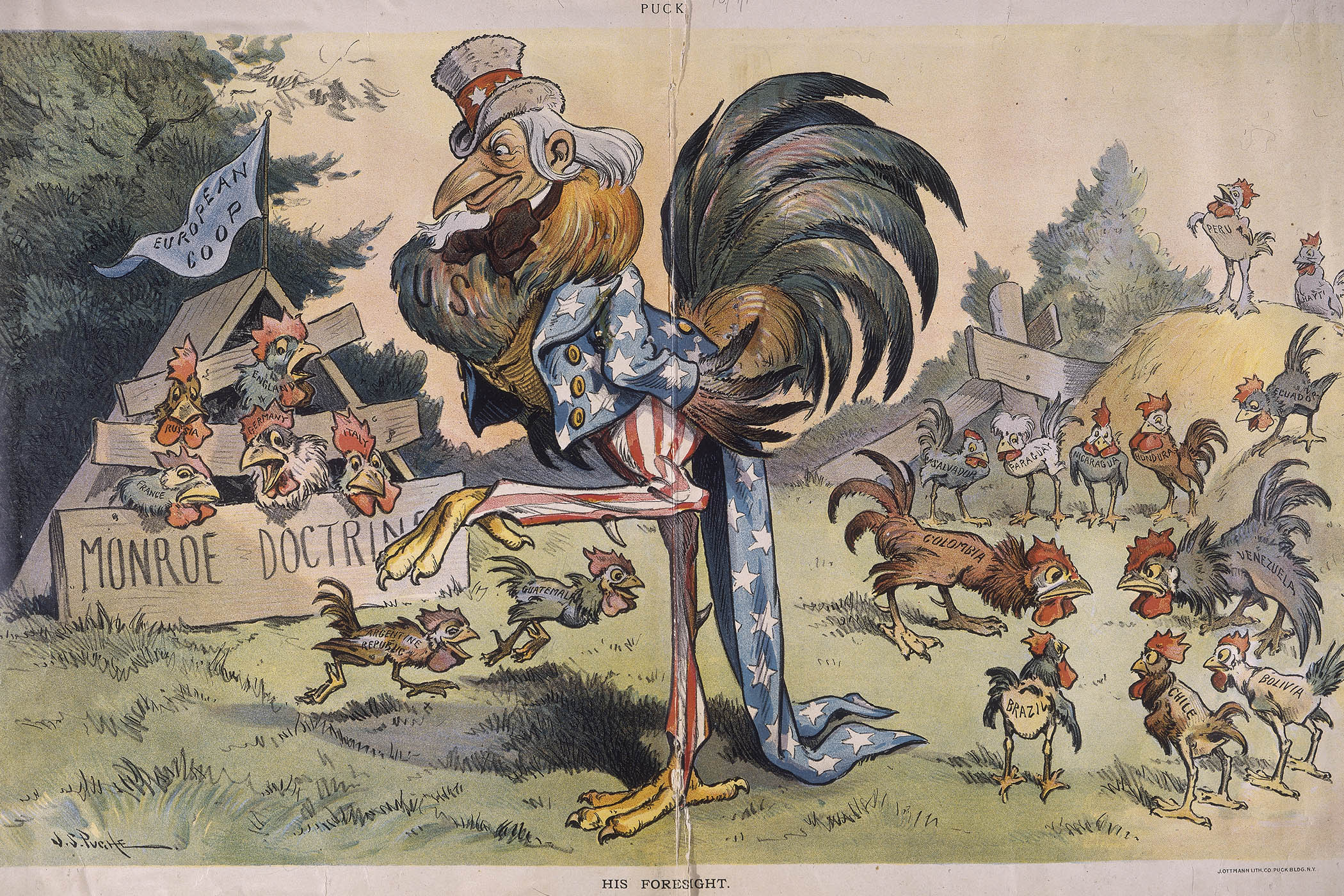
Much of the tension developed from expanding empires. The “Monroe Doctrine”, widely discussed over the past week, promulgated by US president James Monroe in 1823, was not simply a declaration that the “western hemisphere” was America’s sphere of influence, but also a warning that “the American continents… are henceforth not to be considered as subjects for future colonization by any European powers”.
In 1898, the British prime minister, Lord Salisbury, warned that as the major powers built their empires, so “the seeds and causes of conflict among civilized nations will speedily appear”. He was speaking just as European nations and America were engaged in a frenzy of land-grabbing from Africa to the Pacific. Less than 20 years later, Europe exploded into war.
Many of the trends that underlaid 19th century geopolitics transformed through the 20th. The age of empires gave way to that of decolonisation. White supremacy declined and, after the experience of Nazism and the Holocaust, the very idea of racial hierarchies became morally discredited. British global power waned as American hegemony waxed. The Soviet Union emerged as a challenge not just to western powers but to capitalism itself. All helped to birth the western alliance and the rules-based international order that came fully to fruition through the cold war.
A profusion of multilateral treaties and institutions was established, from the United Nations to Nato, from the World Trade Organization to the World Bank. Few at the time, though, talked of a “rules-based order”. The new institutions and treaties were created primarily to entrench US power on its side of the cold war, contain Soviet expansion, buttress the free market and maintain stability. “Without anyone’s having designed it,” the historian John Lewis Gaddis observed, postwar nations “lucked into a system of international relations that, because it has been based upon realities of power, has served the cause of order – if not justice – better than one might have expected.”
The US is as willing to bully Europe as it is any Latin American state
The US is as willing to bully Europe as it is any Latin American state
What make the Venezuela raid and Greenland threats appear unprecedented is less the actions themselves than Trump’s disdain for wrapping his “might is right” policies in more euphemistic language. In that disdain, he echoes older, cruder forms of diplomacy.
The presence of these institutions and treaties obscured the extent to which the rules of the rules-based order were continually breached by those strong enough to do so. From the coup that toppled Iranian prime minister Mohammad Mosaddegh in 1953 to the decade-long US covert intervention in Chile culminating in the overthrow of Salvador Allende’s socialist government in 1973; from the assassination of Congolese prime minister Patrice Lumumba in 1961 to the butchering of hundreds of thousands of suspected communist sympathisers in Indonesia in the mid-1960s; from Britain’s covert war in Yemen to the Vietnam war, western powers repeatedly broke the “rules” to maintain order – or what they construed to be “order”.
Where once the rules-based order sustained American interests, in today’s world, Washington fears that it is undermining them. As the recent National Security Strategy (NSS) puts it, “our elites… lashed American policy to a network of international institutions”, refusing to acknowledge “the outsized influence of larger, richer, and stronger nations” as “a timeless truth of international relations”.
Newsletters
Choose the newsletters you want to receive
View more
For information about how The Observer protects your data, read our Privacy Policy
It is also a world in which European nations have long since ceased to be great powers. America’s main rivals now lie beyond the west, primarily China. The US is as willing to bully Europe as it is any Latin American state. Hence the slow unravelling of both western alliance and the rules-based order.
The “western alliance” is not just a geopolitical reality but, for many, possesses also a deeper cultural, even spiritual, meaning, embodied in the very notion of “the west”. America, the NSS insists, is “sentimentally attached to the European continent”. Not so much the Europe of today as a Europe of myth. Today’s Europe faces “civilizational erasure” thanks largely to “migration policies that are transforming the continent” and to “cratering birthrates, and loss of national identities”. “Should present trends continue”, the NSS document warns, “the continent will be unrecognizable in 20 years or less”.
All this echoes the ethnonationalist arguments of the burgeoning new right on both sides of the Atlantic. Indeed, America’s goal, according to the NSS, is to help “Europe to remain European” by aiding “patriotic European parties”. It takes us back to the 19th century when “the west” was understood largely in racial terms.
“Only Donald Trump could make us miss hypocrisy,” former US state department advisor Jeremy Shapiro mordantly observed recently. Hypocrisy, though, provides comfort only to those who are not on the receiving end of breached rules.
A Hobbesian world without constraining rules may seem more terrifying than a world of rules constantly broken by those who can get away with it. We should settle for neither.
Photograph of cartoon from 1901 by Fotosearch/Getty Images