I missed you this Christmas. Where were you? We always used to spend Christmas together. You used to bring me on your family walks, all of you red-faced and hungover and cheerful. You used to involve me in the emotional saga that was “when will Buddy, the beloved childhood dog, finally die?” I used to love seeing the inside of your house, all plush carpets and stained glass and Agas, just to note how that home seemed to directly contradict the sincerity of your long-held socialist views. No matching jammies with your boyfriend this year? What happened to us? Come back to me please. Start posting with wild abandon again.
My resolution for the new year is to bring you back to me. All of you. Basically, my new year’s resolution is to post more. And to convince you to post more too. All of you. Otherwise it won’t work.
As a millennial, I came of age in the era when people thought nothing of posting a 70-picture Facebook album after every night out or every evening in the park on which you shared a half-bottle of vodka and took photos of everyone’s feet and fingers arranged to form a star. Every time I log back into Facebook – to check the birthday of a friend I’ve known for 20 years, perhaps, or to find out whether an elderly relative has become racist – I’m confronted with these relics of bygone eras, by pictures of me with people I no longer speak to, wearing too much fake tan and a shocking amount of eyebrow pomade.
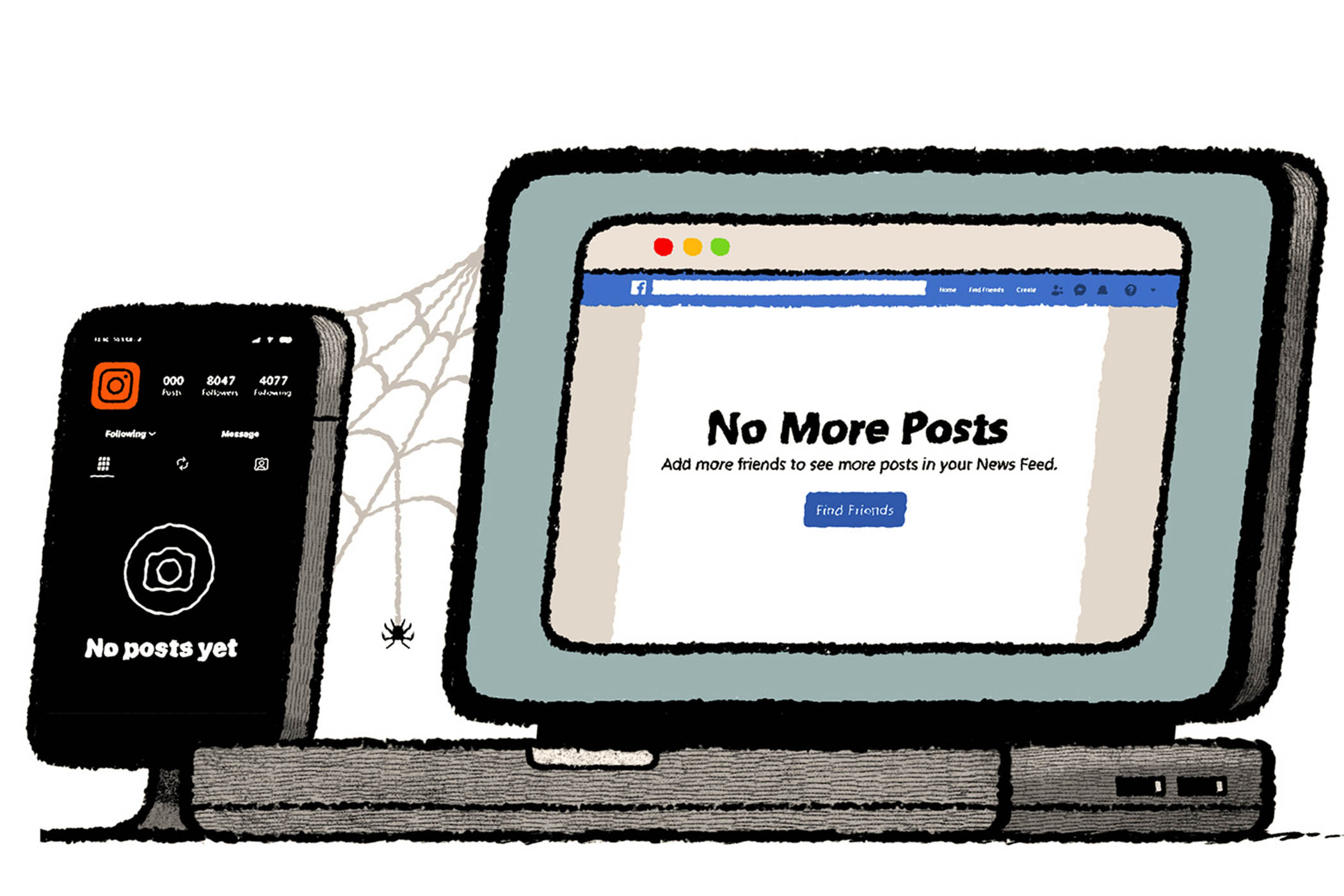
I’m not sure when we turned our back on posting freely, but the tide has definitely turned – and if I can feel it turning, as a person born in the 90s, then it’s a foregone conclusion sadly. A third of all adults on social media are posting less than they did a year ago. Some call it “posting zero”. The New Yorker calls it “posting ennui”. In an essay published in the summer about the narcissistic internet, staff writer Kyle Chayka heralded the apocalypse of the social media ecosystem. Soon enough, he suggested, we’ll stop bothering posting altogether. Then the internet will be a ghost town full of what has already infected it: AI slop and sexbots.
I wish we weren’t too cool or too bored or too frightened of being judged to invite each other into our online lives a bit more
I wish we weren’t too cool or too bored or too frightened of being judged to invite each other into our online lives a bit more
A dwindling number of real-life humans are sticking around, still posting, for the love of the game. I’d like to be among them, but I confess that nowadays I am deathly afraid of it. I can’t upload a single Instagram story without periodically checking it over its 24-hour lifespan, scrolling through my views to see if it’s being watched by people who hate me and trying to imagine how I must appear from another person’s perspective (usually the person who hates me but watches all my stories) to figure out if I’m being annoying or not. Posting anything, from work I’m proud of to important milestones to small snapshots of my life, feels terrifying and exposing. My engagement didn’t even make it to the grid.
Worse than this, posting feels try-hard. It can’t be spontaneous any more: we are all too aware of who is observing our online life and what they might think of it. Performative spontaneity doesn’t even cut it; for example, when someone you haven’t heard from in three years posts “life lately” and about 17 photos seemingly chosen for their random meaninglessness – melted ice cream on the pavement, a blurry cat, half a congealed sandwich. Even this, like everything, is curated and carefully considered.
There’s a psychological reason for all this. To understand why our behaviour has changed we have to understand that our motivations have changed over time too. Once, sharing our lives seemed fun, and we did it for just that reason – the pursuit of enjoyment. But as social media developed and continued to update itself, we were conditioned to post for a different reward: audience engagement. Likes and comments, in other words. Chasing this particular high leads to a kind of psychological fatigue, and so we’re retreating from the chase, asking “who is this for?” and deciding “nobody good”. So we don’t post at all, becoming consumers rather than active participants in our online world. We lurk in the Instagram stories of people we hate instead.
I realise I’m not exactly making my new year’s resolution sound appealing. But there’s an advantage to moving away from this self-conscious charade. I’m not saying we should drag ourselves back to putting up endless photos of one another drunk on cider in a field. But as someone who, like millions of others, lives in a different place to where I grew up, interacting with other people’s lives online and posting about my own could still provide a surprisingly wholesome function. It’s not just about bitching about my ex-classmates being arrested or getting into multi-level marketing scams. It’s also a way to stay connected, to feel less homesick.
Related articles:
During the pandemic, and before that when I had to isolate myself during chemotherapy, social media wasn’t just a distraction; it was a lifeline. It was a way to feel sane and engaged with people I couldn’t reach out and touch. If we couldn’t be together in person, I could at least see snippets of their world.
Even now that I am free to be out and about, I miss those snippets. I wish we weren’t too cool or too bored or too frightened of being judged to invite each other into our online lives a bit more. I think it’s time to bring back that connection. I promise I won’t even side-eye anyone for secretly living in a low-level country estate.
Newsletters
Choose the newsletters you want to receive
View more
For information about how The Observer protects your data, read our Privacy Policy
Illustration by David Foldvari