

Britain invests too little. The latest figures show that in the three months to last September, Britain was bottom of the class. Few things unite economists across the spectrum, but on this there is agreement: unless this dismal trend is reversed, hopes of growth and rising living standards can be kissed goodbye.
That is where agreement ends. One of the most striking things about so much economic commentary today is how quickly people regress to the comfort zone of confirmed prejudice. On the right, the explanation is deemed obvious: Rachel Reeves’s two tax-raising budgets, particularly the rise in employers’ national insurance contributions, has killed business confidence stone dead.
What optimism can this bungling, visionless government engender? What is needed is to revisit Thatcherism, they say, lift the dead hand of the state off the back of business and exploit the opportunities of Brexit. This, despite the fact that past attempts at trying have: a) proved almost impossible because most regulation turns out to exist with good reason, b) when achieved, at best deliver a short-term sugar rush, at worst nothing except increased inequality and more degradation of public services and c) Brexit, meant to promote this Thatcherite agenda, has backfired spectacularly. Has the right noticed?
On the left there is a parallel retreat to a comfort zone of certainties. Scrap the strangulating fiscal rules, tax wealth, extend public ownership – and, with one jump, Jack will be free. Again it matters not that wealth taxes are routinely abandoned abroad as unworkable, that wholesale public ownership has a long record of failure – even in China – and that, as Britain relies on foreigners to buy a critical mass of its public debt, some reassurance of fiscal discipline is a necessity. Still, the mantras are repeated as a badge of radicalism and commitment to the religion of old.
Yet 2026 promises to be the year when it becomes obvious that the basis of the assumptions of both sides are being upended by deep new trends in contemporary capitalism. Capitalism, of its own accord, is doing just what the right urges – distancing itself from the scrutiny of public markets, regulators and government by going private on a monumental scale. By the middle of the next decade, around half of world GDP is forecast to be in a private sphere – private credit, private equity, private foundations and trusts, privately-owned infrastructure and property, private family offices and private companies.
In the next decade, around half of world GDP is forecast to be in a private sphere
In the next decade, around half of world GDP is forecast to be in a private sphere
These trends are most advanced in the US. However, outside its tech sector – especially AI, which has paradoxically turned these avaricious new forces to its advantage – they have delivered little growth. Rather this “privatised” capitalism is monstering the “public” capitalism of publicly quoted companies and the accountable, publicly monitored universe of which they are part. Enter a world of financial engineering, vast unmonitored private debts, companies broken up and flipped in the name of “refocusing”, insecure employment, stagnating real wages and extravagant private fortunes. The excesses have transmuted AI into an ominous bubble, and accentuated AI’s worst proclivities.
A slowing US economy in 2026 will likely expose the risks and fragility of this system; there will be American private firms unable to service their vast private debts, further depressing the valuations of the private companies that overstretched private equity investors need to sell to pay their investors in turn. Nobody knows how big a crisis it will prove, or whether Donald Trump’s team of ideological incompetents is capable of containing it. But it is coming.
Britain is part of this vortex. Our remaining public companies are owned not by long-term British investors, who have largely deserted their homeland, but by a shifting population of mainly American funds that have zero commitment to the British companies they own. Shares have become casino chips to be sold to whichever “activist” investor from this private sphere promises to “refocus” the business by forcing it to sell off chunks to the private markets – usually, but not always, private equity – benchmarking the potential returns to what is achieved in the US.
Last year Britain said farewell to our last solid industrial conglomerate, Smiths Group, through this process, with BP similarly changing its chief executive two weeks ago to “refocus” the business for the same reasons. AstraZeneca has decided to embrace the US and its mores by having a full quotation there: drugs giant GSK is likely to follow. Even the staid Associated British Foods is considering breaking itself up. This is a cross-section of our diminishing business might. I am sure that Reeves’s national insurance hikes have not helped the investment cause, but like regulation, they are of second order importance. Be under no illusion – it is the threat of an attack by this generation of “activist” investors, terrorising British boardrooms, that is the major deterrent to investment unless it promises sky-high returns.
Tory and Reform spokespersons babbling about tax and shrinking the state are today’s deluded druids cauterising dead bats at a long obsolete sacrificial stone. But the left could help itself by offering a critique of what is happening before our eyes, and also by noticing the opportunities that it presents.
Newsletters
Choose the newsletters you want to receive
View more
For information about how The Observer protects your data, read our Privacy Policy
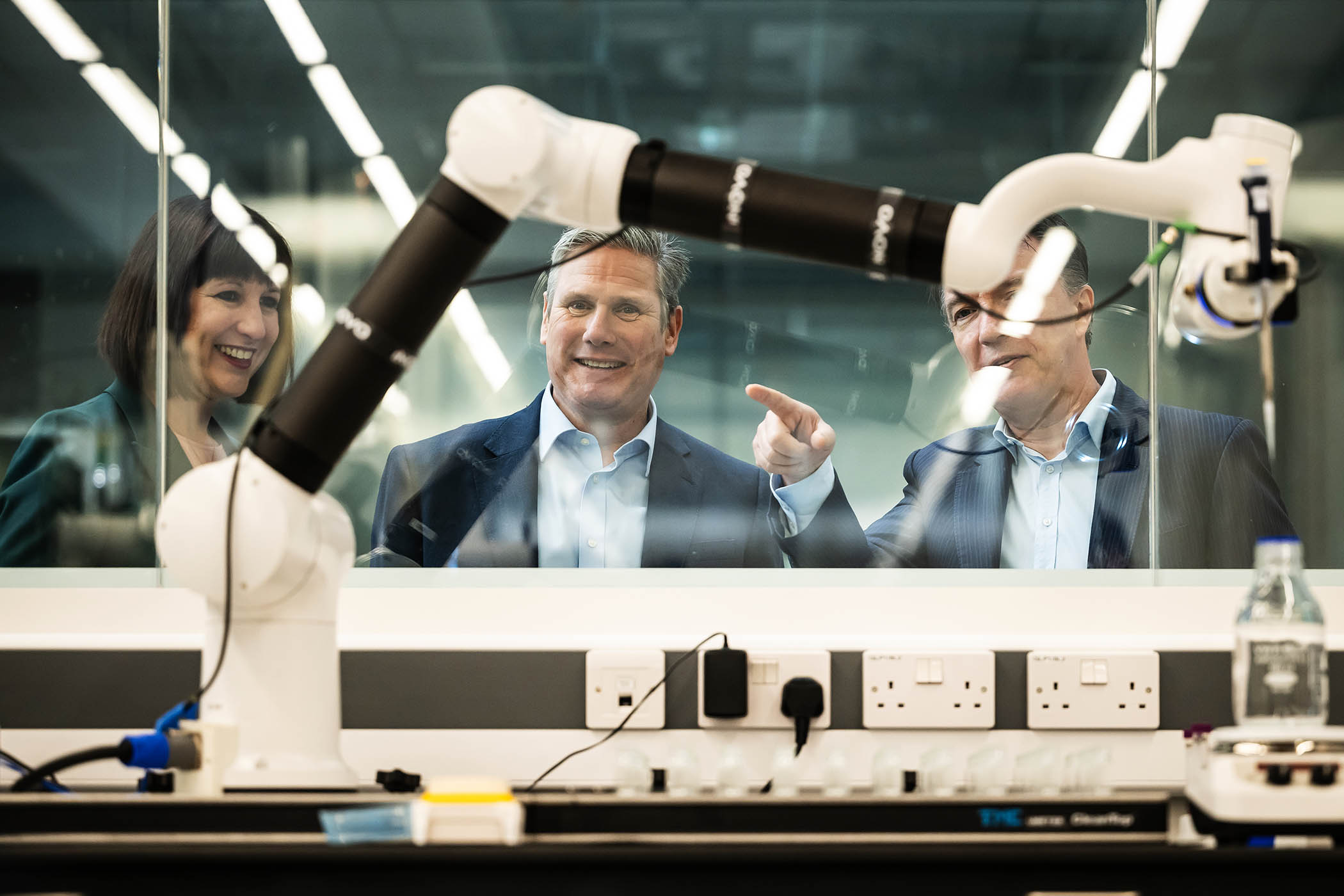
Another story of 2026 will be the accelerating tech revolution, aided and abetted most effectively by business-building venture capitalists. Here Britain is emerging as a potential tech superpower, with more great tech scale-ups than any economy in Europe. With the right capital, people, public support and access to continental scale markets we have the basis to become Europe’s tech superpower – keeping more of these young companies in Britain and making them less venal than their US counterparts as part of defending “public” capitalism.
This needs a turbo-charging of what Keir Starmer ’s government has begun: massive public investment, the embracing of tech entrepreneur capitalists as allies and moving much closer to the EU much faster. The prime minister might even save himself, by becoming this cause’s champion. It is a big vision. He has nothing to lose.
Photograph by Leon Neal/Getty Images