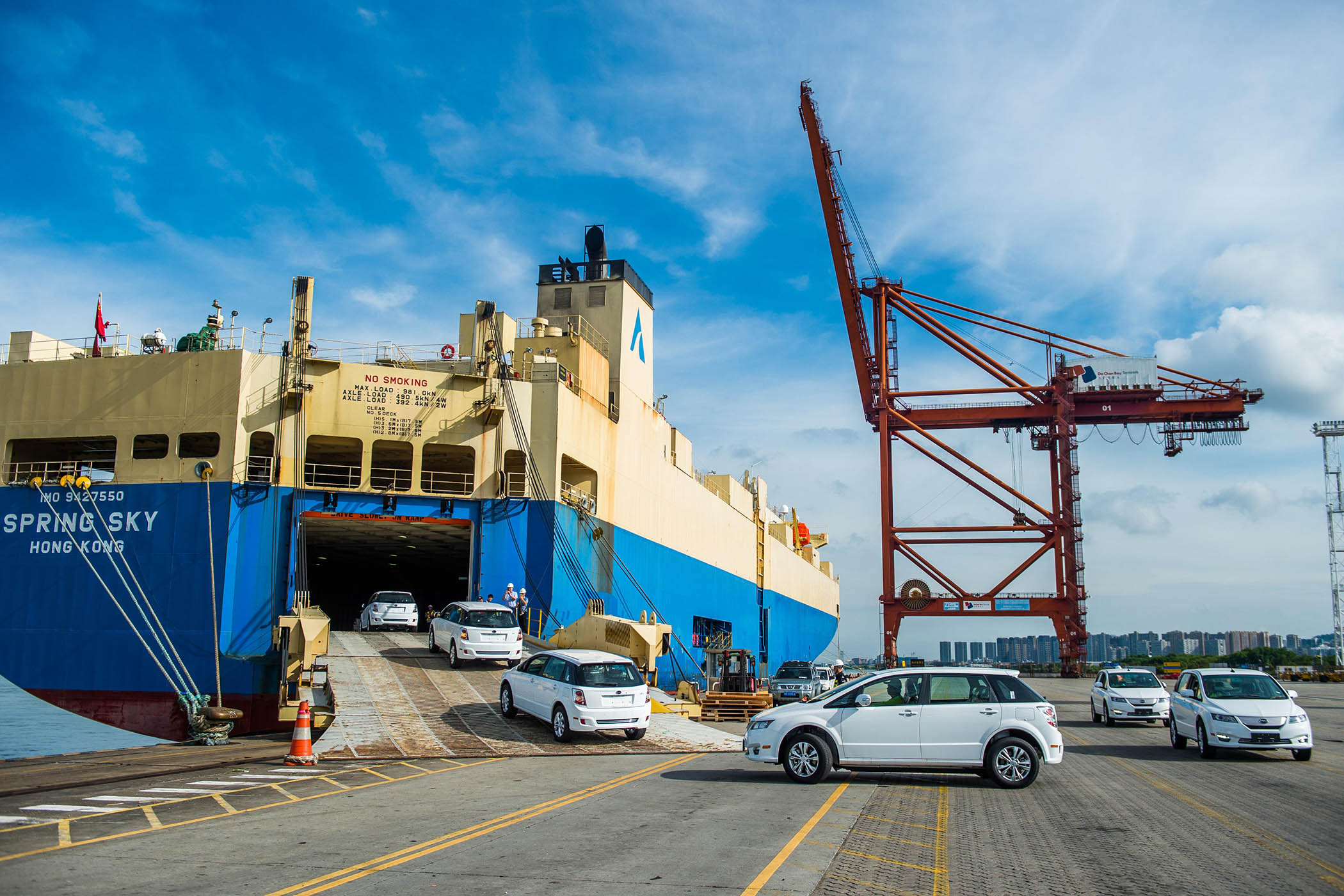
The most striking headline of the festive season turned up last weekend in the Financial Times: “Tesla loses crown to China’s BYD.” The Chinese company sold 2.26 million electric vehicles (EVs) globally in 2025, primarily in Asia, Europe and Latin America. Tesla, for its part, delivered only 1.64 million cars in 2025 compared with 1.79 million the year before.
That’s quite a comedown from its founder’s original goal of 20 million cars a year by 2030. There’s an interesting video clip from 2011 circulating that shows Elon Musk laughing uproariously at the idea that BYD might be a serious competitor to Tesla. Asked why he was laughing, he said: “Have you seen their car? I don’t think they have a great product. It’s not particularly attractive as a technology. It’s not very strong. And BYD as a company has pretty severe problems on their home turf in China. Their focus is – and rightly should be – on making sure they don’t die in China.”
And here we are, with Musk taking time off from his other ventures to refocus on trying to make sure that Tesla doesn’t die on its own turf!
In a way, its decline was inevitable. At the beginning, it had the EV market to itself and it had made the astute decision to build its own supercharger network to reassure buyers worried about range anxiety if they took the plunge to electric. Tesla also pioneered a complete rethink of vehicle design: EVs would not be cars with the engine removed, but more like skateboards with powered wheels at the corners and the battery serving as the board.
It took a while for the internal-combustion industry to get the message, but it has caught up. Even venerable ol’ Volkswagen now sells more EVs in Europe than Tesla. As public charging networks have improved, Tesla’s supercharger infrastructure seems less attractive. Its vehicle lineup – Model 3, Model Y and Model S, plus the Model X SUV – is beginning to look stale compared with other, cheaper offerings. The infamous Cybertruck is a disaster – a turkey without even the prospect of Christmas as a merciful release.
And then there’s the politics. No other founder – with the possible exception of Enzo Ferrari – is more entangled with his creation in the public’s mind than Musk. He was always controversial, but ever since he bought Twitter – now X – he has become increasingly toxic. As I write, he’s facing a backlash from governments across the world after a recent surge in sexualised images of women and children generated without consent by his AI-powered Grok chatbot and posted on X. His brief love-in with Donald Trump didn’t help either. It’s clearly damaged the Tesla brand in some countries, especially in Europe and the east and west coasts of the US. All of which raises the question: is this the kind of man you’d buy a used – never mind a new – car from? Even if, as is the case at the moment, used Teslas are relatively cheap.
Newsletters
Choose the newsletters you want to receive
View more
For information about how The Observer protects your data, read our Privacy Policy
You’d have thought that any corporation with deteriorating results and a leader as obnoxious as Musk would see its share price tanking. Think again. In the first quarter of 2025, for example, the company’s net income declined by 71% year-on-year, from $1.39bn to $409m. Vehicle deliveries went down 13% to 336,681 cars – the largest drop in Tesla’s history. Its operating margin shrank to 2.1% compared with 5.5% a year earlier. And yet its share price, which started 2025 at $379, ended the year at $456. Which leaves Wall Street baffled.
“Sales and profits are shrinking,” wrote one analyst, “yet the stock continues to trade at a premium – over 90x earnings – as if it were a hyper-growth powerhouse.”
Which, of course, is exactly what Musk wants Wall Street to believe. At the moment, his growth spiel is all about Teslas becoming autonomous vehicles, so that owners can rent out their cars as self-driving taxis. He’s been promising FSD – full self-driving – for a decade. In December 2015, he predicted that “complete autonomy” would be implemented by 2018. At the end of 2016, he expected full autonomy by the end of 2017. In April 2017, he predicted that in about two years, drivers would be able to sleep in their vehicle while it drives itself. In 2018, the date to demonstrate this happy possibility was the end of 2019. In other words, mañana.
You get the idea. At the moment, there are some Tesla “robotaxis” on the streets of Austin, Texas. They are available only to a select group of influencers and all have a human “safety driver” in case the vehicle is not quite as autonomous as advertised. (However, it is reported to have recently started testing robotaxis without a human safety monitor onboard.) Even if they aren’t FSD, though, it will have achieved an important objective: keeping the share price – on which much of Musk’s colossal wealth is predicated – in the stratosphere. QED.
What I’m reading
Inverted logic
America’s World Turned Upside Down is former Economist editor-in-chief Bill Emmott’s reflections on 2025.
Completely Caracas
James Fallows offers an acute commentary on Donald Trump’s gunboat diplomacy in his Substack article Blind into Caracas.
Get the memo
Code Is a Liability (Not an Asset) is a terrific, wise essay by Cory Doctorow on the difference between programming and software engineering. Every manager should read it.