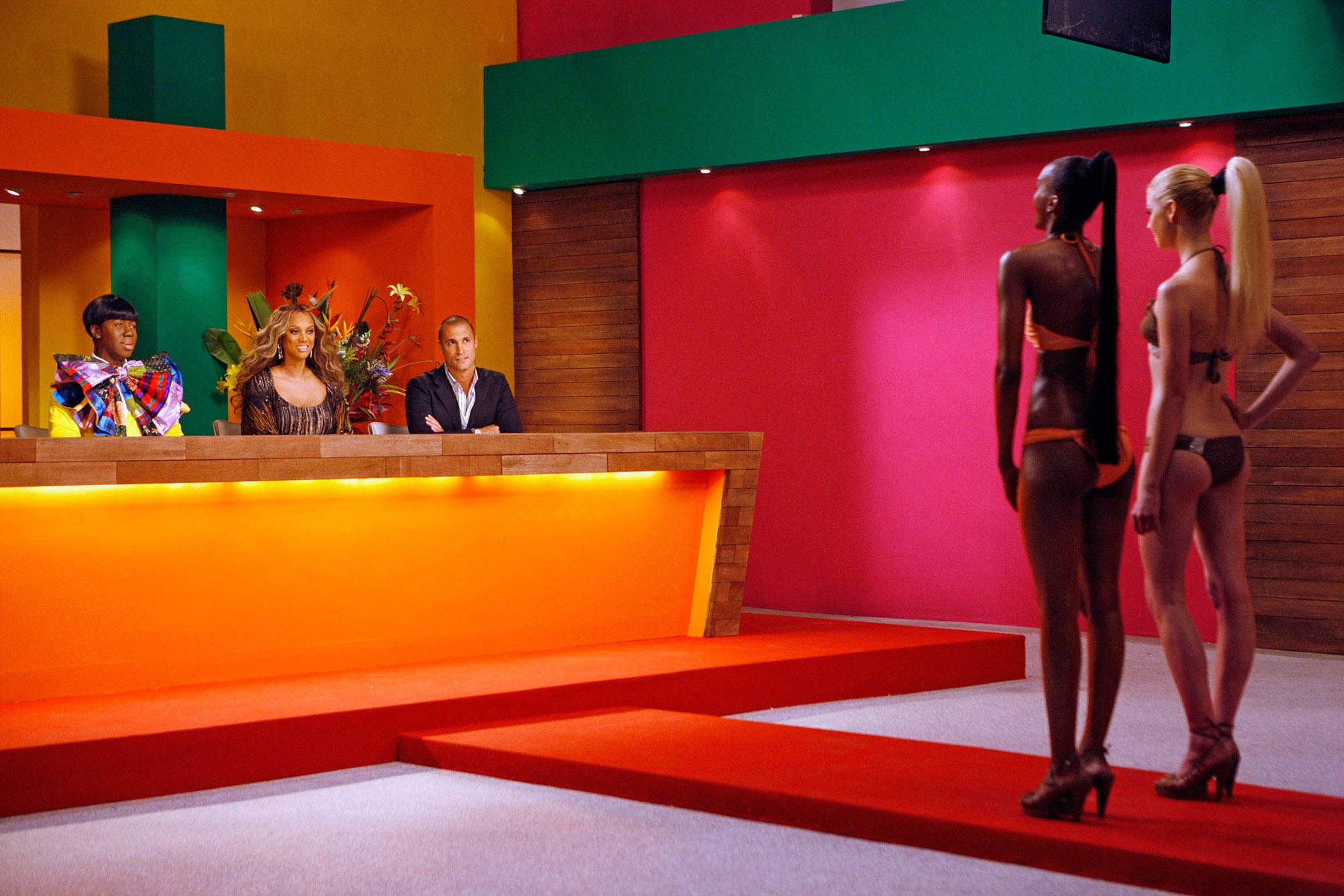

How did women’s beauty standards get so bad in the 2000s? This week offered an answer, with the release of Reality Check: Inside America’s Next Top Model, exploring the rise, cultural dominance and eventual fall of the 24-season (or “cycle”) reality series, fronted and created by the supermodel Tyra Banks, in which civilian women competed to win a modelling contract.
To suggest this documentary has been hotly anticipated would be an understatement. Since the pandemic, clips of the original show have regularly gone viral, with thousands of people reporting their renewed horror from the perspective of the 2020s. When the trailer for the documentary dropped in January, revealing that Banks as well as all of the original core judges would be involved, it immediately got 7m views. “I haven’t really said much,” Banks says in the first episode. “But now it’s time.”
The docuseries takes you through the gruelling challenges, casting and makeovers that hundreds of women went through across ANTM’s 15 years on air. Contestants are pressured into irreversible dental work, rushed to hospital with severe dehydration and hypothermia. The tasks they must undertake are galling. You see women put in blackface for a “race swapping challenge”, something that happened in two seasons. Viewers witness shoots in which contestants have to pose as murder victims, homeless people, addicts, as women suffering from eating disorders.
You see one contestant, who appears to be drunk, actually having sex with a man who is not her boyfriend (the term “sexual assault” isn’t used). You see a photo of another appearing to be groped by a male model, and accompanying footage where she’s cast as “difficult” for trying to bring it up on set.
We’re told we are watching this with a 2026 lens. Now – now – we can see how bad things were, previously blinded by our cultural context. The problem? All of these horrors were obvious even in 2003. The documentary skates over the fact that viewers were appalled by the show as it was airing. You didn’t have to be especially perceptive to have had this reaction: I remember watching, aged 11, as judges called a rail-thin contestant fat, and speaking with friends about how absurd and wrong these people and standards were in 2005.
Under the guise of ethical disgust we are able to rewatch the old action play out again, this time guilt-free
Under the guise of ethical disgust we are able to rewatch the old action play out again, this time guilt-free
Reality Check is a part of a wave of media in the last few months that purports to reassess the reality shows that dominated pop culture in the noughties, showing them for what they truly were: craven and exploitative, seeking to meet a craven and exploitative 2000s audience. In August, Netflix released the documentary Fit For TV, which gave a similar treatment to the reality weight-loss competition The Biggest Loser; only a month later, the David Osit documentary, Predators, explored the long shadow of the hit paedophile sting series To Catch a Predator.
But despite their stated aim of showing how terrible things once were and how much better they are now, rarely do these documentaries offer serious interrogation. Instead they spend most of the time rerunning this grim footage with, at best, a light mea culpa from those responsible for creating it, if we even see them at all.
In Reality Check, Banks – creator, star and executive producer who otherwise emphasises her total involvement in ANTM’s output – exonerates herself from some of the show’s worst crimes, suggesting they are the responsibility of “production”. This is, surely, laughable.
If we know they’re bad now and we knew they were bad then – and we know none of these people are going to take responsibility – then why are we watching these documentaries? Leaving to one side the much more serious Predators – Osit’s film is a sincere attempt to reckon with a show that tried to lure child predators to a film set – there is a dark truth lurking behind most of this media: it feeds the same morbid fascination with these grotesque programmes that had us tuning in 20 years ago. Under the guise of ethical disgust, and with a moral aspect layered on top, we are able to rewatch the old action play out again, this time guilt-free.
The final episode of Reality Check hints at an announcement. “I feel like my work is not done,” Banks says. “You have no idea what we have planned for cycle 25.” And so the scales fall from our eyes: this is not repentance, this is promotion. Looks like we still have an appetite for more gratuitous viewing.
Newsletters
Choose the newsletters you want to receive
View more
For information about how The Observer protects your data, read our Privacy Policy
Reality Check: Inside America’s Next Top Model is on Netflix
Photograph by Everett Collection/Alamy