

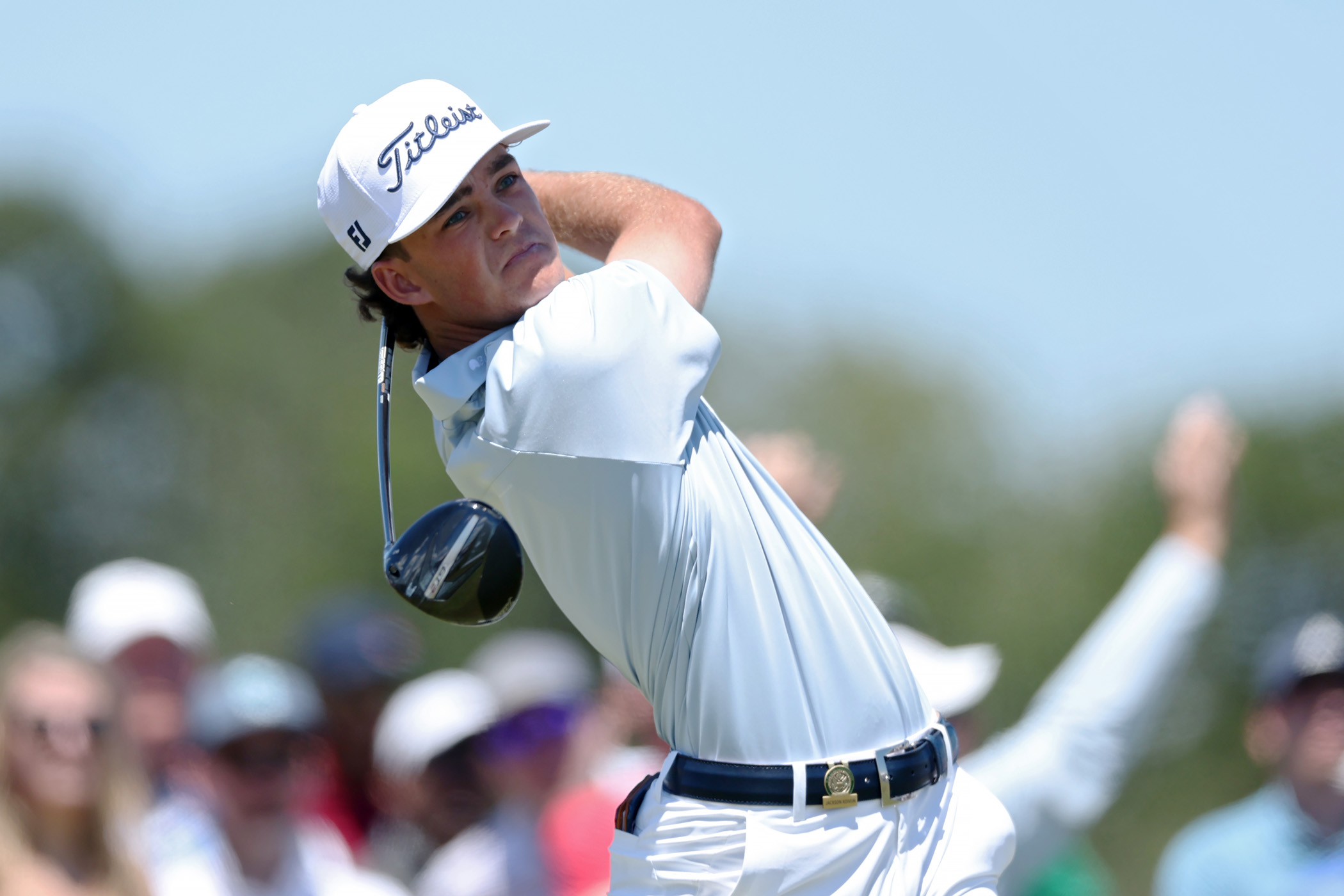
A couple of weeks ago, on 30 December, Tiger Woods turned 50. On the morning of his birthday, with a heavy heart and tears in my eyes, I folded £200 in cash – new bills, crisp and clean, taken out of the ATM the day before for this express purpose – into an envelope and sent it off to Wales.
To explain, we need to go back nearly 17 years.
It is the early spring of 2009, and we are in a hotel room at the Langham Hilton, off Oxford Circus in central London, “we” being myself, James Dean Bradfield and Nicky Wire from the band Manic Street Preachers. We are supposed to be talking about the press release I am writing for their new album, Journal for Plague Lovers. We are, in fact, arguing about sports. A familiar dynamic. More specifically, we are arguing about Tiger Woods. “He’ll never beat Jack Nicklaus,” says Bradfield.
For non-golfers out there (and God help you, you soulless monsters), James was referring to the fact that Jack Nicklaus held the record for the most major championships won by any golfer. Eighteen of them. A record that still stands today and is now unlikely to ever be beaten. Tiger, at the time of arguing in early 2009, held 13 major titles. He was only 33 and still had 17 playing years left until he reached 50: the age when a golfer qualifies for the senior tour. (No one – at that time – had ever won a major championship over the age of 50.) I did the arithmetic: four majors every year (the Masters, the Open, the US Open and the USPGA), four x 17 years…
Tiger had 68 chances to win six more times.
“OK,” I said, sticking my hand out, “200 quid he beats Jack before he turns 50.” As I shook that honest, Welsh hand, there was a cough from across the room...
“Forget beating Jack Nicklaus, I’ll bet you 200 quid Tiger doesn’t win one more fucking major.”
Nicky Wire had entered the bet.
It’s not parting with the money that brought the tears… why do we weep at the end of sporting careers?
It’s not parting with the money that brought the tears… why do we weep at the end of sporting careers?
You must remember that back in early 2009, Tiger Woods won everything all the time. There hadn’t been a year since the late 1990s when he hadn’t won a major. I was already crossing the room to shake a second Welsh hand. But a pause for thought was warranted; Wire was a madman, yes, but crazy like a fox. And God did he know sports. Like my father before him, he’d happily watch indoor bowling from Japan at three o’clock in the morning and could probably give you a form rundown on the top 10 players in the Fuji-Honda Sunday Crown Bowling League. To be making this crazy a bet he had to know something. But what? No. Bollocks. Tiger? The greatest to ever tee it up? The best ambassador for the sport in history? There was no way Tiger wasn’t winning his 14th major. And then he only had five more to go to take Jack out and it was cut to a wide shot of John laughing his head off all the way to the bank.
I stuck my hand out again – “DEAL!”
Fast forward some months to November 2009 and I turn on the TV to see that Tiger Woods – addled out of his mind on Ambien – has crashed his car as he was being chased bleeding down the road by his enraged, golf club-wielding wife, who had just discovered that the greatest to ever tee it up had been doing more behind-the-scenes pumping and grinding than a gas station attendant who moonlights as a barista.
It transpired that this perfect ambassador for the sport had been flying in Hooters waitresses on JetBlue and gifting them Subway sandwiches before pounding away like a sheet metal worker on overtime behind the dumpsters in car parks. He’d been gobbling prescription meds like a Hollywood starlet while working the phone sex lines harder than a hillybilly housewife with a maxed-out credit card. He’d been – you get the drift.
I barely had time to scream “WIRE, YOU BASTARD” before Tiger’s career lay in ruins.
Newsletters
Choose the newsletters you want to receive
View more
For information about how The Observer protects your data, read our Privacy Policy
Almost 10 years later to the week, I was sweating cobs and staring a 400 quid, double-fronted, Wire-Bradfield loss in the face when Tiger somehow limped his broken, mangled body over the line to win the 2019 Masters, his 14th (and, at the time of writing, final) major. As mentioned earlier, the Welsh are a good and honest people and a few days later an envelope arrived in the post containing £200 in cash (new bills, crisp and clean. Scottish notes, too – the Manics were on tour in Edinburgh) along with a restrained, dignified “stuff this up your arse and I hope it chokes you, you Jock bastard” note from Wire. And this week, six years on from that glorious morning, 17 years on from the original bet, I fought back the tears as I did the same for Bradfield.
It’s not parting with the money that brought the tears, dear reader. I can dispel that Scottish stereotype. Why do we weep at the end of sporting careers? Is it true, as George Costanza says to Jerry Seinfeld, that the only time men are allowed to cry is when old sports guys retire? It’s understandable. To have seen Tiger in his prime was something. The infinite power. And now the grey-haired, balding, limping man whose golfing future lies only in his son, Charlie.
But we do not weep for them, of course. We’re weeping for ourselves. For the fading of our own powers, such as they might be. For the turning of the wheel. For mortality.
When the three of us shook hands in that hotel room, my son Robin was 13 and still looked up to me as a god on the golf course. This year, as I pay the bet off, Robin turns 30 and his drives bomb so far past mine that they land in a different postcode. When your son begins to outdrive you, well, as Tiger will tell you, it’s like getting a telegram from the mortuary: We’re looking forward to meeting you. Real soon. And you start doing the ledger – the balance sheet that deals with how it went for you and the people close to you. Wives. Husbands. Children. Partners. (It is an accounting where, as Saul Bellow pointed out – and as Tiger would tell you, too – most of the debits have to do with love.)
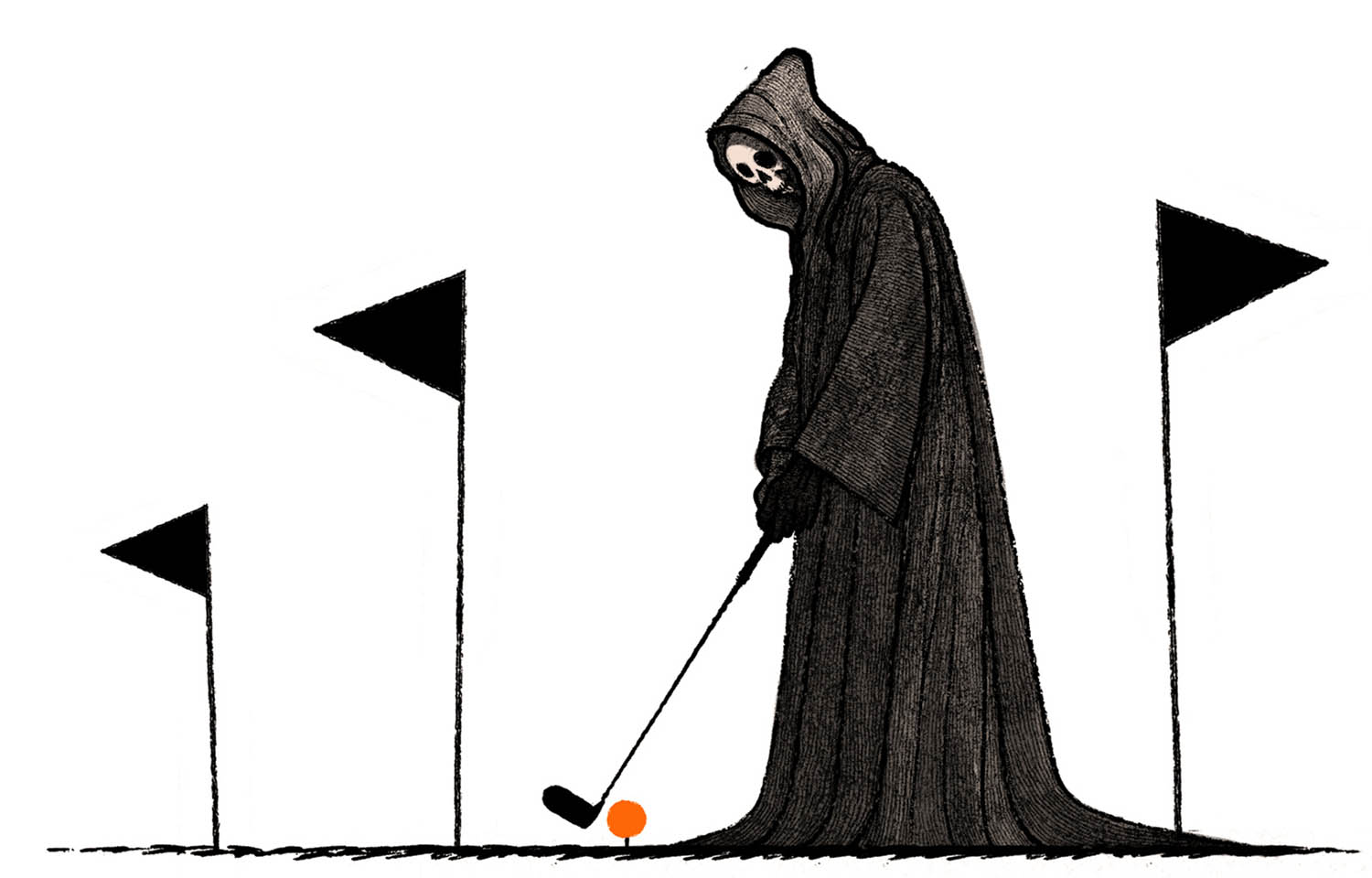
These days, as I watch my fade-cum-slice of a drive land a maximum of 230 yards down the fairway, I am no longer looking for the ball as it falls towards the earth. Like Jack Lemmon at the end of The Legend of Bagger Vance, I am looking for nothing less than the Reaper, waving to me cheerfully from the treeline.
Illustration by David Foldvari