


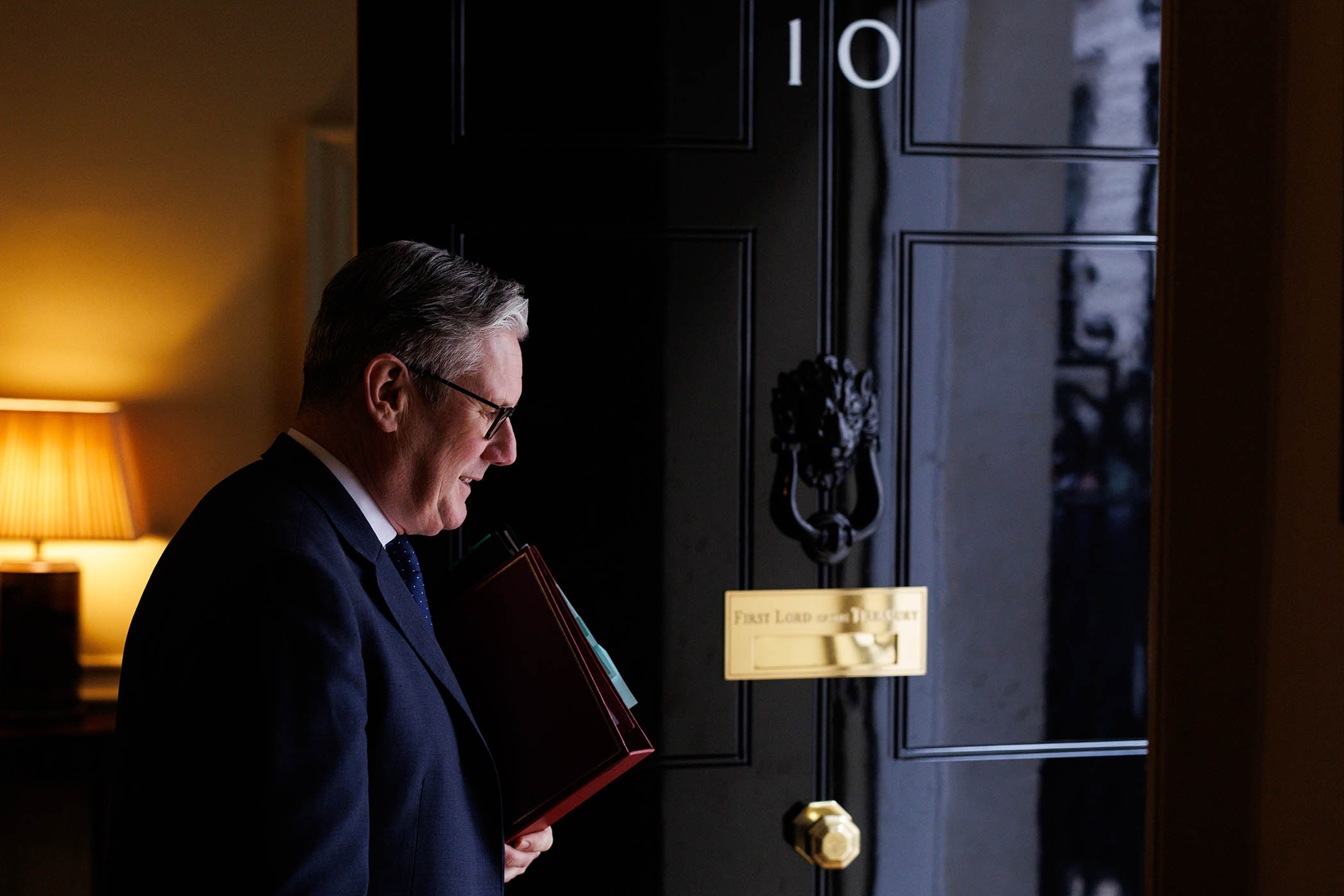
It’s beginning to feel a lot like Christmas, everywhere you go – except the cabinet. Festive cheer has failed to infuse senior members of the government. At a seasonal party, one cabinet minister gazed mournfully into his glass before sighing to me: “The government has no friends.”
Strictly speaking, this is not completely true. About one in six respondents tell pollsters that they would vote Labour if a general election were held tomorrow. As a general observation, that gloomy cabinet member is spot-on. This is a Nobby-no-mates government. Even in their darkest hours, Margaret Thatcher or Tony Blair had a praetorian guard of people so committed to the cause that they would defend their heroes by throwing themselves in front of the massed blades of their enemies. It is not just the dire approval ratings that make the Starmer government look so bereft of allies; it is the absence of any visible cheerleaders at Westminster or beyond it.
For that, Sir Keir is copping much of the blame from his party. When seat after seat tumbled to Labour at the 2024 election, a lot of folk thought he had been awarded five years to do more or less as he liked. Now a lot of the same people think he will be lucky to survive at No 10 for another five months. At the final PMQs of the year, Stephen Flynn, the SNP’s leader at Westminster, provoked laughter on the opposition benches when he asked the prime minister how he'd be spending his final Christmas in Downing Street.
It is not the case that the country has “fallen out of love” with Labour. It was never in love in the first place. That whopping majority in the Commons was built on shallow foundations. A vote share of less than 34% was the lowest for any party winning a parliamentary majority in the history of universal suffrage. The central dynamic of the contest was not unbridled fervour to see Labour in action; it was an unalloyed determination to purge the Tories from power.
This is a broadly centrist government led by a serious and hardworking man who is committed to some worthy goals. Which is a terrible combination in our hyper-polarised media environment. The government is too leftwing for the unrelenting media of the right. It is too rightwing for the unforgiving media of the left. The achievements it can fairly claim get next to no attention while its blunders receive maximum magnification. Only the very best of communicators might find a way to thrive in this climate. Whatever else can be said of Sir Keir, he is no archangel of oratory. His party conference address did a decent job of drawing the moral battle lines with Nigel Farage, but that speech stands out because it was exceptional. More often, chunters one disillusioned minister, the prime minister prefers “reading out a list” to “the contest of ideas”.
It is not the case that the country has ‘fallen out of love’ with Labour. It was never in love in the first place
It is not the case that the country has ‘fallen out of love’ with Labour. It was never in love in the first place
He is also grappling with the systemic challenge that has defeated so many governments in the affluent world since the crippling financial crisis of 2007-09. How do you satisfy public demand for decent state services at reasonable levels of taxation when growth is so anaemic? This is the central conundrum that Labour promised to crack. It is going to be very hard for it, or any alternative government, to be popular until they can. The doom loop of higher taxes for unsatisfactory services feeds the corrosion of trust in the state and its ability to deliver. The principal beneficiaries of the turn against Labour this year have been Reform UK and the Greens. The biggest thing these populists of right and left have in common is that neither of them have ever been faced with the hard choices that come with being a government.
These headwinds have been compounded by a lamentable propensity to steer the ship of state on to the rocks. There’s a compelling case that the defining political event of the past 12 months came in the summer when No 10 and the Treasury combined in an effort to curb the ballooning cost of disability benefits, only to be forced into an abject and authority-shredding retreat by their own backbenchers. Those who hated the idea of welfare reform liked the government no better for the fact that it was forced to capitulate. Those who think we need welfare reform despaired that the government proved incapable of implementing it.
There was another chaotic tale surrounding the budget. Handled differently, it could have been a morale-raising feel-good story about the fiscal situation being better than anticipated. Instead, it became a spirit-sapping feel-bad affair about leaks and accusations of misrepresentation. Even though the chancellor delivered several items that Labour MPs had been clamouring for, they cheered for about five minutes and then resumed their backbiting about the leadership.
It is striking how lonely the government looks in the wider arena. One cabinet member, a different one to the fellow who mourns their lack of friends, notes the absence of any “third-party endorsements” from players in the public square. Business, which was quite loved-up with Labour before the general election, has turned extremely sour. Employers resent the additional taxes demanded of them, they’re leery of substantial increases to the minimum wage and warn that jobs will be lost because of the employment legislation that has just cleared blockages in parliament.
If business is aggravated by the most sweeping enhancement of workers’ rights in decades, you might expect the trades unions to be happy. Are they heck. Unison, Britain’s largest, has just voted to oust its moderate and generally Starmer-supportive general secretary and replace her with Andrea Egan, an admirer of Jeremy Corbyn who was expelled from Labour three years ago for promoting articles from a Marxist website. Avowedly hostile to the government, she ominously declares that she plans “a wide-ranging strategic review of taking strike action across the labour movement”.
Newsletters
Choose the newsletters you want to receive
View more
For information about how The Observer protects your data, read our Privacy Policy
Her arrival is not going to make life any rosier for the Labour leader. Nor are the striking doctors. They no longer command public sympathy and that has emboldened the health secretary and the prime minister to condemn them for recklessly endangering the NHS. That doesn’t mean voters won’t also blame ministers for the damage the strikes will do to the health service.
It’s an unmerry Christmas for those in power. As you gather in what I hope is the warm embrace of your loved ones, spare a thought for our sadly cheerless and friendless government.
Photograph by Mark Thomas/Alamy Live News