
‘Globalise the intifada.” It’s a phrase that could now land you in jail. “Words and chants … have real world consequences”, warned Mark Rowley, commissioner of the Metropolitan Police, and Stephen Watson, chief constable of Greater Manchester, in a joint statement last week. “The context has changed” after the Bondi beach horror, and given the concern of Jewish communities “about placards and chants such as ‘globalise the intifada’ … we will act decisively and make arrests.”
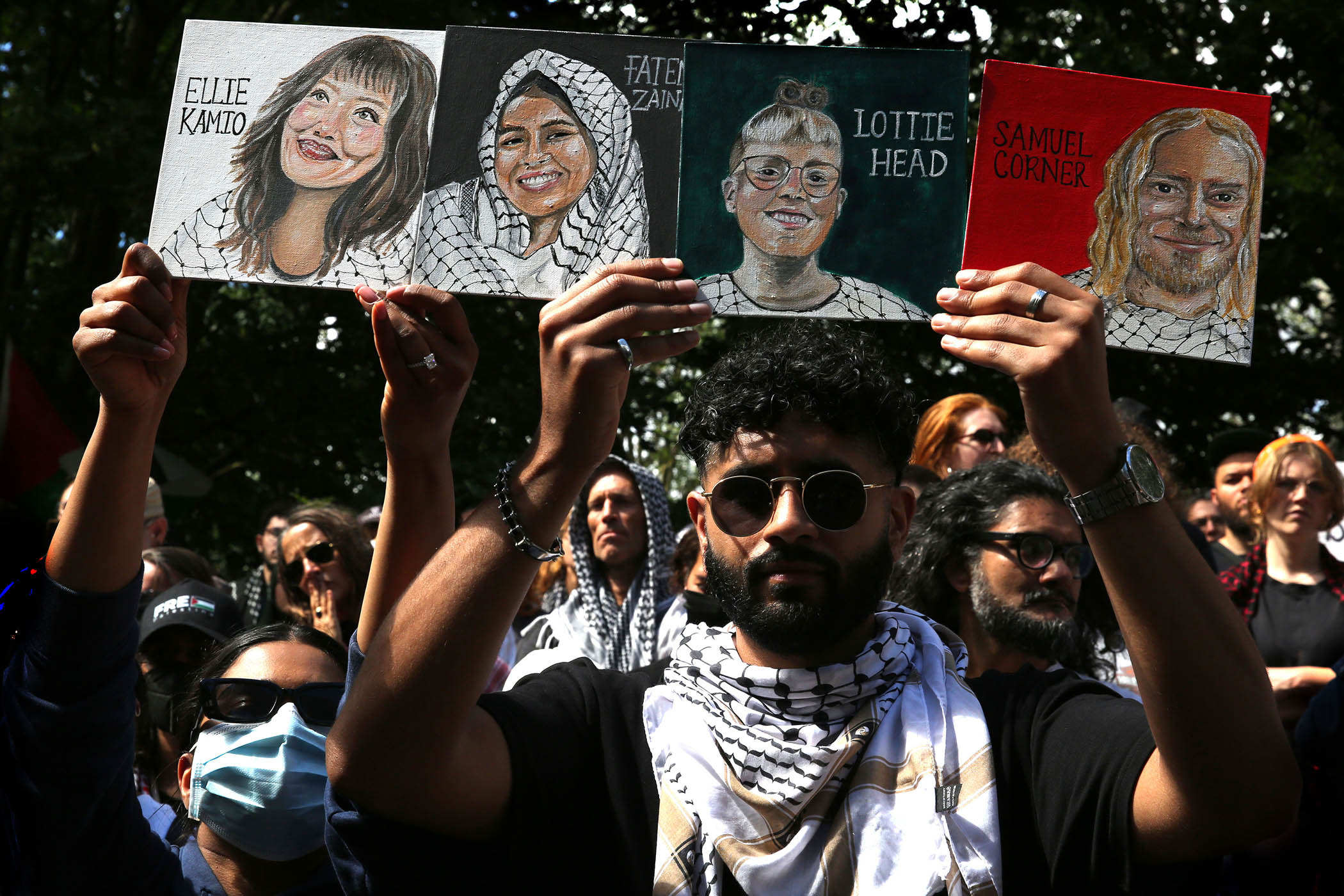
And they did. At a protest in London about the proscription of Palestine Action last Wednesday, two people were arrested for “racially aggravated public order offences” after allegedly chanting the now forbidden slogan.
After the brutal killings of 15 Jews attending a Hanukah celebration on Bondi beach, following on from the murderous attack on worshippers at Manchester’s Heaton Park Hebrew Congregation during Yom Kippur, which left two dead, the context of the debate over antisemitism has indeed changed.
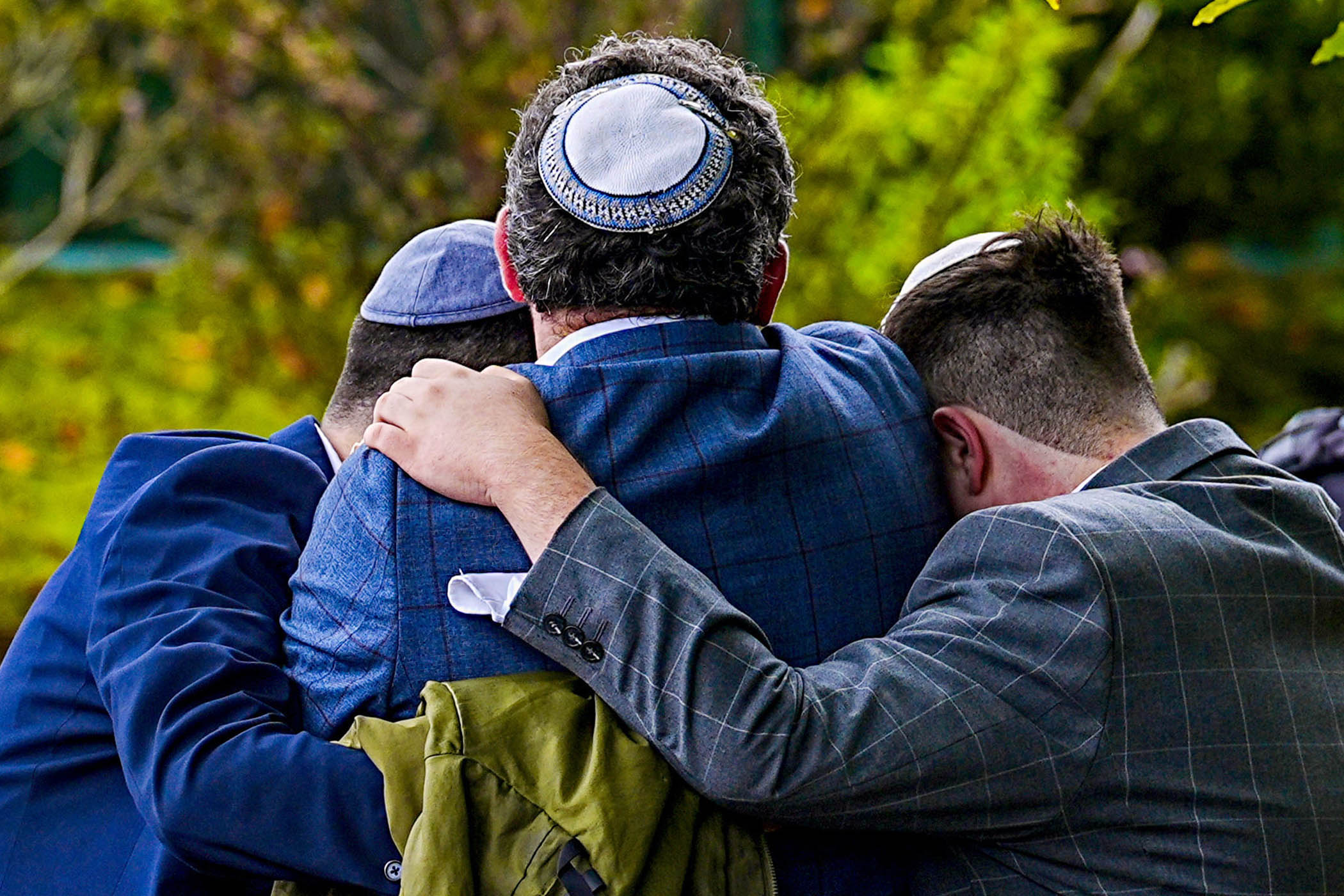
The killings have left Jews feeling beleaguered and fearful – whether or not they wear a kippah or a Star of David necklace. A survey by the Institute for Jewish Policy Research, published in October, suggested that more than four out of five British Jews regarded antisemitism as a “very big” or “fairly big” problem.
Violent Jew-hatred has been exacerbated as increasing numbers slip into the mire in which all Jews are held accountable for the actions of the state of Israel. Equally, many Jews now view the very expression of Palestinian solidarity as fuelling antisemitism. The conflation of Israel with all Jews is less a case of Palestinian solidarity being inherently antisemitic, than of antisemites seizing upon the actions of Israel to justify their Jew-hatred and of too many on the left failing to challenge such bigotry within their ranks.
At the same time, Jewish scholars such as Mark Mazower and Antony Lerman have shown that it is not just antisemites who conflate Israel and Jews but the Jewish state and its supporters, too. From the 1970s onwards, antisemitism became reframed as meaning any challenge to the legitimacy of Israel. Redefining antisemitism in this fashion, Lerman argues, has been more about deflecting criticism of Israel than about protecting diasporic Jews from bigotry or violence.
It is against this background that the debate over the phrase “globalise the intifada” has emerged. In the wake of the Bondi beach massacre, the slogan has been singled out by politicians and commentators, from Wes Streeting on Newsnight to Bret Stephens in the New York Times, for fomenting anti-Jewish violence. “Bondi Beach Is What ‘Globalize the Intifada’ Looks Like”, read a New York Times headline. The police chiefs in London and Manchester appear to agree.
A phrase such as “globalise the intifada” can inevitably be interpreted in many ways, for some expressing solidarity with Palestinians, for others a hatred of Jews. However one reads it, though, is it plausible to claim that the slogan can incite mass murder?
Sajid and Naveed Akram, the Bondi beach terrorists, appear to have been hardline Islamists and supporters of Islamic State (IS). Do we really imagine that had the phrase “globalise the intifada” been censored, or all pro-Palestinian demonstrations banned, the Akrams would not have perpetrated their horror? To believe this is to refuse to take Islamist terror seriously.
However one reads it, is it plausible to claim a slogan can incite mass murder?
However one reads it, is it plausible to claim a slogan can incite mass murder?
Many of those at the forefront of the struggle against antisemitism have warned of the dangers of using that struggle to constrain free speech and protest. Kenneth Stern, the lead drafter of the International Holocaust Remembrance Alliance definition of antisemitism, adopted by many governments, universities and other institutions, has condemned the way it has become “weaponised” into “a blunt instrument to label anyone an antisemite” and to “go after pro-Palestinian speech”.
Newsletters
Choose the newsletters you want to receive
View more
For information about how The Observer protects your data, read our Privacy Policy
In October, in the aftermath of the Manchester synagogue attack, Brendan McGeever, Ben Gidley and David Feldman from the Birkbeck Institute for the Study of Antisemitism criticised the government’s promise “to restrict the right to protest in the name of Jewish safety”.
Jews, they observed, were divided over the question of pro-Palestine marches and whether they made them less safe. Many took part in such demonstrations and only a minority of young Jews now see themselves as “Zionists”.
Yet, for many commentators, any act of showing solidarity with Palestinians is illegitimate. “Your call for a Palestinian state pours fuel on the antisemitic fire … and encourages the Jew hatred now stalking your streets”, Israeli prime minister Benjamin Netanyahu excoriated his Australian counterpart Anthony Albanese. According to the Times columnist Melanie Phillips, “the Palestinian cause was invented only to steal the Jews’ identity and history” and that “anyone who supports the Palestinian cause is supporting Nazi-style demonisation of the Jews, ethnic cleansing and genocide”. It’s a bigotry that runs no less deep than Jew-hatred.
It is also striking that many who normally denounce hate speech laws, who castigate Britain for imprisoning people for inflammatory tweets, who lionise Lucy Connolly as a free speech martyr, and judge it “insane” that Luke Yarwood has been imprisoned for tweeting “Violence and murder is the only way now. Start off burning every migrant hotel then head off to MPs’ houses and Parliament, we need to take over by FORCE”, have not just been silent about the latest policing of pro-Palestinian speech, but even welcomed police bans.
Exposed here is a tribal world in which too many fail to take either antisemitism or Palestinian freedom seriously, and who care about free speech only when it is speech they like. If we hide in our separate silos, opposing only certain kinds of bigotry, or supporting liberty only for certain kinds of people, we will all lose.
Photograph by Peter Byrne/PA