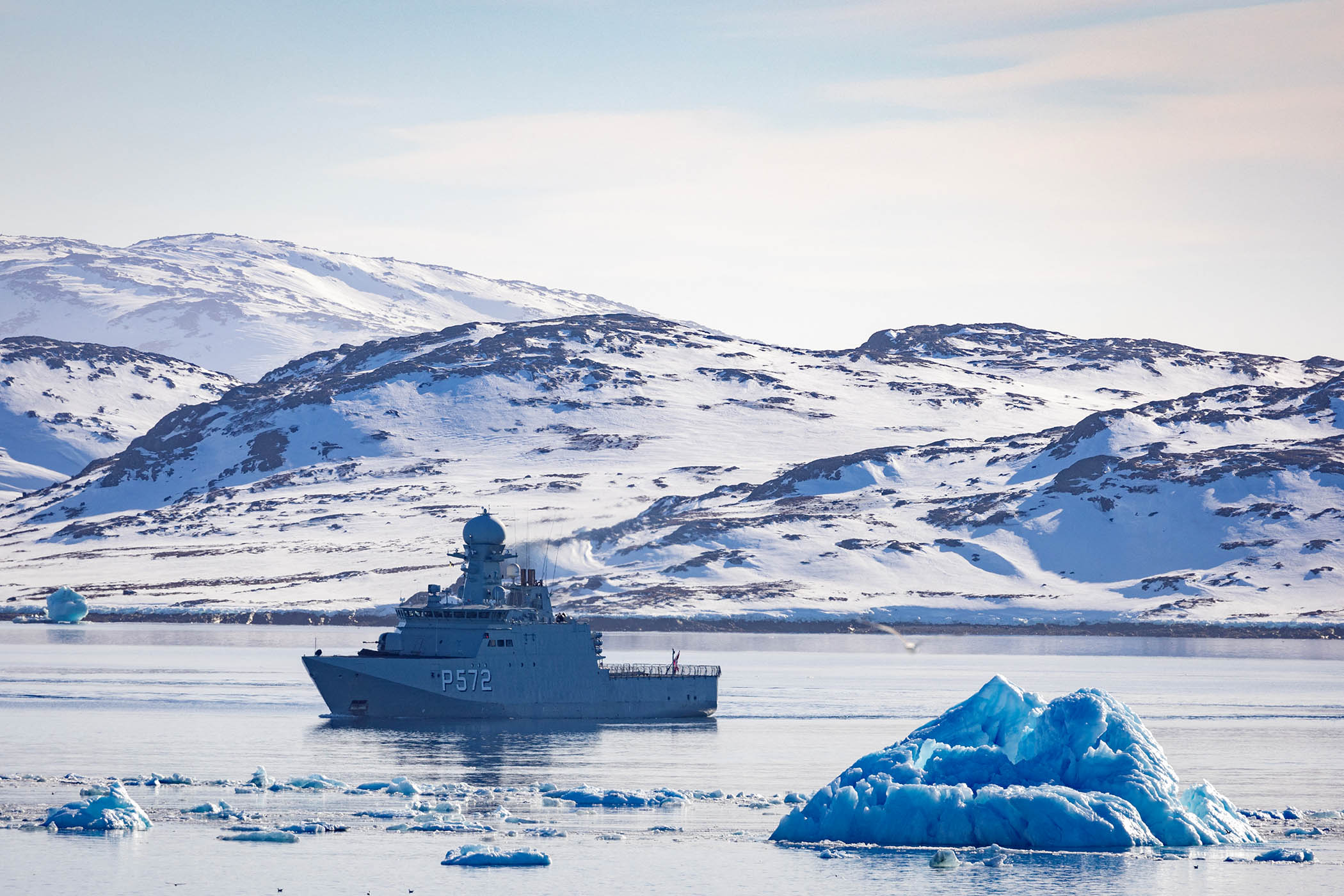



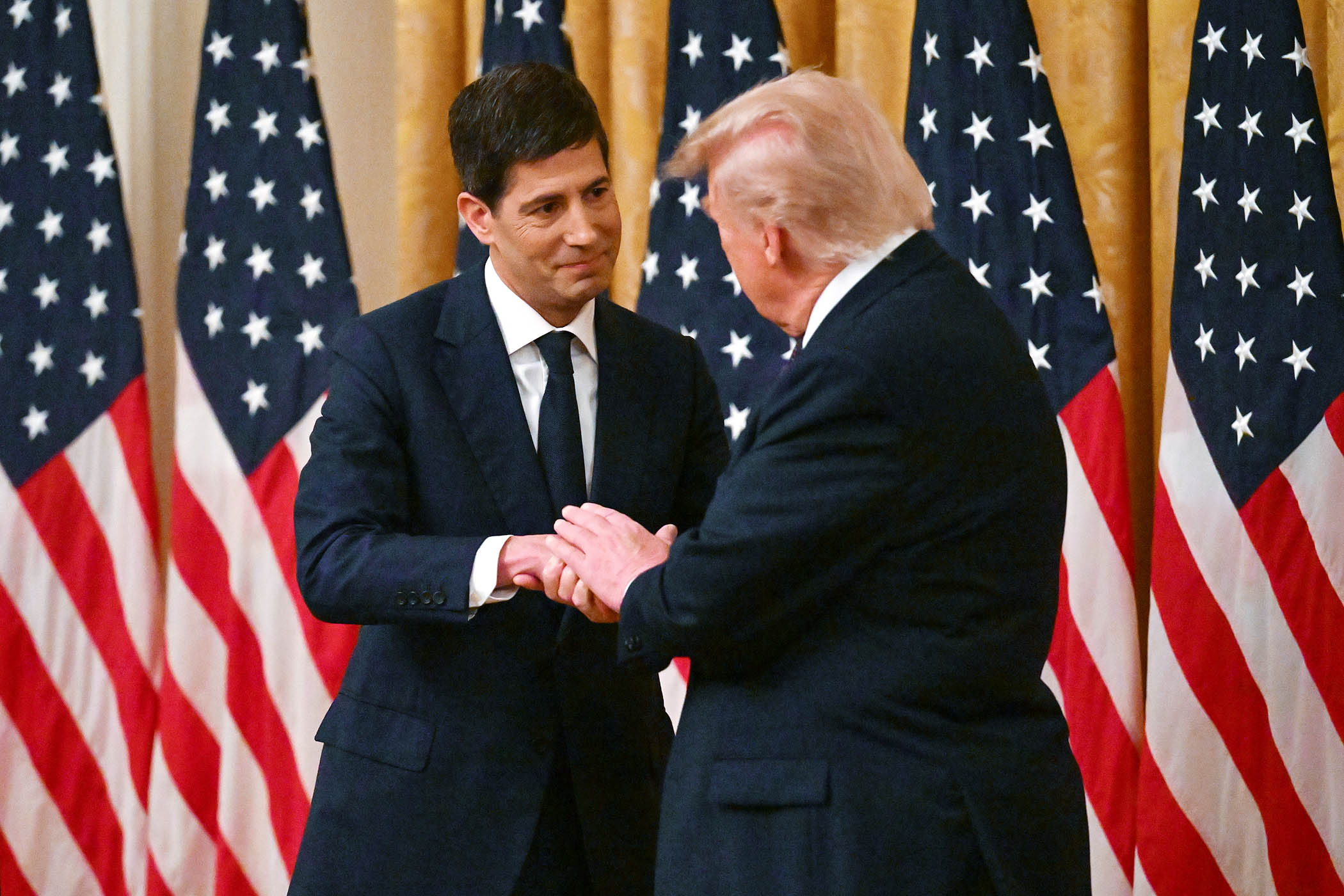
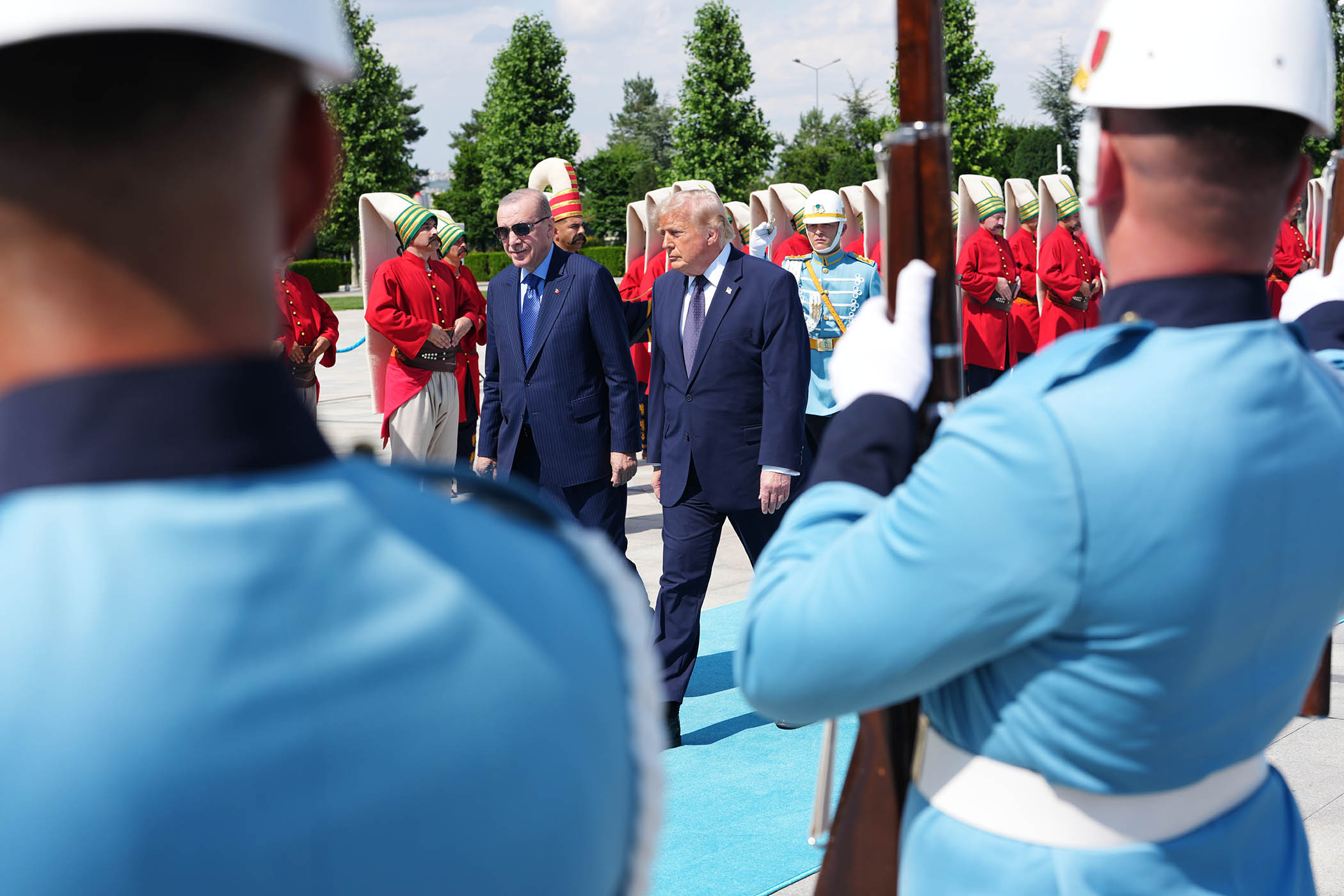
The Danish government fears there is no deal it can offer US president Donald Trump that will persuade him not to annex Greenland, The Observer understands, ahead of a crunch meeting this week between US secretary of state Marco Rubio, and the foreign ministers of Denmark and Greenland.
During a call between Trump and Danish prime minister Mette Frederiksen last year, he made clear his desire to own Greenland was “personal”, said someone briefed on the contents of the call. Frederiksen came away with the sense that Trump felt “this is my space and I want to own it”, they said.
Now, that realisation is crystallising as the Danish government scrambles to devise a plan that might appeal to Trump. “It’s difficult to see what it is that they really want except for putting their name on the map, and that’s not something we can give them,” said Rasmus Jarlov, the chairman of the Danish defence committee.
One option is a joint operation to invest in minerals, along similar lines to the deal the US struck with Ukraine last year. Denmark is also inviting the US to expand its military presence in Greenland, building on an agreement dating back to 1951 that already gives it significant access.
“If the US wants to get increased control over Greenland militarily or in security policy terms, it could easily achieve this through the existing agreement between the Kingdom of Denmark and the US,” said Klavs Holm, a Danish diplomat. “The question is: is that enough for Mr Trump?”
Riding high on the success of a military operation in Venezuela, Trump – who had vowed to extricate the US from foreign entanglements – has shown he is serious about establishing uncontested dominance over the western hemisphere. Unlike Venezuela, however, Greenland is part of the Danish kingdom – a Nato member and stalwart US ally – and challenging its sovereignty threatens to torpedo the transatlantic alliance that forms the bedrock of the post-second world war order.
Asked in an interview with the New York Times whether acquiring Greenland mattered more to him than preserving Nato, Trump did not answer directly, but acknowledged “it may be a choice”.
The White House says it is exploring “a range of options” to acquire Greenland and has repeatedly refused to rule out the use of force.
“We’re not expecting a military attack, but of course we can’t rule it out when they keep saying it’s an option,” said Jarlov. “We have to take it seriously.” He declined to comment on what Denmark was doing to prepare for that eventuality, in order, he said, to avoid further escalation.
‘Seeing these statements towards our allies is a real embarrassment. None of this makes sense and all of this is damaging’
‘Seeing these statements towards our allies is a real embarrassment. None of this makes sense and all of this is damaging’
Don Bacon, Nebraska congressman
If the US were to launch an invasion, there would be little to prevent it from taking over the sparsely populated territory. Within hours, US forces could seize its sea and airports, take control of population centres and hand out American passports to its 57,000 inhabitants. In the words of Trump’s deputy chief of staff, Stephen Miller: “Nobody is gonna fight the US militarily over the future of Greenland.”
Newsletters
Choose the newsletters you want to receive
View more
For information about how The Observer protects your data, read our Privacy Policy
Short of military action, the US could unilaterally declare sovereignty over its territorial waters, or claim exclusive economic zones around mineral sites, said Jamie Shea, a former Nato official and associate fellow with the international security programme at Chatham House.
Another option would be to leverage Greenland’s desire for independence to cleave it from Denmark. Once a Danish colony, Greenland has fought hard to become a self-governing territory within the Kingdom of Denmark. But it has chafed against Denmark, which retains control of Greenland’s foreign policy and defence, and pays half of its budget.
In an interview last week, Trump’s special envoy to Greenland said there was no need to seize Greenland by force. “I think the president supports an independent Greenland with economic ties and trade opportunities for the US,” Louisiana governor Jeff Landry told CNBC.
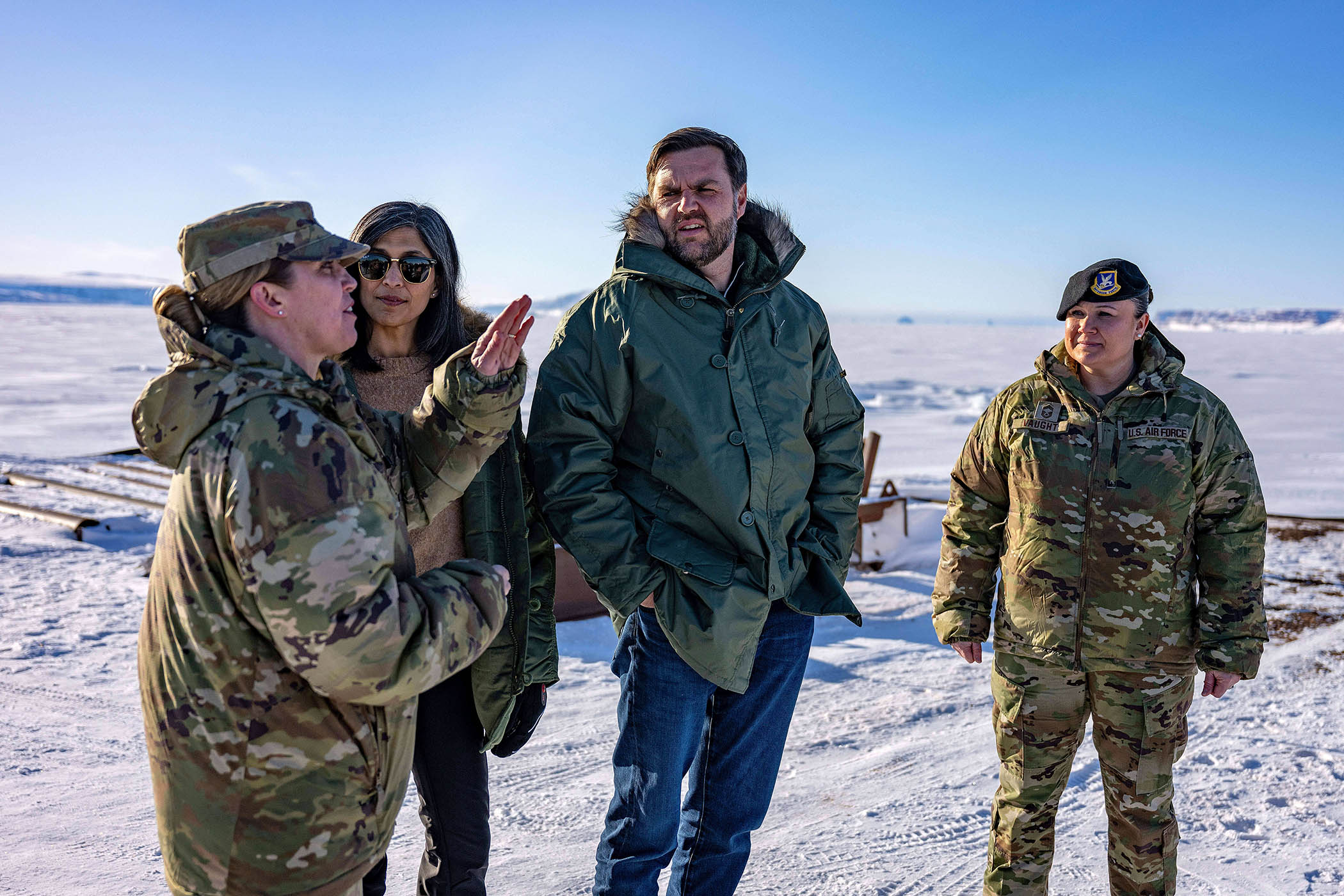
US vice -president JD Vance and his wife, Usha, tour the US military’s Pituffik Space Base in Greenland last year
While mostGreenlanders want independence, they do not want to trade one colonial power for another. In a poll last year, 85% of Greenlanders responded “no” to the question: Do you want Greenland to leave the Danish realm and instead become part of the United States?
To tempt them, US officials have discussed sending each Greenlander a payment of between $10,000 and $100,000, Reuters reported. “Every time they [the US] do these theatrical things, it pushes us away from them more and more,” said Masaana Egede, editor-in-chief of Greenland’s main newspaper, Sermitsiaq.
White House press secretary Karoline Leavitt said diplomacy was always Trump’s first option, noting that he had sought to negotiate with Venezuela and Iran before launching military action against both.
Sources close to the administration stress that calmer heads at the White House are exploring legal avenues to expand the US claim on Greenland in a negotiated settlement, potentially overhauling the 1951 agreement with Denmark. The pact, signed when Greenland was a Danish colony, allows the US to “construct, maintain and operate” military bases across Greenland and fly over and navigate the territory without restriction.
“They’re looking at some kind of legal arrangement where the US puts more formality in its military relationship with Greenland in a way that satisfies Denmark without thinking that this is the end of Nato,” said one DC consultant. Under such a deal, Greenland would serve the US as “a big launch pad”.
European leaders, who have tiptoed around Trump in fear of losing US support for Ukraine’s war effort, rallied behind Danish prime minister Frederiksen this week. German foreign minister Johann Wadephul told reporters during a visit to Lithuania that Greenland falls under Article 5 of the Nato alliance, whereby an attack on one member is an attack against all, obligating other members to respond.
Members of Trump’s own party have also thrown their support behind Denmark. “Seeing these statements towards our allies is a real embarrassment,” said Nebraska congressman Don Bacon, a vocal critic of Trump’s approach to Greenland. “None of this makes sense and all of this is damaging.”
The best way to defuse US claims to Greenland is to undermine the rationale for them, Danish foreign minister Lars Lokke Rasmussen told broadcaster TV2. Trump has hectored Denmark for underinvesting in Greenland’s security, claiming it is swarming with Russian and Chinese ships. Danish and US intelligence dispute that, but share the view that Moscow and Beijing represent a long-term threat.
'Ownership is what matters, because it gives him a greater sense of power'
'Ownership is what matters, because it gives him a greater sense of power'
Ivo Daalder, former US ambassador to Nato
Europe could pledge to boost spending on Nato infrastructure in Greenland and develop a new regional defence plan. Denmark’s ambassador to the US, Jesper Møller Sørensen, underlined the fact that his country had committed $13.7bn to strengthen Arctic capabilities and operations last year alone.
Neutralising Trump’s threats could hinge on finding a way for him to present an agreement over Greenland as a major victory, said Holm, the Danish diplomat: “Vanity may be a factor.”
Still, it is doubtful that what Denmark and Greenland are willing to offer is enough to satisfy a leader whose foreign policy instincts are guided by a background in real estate.
“The one thing you can’t negotiate is ownership and, unfortunately, for the US president, ownership is what matters,” said Ivo Daalder, who served as US ambassador to Nato under president Barack Obama.
The White House has sidestepped questions about why Trump wishes to own Greenland outright. Pressed on the matter this week, Leavitt repeated that possession would give the US “more control over the Arctic region… ensuring that China and Russia… cannot continue their aggression in this very important and strategic region.”
Trump offered his own explanation in the New York Times: “Ownership gives you things and elements that you can’t get from just signing a document.”
The key word is elements. In the Arctic, climate change is melting ice, unlocking deposits of elements crucial to modern technologies. Free access to those could help the US to break China’s stranglehold on the supply chain of rare earth minerals. Trump made no secret of his motive for removing Nicolás Maduro: oil.
“You have to put yourself in the mind of a 19th-century imperial power,” said Daalder. “Ownership is what matters, because it gives him a greater sense of power.”
Photographs by Odd Andersen/AFP via Getty Images, Jim Watson/AP