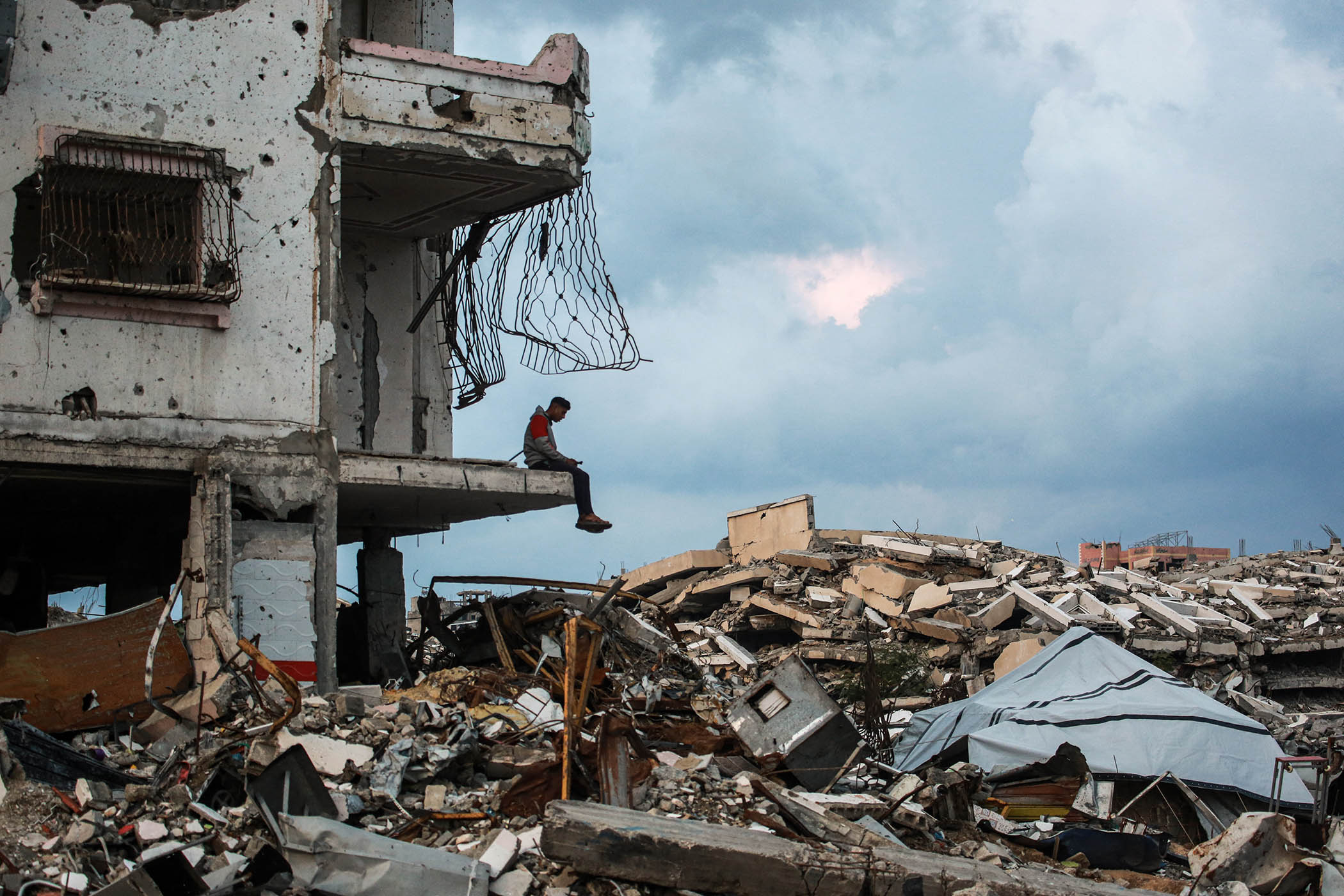


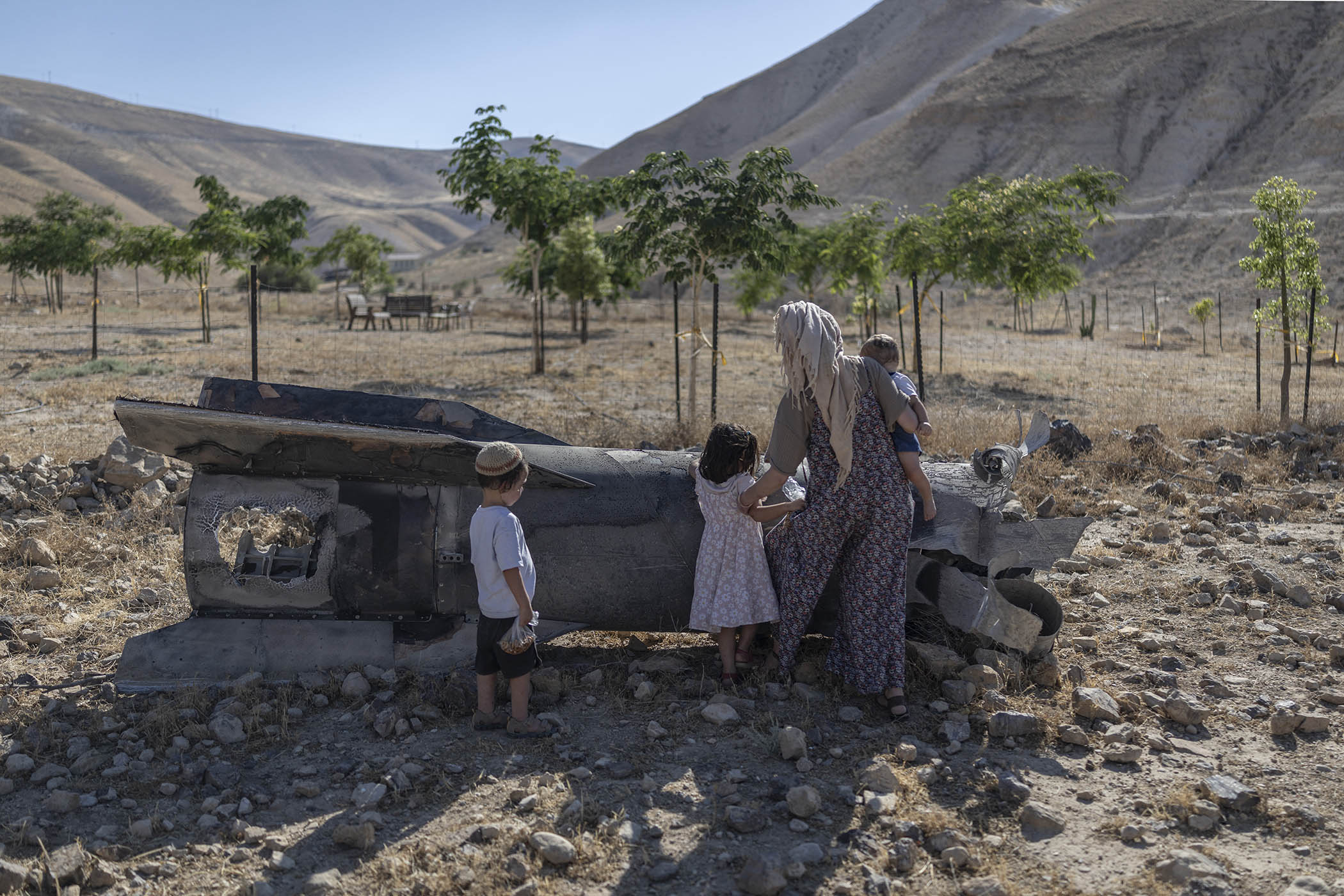
After the war, came the storm. Over the past few days, the wind and rain of Storm Byron has ripped through Gaza, flooding damaged houses and destroying flimsy tents. It’s not a hurricane, just bad weather. Anywhere else in the world – like, say, Israel – there would be no casualties. But after two years of almost every building being pummelled into rubble, Gaza is different.
Two children died from the cold, a baby died after rainwater leaked into the family’s tent, and two more deaths were caused by a wall collapsing on to tents.
Except, of course, it’s not really after the war. It is now nine weeks since a ceasefire between Israel and Hamas was agreed, but aside from the return of Israeli hostages and the release of Palestinian prisoners and detainees, little has changed.
Israel is still regularly launching attacks inside Gaza. At the start of this month, the official death toll ticked over to 70,000. Among the dead were two brothers – aged eight and 11 – who were killed when an Israeli drone struck close to a school where displaced people were sheltering.
The promised delivery of at least 600 trucks of aid a day has not been met once. Some UN and commercial trucks are allowed by Israel to enter each day, but nowhere near enough.
Gaza remains an ungoverned territory. Donald Trump’s “board of peace” does not exist, nor does the technocratic committee of Palestinians that was supposed to operate beneath it. Israel has been allowed to vet every member and has so far refused to allow anyone with a connection to the Palestinian Authority to be involved. In the vacuum, Hamas fights for control with a series of Israeli-backed Palestinian militias.
Ukraine is part of the reason no progress has been made in Gaza. The two men responsible for Trump’s Gaza plan also hold the pen on Ukraine
Ukraine is part of the reason no progress has been made in Gaza. The two men responsible for Trump’s Gaza plan also hold the pen on Ukraine
Finally, the international stabilisation force proposed in the plan remains a vague idea that some Arab states, maybe Turkey too, will be willing to send troops to Gaza to ensure… what exactly is unclear. Israel wants them to be responsible for disarming Hamas. The regional nations that are theoretically willing to consider being part of a mission will only do so if it’s a peacekeeping and monitoring mission.
“They will not go there to be an extension of the Israeli army,” says Amjad Iraqi, a senior analyst for Crisis Group.
All of this was easy to predict. In an image depressingly reminiscent of George W Bush standing on an aircraft carrier with a “Mission Accomplished” banner behind him, world leaders flew to Sharm el Sheikh to stand before a massive “Peace 2025” sign and congratulate themselves on securing what Trump described as the “historic dawn of a new Middle East”.
This was Trump’s show. The “peace plan” was drawn up by his envoy, Steve Witkoff, with little European or Arab involvement. He was, probably correctly, seen as the only person with the power to rein in Benjamin Netanyahu. But that didn’t mean that the rest of the world had to bow and scrape at his feet – nor fail to put forward their own proposals.
Newsletters
Choose the newsletters you want to receive
View more
For information about how The Observer protects your data, read our Privacy Policy
While Keir Starmer, Emmanuel Macron and Friedrich Merz have belatedly realised they need to provide an alternative plan for Ukraine, there is no E3 counter-proposal for Gaza. Instead, they have all signed on to the empty Trump plan and refused to rock the boat.
Ukraine is part of the reason no progress has been made in Gaza. The two men responsible for Trump’s Gaza plan – Witkoff and Jared Kushner – also hold the pen on Ukraine. “This tiny team is managing all these files,” says Iraqi. “Other institutions, like the state department, aren’t having any say in any of this.”
Meanwhile, in Gaza, Israel is fortifying the “yellow line” drawn on the map that gives them control of more than half of the territory. Last week the IDF’s chief of staff described it as “the new border line”.
The fear now, Iraqi says, is that “Gaza will be trapped in this purgatory where people will be able to survive – barely”. The border has been opened to allow people to leave – but not return. “This helplessness and despair will become a long-term issue.”
Two million Palestinians remain in Gaza. If they are to have any hope for the future, their fate must not rest in the hands of a distracted US president who thinks his job is done.
Photograph by BASHAR TALEB / AFP via Getty Images